On air · 1 of 3 networks
CNC Onsite A/S
- cnconsite.dk
- Industry & Manufacturing
- DK
- 57 employees
CNC Onsite A/S’s ads on LinkedIn, Meta and Google, recorded by adsrunning. Browse the latest here for free. Sign up free to see all 29. Watch CNC Onsite A/S with Starter to get each new one in your feed.
Watchlist with Starter · $49/mo
| Network | Status | Live ads | Nov 2025LinkedIn activity · 52 weeksOct 2026 | Checked | Next step |
|---|---|---|---|---|---|
| Running | 12 | Checked 30 Oct 2026 | See all 29 ads → | ||
| Meta | Not checked | — | |||
| None recorded | 0 | No ads found on the Google Ads Transparency Center | Checked 25 Oct 2026 | Collect them with the API → |
CNC Onsite A/S has 12 live LinkedIn ads. We recorded no Google ads on 25 Oct 2026.
Latest ads
- LINKEDIN · IMAGESince 31 Aug 2026
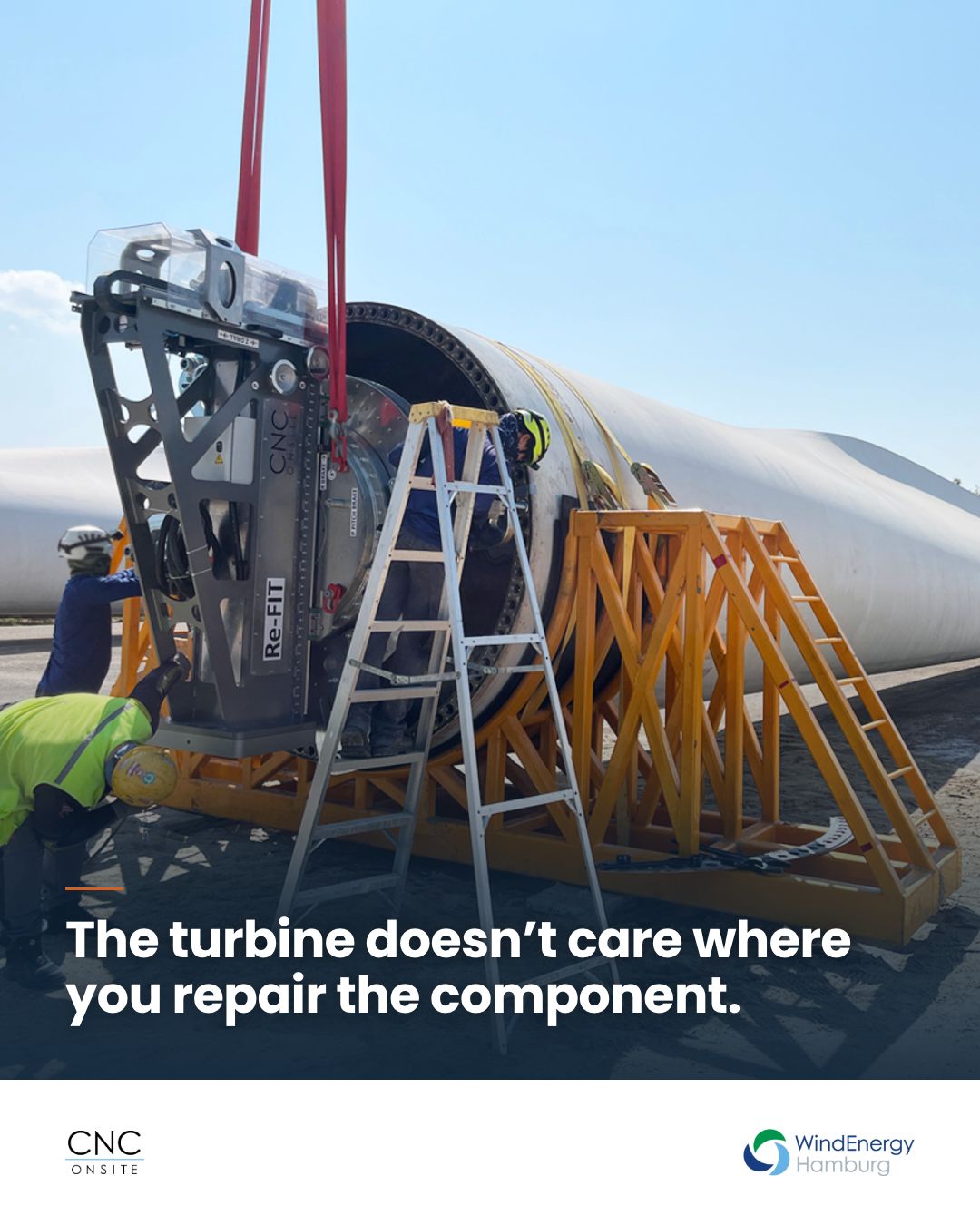
The turbine doesn't care where you repair the component. But the location of the repair can have a huge impact. Portable machining has been used in heavy industry for decades. What is interesting in wind is how far we can take that concept: - Can we repair damaged yaw ring teeth, shafts, or similar critical components without removing the nacelle? - Can we restore damaged blade root inserts without sending the blade back to the manufacturer? - Can we machine large flanges directly at the wind farm? These are not simply questions about machining. They are questions about how much of a repair really needs to happen in a workshop - and how much of the work can be brought to the turbine or the wind farm instead. At CNC Onsite, we specialize in mobile precision machining, bringing the machining capability to the component instead of moving the component to a workshop. We've applied this approach to yaw rings, shafts, blade roots, flanges and other critical components, with solutions designed around the very different conditions found in and around wind turbines. And I think this is an interesting direction for wind O&M as turbines age and lifetime extension becomes increasingly important. Maybe the question isn't where a component can be repaired. Maybe it's why we still assume the component has to leave the turbine to be repaired at all. I'll be at WindEnergy Hamburg from 22 to 25 September with CNC Onsite in the Danish Pavilion, B1:EG:508. If you're working with wind turbine maintenance, repair or lifetime extension, come by and let's talk about where onsite machining can make a difference. See you in Hamburg.
- LINKEDIN · IMAGESince 18 Aug 2026
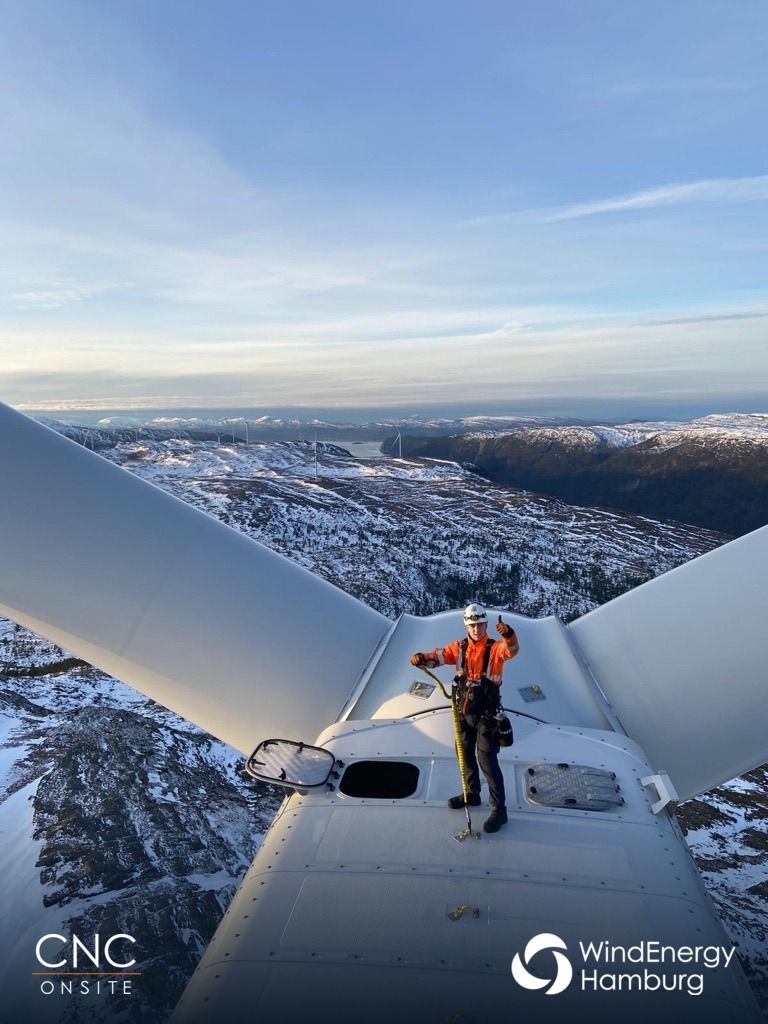
Keep the nacelle where it belongs, we bring the machining to the turbine. The wind fleet across Europe is aging. Spare parts for older models are getting harder to find, and the classic repair chain - crane, component removal, transport, factory repair - gets pricey and sometimes impossible. Why haul the component to a workshop when we can bring the workshop to the turbine? At CNC Onsite we repair critical parts right in the nacelle: - Yaw‑ring teeth - Yaw‑ring sliding surfaces - Rotor locks - Shafts - Bolts and threads …and more. All up‑tower, no cranes, no hot work. The result? Much lower repair costs, far less downtime and improved HSE. I’ll be talking about this and more with existing and new customers at WindEnergy Hamburg this September. Hamburg is a key meeting point for the wind industry, and we’d love to see you. Find us at the Danish Pavilion, Stand B1.EG.508. CNC Onsite is listed as its own exhibitor in the directory, so we're easy to find. Drop by, leave a comment, or send me an e-mail and we'll set up a meeting. See you soon.
- LINKEDIN · IMAGESince 17 Aug 2026
WindEnergy Hamburg is on the calendar. 22-25 September, and I'm looking forward to it. One question I get from engineering teams, almost every time: can on-site CNC machining actually deliver the tolerances and documentation needed to get a repair approved? It's the right question. And the answer is yes - but you have to see the documentation to believe it. We deliver full before/after measurement reports for every job: tolerances, surface analysis, process protocol. Our technicians work up-tower with portable CNC equipment that hits the same specs as a production facility. We work alongside engineering teams at Vestas, Siemens, and others on repair cases where documentation requirements are strict. The gap between "field repair" and "approved repair" is usually smaller than people expect - once they see the actual process and output. If you're in Hamburg and curious what on-site repair documentation actually looks like, bring your toughest approval case. Happy to walk through a real report. You'll find us at our own stand in the Danish Pavilion, Stand B1.EG.508 - and CNC Onsite is listed as its own exhibitor in the directory, so we're easy to find. See you in Hamburg. 🫵
- LINKEDIN · IMAGESince 22 Jul 2026
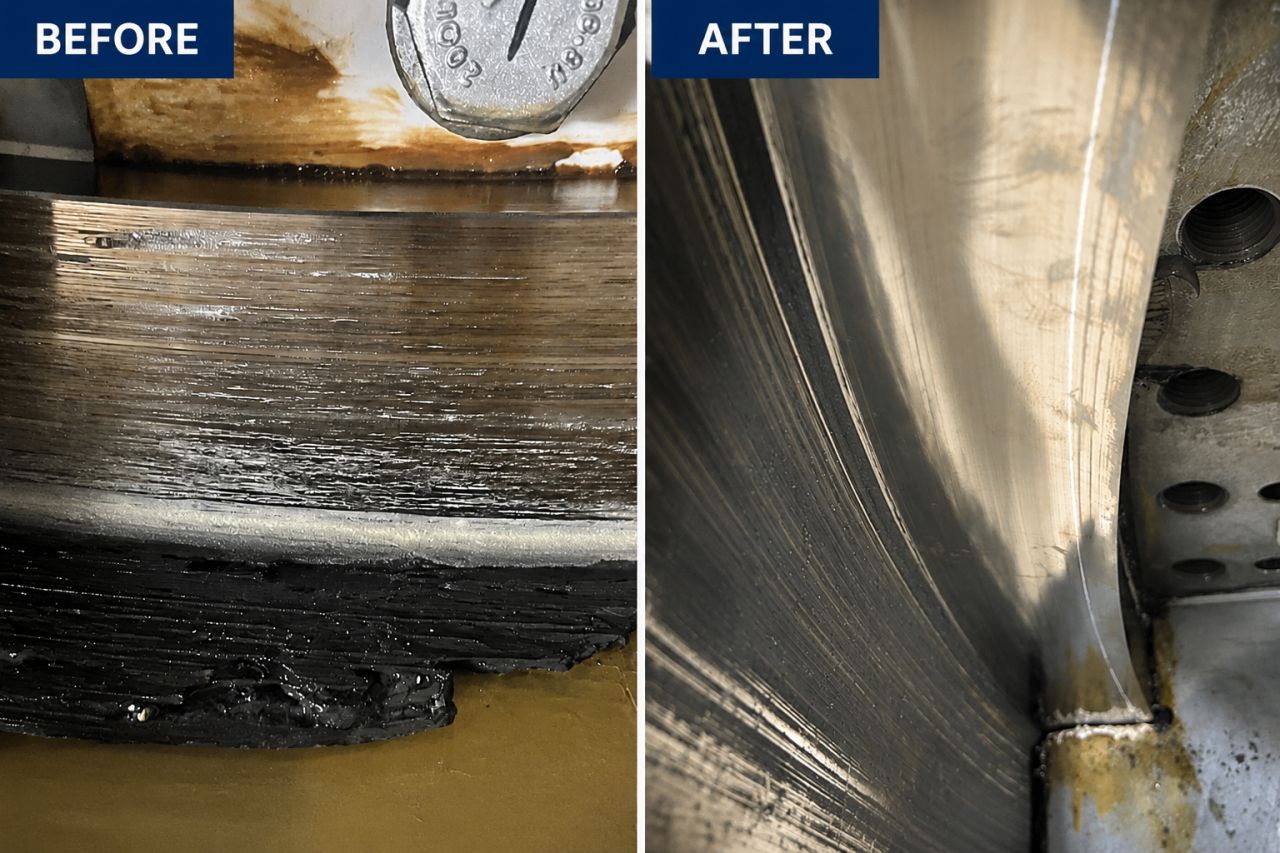
When a yaw bearing sliding surface is worn, most operators assume replacement is the only sensible option. Often, it isn't. Replacing the component is a proven solution. But it's also by far the most extensive and expensive one. It often means: → Heavy logistics → Crane mobilisation → Large service crews → Long lead times → Extended turbine downtime In many cases, the damage is limited to the sliding surface itself. Instead of replacing major components, the sliding surface can be restored through precision on-site machining, the worn parts (such as spring packs or brake pads, depending on the turbine platform) can be replaced, followed by routine maintenance. The goal isn't simply to get the turbine running again. It's to eliminate the root cause of the wear and restore the component for continued operation. One recent refurbishment of ours was completed in 4 days. The total cost was less than 10% of a replacement, while avoiding cranes, heavy transport and months of planning. Replacement will always have its place. But before replacing major components, it's worth asking one simple question: Is replacement actually necessary? Sometimes, refurbishment is the better answer.
- LINKEDIN · IMAGESince 9 Jun 2026
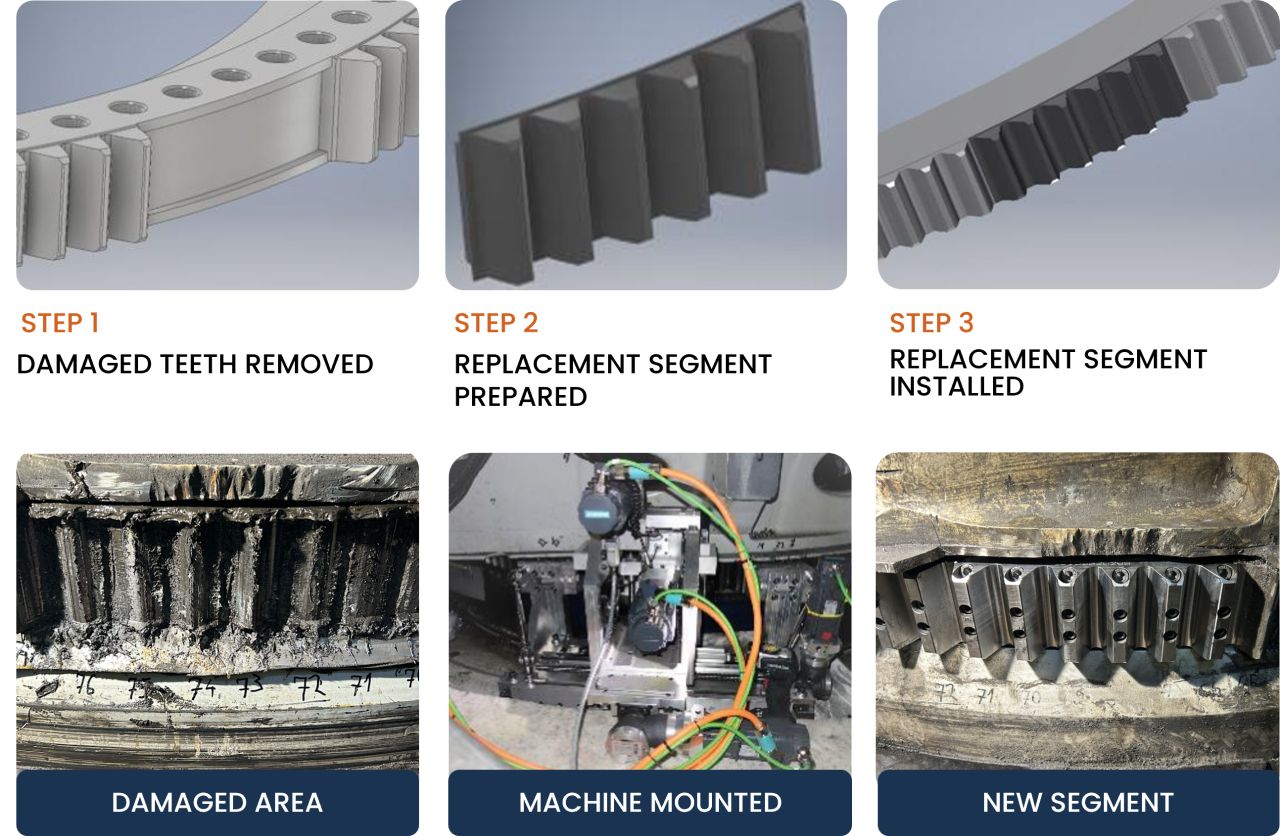
A wind turbine can be offline for weeks or even months because a few yaw ring teeth are damaged. Not because the turbine is beyond repair. Simply because the replacing the entire component has traditionally been the default solution - especially in hot, dry regions where welding is highly risky. Setting aside the risks and complexity involved in disassembling major turbine components, the replacement path itself comes with a hefty price tag and timeline most operators know too well: → Crane costs alone: $90-$150K → Lost production at $2-$4K/day for a 3-4 MW turbine → Typical downtime: 8 to 12 weeks And that's assuming crane access is straightforward. For nearly 10 years, we've been helping our customers take a different approach. Instead of replacing the entire yaw ring, we machine out the damaged teeth and install replacement segments directly inside the nacelle. These segments are the result of extensive engineering and are designed to match or exceed the design life of the original teeth. ✓ No crane mobilisation ✓ No nacelle removal ✓ No hot work The result is typically a repair completed in around 5-7 days rather than months of downtime associated with major component replacement. If your fleet has yaw ring tooth damage and the default answer has been "replace it", it may be worth reconsidering the options next time. Happy to walk through the numbers. Reach out to me at [email protected] or connect here on LinkedIn.
- LINKEDIN · IMAGESince 16 Apr 2026
Madrid is already next week - WindEurope Annual is one I always look forward to 😊 . We came back from ACP OM&S in Orlando with a sense that the US market is genuinely ready for "new" solutions. Not the usual "interesting, send me a brochure." Operators who've been doing crane-dependent maintenance for years, looking at what on-site CNC machining actually costs and delivers - and deciding they want to know more. Madrid is different. European operators generally know us, or know of us. The conversation here is often further along. Less about explaining what we do, more about where it fits in a specific maintenance program. That's a conversation I find genuinely energising. The wind fleet across Europe is aging. Spare parts for older models are harder to source. The old playbook - crane, nacelle removal, factory repair or replacement - is increasingly expensive and sometimes not viable at all. We repair in place: yaw ring teeth, yaw ring sliding surfaces, rotor locks, shafts, bolts & threads and much more. All Up-tower, no cranes, no hot work. If you'll be at WindEurope Annual April 21-23, let's meet and have a proper conversation. I'm looking forward to it.

6 of 29 adsSign up to see every CNC Onsite A/S ad, filter by format and date, and get alerts on new ones.
See all 29 adsWatch the companies you care about.
Filter every ad by industry, country, format and network, and get alerts when a company you watch starts running new ads.