On air · 1 of 3 networks
Borouge International Europe
- borougeinternational.com
- Industry & Manufacturing
- AT
- 3,472 employees
Borouge International Europe’s ads on LinkedIn, Meta and Google, recorded by adsrunning. Browse the latest here for free. Sign up free to see all 215. Watch Borouge International Europe with Starter to get each new one in your feed.
Watchlist with Starter · $49/mo
| Network | Status | Live ads | Nov 2025LinkedIn activity · 52 weeksOct 2026 | Checked | Next step |
|---|---|---|---|---|---|
| Running | 13 | Checked 28 Oct 2026 | See all 215 ads → | ||
| Meta | None recorded | 0 | No active ads recorded on the Meta Ad Library | Checked 18 Oct 2026 | Collect them with the API → |
| Recently | 50 | Ads on the Google Ads Transparency Center | Checked 14 Oct 2026 | Collect them with the API → |
Borouge International Europe has 13 live LinkedIn ads. Its Facebook page had no active ads on 18 Oct 2026, and we recorded 50 Google ads on 14 Oct 2026.
Latest ads
- LINKEDIN · IMAGESince 19 Oct 2026
Join our webinar to discover how reliable materials, regulatory expertise, and secure supply chains can help reduce risk and support long-term success. 📅 5 November 2026 🕑 2:00-3:00 p.m. CET
- LINKEDIN · IMAGESince 17 Sept 2026
Discover Bormed™ at CPHI 2026 in Milan. Meet Borouge International, a global partner in healthcare polyolefins, powered by service excellence, unwavering commitment, and proven conformance. Secure your meeting with our experts: https://lnkd.in/gfuu_2ag
- LINKEDIN · IMAGESince 17 Sept 2026
🚀 Heading to Fakuma 2026? Meet Borouge International and discover our essential materials advancing the world. Bringing together the strengths of Borealis, Borouge, and NOVA Chemicals, with expanded circular capabilities through Rialti, we're creating new possibilities for innovation, performance, and circularity. 📍 Borouge International | Stand A4-4222 | Hall A4 👉 Book a meeting with us and get a free entry ticket: https://lnkd.in/eAb4yRan
- LINKEDIN · IMAGESince 16 Sept 2026
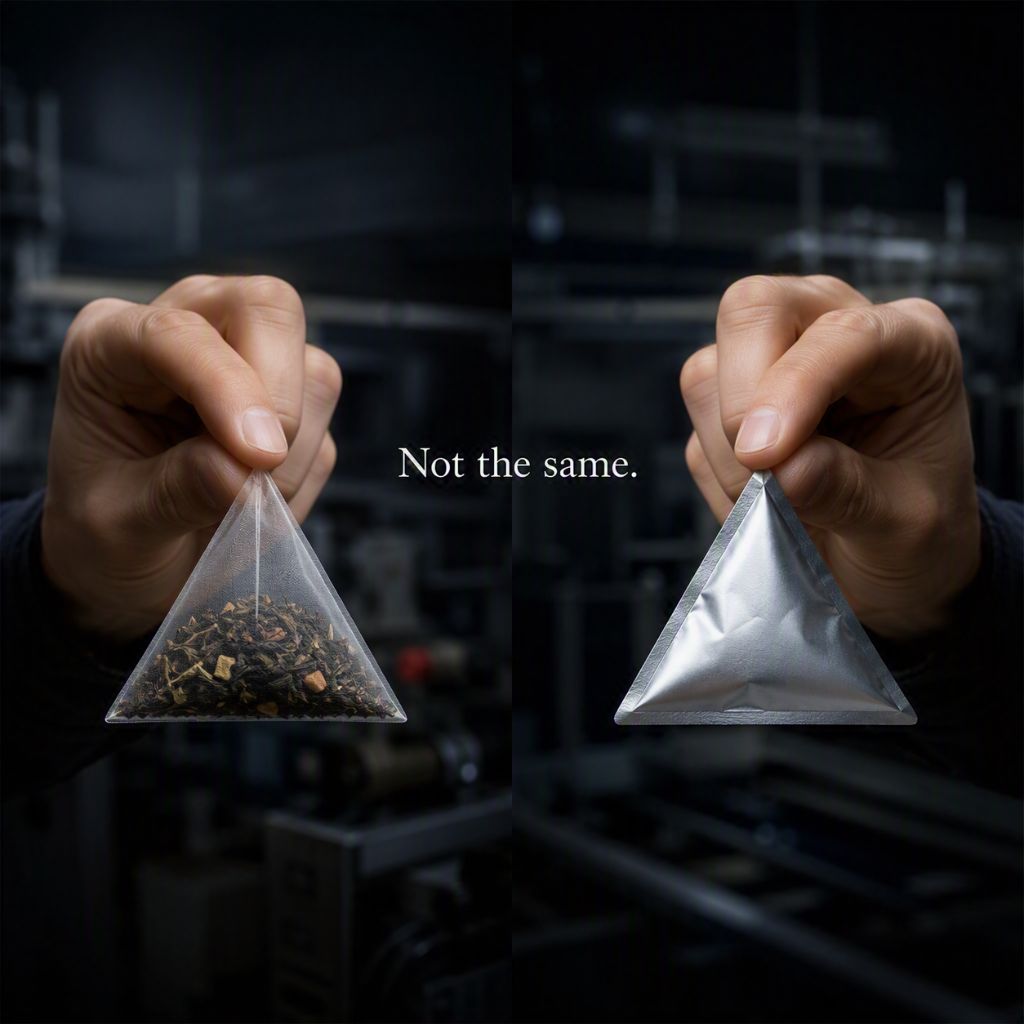
A few weeks ago, I wrote that packaging is one of the hidden heroes of battery technology. The reaction I get most often when talking about pouch cell laminates is a puzzled look. I remember proudly showing one of the first test laminates from our development work to a friend. She looked at it, laughed, and asked: "So... why exactly are you so excited about this piece of aluminum foil?" Fair question. Sometimes pouch cell laminates are jokingly referred to as "tea bags for batteries". From the outside, they don't look particularly impressive. Compared to discussions about lithium, silicon, solid-state batteries, or fast charging, battery packaging rarely gets much attention. Yet an enormous amount of engineering goes into it. A typical laminate combines polymer layers such as PET or nylon, an aluminum foil barrier, adhesive systems, and an inner sealing layer, often based on polypropylene. Each material serves a different purpose. One provides mechanical robustness, another acts as a barrier against moisture and gases, another creates the seal, while the adhesive system keeps very different materials working together throughout the battery's life. Every layer has its own community of experts behind it. Film producers, adhesive specialists, foil manufacturers, polymer suppliers, and battery engineers all approach the laminate from different perspectives. Yet customers never evaluate those layers separately. The only thing that matters is whether the laminate works as intended. That is what makes battery packaging such an interesting engineering challenge. Success is not determined by an individual material, but by how all layers perform together under years of mechanical stress, temperature fluctuations, electrolyte exposure, charging cycles, and manufacturing demands. The challenge becomes even greater because the laminate is designed not only for the battery itself, but also for the way that battery is manufactured. Processing conditions, equipment, and manufacturing requirements can all influence what the optimal solution looks like. This is why one-size-fits-all approaches rarely work. What makes sense for one cell design or production process may not make sense for another. A thinner structure may maximize the amount of active material within the cell, while a thicker one may offer advantages in mechanical robustness or long-term reliability. One manufacturer may prioritize lower sealing temperatures; another may focus on deep-drawing performance, process robustness, or cycle life. Ultimately, the goal is not to find a universal solution. It is to find the right balance between performance, manufacturability, lifetime, weight, cost, and reliability for a specific application. In the end, the question is not whether a laminate is good or bad. The question is whether it is the right fit for the purpose it is designed to serve. P.S.: Visual generated with AI #BatteryIndustry #BatteryPackaging #PouchCells #Electrification
- LINKEDIN · IMAGESince 4 Sept 2026
If I showed a battery cell to most people and asked what makes it work, the answers would probably involve chemistry. Lithium. Nickel. Cobalt. Silicon. Very few people would consider packaging and format as critical. And yet, packaging plays a surprisingly important role in battery performance and differentiation. Its job goes far beyond simply containing the cell. A battery package needs to provide protection from moisture and oxygen, mechanical stability, sealing integrity, electrical insulation, long-term durability throughout the cell lifetime. Different cell formats solve this challenge in different ways. A cylindrical cell relies on a metal can. A prismatic cell uses a rigid housing. A pouch cell takes a completely different approach with a lightweight flexible laminate structure. Each format comes with advantages and trade-offs: >> Tesla is known for its use of cylindrical cells. They are robust, highly standardized, and benefit from decades of manufacturing know-how. >> Many large battery manufacturers, including CATL and BYD, have built significant parts of their portfolio around prismatic cells, which make very efficient use of space and can reduce the number of cells needed in a battery pack. >> Pouch cells take yet another approach. Their flexible architecture allows battery designers a high degree of freedom when optimizing weight, shape, and energy density. That's one of the reasons why pouch cells are often discussed in the context of next-generation battery concepts, including various solid-state developments. Of course, every advantage comes with its own engineering challenge. The same flexibility that makes pouch cells attractive can also make them more sensitive to swelling and mechanical stresses, placing greater demands on the surrounding materials and packaging design. What I find fascinating is that many discussions around batteries focus on what happens inside the cell. But some of the most interesting engineering challenges happen around it. Because regardless of the chemistry, every cell ultimately depends on something much less visible: a package that protects it, contains it, and keeps working throughout its lifetime. #BatteryIndustry #PouchCells #BatteryEngineering #BatteryMaterials #Electrification PS: Visual generated with AI.
- LINKEDIN · IMAGESince 4 Sept 2026
One thing I find fascinating about batteries is how far they travel before they ever power anything, really. A raw material may be mined on one continent, refined on another, converted into a battery component elsewhere, assembled into a cell in yet another country, and finally integrated into a battery pack thousands of kilometers away. We rarely think about that journey. Yet every handover adds cost, lead time, and complexity. And complexity has a habit of showing up at the worst possible moment. If a shipment spends 40–50 days crossing oceans before it reaches a production site, every forecasting error, disruption, port delay, or geopolitical event becomes amplified. Sustainability is often discussed first. And rightly so: moving materials around the globe has a carbon footprint, and international shipping accounts for a meaningful share of global emissions. Sustainability is a topic close to my heart. But even if we set the environmental argument aside, localizing parts of the supply chain is also a very rational operational discussion. Shorter supply chains mean less inventory, faster feedback loops, quicker problem-solving, and greater visibility. In other words: more control. And in an industry where product quality is measured in microns, milliseconds, and millions of units, control matters. The obvious counterargument is cost. Global supply chains exist for a reason. They are often highly efficient and highly competitive. But that raises a question I find increasingly interesting: What is the value of resilience? What is the value of reducing a 40–50 day supply chain to a few days? What is the value of reacting quickly when demand changes? What is the value of knowing that critical materials, components, or processes remain accessible when trade conditions or geopolitical priorities shift? These benefits rarely show up clearly on a purchase order. Yet they become very visible when a shipment is delayed, an export restriction is introduced, or a dependency becomes a source of leverage. We have seen several reminders of this in recent years. Whether it is shipping disruptions, trade tensions, sanctions, export restrictions, or the uncertainty surrounding critical transport routes, events taking place thousands of kilometres away can quickly find their way into industrial supply chains, inventories, and ultimately production schedules. Global supply chains have enabled remarkable growth, specialization, and innovation across industries. The challenge is understanding the full picture when making sourcing decisions. Cost will always matter. But so do lead times, inventory levels, responsiveness, visibility, and the ability to adapt. The question is not whether global or local supply chains are better. Most industries will continue to rely on a mix of both. The real question is how to design supply chains that combine competitiveness with resilience. Because flexibility rarely looks valuable - until the day it becomes essential.





6 of 215 adsSign up to see every Borouge International Europe ad, filter by format and date, and get alerts on new ones.
See all 215 adsWatch the companies you care about.
Filter every ad by industry, country, format and network, and get alerts when a company you watch starts running new ads.