On air · 1 of 3 networks
Bonfy.AI, a Kiteworks company
- bonfy.ai
- Cybersecurity
- US
- 21 employees
Bonfy.AI, a Kiteworks company’s ads on LinkedIn, Meta and Google, recorded by adsrunning. Browse the latest here for free. Sign up free to see all 21. Watch Bonfy.AI, a Kiteworks company with Starter to get each new one in your feed.
Watchlist with Starter · $49/mo
| Network | Status | Live ads | Nov 2025LinkedIn activity · 52 weeksOct 2026 | Checked | Next step |
|---|---|---|---|---|---|
| Running | 21 | Checked 30 Oct 2026 | See all 21 ads → | ||
| Meta | Not checked | — | |||
| Recently | 7 | Ads on the Google Ads Transparency Center | Checked 13 Oct 2026 | Collect them with the API → |
Bonfy.AI, a Kiteworks company has 21 live LinkedIn ads. We recorded 7 Google ads on 13 Oct 2026.
Latest ads
- LINKEDIN · IMAGERecorded 11 Sept 2026
We analyze your content, GenAI-generated and human-created, to prevent risks and data loss related to cybersecurity, privacy, regulatory compliance, IP protection, business liabilities, and reputational exposures.
- LINKEDIN · IMAGERecorded 11 Sept 2026
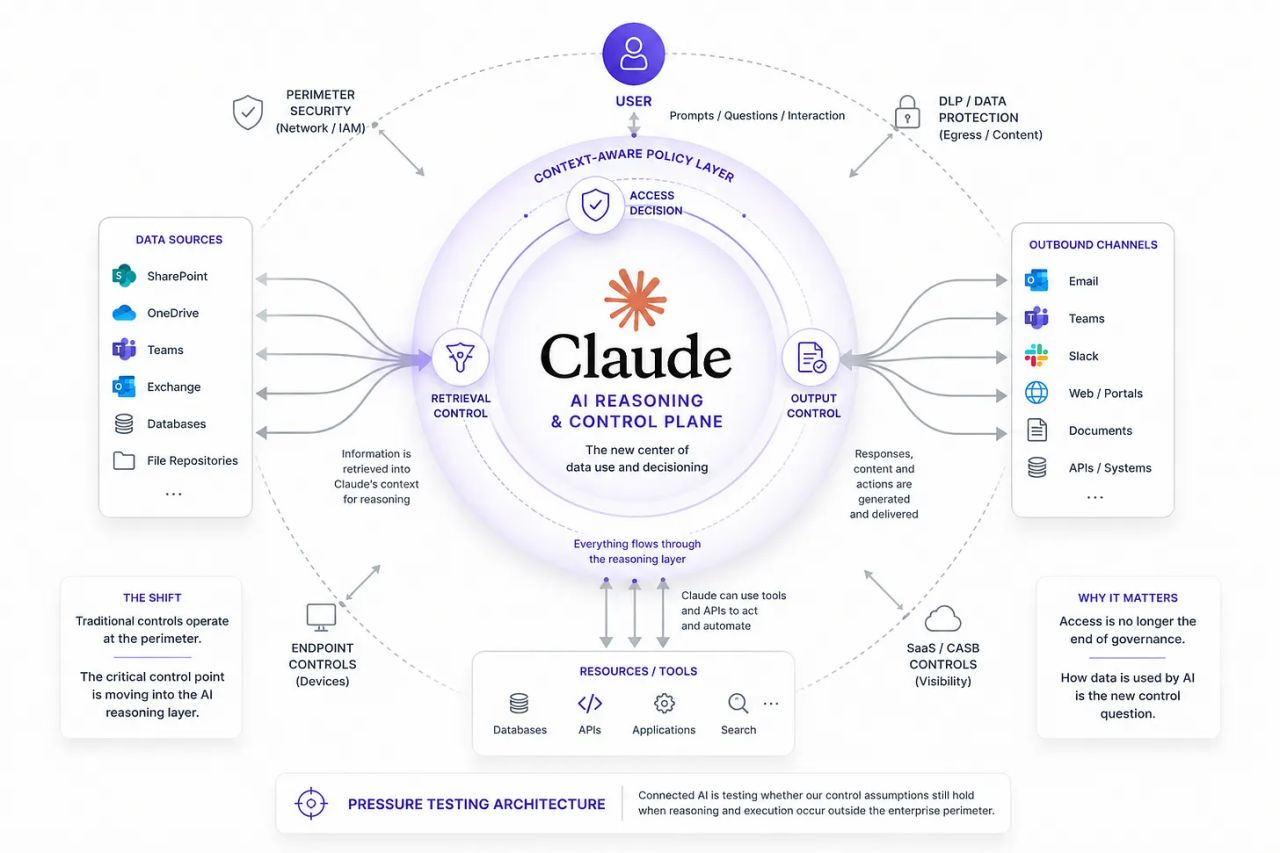
Claude isn’t just testing your AI policy. It’s pressure‑testing your entire data security architecture. Most boardroom conversations about AI risk still orbit the model: prompt leakage, misuse, hallucinations, and guardrails around the application itself. Important — but incomplete. Connected AI systems like Claude Enterprise expose a deeper break: the execution point for sensitive data is moving out of the places your controls were designed to watch. When Claude connects to Microsoft 365, a single user interaction can pull documents from repositories, build transient working context, reason over it inside Claude’s environment, store pieces in shared memory, and synthesize output — all before the user sees a response. The enterprise still owns the data, but no longer fully owns the execution path through which that data is used. In that world, the central question changes. It’s no longer just “Can this user access the document?” It becomes “Should this AI system retrieve, combine, and use that document in this workflow, for this purpose?” Permissions stay green, while your true policy decision has quietly shifted to the moment of selection into the reasoning loop. Gidi Cohen’s article “Claude Enterprise Is Pressure Testing Data Security. And That’s a Good Thing.” argues that connected AI is forcing a necessary architectural evolution: a new control layer focused on governing how AI systems are allowed to use data, not merely where that data resides or how it moves. Claude is simply the clearest early example of a pattern that is already emerging across Copilot Studio, ChatGPT Enterprise, and multi‑agent systems. If your AI strategy assumes existing controls can simply be “extended” to cover connected agents, this piece is the reality check — and roadmap — you need. Read the full Substack and the broader “Data Security for AI Agents: The Missing Dimension” series to see how Bonfy.AI is building that next control layer at the reasoning boundary. Link in comments. #AgenticAI #AISecurity #DataSecurity #ConnectedAI #EnterpriseAI #AIGovernance #CISO #SecurityArchitecture #ReasoningBoundary #BonfyAI
- LINKEDIN · IMAGERecorded 11 Sept 2026
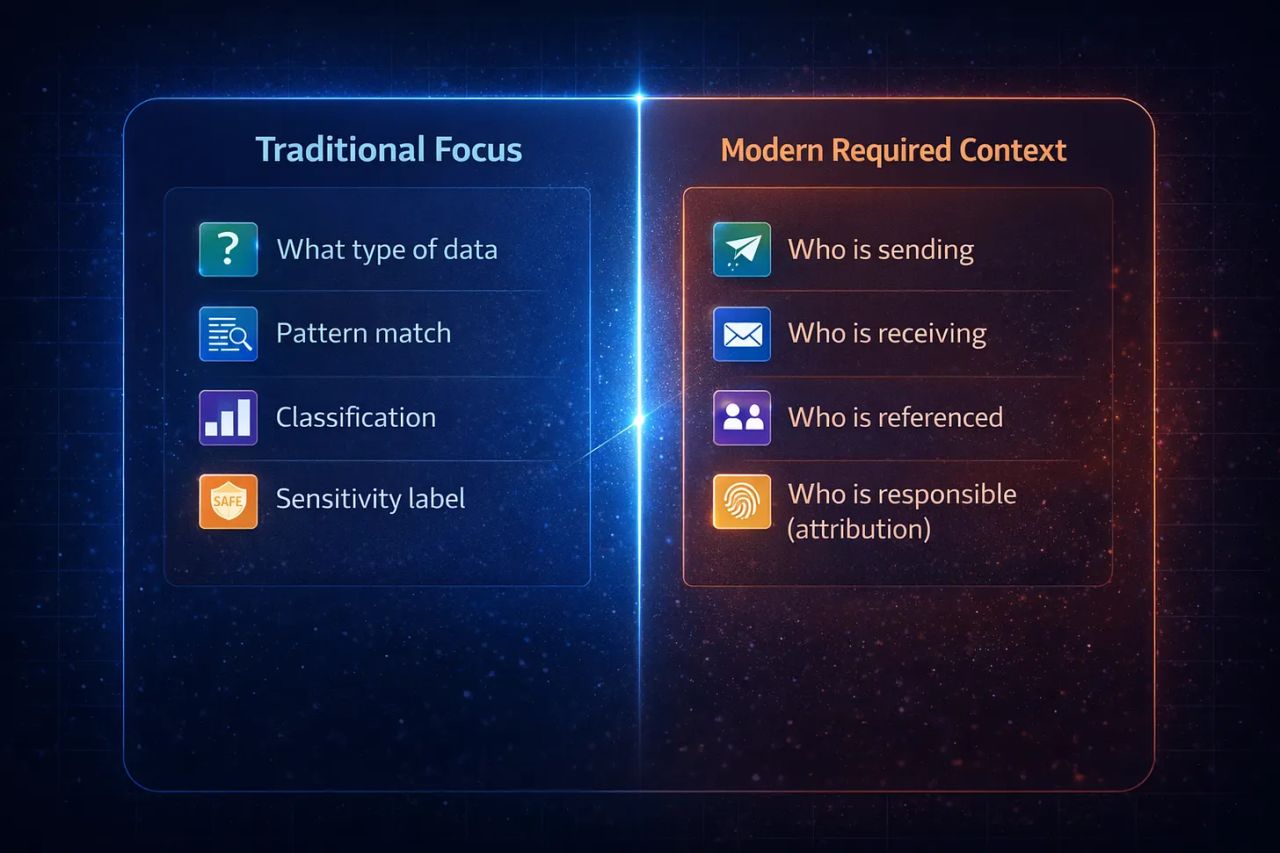
Your DLP may know what your data is. It still has no idea who it belongs to. For years, data security was built around one question: “Is this PII, PHI, PCI, confidential?” Pattern matching, regex, and classification engines answered the what and gave us a sense of control. But regulations were never written around patterns. They were written around people — data subjects, customers, patients, account holders — and the obligations attached to their data. In AI‑driven environments, that mismatch is now a structural problem. You can have the right sender, the right classification, and still create a reportable incident simply by sending the right data to the wrong customer — or by letting a copilot mix entities across accounts in a single response. Traditional controls rarely reason simultaneously about the sender, the receiver, and the entities referenced in the content, which is exactly where modern risk now lives. Gidi Cohen’s Substack article “The Who: The Missing Dimension in Modern Data Security” explains why the future of data security — especially for AI agents and copilots — depends on entity- and attribution-aware controls that understand who is involved in every interaction, not just what the payload looks like. He shows how this shift reduces false positives, exposes blind spots in false negatives, and lowers friction for legitimate workflows by aligning enforcement with actual business relationships. If your AI governance strategy doesn’t explicitly model the who across agent workflows, SaaS, and collaboration tools, you’re governing patterns, not people. Check out the article to find out how to operationalize the who inside agent reasoning loops — closing the gap between regulatory intent and real‑world AI behavior. Link in comments. #AIDataSecurity #EntityAwareSecurity #AIGovernance #DataAttribution #ModernDLP #AICompliance #SecurityInnovation
- LINKEDIN · IMAGERecorded 11 Sept 2026
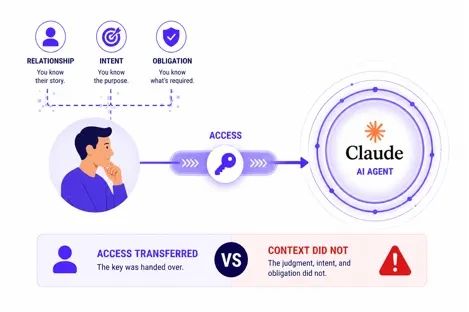
Your AI agents already have more access than your best account manager ever did. What they don’t have is judgment. For twenty years, enterprise data security quietly depended on an unwritten assumption: a human would sit in the decision loop. A human decided which customer details belonged in an email, which records were appropriate for a report, and which accounts should never appear in the same context. Agentic AI breaks that assumption. When you deploy Copilot, Claude, or custom agents on top of MCP servers and APIs, you transfer access wholesale: the agent can reach the same repositories, query the same databases, and assemble context from the same sources — at machine speed. What does not transfer is judgment: the understanding of relationships, obligations, and business context that determines whether using that data is appropriate in this specific interaction. Most security stacks are still trying to fix this by logging traffic — prompts, tool calls, retrieval events. That gives you visibility into what moved, not whether the movement made business sense. The result is a widening governance gap: agents make retrieval decisions, not business decisions, and no current control layer is encoding the judgment humans used to provide naturally. In a Substack article, Gidi Cohen (our CEO & Co‑Founder) explains why “AI agents inherited your data, not your judgment,” and why the enforcement layer now has to live at the data boundary inside the reasoning loop — not just on the network or the endpoint. If you’re responsible for AI governance, this is the missing dimension in your current architecture. Link to the full article is in the comments. #AISecurity #DataSecurity #AIStrategy #AIAgents #DLP #MCP
- LINKEDIN · IMAGERecorded 11 Sept 2026
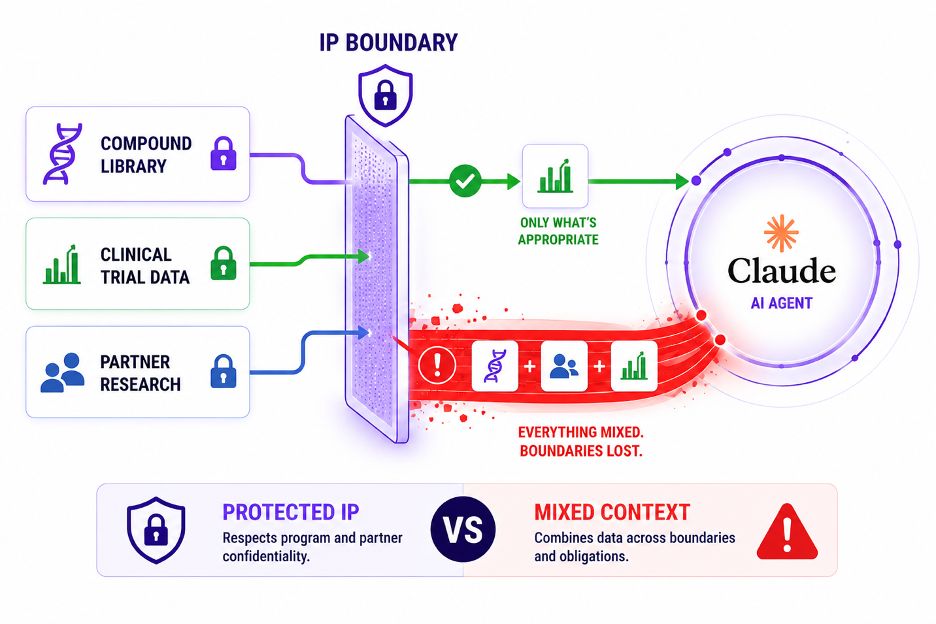
In biotech and pharma, the worst AI incident of the year will probably never be classified as a breach. A data breach has a clear anatomy: unauthorized access, a disclosure notification, a remediation timeline. Trade secret loss in a research organization looks nothing like that. It looks like a scientist using Copilot or a custom AI agent to speed up a literature review, pulling from internal compound databases alongside public sources, with no way for the agent to know which structures are pre-patent, which are bound by a confidential disclosure agreement, or which sit inside an exclusivity deal. The agent retrieves what it can reach and assembles what the prompt asks for. Nothing about that looks like an incident. It may already be one. Financial services operationalized judgment through regulatory frameworks. Healthcare built it into HIPAA's minimum necessary standard. Biotech and pharma never had that luxury. The judgment that kept pre-patent compounds separate from public research, and kept one partner's term sheet from bleeding into another program's analysis, lived in the experience of research directors who knew the relationships behind the data. AI agents inherit the file permissions. They don't inherit the context that made those permissions meaningful. Access control was never built to answer the question that matters here: not who can open a file, but whether the obligations attached to it survive being retrieved and reasoned over by a system with no concept of whose IP it's holding. The full piece is in the comments. For anyone in life sciences security, where is that judgment actually living in your organization today? #AISecurity #DataSecurity #AIGovernance #Biotech #PharmaSecurity #IPProtection #TradeSecrets #ClaudeAI
- LINKEDIN · IMAGERecorded 11 Sept 2026
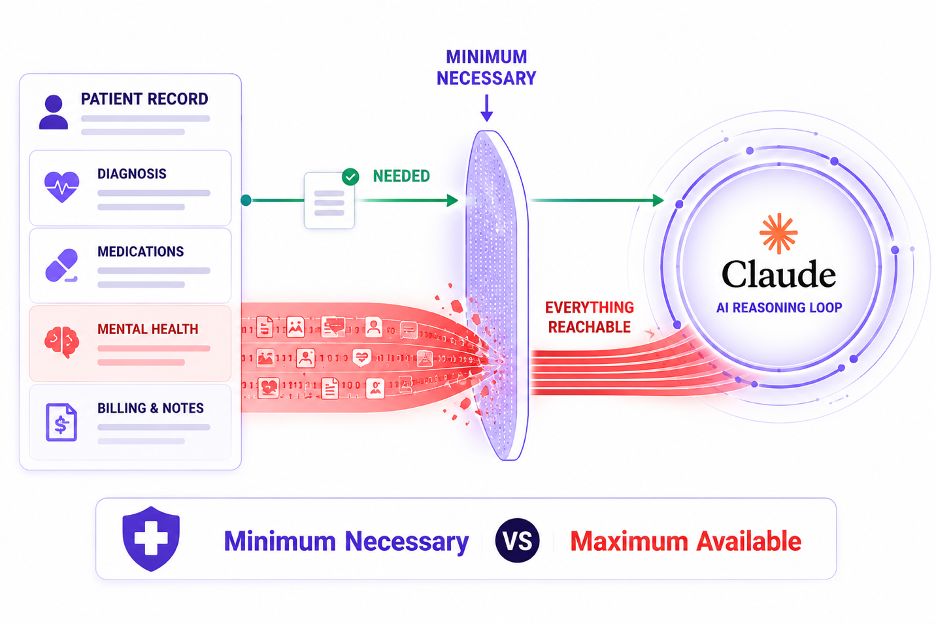
Healthcare has had a compliance requirement for thirty years that AI agents violate by default. It's called the minimum necessary standard, and every Copilot deployment touching patient records is testing it right now. The minimum necessary standard is one of HIPAA's foundational Privacy Rule requirements. It demands that access to protected health information be limited to exactly what the specific task requires. Not what the system can reach. Not what permissions allow. What the task requires. Every covered entity and business associate in the United States is bound by it. The problem is that standard was written for a world where a human being made every access decision. The physician reviewing a record. The billing specialist pulling a chart. A person who understood the patient relationship, the purpose of the request, and the regulatory obligation attached to it. That judgment was never codified in a label or a permission entry. It lived in the person doing the work. When a health system deploys Copilot across administrative workflows or an AI agent across revenue cycle operations, that person steps back. The agent has the access. It does not have the judgment. And the most dangerous failure mode isn't an unauthorized party reaching patient records. It's an authorized agent surfacing psychiatric history in a billing workflow, or pulling a complete episode record when a single encounter note was the only appropriate scope. No unauthorized access occurs. The minimum necessary standard is violated anyway. In January 2025, HHS published a proposed major update to the HIPAA Security Rule — the first of its kind in roughly two decades — signaling that AI systems operating across clinical and administrative workflows are squarely inside the compliance framework, not a future consideration. The full piece is in the comments. Curious whether compliance teams at the health systems you work with have confronted this distinction yet. #AISecurity #DataSecurity #HIPAA #HealthcareAI #AIGovernance #CISO #DataProtection #Cybersecurity #AIRisk
6 of 21 adsSign up to see every Bonfy.AI, a Kiteworks company ad, filter by format and date, and get alerts on new ones.
See all 21 adsWatch the companies you care about.
Filter every ad by industry, country, format and network, and get alerts when a company you watch starts running new ads.