On air · 1 of 3 networks
Biosensors MDPI
- mdpi.com
- Media, Events & Publishing
- CH
- 20 employees
Biosensors MDPI’s ads on LinkedIn, Meta and Google, recorded by adsrunning. Browse the latest here for free. Sign up free to see all 123. Watch Biosensors MDPI with Starter to get each new one in your feed.
Watchlist with Starter · $49/mo
| Network | Status | Live ads | Nov 2025LinkedIn activity · 52 weeksOct 2026 | Checked | Next step |
|---|---|---|---|---|---|
| None recorded | 0 | Checked 30 Oct 2026 | See all 123 ads → | ||
| Meta | None recorded | 0 | No active ads recorded on the Meta Ad Library | Checked 18 Oct 2026 | Collect them with the API → |
| Running | 53 | Ads on the Google Ads Transparency Center | Checked 29 Oct 2026 | Collect them with the API → |
Biosensors MDPI has no live LinkedIn ads. Its Facebook page had no active ads on 18 Oct 2026, and we recorded 53 Google ads on 29 Oct 2026.
Latest ads
- LINKEDIN · IMAGESince 20 Oct 2026
📣Call for Reading: #EditorChoice #Review #Electronic #Nose as a Novel Method for #Diagnosing #Cancer: A Systematic Review By Tonacci, A. et al. https://shorturl.at/BwS2S #Abstract Cancer is fast becoming the most important cause of death worldwide, its mortality being mostly caused by late or wrong diagnosis. Novel strategies have been developed to identify early signs of cancer in a minimally obtrusive way, including the Electronic Nose (E-Nose) technology, user-friendly, cost- and time-saving alternative to classical approaches. This systematic review, conducted under the PRISMA guidelines, identified 60 articles directly dealing with the E-Nose application in cancer research published up to 31 January 2020. Among these works, the vast majority reported successful E-Nose use for diagnosing Lung Cancer, showing promising results especially when employing the Aeonose tool, discriminating subjects with Lung Cancer from controls in more than 80% of individuals, in most studies. In order to tailor the main limitations of the proposed approach, including the application of the protocol to advanced stage of cancer, sample heterogeneity and massive confounders, future studies should be conducted on early stage patients, and on larger cohorts, as to better characterize the specific breathprint associated with the various subtypes of cancer. This would ultimately lead to a better and faster diagnosis and to earlier treatment, possibly reducing the burden associated to such conditions. #MDPI Università di Pisa CNR-IFC, National Research Council Institute of Clinical Physiology #Biosensor #OpenAccess #Biosensing #ArtificialOlfaction #Cancer #ElectronicNose #Health #Sensors
- LINKEDIN · IMAGESince 12 Oct 2026
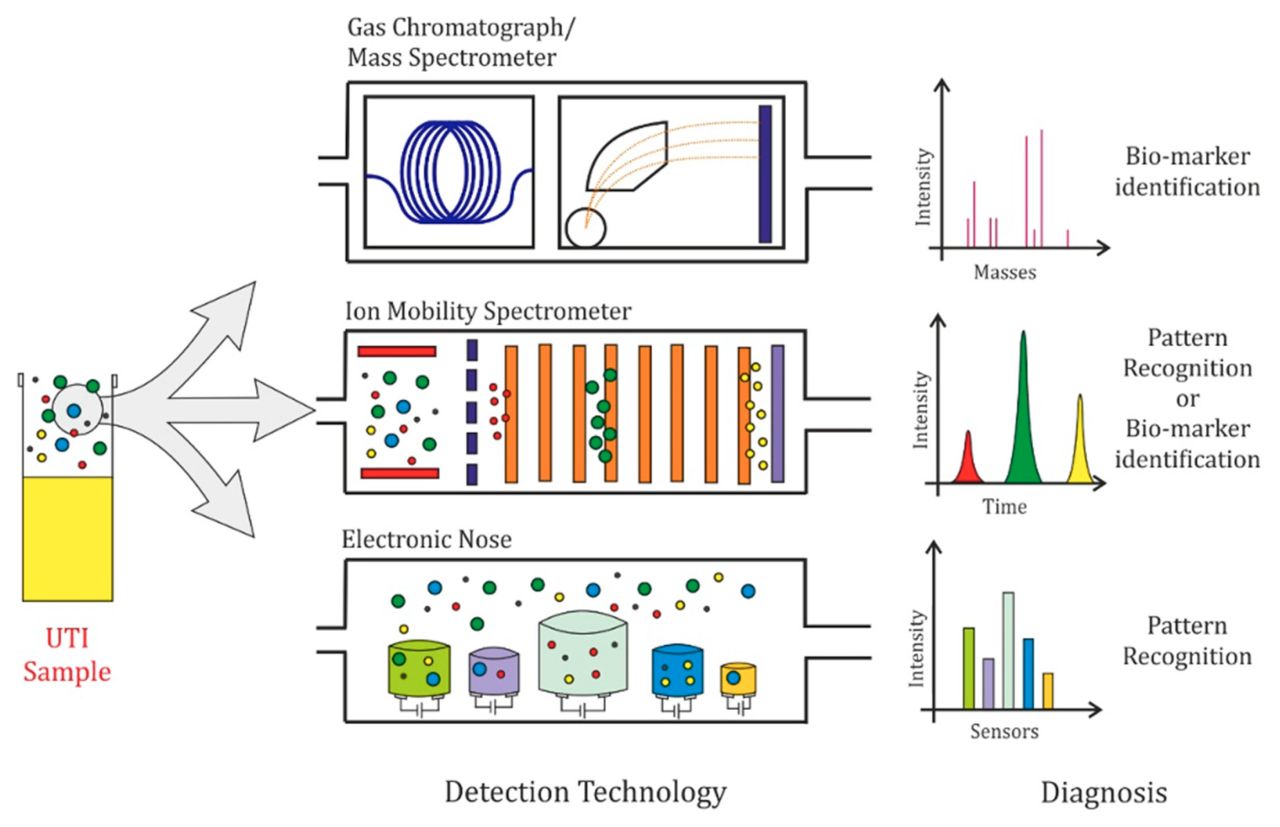
📣Call for Reading: #EditorChoice #Review Sniffing Out #Urinary Tract Infection—#Diagnosis Based on #Volatile #Organic #Compounds and #Smell #Profile By Covington, J. A. et al. https://shorturl.at/JGJw4 #Abstract Current available methods for the clinical diagnosis of urinary tract infection (UTI) rely on a urine dipstick test or culturing of pathogens. The dipstick test is rapid (available in 1–2 min), but has a low positive predictive value, while culturing is time-consuming and delays diagnosis (24–72 h between sample collection and pathogen identification). Due to this delay, broad-spectrum antibiotics are often prescribed immediately. The over-prescription of antibiotics should be limited, in order to prevent the development of antimicrobial resistance. As a result, there is a growing need for alternative diagnostic tools. This paper reviews applications of chemical-analysis instruments, such as gas chromatography–mass spectrometry (GC-MS), selected ion flow tube mass spectrometry (SIFT-MS), ion mobility spectrometry (IMS), field asymmetric ion mobility spectrometry (FAIMS) and electronic noses (eNoses) used for the diagnosis of UTI. These methods analyse volatile organic compounds (VOCs) that emanate from the headspace of collected urine samples to identify the bacterial pathogen and even determine the causative agent’s resistance to different antibiotics. There is great potential for these technologies to gain wide-spread and routine use in clinical settings, since the analysis can be automated, and test results can be available within minutes after sample collection. This could significantly reduce the necessity to prescribe broad-spectrum antibiotics and allow the faster and more effective use of narrow-spectrum antibiotics. #MDPI University of Warwick #Biosensor #OpenAccess #Biosensing #Urinary #TractInfection #ElectronicNose #VolatileOrganicCompounds #IonMobility #Spectrometry #GasChromatography #MassSpectrometry #PatternRecognition #Metabolite #Detection
- LINKEDIN · IMAGESince 12 Oct 2026
⏰ ONE MONTH UNTIL THE ABSTRACT SUBMISSION DEADLINE! 🔬🧬 Have you prepared your latest research in biosensors and related technologies? Now is the time to share it with an international scientific community! The 6th International Electronic Conference on Biosensors (IECB 2027) will be held online from 17–19 March 2027, bringing together researchers, scientists, and professionals to exchange the latest advances and explore future directions in biosensor science and technology. 🔬 Key Topics Include: 🔹 AI and Machine Learning in Biosensors 🔹 Wearable, Implantable, and Portable Biosensors 🔹 Micro-Technologies in Biosensors 🔹 Advances in Biological Recognition Elements 🔹 Nanobiosensors, Nanomaterials & Nanoanalytical Systems 🔹 Optical and Photonic Biosensors 🔹 Point-of-Care Technologies 📌 Important Deadlines: 🔹 Abstract submission deadline: 23 October 2026 🔹 Acceptance notification: 30 November 2026 🔹 Early-bird registration deadline: 17 January 2027 🔹 Registration deadline: 12 March 2027 🚨 Don’t miss your chance to present your research at IECB 2027. Submit your abstract before the deadline! 🌐 Learn more: https://shorturl.at/ps9sd We look forward to welcoming you to IECB 2027! #Biosensors #IECB2027 #Bioreceptors #CallForAbstracts #Nanomaterials #ArtificialIntelligence #OpticalSensors #MDPI
- LINKEDIN · IMAGESince 9 Oct 2026
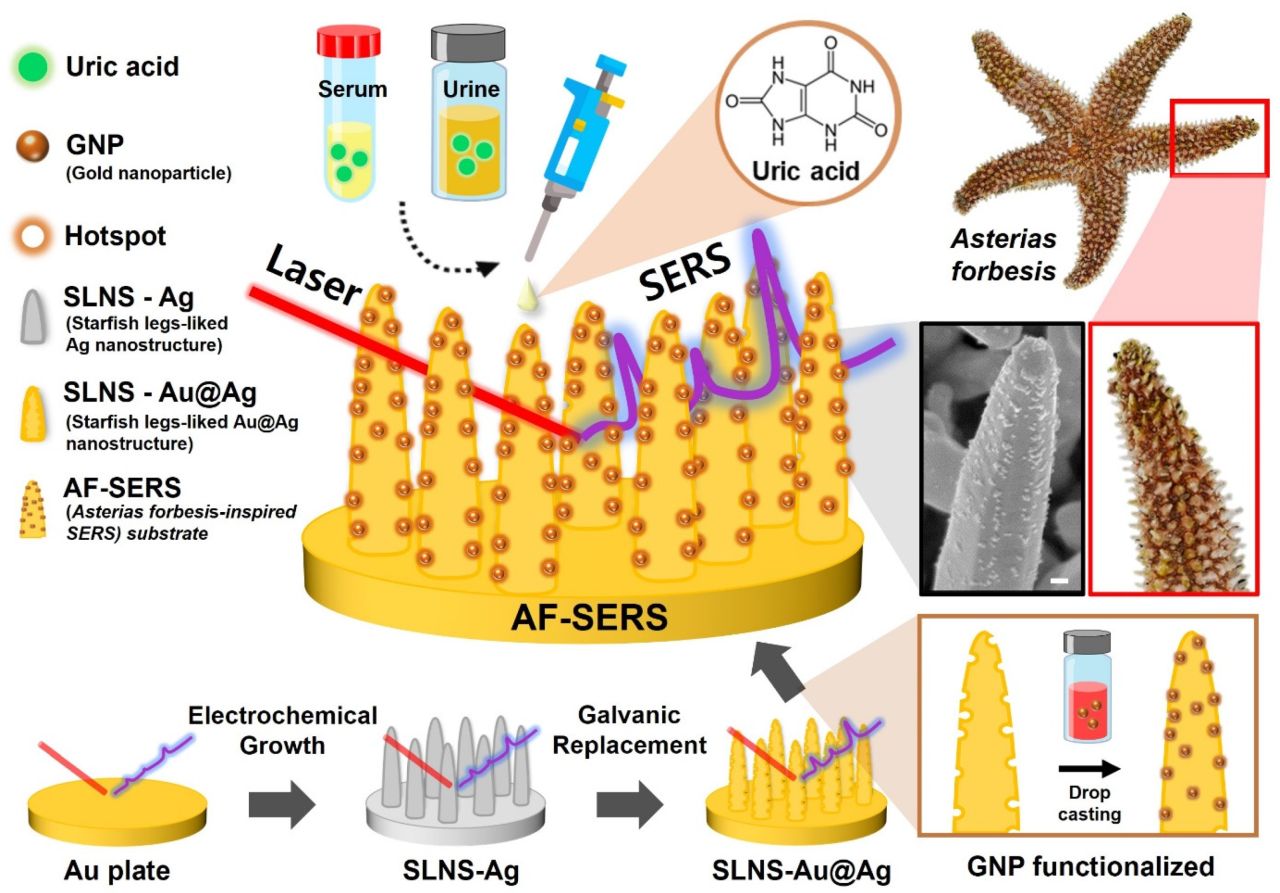
📣Call for Reading: #Article Asterias forbesi-Inspired #SERS Substrates for Wide-Range #Detection of #Uric #Acid By Park, J. et al. https://shorturl.at/UQy7J #Abstract Uric acid (UA), the final metabolite of purine, is primarily excreted through urine to maintain an appropriate concentration in the bloodstream. However, any malfunction in this process can lead to complications due to either deficiency or excess amount of UA. Hence, the development of a sensor platform with a wide-range detection is crucial. To realize this, we fabricated a surface-enhanced Raman spectroscopy (SERS) substrate inspired by a type of starfish with numerous protrusions, Asterias forbesi. The Asterias forbesi-inspired SERS (AF-SERS) substrate utilized an Au@Ag nanostructure and gold nanoparticles to mimic the leg and protrusion morphology of the starfish. This substrate exhibited excellent Raman performance due to numerous hotspots, demonstrating outstanding stability, reproducibility, and repeatability. In laboratory settings, we successfully detected UA down to a concentration of 1.16 nM (limit of detection) and demonstrated selectivity against various metabolites. In the experiments designed for real-world application, the AF-SERS substrate detected a broad range of UA concentrations, covering deficiencies and excesses, in both serum and urine samples. These results underscore the potential of the developed AF-SERS substrate as a practical detection platform for UA in real-world applications. #MDPI Sungkyunkwan University(SKKU) Korea National University of Transportation #Biosensor #OpenAccess #Biosensing #UricAcid #WideRange #Detection #Bioinspired #GoldNanoparticles #SurfaceEnhancedRamanScattering
- LINKEDIN · IMAGESince 9 Oct 2026
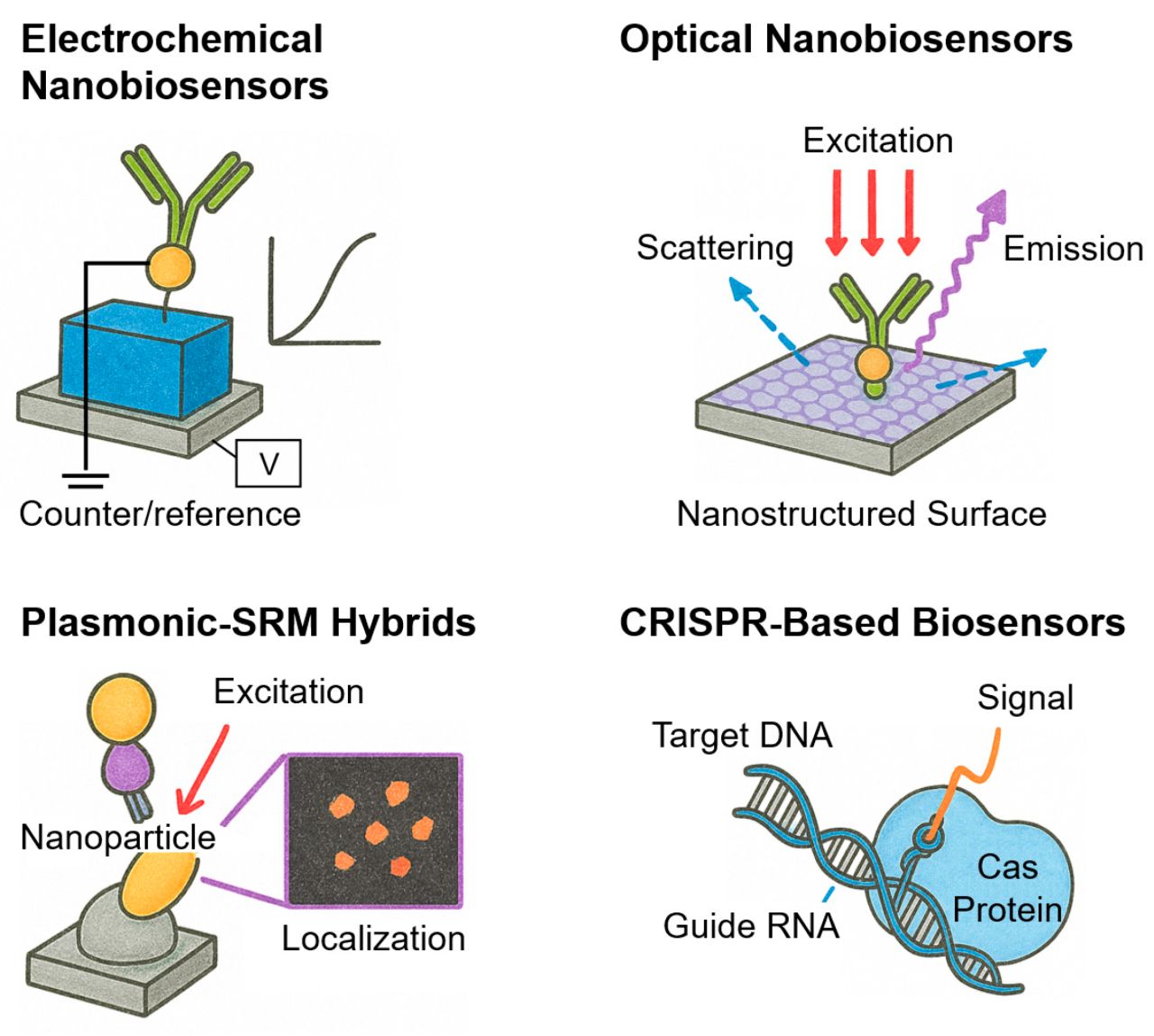
📣Call for Reading: #Review #Nanobiosensors for Single-Molecule #Diagnostics: Toward Integration with Super-Resolution #Imaging By Kang, S. H. et al. https://shorturl.at/EA0xg #Abstract Recent advances in nanotechnology and optical imaging have transformed molecular diagnostics, enabling the detection and analysis of individual biomolecules with unprecedented precision. Nanobiosensors provide ultrasensitive molecular detection, and super-resolution microscopy (SRM) exceeds the diffraction limit of conventional optics to achieve nanometer-scale resolution. Although their integration remains in its infancy, with only a handful of proof-of-concept studies reported, the convergence of nanobiosensors and SRM holds significant promise for next-generation diagnostics. In this review, we first outline nanobiosensor-based single-molecule detection strategies and highlight representative implementations. These include plasmonic–SRM hybrids, electrochemical–optical correlatives, and SRM-enabled immunoassays, with a focus on their applications in oncology, infectious diseases, and neurodegenerative disorders. Then, we discuss emerging studies at the interface of nanobiosensors and SRM, including nanostructure-assisted SRM. Despite not being true biosensing approaches, these studies provide valuable insights into how engineered nanomaterials can improve imaging performance. Finally, we evaluate current challenges, including reproducibility, multiplexing, and clinical translation, and outline future opportunities, such as the development of photostable probes, artificial intelligence-assisted image reconstruction, microfluidic integration, and regulatory strategies. This review highlights the synergistic potential of nanobiosensors and SRM, outlining a roadmap toward clinically translatable next-generation single-molecule diagnostic platforms. #MDPI Kyung Hee University 경희대학교 #Biosensor #OpenAccess #Biosensing #Nanobiosensor #SingleMolecule #Detection #SuperResolution #Microscopy #Diagnostics
- LINKEDIN · IMAGESince 6 Oct 2026
📢Call for Papers We are inviting submissions for a Special Issue titled "Engineering Strategies Towards In Situ Biosensing" in Biosensors, focusing on cutting-edge solutions that bridge the gap between laboratory biosensors and real-world, in situ applications. Our Guest Editors: Dr. Tsz Hung Wong, Prof. Dr. Xingcan Huang, Zhoulyu Rao, Dr. Jiaoli Li Present a platform that is exploring the following topics: 🔹 Functional Material Design & Hydrogel-Based Biointerfaces 🔹 Flexible, Wearable & Implantable Electronics 🔹 Microfluidic Integration & Novel Electrode Architecture 🔹 Advanced Signal Processing for Real Biological Environments Whether you are working on material-, interface-, device-, or system-level solutions, we welcome your Research Articles, Reviews, and Short Communications. 👉 Learn more and submit your work: https://shorturl.at/PXwbl #biosensors #InSituBiosensing #FlexibleElectronics #BiomedicalEngineering #WearableTech #HealthcareInnovation #MDPI #OpenAccess



6 of 123 adsSign up to see every Biosensors MDPI ad, filter by format and date, and get alerts on new ones.
See all 123 adsWatch the companies you care about.
Filter every ad by industry, country, format and network, and get alerts when a company you watch starts running new ads.