On air · 1 of 3 networks
Be Giant
- begiant.ca
- Media, Events & Publishing
- 12 employees
Be Giant’s ads on LinkedIn, Meta and Google, recorded by adsrunning. Browse the latest here for free. Sign up free to see all 226. Watch Be Giant with Starter to get each new one in your feed.
Watchlist with Starter · $49/mo
| Network | Status | Live ads | Nov 2025LinkedIn activity · 52 weeksOct 2026 | Checked | Next step |
|---|---|---|---|---|---|
| Running | 226 | Checked 30 Oct 2026 | See all 226 ads → | ||
| Meta | Not checked | — | |||
| Recently | 37 | Ads on the Google Ads Transparency Center | Checked 9 Oct 2026 | Collect them with the API → |
Be Giant has 226 live LinkedIn ads. We recorded 37 Google ads on 9 Oct 2026.
Latest ads
- LINKEDIN · IMAGERecorded 7 Oct 2026
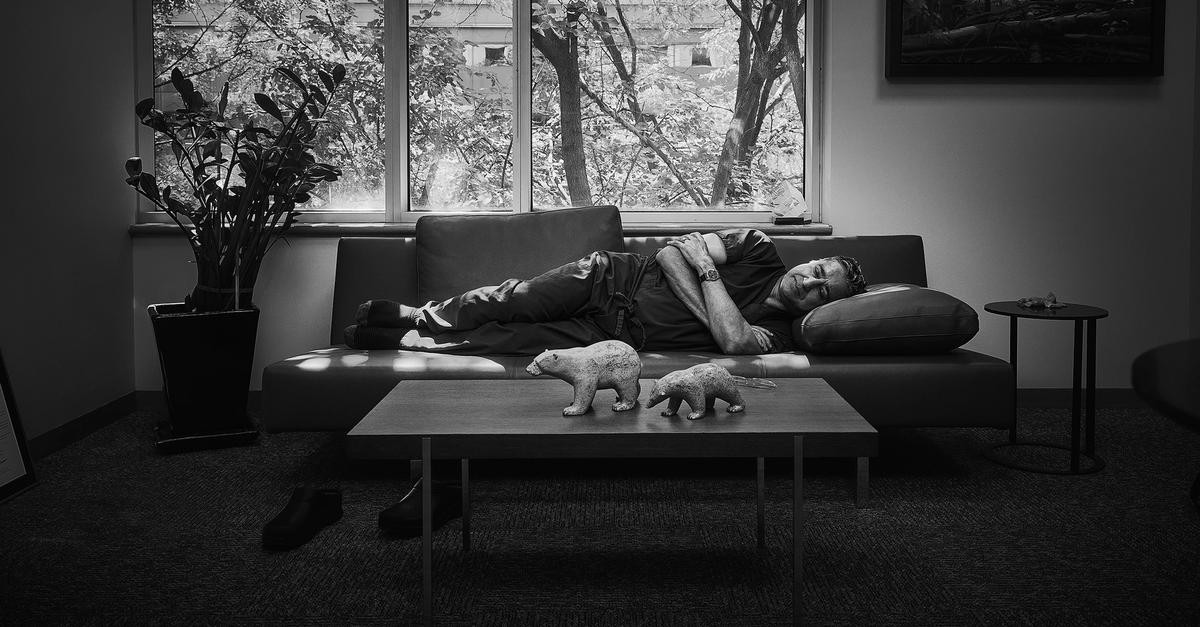
A Toronto company is helping surgeons analyze their work before the patient even wakes up
- LINKEDIN · IMAGERecorded 7 Oct 2026
A Toronto company is helping surgeons analyze their work before the patient even wakes up
- LINKEDIN · IMAGERecorded 7 Oct 2026
For the past 21 years, the team at Dr. Shaf Keshavjee’s state-of-the-art Latner Thoracic Research Laboratories at Toronto’s University Health Network (UHN) has been researching every aspect of lung injury and repair. Their work sounds like the stuff of science fiction. They are working on growing lungs from stem cells; repairing lungs using gene therapy and nanoparticles; turning type-A blood lungs into type-O to make a universal-donor lung; creating digital twins of human lungs for personalized drug development; learning from Arctic bacteria how to protect lungs for transplantation; and using gene-editing technology on human lungs. This team of around 150 scientists, who are based in downtown Toronto, includes specialists in liquids, gene editing, biomedical engineering, nanotechnology and artificial intelligence as well as more traditional areas of biology, chemistry and physics. They are edging ever closer to being able to repair a patient’s own lungs inside their body. If they succeed, people with damaged lungs may one day avoid ever needing a transplant – and if the researchers can figure out how to do this with a lung, chances are the heart, liver, kidney and pancreas will follow. The implications and breadth of their work are huge. Karen Zagor on how the pioneering Toronto surgeon‘s team is edging ever closer to being able to repair a patient’s own lungs inside their body: https://lnkd.in/gCkw45DV Photos By Daniel Ehrenworth cc: Dr. Marcelo Cypel MD MSc FACS FRCSC
- LINKEDIN · IMAGERecorded 7 Oct 2026
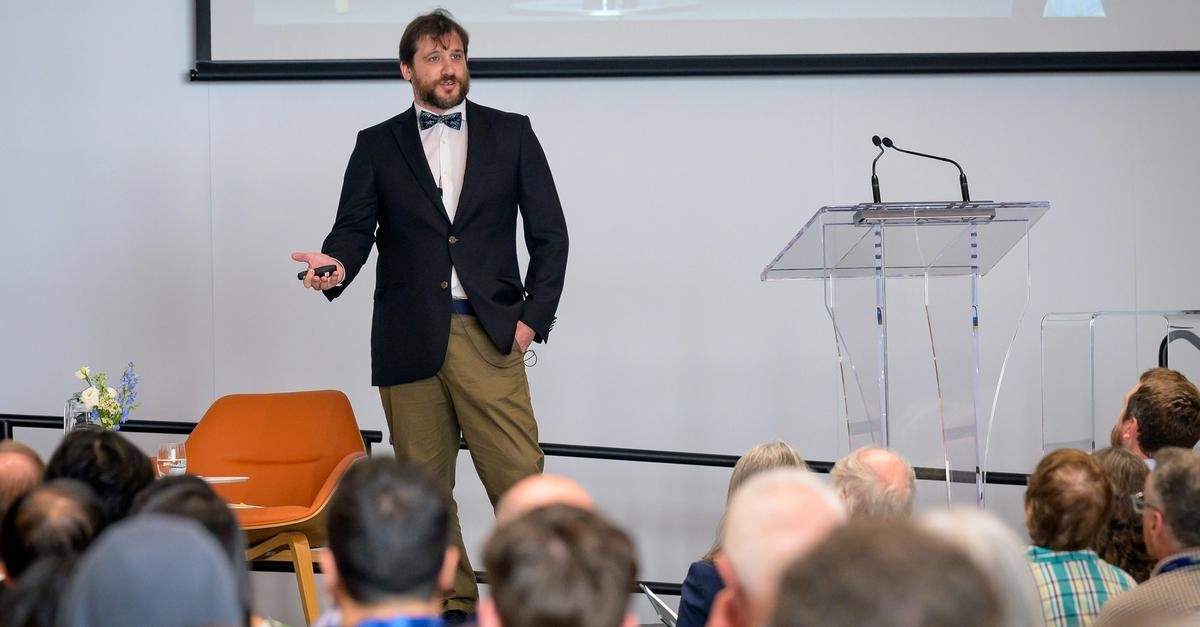
As the prospect of superintelligent AI becomes increasingly plausible, who will step up to keep humanity safe? Engineers, coders, policymakers and activists all play a role. And now, through a new AI safety institute to be headed by jacob tsimerman, a prize-winning Canadian academic, mathematicians are ready to do their part. “The thing about AI is that we don't have the right ideas yet to make a safe superintelligence. We're trying to build something where we don't yet know the answers, and that's where mathematicians are extremely comfortable,” says Tsimerman, a professor at the University of Toronto. In July, he was one of four recipients of the world’s most prestigious math prize, the Fields Medal, sometimes described as the “Nobel Prize of mathematics.” This week, he announced he is shifting his focus from the esoteric work that garnered him this and other accolades to become the scientific director at the Mathematical AI Safety Institute (MAISI), an organization he co-founded. Over the past decade, Tsimerman watched developments in AI with growing concern – as a mathematician and as a human being. As neural networks got more and more powerful, it became clear to him that we weren’t ready for the moment when artificial intelligence surpassed human intelligence. Patchen Barss has more on MAISI, which will sidestep traditional academic peer reviews to publish new ideas and insights as quickly as possible via lecture notes, blogs or other formats. That’s because Tsimerman treats the work as a race against time and the pace of AI’s increasing capabilities. https://lnkd.in/gMA9mmqt
- LINKEDIN · IMAGERecorded 7 Oct 2026
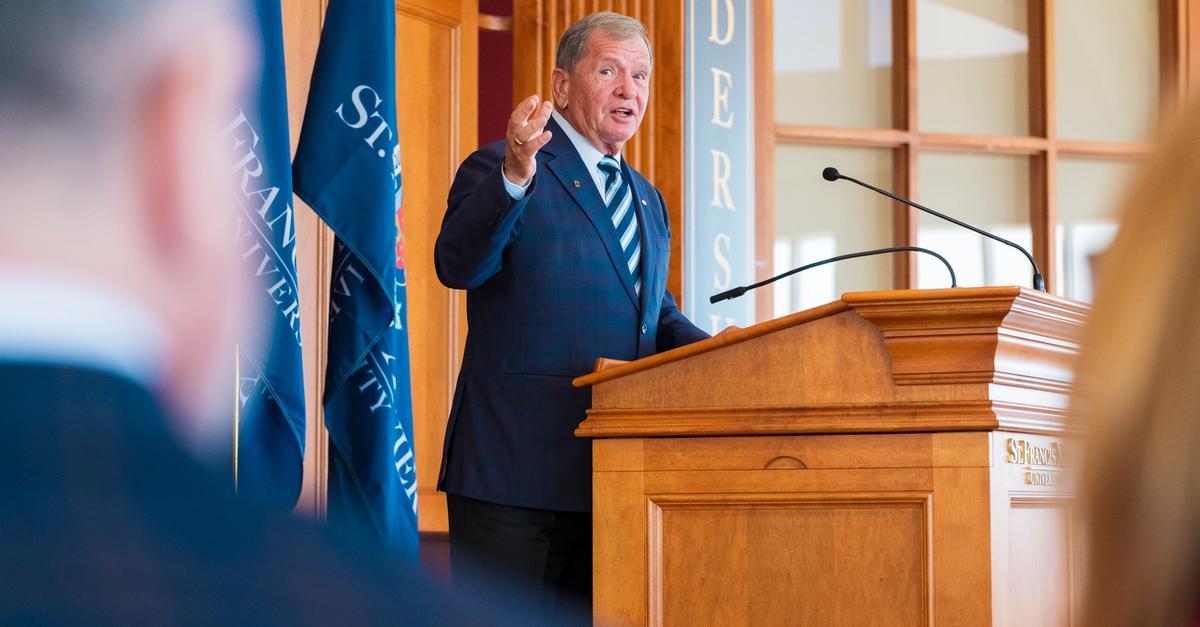
“I get an inbound [email] every day asking, ‘Can you get me into this meeting or that,’ and I’m just a small fry,” Frank McKenna says of the inaugural Canada Investment Summit. “I know one CEO says he’s got five large sovereign funds around the world that contacted him about trying to get in.” Some of the world’s biggest investment managers – who oversee more than $100 trillion in assets – are gathering in Toronto next week for the inaugural Canada Investment Summit. They’ll pore over a dealbook of Canadian projects and meet CEOs, premiers and other proponents looking for capital. It’s all part of Prime Minister Mark Carney’s plan to unlock a trillion dollars of new investment in the Canadian economy. McKenna will be there too. As deputy chair of TD Securities and chair of Brookfield Corporation, not to mention a former premier of New Brunswick and ambassador to the U.S., he knows something about negotiating big deals. A self-described “interested observer” of the main summit, he helped arrange two of its side events – the Milken Institute’s first-ever Global Dialogues event in Canada and the Canadian Venture Capital & Private Equity Association (CVCA) Global Growth Forum. Lisa Hrabluk talked with McKenna to get an inside look at how the world’s biggest investors are sizing up Canada – and what might be on the table at the conference. Q: There’s certainly been a lot of interest in this summit. What are you expecting to see next week? “It’s really the most interesting event that I’ve been part of in decades in Canada. I’ve never seen anything like this. I was just talking to a [cabinet] minister who’s got a bunch of bilateral [meetings] and things going on that I didn’t even know about. This is like a Super Bowl with hundreds of tailgate parties. At Brookfield we’ve got a dinner Tuesday night that’s got more money in the room than I knew was on the planet.” https://lnkd.in/gjq4SySE
- LINKEDIN · IMAGERecorded 7 Oct 2026
If drivers in Burnaby, B.C. last summer had X-ray vision, they might have spotted something curious inside a couple of yellow school buses cruising around town: 5,000 pounds of sandbags, meant to stand in for the weight of a load of rambunctious kids. The electric buses, being put through the rhythms of an ordinary school run, were part of a pilot study by BC Hydro and Lynch Bus Lines to see how much charge was left in their batteries after a school day. “We were trying to see, do you have enough at the end of the day to actually give back to the grid?” says Cory Lynch, operations manager at Burnaby-based Lynch Bus Lines. The answer was yes. The pilot test found that the test buses had a remaining 100 to 125 kWh left for B.C. Hydro to use during the 5-to-9p.m. window, which is about enough electricity per bus to heat a single-family home for almost three days. This idea is called V2G, or vehicle-to-grid, and it works like this: electric vehicles are connected to the power grid so their batteries can supply power when it’s most needed – for example, between 5 p.m. to 9 p.m. on cold winter days, when the province has its peak electricity demand. In turn, the vehicles recharge when demand on the grid is lower. Now, the utility is planning to take the concept further, with aims to test a larger number of vehicles, including residential cars and trucks. Read Kat Tancock’s look at this fascinating technology and how these yellow school buses could transform B.C.’s electricity grid: https://lnkd.in/gs4iiS74


6 of 226 adsSign up to see every Be Giant ad, filter by format and date, and get alerts on new ones.
See all 226 adsWatch the companies you care about.
Filter every ad by industry, country, format and network, and get alerts when a company you watch starts running new ads.