On air · 1 of 3 networks
Axiomera AI
- axiomera.com
- Healthcare & Life Sciences
- US
- 17 employees
Axiomera AI’s ads on LinkedIn, Meta and Google, recorded by adsrunning. Browse the latest here for free. Sign up free to see all 66. Watch Axiomera AI with Starter to get each new one in your feed.
Watchlist with Starter · $49/mo
| Network | Status | Live ads | Nov 2025LinkedIn activity · 52 weeksOct 2026 | Checked | Next step |
|---|---|---|---|---|---|
| Running | 58 | Checked 30 Oct 2026 | See all 66 ads → | ||
| Meta | Not checked | — | |||
| None recorded | 0 | No ads found on the Google Ads Transparency Center | Checked 7 Oct 2026 | Collect them with the API → |
Axiomera AI has 58 live LinkedIn ads. We recorded no Google ads on 7 Oct 2026.
Latest ads
- LINKEDIN · IMAGESince 18 Aug 2026
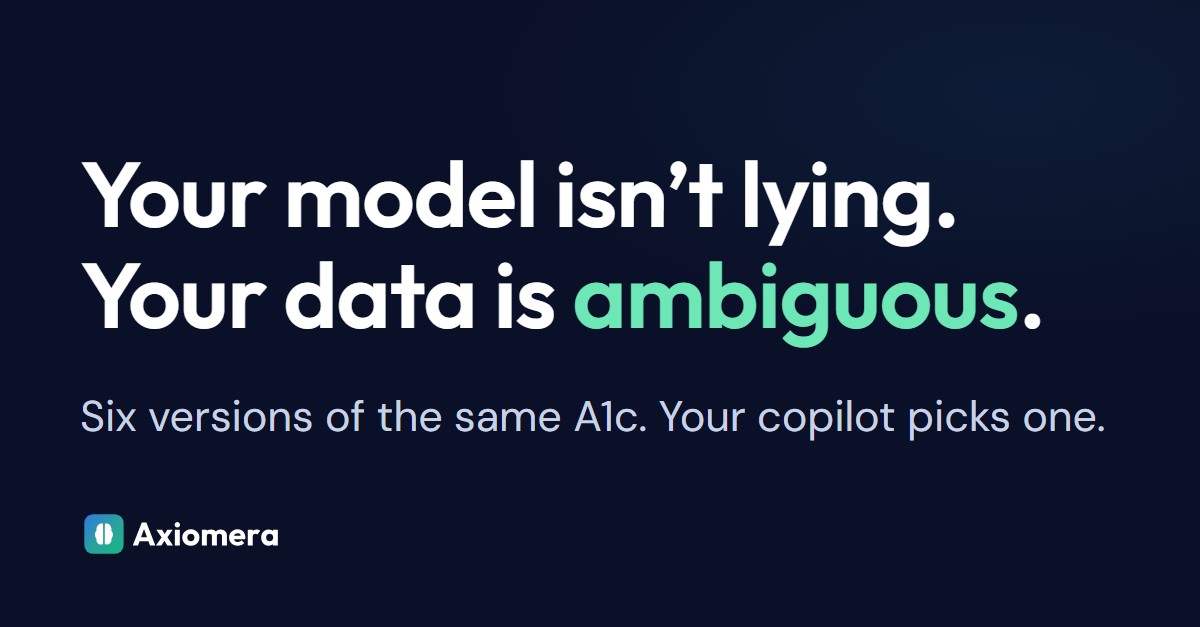
Six versions of the same A1c across three source systems. Your copilot picks one and sounds completely certain. That is not a model failure. You cannot prompt your way out of it, and swapping models will not fix it, because the ambiguity is underneath both. Axiomera binds every field to a real ontology, then harmonizes across sources and time. Your model stops choosing between six plausible values, because it receives one resolved value, a calibrated confidence score on that specific field, and a line back to the exact source message it came from. Below your threshold, clinical fields route to a human instead of guessing. The binding is probabilistic. What runs in production is deterministic and hash stable.
- LINKEDIN · IMAGESince 18 Aug 2026
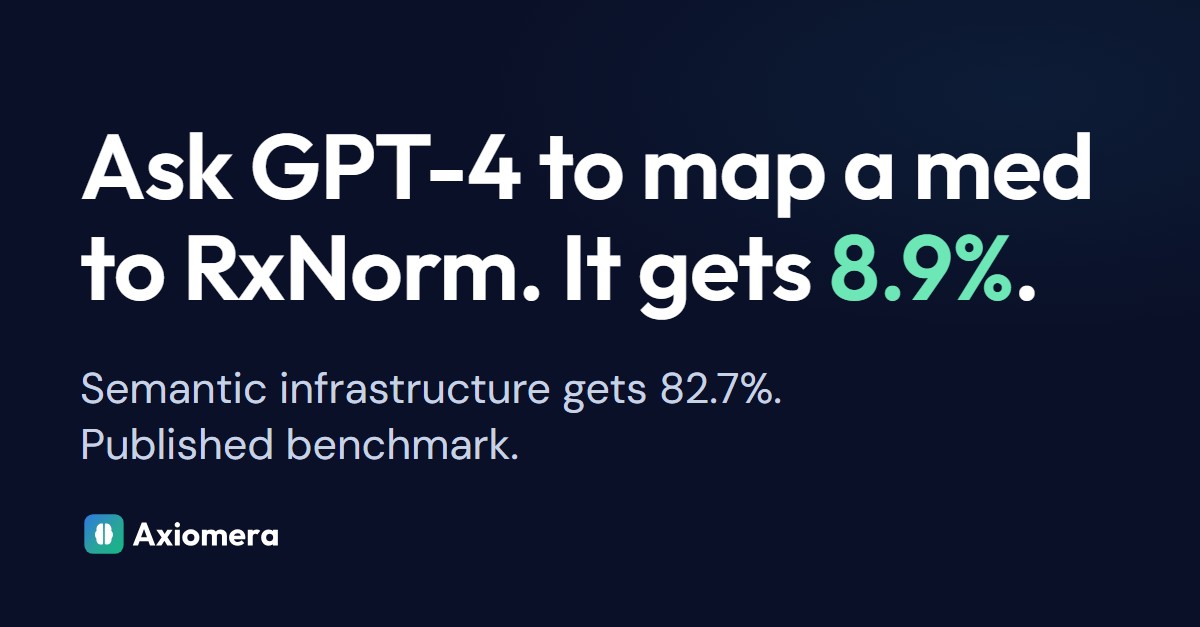
Semantic infrastructure gets 82.7% on the same task. That is a published John Snow Labs benchmark, not our number. Your copilot is not stupid. It is ungrounded. And 71% of data teams now say hallucinated outputs are reaching their stakeholders (dbt Labs, 2026). That is a data problem wearing a model problem's clothes. Axiomera fixes the layer underneath: ontology binding, harmonization across sources and time, calibrated confidence on every field, and human escalation before anything clinical commits silently.
- LINKEDIN · IMAGESince 9 Aug 2026
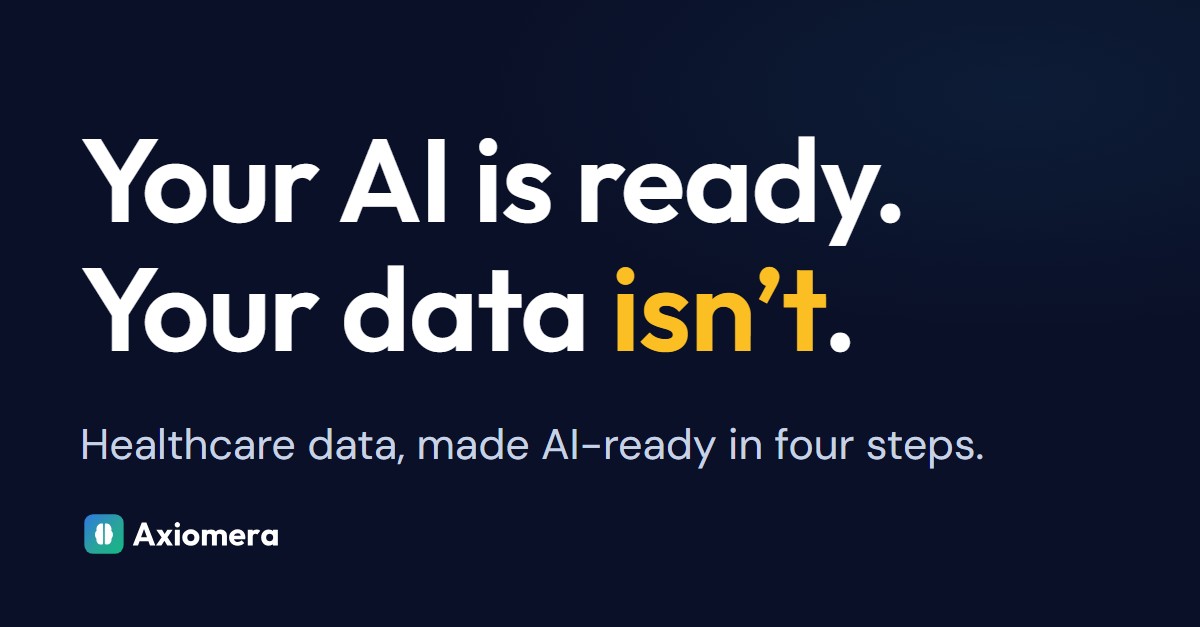
Every major data keynote this year ends on the same line: get your data AI-ready. The slogan is free. The how is the hard part. Axiomera makes healthcare data AI-ready in four steps, with the time harmonization step the others skip, inside your own environment.
- LINKEDIN · IMAGESince 9 Aug 2026
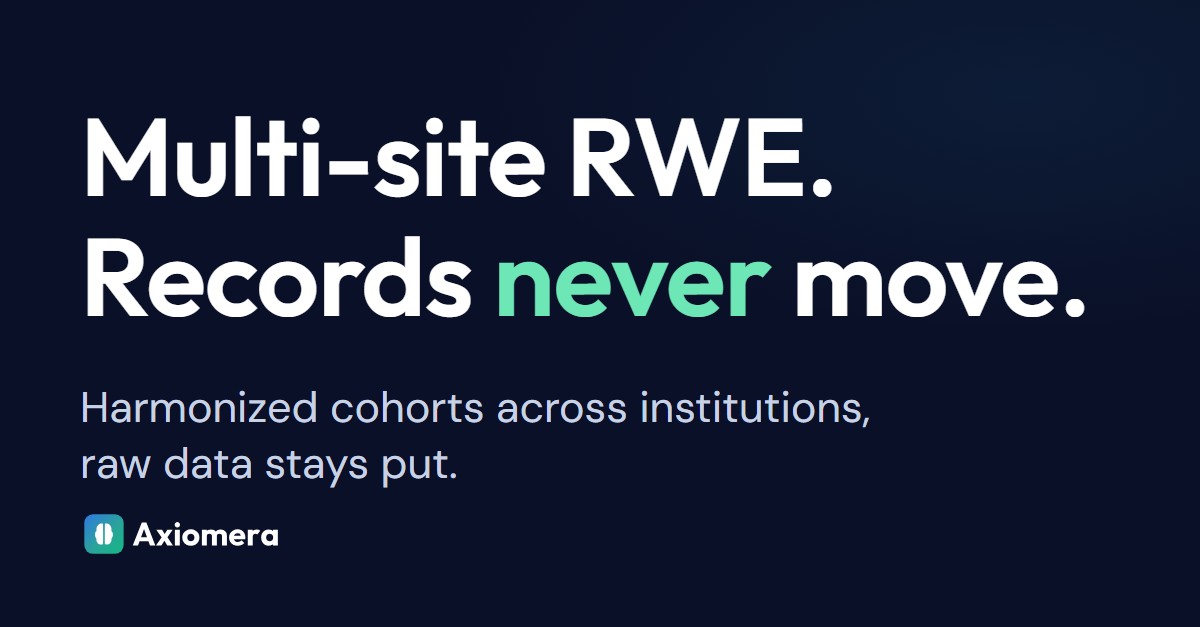
Multi-site RWE usually means moving records, and moving records is where studies stall. Axiomera harmonizes cohorts across institutions while raw data stays put at each site. Sources are standardized, mapped to shared meaning and harmonized in time, the step most pipelines skip. Everything runs inside each institution's own environment.
- LINKEDIN · IMAGESince 9 Aug 2026
Your launch data lives in five places that disagree: claims, 867 EDI, specialty pharmacy feeds, CRM, rebate lines. Axiomera harmonizes them into one launch picture, by brand, account and payer, from ship to script to rebate. Launch analytics in days, not six-week rebuilds. It runs inside your own environment.
- LINKEDIN · IMAGERecorded 7 Oct 2026
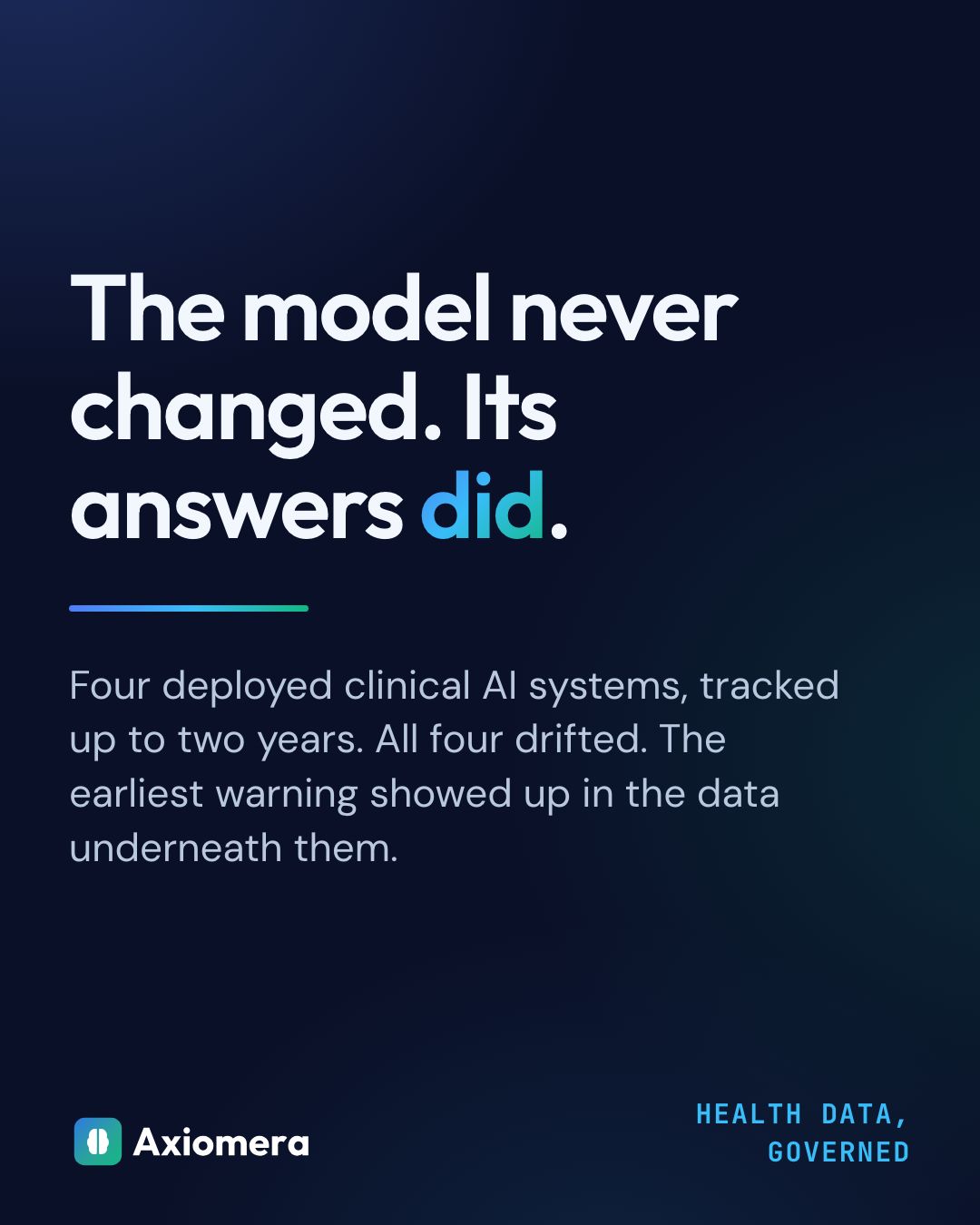
𝗙𝗼𝘂𝗿 𝗰𝗹𝗶𝗻𝗶𝗰𝗮𝗹 𝗔𝗜 𝘀𝘆𝘀𝘁𝗲𝗺𝘀 𝘄𝗲𝗿𝗲 𝘁𝗿𝗮𝗰𝗸𝗲𝗱 𝗳𝗼𝗿 𝘂𝗽 𝘁𝗼 𝘁𝘄𝗼 𝘆𝗲𝗮𝗿𝘀 𝗮𝗳𝘁𝗲𝗿 𝗴𝗼-𝗹𝗶𝘃𝗲. 𝗔𝗹𝗹 𝗳𝗼𝘂𝗿 𝗱𝗿𝗶𝗳𝘁𝗲𝗱 𝗮𝘄𝗮𝘆 𝗳𝗿𝗼𝗺 𝘁𝗵𝗲𝗶𝗿 𝘃𝗮𝗹𝗶𝗱𝗮𝘁𝗶𝗼𝗻 𝗽𝗲𝗿𝗳𝗼𝗿𝗺𝗮𝗻𝗰𝗲. 𝗧𝗵𝗲 𝗺𝗼𝗱𝗲𝗹𝘀 𝗻𝗲𝘃𝗲𝗿 𝗰𝗵𝗮𝗻𝗴𝗲𝗱. That is a peer-reviewed study published in PLOS Digital Health on July 27, covering four deployed systems inside one large healthcare organization, across 68,000 to 1,240,000 inference events each. Same models, same thresholds, same intended uses. The first thing to go was calibration. Ranking held up, so the systems still sorted patients in roughly the right order while the absolute risk numbers quietly stopped being right. The paper calls it silent miscalibration, and it is the kind of failure a dashboard of accuracy metrics will not show you. What tracked with the degradation was workflow-associated change in data availability and timing. Inputs that used to arrive started arriving late, or stopped arriving. The paper found that association stronger and more consistent than anything measured at the population level. Those operational signals showed the problem earlier than outcome-based monitoring did, because outcome labels wait on documentation and arrive long after the decision. So the earliest warning that a clinical model is going wrong shows up in the data layer, and most teams are watching the model layer. Four systems in one organization, and the authors say that the effect sizes should not be read as universal failure rates for clinical AI. What carries is the failure structure, repeating across four systems in different clinical domains and workflows. Axiomera AI works on the layer the paper points at. Every field is bound to shared clinical terminologies as it arrives, with a confidence score and lineage on the value itself, so the binding travels with the record. Sources reconcile into one governed layer, all of it inside your own environment. Raw data never leaves it and nothing is rewritten at the source. That does not monitor your model. It makes the ground your model stands on legible, so when an input changes what it means or when it shows up, that is a thing you can see and re-derive. Today most teams learn it months later, from an outcome. The paper is in the first comment. #HealthcareAI #DataGovernance

6 of 66 adsSign up to see every Axiomera AI ad, filter by format and date, and get alerts on new ones.
See all 66 adsWatch the companies you care about.
Filter every ad by industry, country, format and network, and get alerts when a company you watch starts running new ads.