On air · 1 of 3 networks
Artos AI
- artosai.com
- Healthcare & Life Sciences
- US
- 28 employees
Artos AI’s ads on LinkedIn, Meta and Google, recorded by adsrunning. Browse the latest here for free. Sign up free to see all 131. Watch Artos AI with Starter to get each new one in your feed.
Watchlist with Starter · $49/mo
| Network | Status | Live ads | Nov 2025LinkedIn activity · 52 weeksOct 2026 | Checked | Next step |
|---|---|---|---|---|---|
| Running | 39 | Checked 30 Oct 2026 | See all 131 ads → | ||
| Meta | Not checked | — | |||
| Recently | 17 | Ads on the Google Ads Transparency Center | Checked 5 Oct 2026 | Collect them with the API → |
Artos AI has 39 live LinkedIn ads. We recorded 17 Google ads on 5 Oct 2026.
Latest ads
- LINKEDIN · IMAGESince 3 Sept 2026
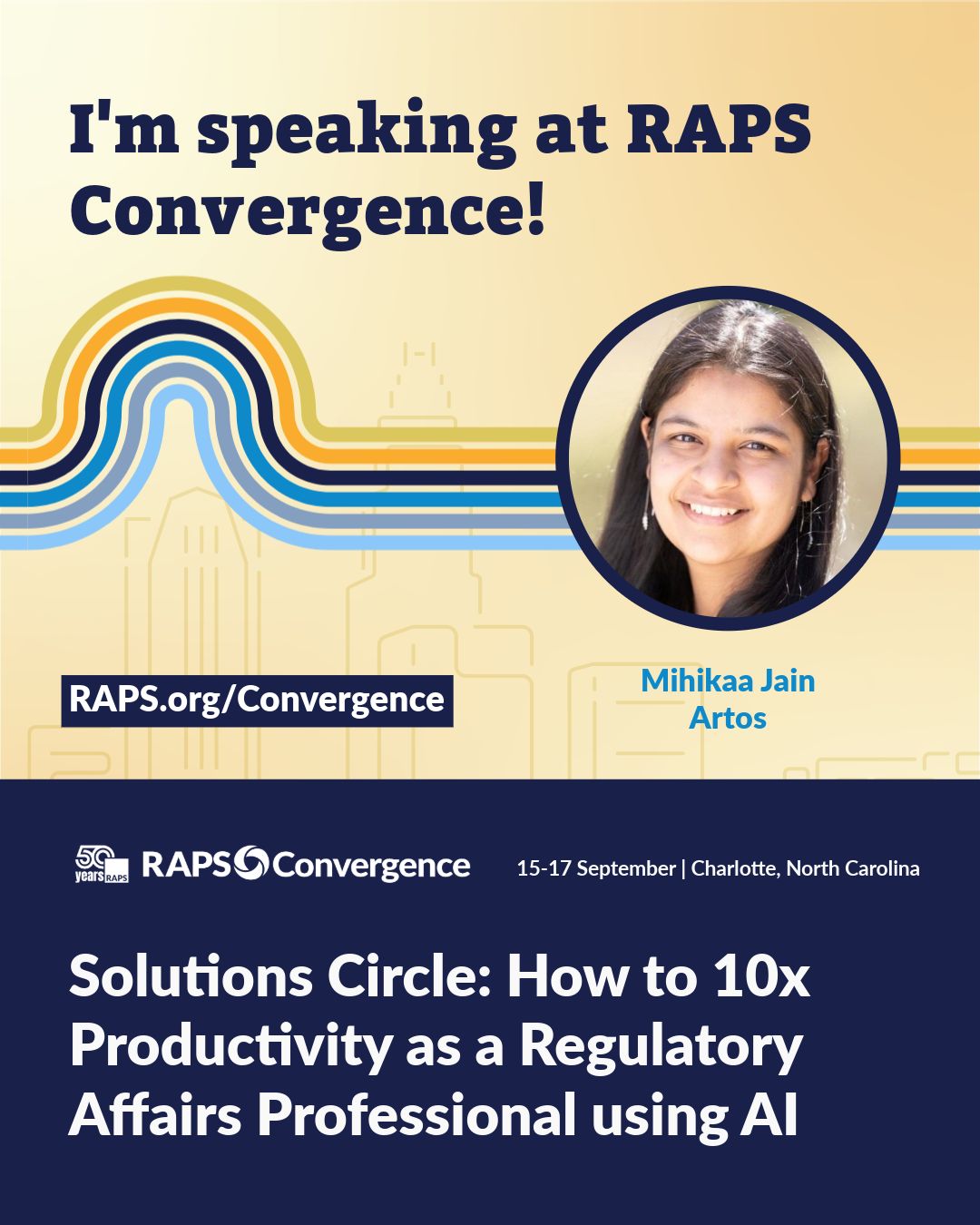
Most of the AI conversation in life sciences is about enterprise-scale deployments and ROI. But some of the biggest wins right now are happening at the individual level where people are using AI tools to speed up everyday work and even build tools for their team. That's what I'll be focusing on at #RAPSConvergence next month: practical, real-life tips and lived experiences, not theory. If you'll be there, I'd love to say hello and catch-up!
- LINKEDIN · IMAGESince 30 Jul 2026
ChatGPT, Copilot and Claude are general-purpose. Artos is document-specific AI for regulatory submissions, with audit logs, data isolation, and hallucination mitigation built in.
- LINKEDIN · IMAGESince 30 Jul 2026
Clinical, non-clinical, and CMC documents demand specialized AI, not a general chatbot. Artos generates compliant drafts across all three, with source traceability throughout.
- LINKEDIN · IMAGESince 17 Jul 2026
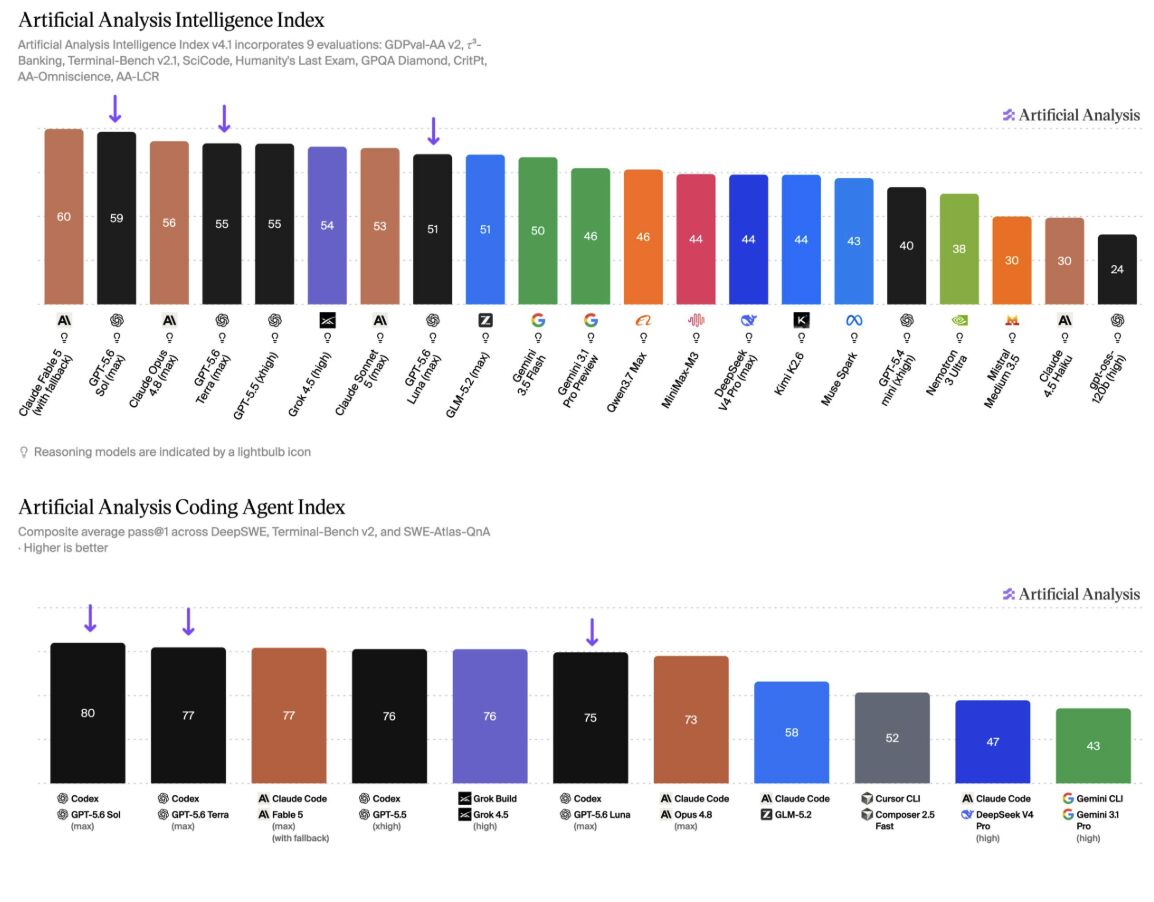
GPT-5.6 and Claude Fable 5 were released in the past week (or in the case of Fable, re-released). These models are interesting because they’re not really built to follow instructions as much as to pursue goals. That autonomy is what makes these models feel so capable, but it's also, paradoxically, the problem in a regulated setting like pharma. We see this firsthand as we build on each new model. In drug development, regulators want the receipts, how a piece of content was produced, what data it drew from, who reviewed it, and whether you can reproduce that reasoning on demand. But every decision a model quietly makes on its own is a decision you didn't specify, can't fully explain, and may not be able to reproduce. In most industries that's a feature. In a GxP environment, it's the thing you have to control for. That turns out to be a genuinely interesting engineering problem: which use cases actually benefit from a model like Fable, and which are better served by an older, more steerable one? A goal-seeking model is a gift for open-ended, exploratory work and a liability for a task where every step has to be pre-specified and reproduced. The newest model isn't automatically the right one, sometimes the more constrained, "less clever" one is exactly what the workflow needs. This is something we actively evaluate every time a new model comes out, and we've started building a framework to help categorize model capabilities. It’s a powerful proof point that an ensemble of models may be the winning answer in verticalized workflows (and cheaper in tokens!).
- LINKEDIN · IMAGESince 11 Jun 2026
Every year the AI conversation gets bigger. The adoption problem stays the same. Heading to #DIA2026 next week and the one thing I keep coming back to is trust. Not in an abstract, big-picture way. In a very practical one. Everyone has tried AI at this point. Pilots have run. Teams have experimented. But moving from "we tried it" to "we actually use it" is where things get hard and from what I've seen, trust is big bottleneck. And it makes sense. If I'm a user and I don't understand how a system reached a conclusion, I'm not going to rely on it. I will spend a lot of time to review the content and not really see any efficiency. That's not resistance to change, that's a reasonable response to what appears like a black box. So what actually moves the needle? Three things I keep coming back to: Validation. In regulated environments, this means being able to build GxP compliant, auditable data pipelines for parts of the document generation process. Not just "the AI worked" but being able to show exactly what happened, when, and why, in a way that holds up to scrutiny. Showing its work. A good example: AI that can comment on whether a result is statistically significant based on the testing hierarchy defined in the SAP and show you exactly why it reached that conclusion. That kind of transparency is what gets a reviewer to trust the output rather than just recheck everything manually. Knowing its limits. Just as important as what AI can do is what it knows not to do. Determining a NOAEL from raw data is an interpretation that belongs to an SME, not a model. AI that understands that boundary and respects it is far more trustworthy than one that doesn't know where to stop. Curious to hear from people who've also been thinking through this. If you're going to be at DIA, let's connect. #DIA2026 #AI #AIAdoption P.S. Picture from last year's DIA. When you RSVP a full year in advance, you know it's a good one. See you in Philadelphia.
- LINKEDIN · IMAGESince 9 Jun 2026
Every year before DIA, I make a prediction. This year's: AI will be the most-talked-about topic at the conference (again) — and also the most oversold one. Every booth will have it. Every session will reference it. But here's what I actually think happens: the conversations that matter won't be about AI at all. They'll be about trust — specifically, whether sponsors and regulators can agree on what "good enough" looks like for AI-generated clinical documents. Talking about the technology in a vacuum isn't helpful here. The validation frameworks, the SOPs, the trust from people using it - that's what matters That's the real DIA 2026 story. If you're there and want to talk clinical documentation, regulatory submissions, or just commiserate about the state of AI in drug development, would love to chat!


6 of 131 adsSign up to see every Artos AI ad, filter by format and date, and get alerts on new ones.
See all 131 adsWatch the companies you care about.
Filter every ad by industry, country, format and network, and get alerts when a company you watch starts running new ads.