On air · 1 of 3 networks
Appsilon
- go.appsilon.com
- Healthcare & Life Sciences
- PL
- 85 employees
Appsilon’s ads on LinkedIn, Meta and Google, recorded by adsrunning. Browse the latest here for free. Sign up free to see all 103. Watch Appsilon with Starter to get each new one in your feed.
Watchlist with Starter · $49/mo
| Network | Status | Live ads | Nov 2025LinkedIn activity · 52 weeksOct 2026 | Checked | Next step |
|---|---|---|---|---|---|
| Running | 36 | Checked 30 Oct 2026 | See all 103 ads → | ||
| Meta | Not checked | — | |||
| Recently | 2 | Ads on the Google Ads Transparency Center | Checked 17 Oct 2026 | Collect them with the API → |
Appsilon has 36 live LinkedIn ads. We recorded 2 Google ads on 17 Oct 2026.
Latest ads
- LINKEDIN · IMAGESince 22 Oct 2026
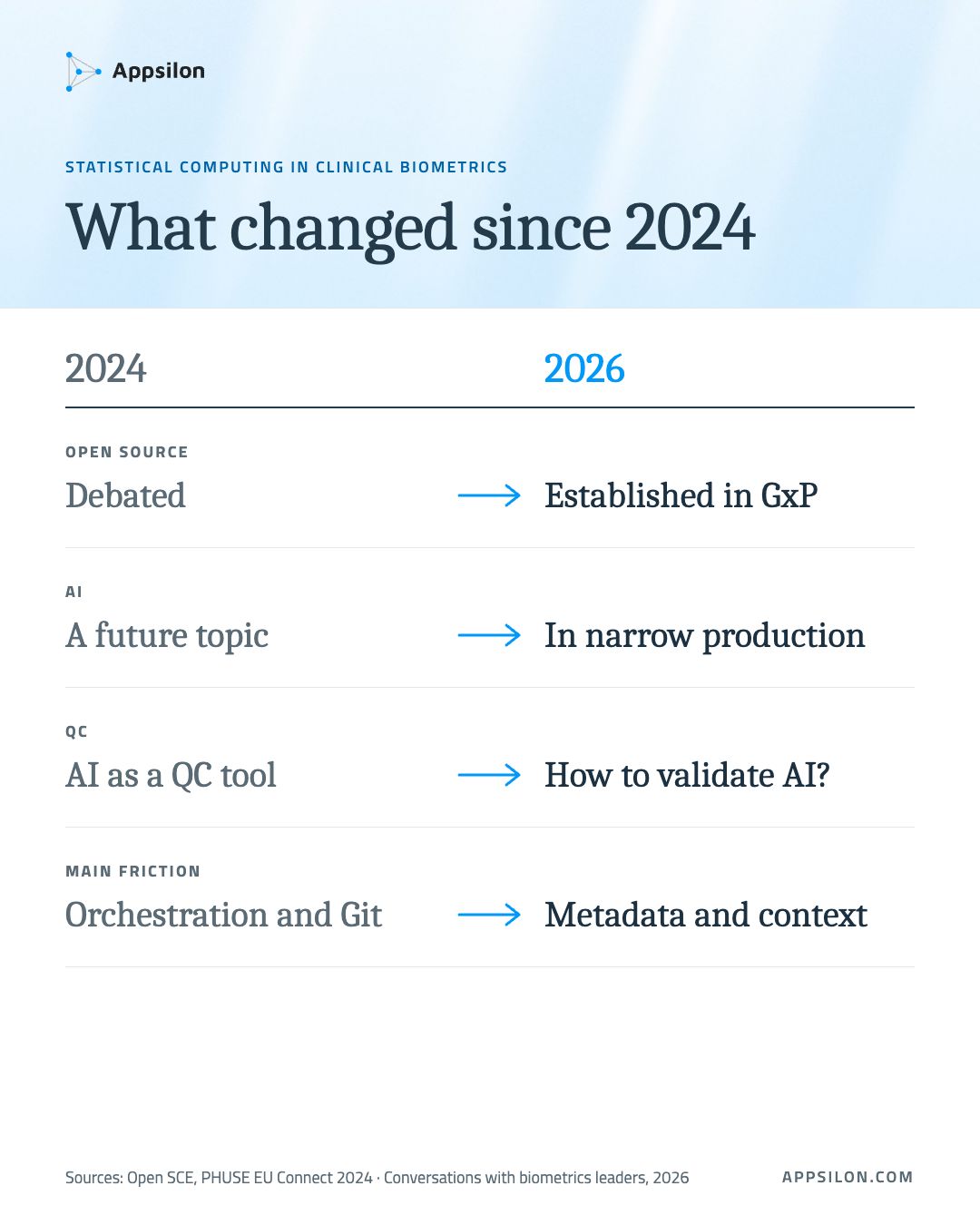
What has changed in statistical computing since 2024? In 2024, Caroline Phares and Pascal Bouquet spoke with SCE leaders at several large pharma companies as part of the Open SCE initiative. They shared the findings at PHUSE EU Connect 2024: https://lnkd.in/duKEeXuw Reading those findings again alongside our conversations with biometrics leaders this year, the shift is clear. In 2024, the discussion centered on SCE infrastructure: * Orchestration: planning and task allocation were largely managed in Excel, and there was a strong need for an integrated orchestration layer. Code management: this emerged as a critical area. Git was seen as too complex for statisticians, and companies were looking for a simpler interface. Open source: concerns about support, maintenance, governance and siloed efforts were still significant. * AI: mostly a future topic, such as drafting code or a table of contents from the SAP, or generating independent QC programs. In 2026, the starting point is different: * Open source: established in GxP work. R-based submissions have been filed, and at one large pharma company about 60% of standard TFLs are now produced in R. The question has moved from why to when and how. * AI: in use, but in narrow and well-controlled places. AI-generated ADaM code is used on live studies, and tools that take an SAP through to TLFs are close to production. * QC: the question has reversed. In 2024, AI was discussed as a way to generate independent QC. Today, teams are asking what should replace independent replication when AI writes part of the code. Integration: the main friction is no longer moving code or tasks, but moving the metadata and context that give the data its meaning. Some things have not changed. Excel is still widely used, and human oversight remains the main safeguard. In the next post, we will look at the trends emerging from this shift.
- LINKEDIN · VIDEOSince 22 Oct 2026
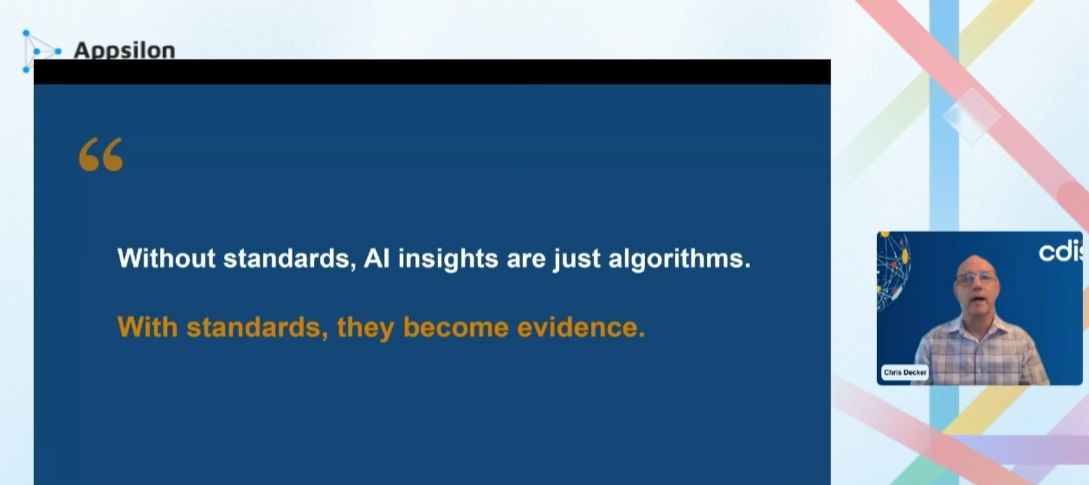
Validated AI for Pharma Summit happened a month ago. I keep coming back to the keynote from Chris Decker, CDISC; so informative and inspiring. Validated systems have to be audited at ease. You need to be able to trace back the AI decisions, with the clarity on data sources and versions used. Watch the full keynote on: https://lnkd.in/dWqQ2Anm
- LINKEDIN · VIDEOSince 21 Oct 2026
In regulated industries, the question isn’t “can AI do this?”, but it's more “can you prove it’s safe to use here?” As David Foster from eClinical Solutions put it in our recent Validated AI for Pharma Summit: “Increasingly, clients want these tools, but they want proof. They want to understand how they’re going to fold that into their governed, regulated environment.” I believe that the teams that win won’t be the ones with the flashiest AI demos. They will need to show compliance, governance, and fit from day one into the company ecosystem and workflows. This is also what we want to do with Mediforce, our open-source platform for agentic workflows in regulated pharma. 🎥 To learn more from the industry experts, watch the full 20-minute session with David and all the other summit talks: https://lnkd.in/dqb5VgKA #AIGovernance #Pharma #ClinicalTrials #DataScience #Compliance
- LINKEDIN · IMAGESince 19 Oct 2026
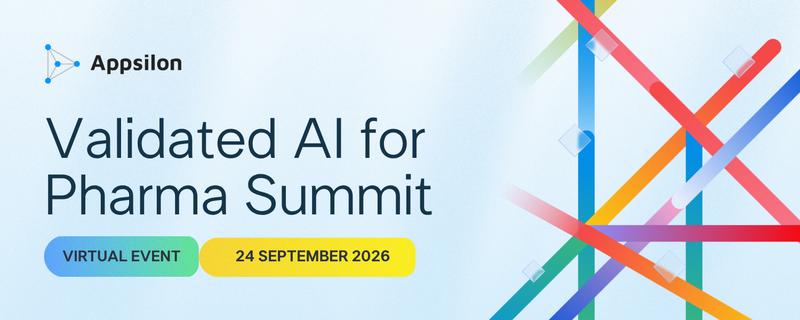
We asked nearly 400 people in pharma where they actually are with validated AI. Only 15% of respondents have it running in GxP. That single number sums up the Validated AI for Pharma Summit better than any recap could. Over 600 registrations, nearly 400 attendees from 38 countries, and people stayed for an average of nearly 3 hours. Nobody watches 3 hours of a virtual conference unless they're looking for something they haven't found elsewhere. Four things I took away: 1️⃣ The real question isn't "is the AI validated?", it's "what exactly are we validating?" The liveliest debate of the day: do you validate the model, or the code it produces? One team shared that in early tests, AI-driven code review surfaced several times more issues than human review of the same human-written code. That reframes the whole conversation. 2️⃣ Trustworthy AI starts with trustworthy data. Chris Decker (CDISC) opened with it, and the audience confirmed it, data quality and standards came back as the #1 blocker to calling a setup validated. 3️⃣ Sovereignty is not compliance. Hosting a model in Europe, or on your own hardware, doesn't hand you GxP. It moves the assurance work in-house. 4️⃣ The hardest problem is organisational, not technical. A third of respondents said nobody clearly owns AI adoption at their company. Which explains why so many pilots never become production. Thank you to every speaker: CDISC, Novartis, Eli Lilly and Company, PHUSE, Domino Data Lab, eClinical Solutions, ERA Sciences, HealthtechPartners 42, Pharma Law Solutions and to everyone who turned the chat into the best session of the day. We'll be back, and bigger. If validated AI is on your 2027 roadmap, follow along, the next one is already taking shape. 👉 Check for recordings: https://lnkd.in/dA4Qy5wF #PharmaAI #GxP #ValidatedAI #ClinicalDataScience
- LINKEDIN · SPOTLIGHTSince 16 Oct 2026
- LINKEDIN · IMAGESince 13 Oct 2026
A week ago, 384 people from 38 countries joined us live for the Validated AI for Pharma Summit. I opened it, gave a talk, moderated the roundtable and closed it, so it was a long day. Three things from it have stayed with me. Data came out on top in our live poll. When we asked what stops people from calling their AI setup validated, the most common answer was data quality and standards. I wasn't surprised, but it was good to see it written down. Most teams are still early. Only 4 of 27 people who answered run validated AI in GxP today. Everyone else is exploring, piloting, or running something that isn't validated yet. In regulated work, going step by step is the right pace. A third of respondents said nobody at their company clearly owns AI adoption. We talked about this in the roundtable too, and I think it needs an answer before any of the technical stuff does. Big thanks to our speakers: Chris Decker, Peter K., Ben O'Brien, Eric Nantz, Will Landau, Ross Sharp, CFA, Michael Rimler, Magalie Wasem Tréguer, Pascal BOUQUET Gabriel Eichler, PhD, David Foster and André Veríssimo, PhD. Thanks also to Srinivas V. and Sarah Banks for the roundtable, to Dina P. and Jakub Wąsala for hosting, and to Jakub Wąsala and Vedha Viyash for running the Workshop Day with me. We didn't get to every question in the chat. If something stuck with you, or you didn't agree with something you heard, tell me. Leave a comment or DM me. I'm happy to get on a call and talk it through. In two weeks we're doing a separate webinar with Anna De Feo. I'll share details soon. All sessions are on demand here: https://lnkd.in/gNWH9BVA #ValidatedAI #PharmaAI #GxP

6 of 103 adsSign up to see every Appsilon ad, filter by format and date, and get alerts on new ones.
See all 103 adsWatch the companies you care about.
Filter every ad by industry, country, format and network, and get alerts when a company you watch starts running new ads.