Not on air · 2 of 3 networks checked
Aloxy
- aloxy.io
- Industry & Manufacturing
- BE
- 33 employees
Aloxy’s ads on LinkedIn, Meta and Google, recorded by adsrunning. Browse the latest here for free. Sign up free to see all 1,204. Watch Aloxy with Starter to get each new one in your feed.
Watchlist with Starter · $49/mo
| Network | Status | Live ads | Nov 2025LinkedIn activity · 52 weeksOct 2026 | Checked | Next step |
|---|---|---|---|---|---|
| None recorded | 0 | Checked 30 Oct 2026 | See all 1,204 ads → | ||
| Meta | Not checked | — | |||
| None recorded | 0 | No ads found on the Google Ads Transparency Center | Checked 2 Oct 2026 | Collect them with the API → |
Aloxy has no live LinkedIn ads. We recorded no Google ads on 2 Oct 2026.
Latest ads
- LINKEDIN · IMAGESince 27 Oct 2026
A control room is only as good as the data that reaches it. Tanks, pumps and automated valves report. The manual valves, thousands on a typical terminal, do not, which is why a line-up is still confirmed by radio and a signature. A digital connection changes that. A wireless sensor on the handwheel sends every valve position to the control room the moment it changes, with no cable and no shutdown to install. Your operators see the line-up as it is, not as it was reported. That is how wireless manual valve sensors make brownfield operations safer and more efficient. See it in operation.
- LINKEDIN · IMAGESince 27 Oct 2026
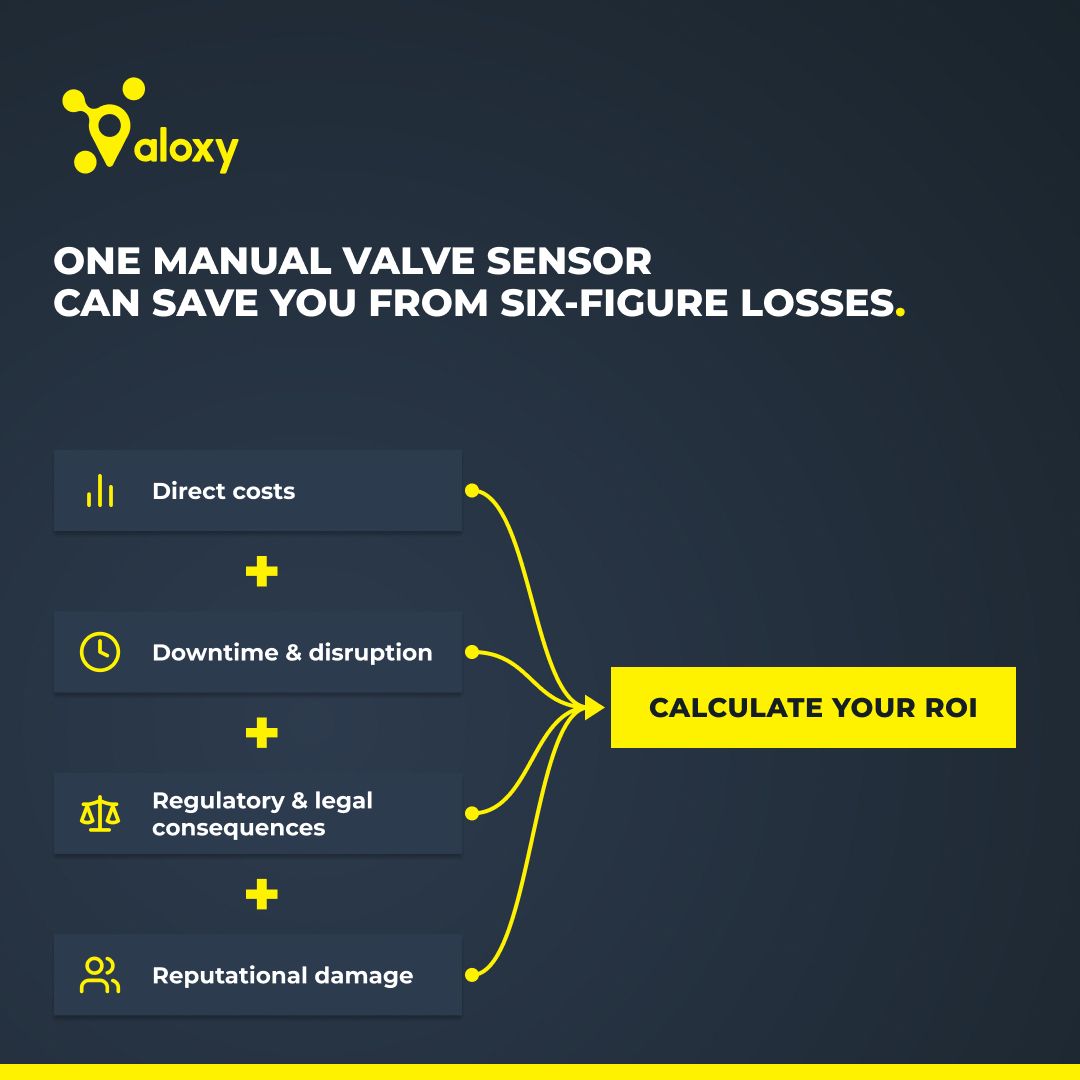
One wrong valve position rarely stays one problem. First the direct costs: the failed line-up, lost or downgraded product, equipment repair. Then the disruption: part of the terminal shut down, deliveries late, vessels waiting on demurrage. Then fines, investigations and legal fees. And last, the part no ledger captures: customer trust, contract penalties and the next contract. Terminals report two to five misalignments a week, and one incident can cost up to $500K. One wireless sensor on the handwheel shows a wrong position before it becomes any of this. Calculate the ROI for your site.
- LINKEDIN · IMAGESince 27 Oct 2026
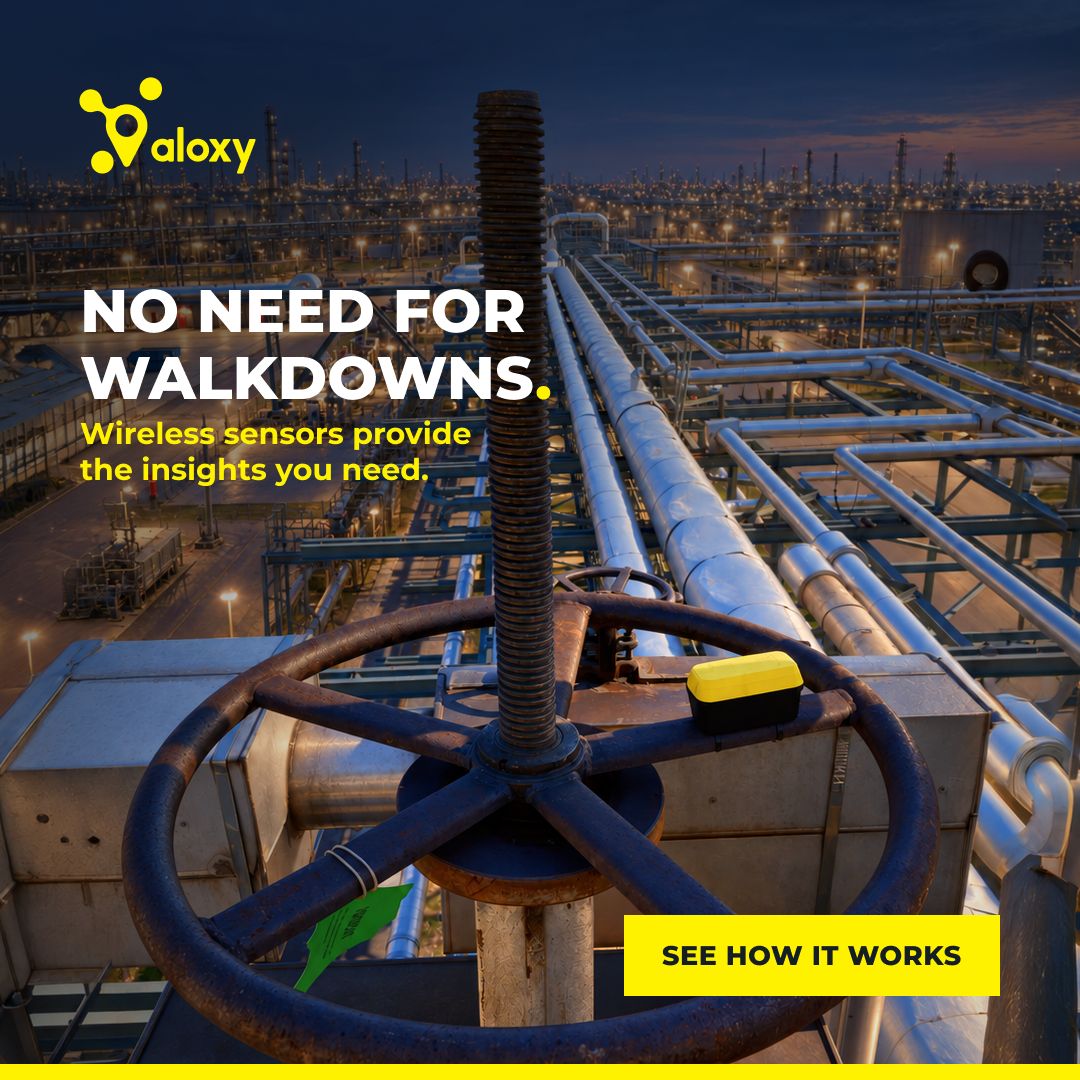
A walkdown tells you where a valve was when someone last looked at it. By the time the answer comes back over the radio, it is history. Walk-the-line, four-eye checks and lockout/tagout exist because a manual valve cannot report its own position. Every line-up costs a person, a route and a signature, and the American Fuel & Petrochemical Manufacturers puts roughly a fifth of process safety events down to valves left open and line-up errors. Our wireless sensors make the walk unnecessary. Mounted on the valves you already have, they send every position change to the control room in real time.
- LINKEDIN · IMAGESince 27 Oct 2026
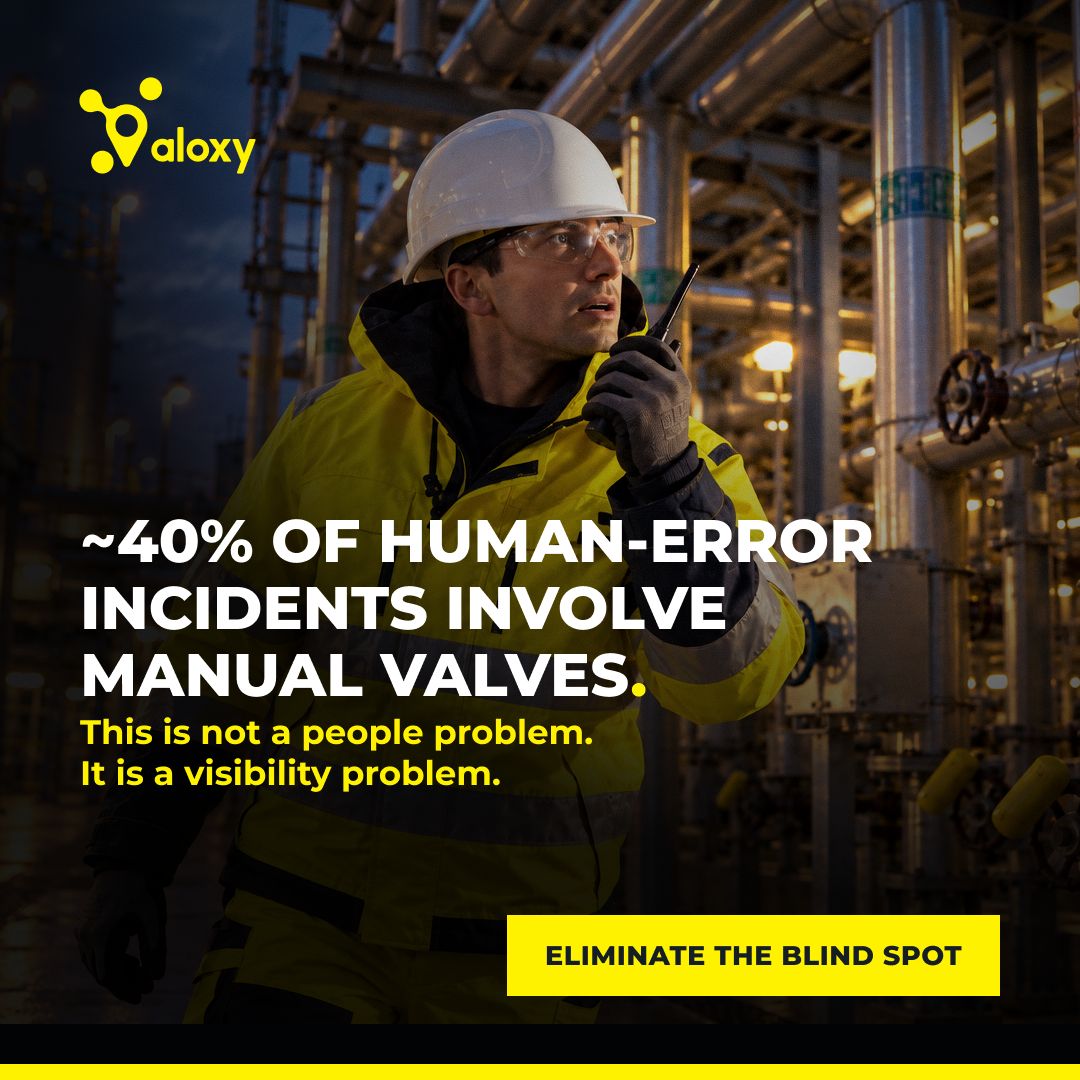
About 40% of human-error incidents involve a manual valve. Studies put human error at the root of 70 to 80% of incidents in oil and gas, and lockout/tagout is still the fourth most cited OSHA standard, year after year. Nobody decides to leave a valve open. Operators act on the information they have, and for a manual valve that is a memory, a radio call or a walk down the line. More training and more administrative control won’t change that. Visibility does. When every manual valve reports its position to the control room in real time, a wrong position is caught before it becomes an incident.
- LINKEDIN · IMAGESince 26 Oct 2026
Most terminals were not built for digital connectivity. The cable tray is full, trenching needs a hot-work permit, and every wired position switch needs a slot in the next shutdown. That is why manual valves stayed blind long after everything else went digital. Our sensor is built for that reality. It mounts on the handwheel or lever of any valve, without brackets or a field survey, and is installed and calibrated in about two minutes. Wireless, 10+ years on one battery, validated position data into your DCS, SCADA or the Aloxy dashboard. Proven at 120+ plants of global industry leaders.
- LINKEDIN · IMAGESince 26 Oct 2026
The incidents that make the news are the end of a chain, not the start. Behind a major event at a terminal there are usually dozens of smaller ones: a valve left open, a line-up corrected late, a near miss closed without action. The ratio is well documented. Heinrich counted some 300 near misses for every serious accident, and American Fuel & Petrochemical Manufacturers traces roughly 30% of process safety events to valves left open, line-up errors and operational readiness lapses. With real-time valve position data in the control room, you see a minor event while it is minor.



6 of 1,204 adsSign up to see every Aloxy ad, filter by format and date, and get alerts on new ones.
See all 1,204 adsWatch the companies you care about.
Filter every ad by industry, country, format and network, and get alerts when a company you watch starts running new ads.