On air · 1 of 3 networks
Allia Health (YC S26)
- Healthcare & Life Sciences
- US
- 26 employees
Allia Health (YC S26)’s ads on LinkedIn, Meta and Google, recorded by adsrunning. Browse the latest here for free. Sign up free to see all 119. Watch Allia Health (YC S26) with Starter to get each new one in your feed.
Watchlist with Starter · $49/mo
| Network | Status | Live ads | Nov 2025LinkedIn activity · 52 weeksOct 2026 | Checked | Next step |
|---|---|---|---|---|---|
| Running | 119 | Checked 30 Oct 2026 | See all 119 ads → | ||
| Meta | Not checked | — | |||
| Not checked | — |
Allia Health (YC S26) has 119 live LinkedIn ads.
Latest ads
- LINKEDIN · IMAGERecorded 4 Sept 2026
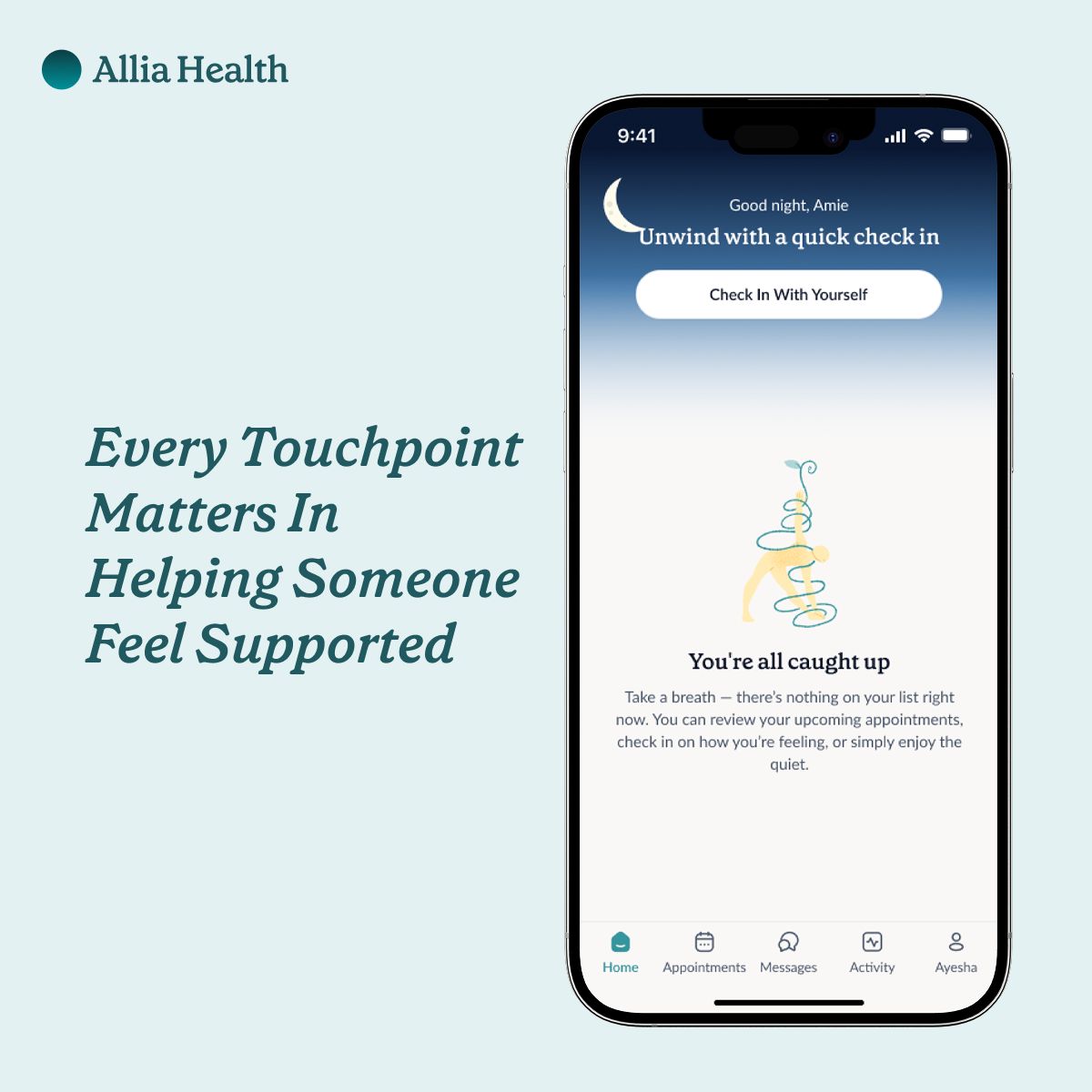
We care deeply about clinicians, because supporting clinicians is one of the most reliable ways to improve care for the people they serve. But in the small places where Allia Health interfaces directly with clients/patients, we want to make sure we show the same care their clinicians would. We’re getting ready to release the updated Allia Health client/patient app, and this new home screen shows what we’re aiming for. Last night, when I logged in, it simply said: “Good night, Amie. Unwind with a quick check in.” Most mental health apps talk to people like they are checking off a task. They can feel cold and distant, even transactional. But care is personal. The language should be, too. Areesha Hosmer leads our content, but she’s a therapist, too. It shows in the way she has reworked the language in the app so that even brief interactions feel thoughtful and grounded. It’s a small touch, but it sets the tone we want, which is to convey care and not bureaucracy. Clinicians instinctively speak with empathy. Our responsibility is to make sure the technology feels just as caring. If we get the little moments right, people on both sides of the care relationship can feel supported the way they deserve.
- LINKEDIN · IMAGERecorded 4 Sept 2026
We ran two surveys this week: one for clinicians and one for anyone who has ever been on the receiving end of mental health care. They were both about language and terminology, and I just wanted to say thank you for the thought that went into the responses. More than 140 clinicians and over 60 non-clinicians replied. The comments were considered, often very honest, and in a few cases made me rethink assumptions I didn’t realise I was carrying. (Exactly why we asked!) It also confirmed something I’m learning as we build Allia: when we’re stuck on a question, asking the people who actually live in the system gives us far better insight than anything we could come up with on our own. If we want Allia to be clinician-first and person-centred, then we can’t make these decisions in a vacuum. Even something as small as terminology shapes how care feels, and it’s worth getting right. Thank you again to everyone who took the time.
- LINKEDIN · IMAGERecorded 4 Sept 2026
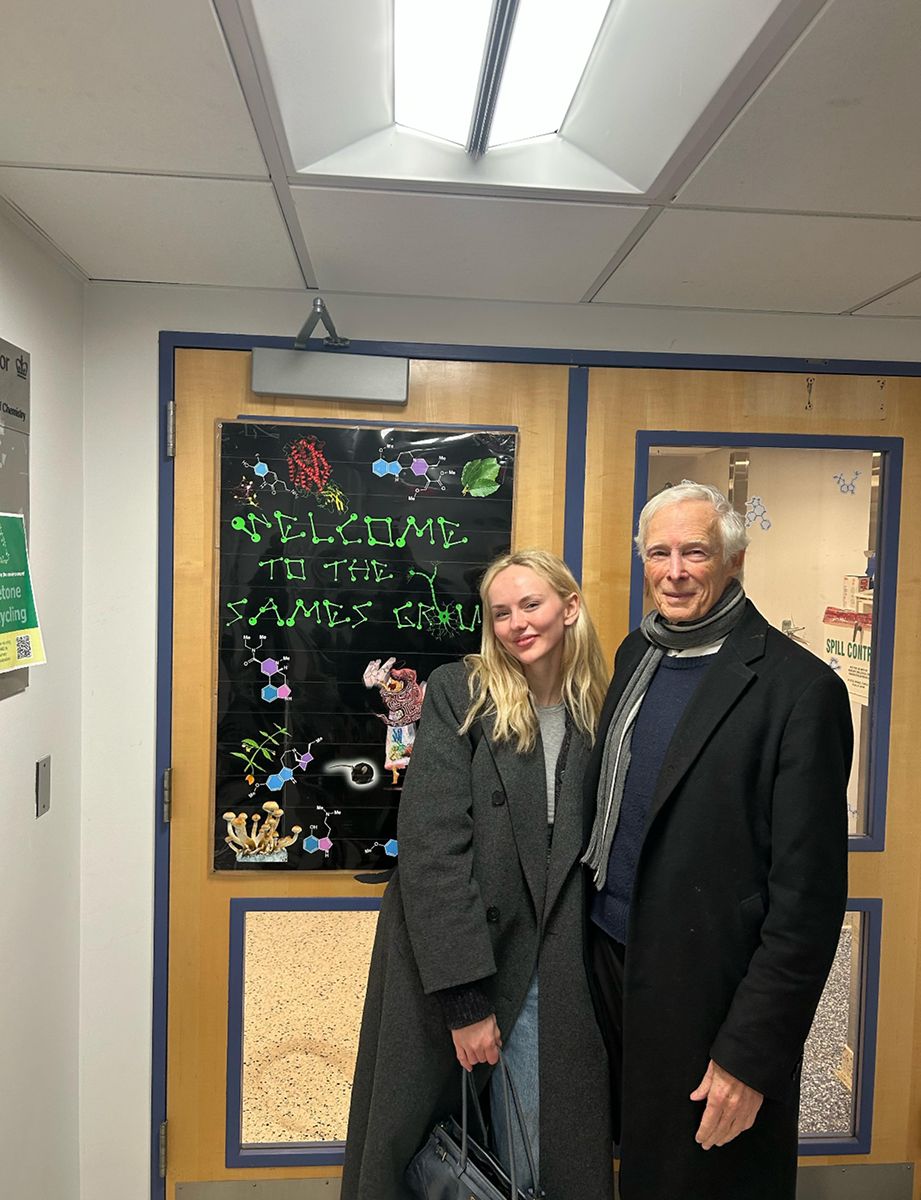
Spent Monday touring what is likely the world’s leading ibogaine research lab at Columbia, with Professor Dalibor Sames (founder of Gilgamesh Pharmaceuticals), Leonard Pickard and David Lankri. Ibogaine is going to be a massive breakthrough for psychiatry and possibly medicine as a whole. Dr Nolan Williams’ conducted the first study to use neuroimaging to evaluate ibogaine treatment for traumatic brain injury and PTSD in special operations vets. The findings were incredible: an 88% reduction in PTSD symptoms, an 87% reduction in depression scores and marked improvements in cognitive function. No other drug has ever been able to alleviate the functional and neuropsychiatric symptoms of traumatic brain injury!! Gilgamesh is working on a cardio-safe ibogaine analog - which could remove the main barrier to wider use.
- LINKEDIN · IMAGERecorded 4 Sept 2026
THE most common question we're asked on calls is "How is this free?" It was my first question too. (Actually, I think I said "I'm very suspicious!" to Amie Leighton 😆) Clinicians are so used to being sold a product (or become the product 😒) or asked to pay for a pricey subscription, that we've come to believe this is the only model that could possibly exist in this field. This is why I was so surprised when Saroosh Khan informed me that running an EHR, like Allia, for individual clinicians and small practices is relatively low-cost 😲 So in the words of our insanely talented Content Manager Areesha Hosmer, here is why Allia is free and always will be! 🔗 https://lnkd.in/g-yUZ5TG
- LINKEDIN · IMAGERecorded 4 Sept 2026
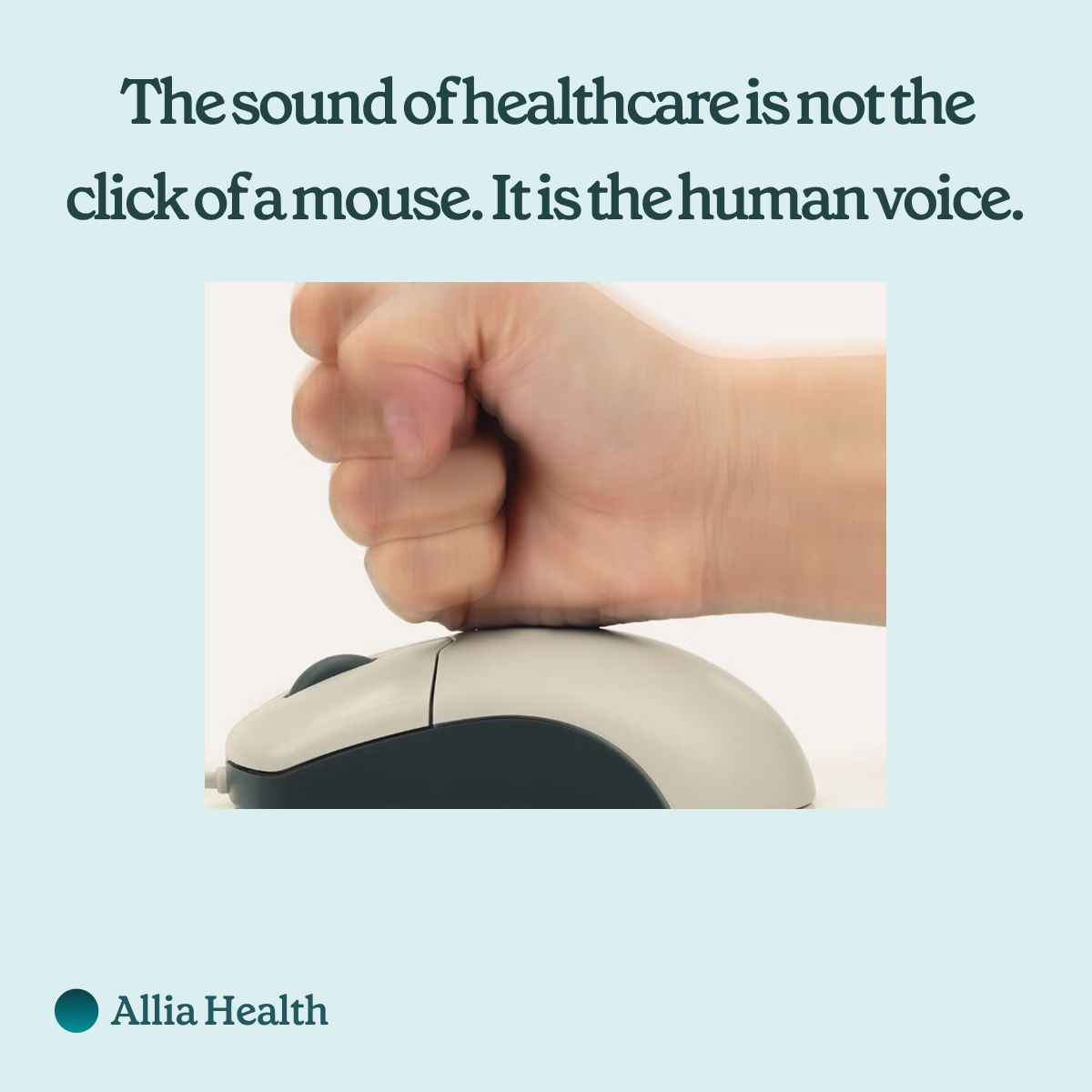
Should we start tracking click count? One of our advisors - Layne Gritti DO- suggested it, and I kind of like the idea. Every click a clinician makes is really just a tiny step or decision or acknowledgement that adds to their mental labor. There are clicks required on every form, every dropdown, and every new window that opens when you just want to finish your note. I’ve heard people call it “death by clicks.” And I’m guessing not many clinicians are thinking about something as mundane as clicks (not when they’ve got much more important things to think about), but as builders of tech, we should be thinking about it, along with any other small tweak we can make in the software to make their lives easier. Maybe click count should be a metric, if only because it would at least tell us if the tools we’re building are getting lighter or heavier to use.
- LINKEDIN · IMAGERecorded 4 Sept 2026
Allia Health is now officially a Public Benefit Corporation, and I wanted to share why that matters to us. Neither Saroosh Khan nor I came into this as “big tech” people. We’re not from the usual founder pipeline. I’m here because I owe my life to mental health clinicians. He’s here because he’s a problem-solver who refuses to spend his life building things that only move money around rather than meaningfully help people. I’m not blind to the mistrust that exists in this space, and the fact that a lot of it is well earned. Clinicians have been promised the world by tech companies and then left to chase authorisations, fight their EHR, or watch their workplace turn into a metrics factory. I’ve learned just as much from the failures in this industry as from the few bright spots. (Probably more, if I’m honest.) Becoming a Public Benefit Corporation is our way of formalising the commitments we keep talking about. It gives us a legal structure that lets us prioritise the wellbeing of clinicians and the people they care for alongside the financial success of the company. And it gives us room, legally and operationally, to make decisions that aren’t always optimised for short-term revenue, but are optimised for doing the right thing. That means that we are set up to: – Reinvest revenue in tools that reduce clinician burden, even when they’re not the “most profitable” features. – Maintain our commitment to keeping Allia Health free for individual clinicians. – Keep clinicians at the centre of product, partnership, and reimbursement decisions. – Protect clinical quality and patient wellbeing, even when investors or markets push for scale above all else. Being a PBC doesn’t magically solve everything, but it does give us a structure that matches our intentions. I’m here because mental health clinicians changed my life. Becoming a PBC is one way of honouring that , and making sure the company we’re building reflects the kind of care and integrity they model every day.

6 of 119 adsSign up to see every Allia Health (YC S26) ad, filter by format and date, and get alerts on new ones.
See all 119 adsWatch the companies you care about.
Filter every ad by industry, country, format and network, and get alerts when a company you watch starts running new ads.