On air · 2 of 3 networks
Allergy EAACI
- journalallergy.com
- Media, Events & Publishing
- CH
- 9 employees
Allergy EAACI’s ads on LinkedIn, Meta and Google, recorded by adsrunning. Browse the latest here for free. Sign up free to see all 118. Watch Allergy EAACI with Starter to get each new one in your feed.
Watchlist with Starter · $49/mo
| Network | Status | Live ads | Nov 2025LinkedIn activity · 52 weeksOct 2026 | Checked | Next step |
|---|---|---|---|---|---|
| Running | 2 | Checked 30 Oct 2026 | See all 118 ads → | ||
| Meta | Running | 8 | Active ads on the Meta Ad Library, all countries | Checked 26 Oct 2026 | Collect them with the API → |
| None recorded | 0 | No ads found on the Google Ads Transparency Center | Checked 1 Oct 2026 | Collect them with the API → |
Allergy EAACI has 2 live LinkedIn ads. Its Facebook page had 8 active ads on 26 Oct 2026, and we recorded no Google ads on 1 Oct 2026.
Latest ads
- LINKEDIN · IMAGESince 27 Oct 2026
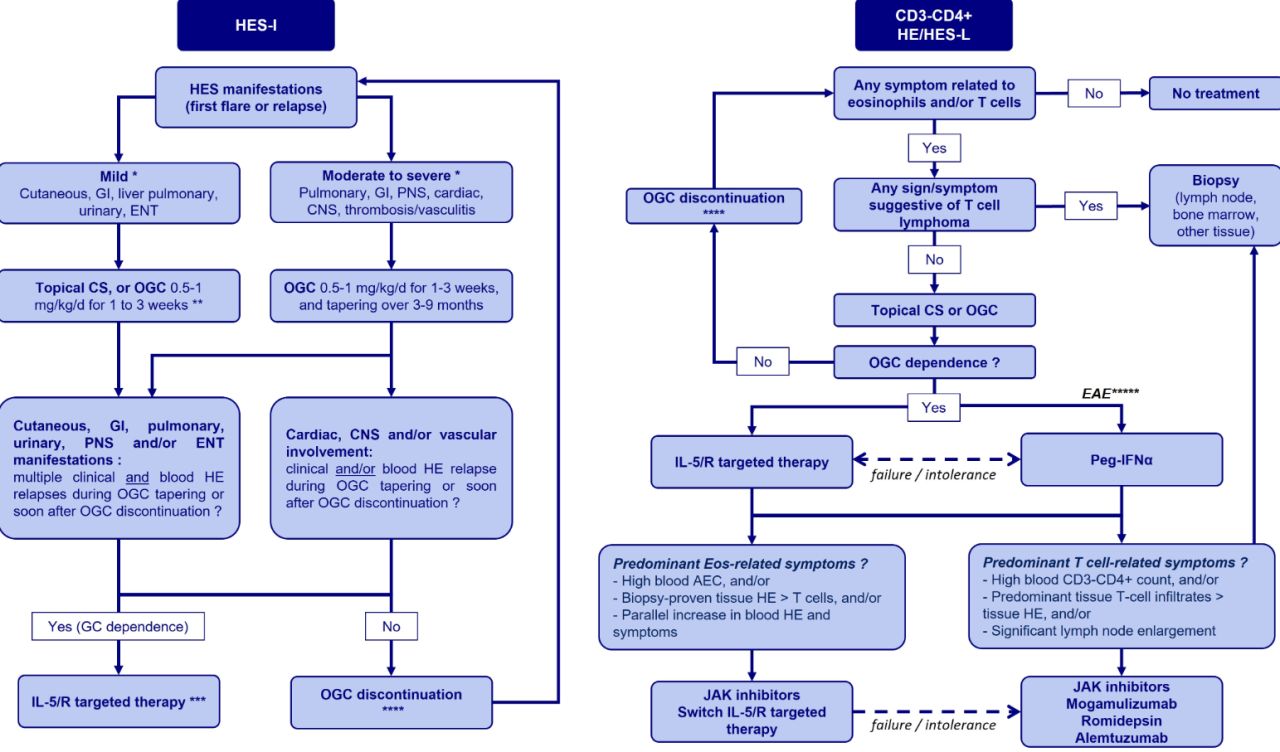
Open Access: Algorithms in Allergy: Treatment of Hypereosinophilic Syndromes, 2026 Update. Corresponding author: Guillaume Lefèvre Read the article here: doi.org/10.1111/all.70533 This medical algorithm provides a step-by-step approach for the treatment of non-clonal and neoplastic hypereosinophilic syndromes You can find the corresponding diagnosis algorithm here: doi.org/10.1111/all.70539 #Allergy_journal Read other medical algorithms published in #Allergy here: https://lnkd.in/giiJaJKJ
- LINKEDIN · IMAGESince 23 Oct 2026
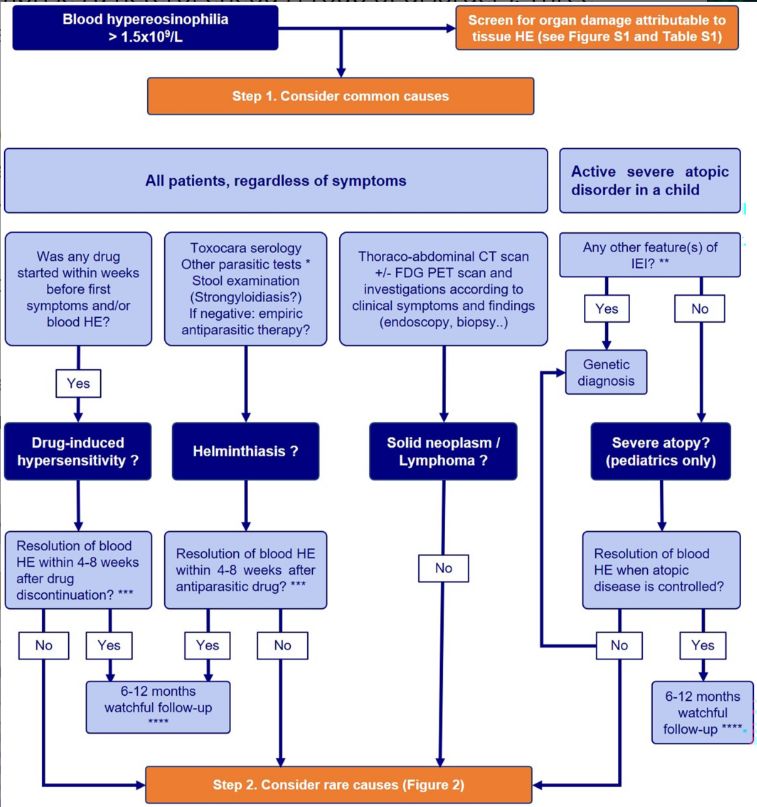
Open Access: Algorithms in Allergy: Diagnosis of Hypereosinophilic Syndromes, 2026 Update. Corresponding author: Guillaume Lefèvre Read the article here: doi.org/10.1111/all.70539 This medical algorithm provides a step-by-step approach for diagnosing blood hypereosinophilia (HE), blood HE associated with organ damage and tissue-restricted HES with eosinophilia. You can find the corresponding treatment algorithm here: https://lnkd.in/e8XTUwGd #Allergy_journal Giacomo Emmi, Read other medical algorithms published in #Allergy here: https://lnkd.in/giiJaJKJ
- LINKEDIN · IMAGESince 14 Oct 2026
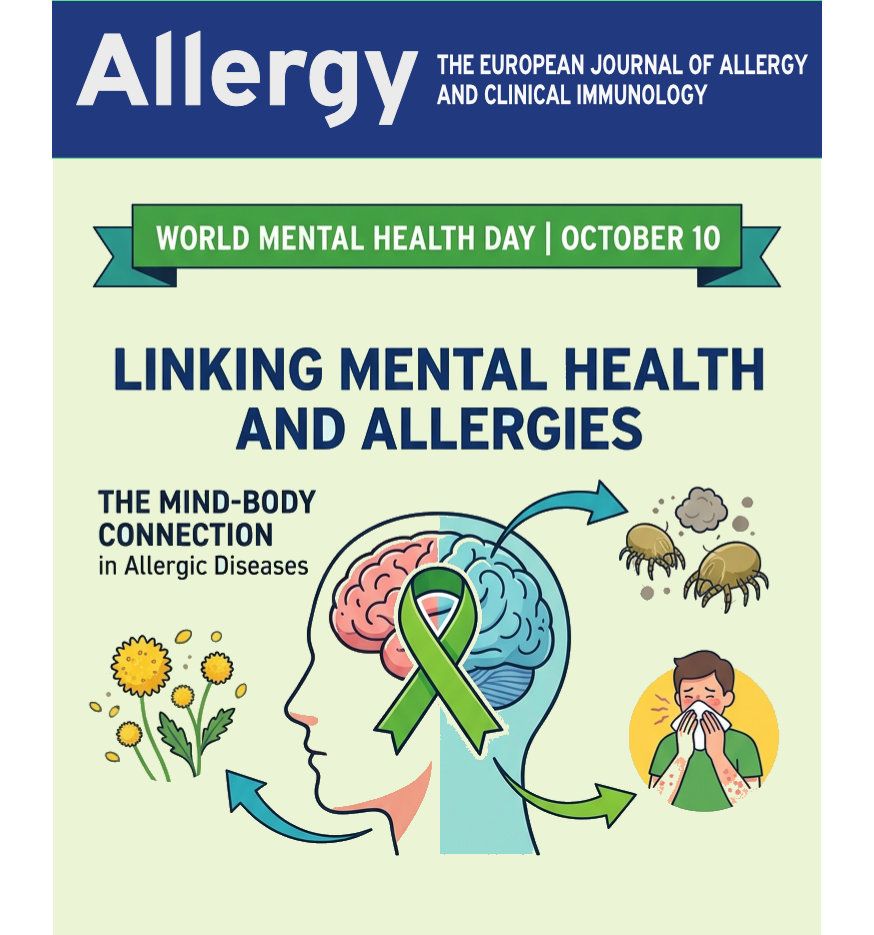
As part of #WorldMentalHealthDay, we would like to bring awareness to allergic diseases that can coexist with mental health comorbidities. These can be further aggravated by the anxiety related to the disease. The psychosocial impact of allergies is discussed in these recently published articles in #Allergy: 1. Hartiala M, Elenius V, Pesquera AA, et al. Exposures in Indoor Air Affecting Health. Allergy. 2026;81(3):700-719. doi.org/10.1111/all.70179 2. Cavaleiro Rufo J, Paciencia I, Jutel M, et al. The Impact of War on Asthma, a Systematic Review and Meta-Analysis: An EAACI Task Force Report. Allergy. 2026;81(1):69-83. doi.org/10.1111/all.70038 3. Knibb RC, Herbert LJ, Jones CJ, et al. Global availability and uptake of psychological services for adults, caregivers and children with food allergy. Allergy. 2024;79(10):2787-2797. doi.org/10.1111/all.16204 4. Cameron S, Donnelly A, Broderick C, et al. Mind and skin: Exploring the links between inflammation, sleep disturbance and neurocognitive function in patients with atopic dermatitis. Allergy. 2024;79(1):26-36. doi.org/10.1111/all.15818 5. Fieten KB, Drijver-Messelink MT, Cogo A, et al. Alpine altitude climate treatment for severe and uncontrolled asthma: An EAACI position paper. Allergy. 2022;77(7):1991-2024. doi.org/10.1111/all.15242 6. Eyice Karabacak D, Demir S, Yegit OO, et al. Impact of anxiety, stress and depression related to COVID-19 pandemic on the course of hereditary angioedema with C1-inhibitor deficiency. Allergy. 2021;76(8):2535-2543. doi.org/10.1111/all.14796 7. Prescott SL, Logan AC, Bristow J, et al. Exiting the Anthropocene: Achieving personal and planetary health in the 21st century. Allergy. 2022;77(12):3498-3512. doi.org/10.1111/all.15419 8. Haahtela T, Jantunen J, Saarinen K, et al. Managing the allergy and asthma epidemic in 2020s-Lessons from the Finnish experience. Allergy. 2022;77(8):2367-2380. doi.org/10.1111/all.15266 9. Celebi Sozener Z, Ozdel Ozturk B, Cerci P, et al. Epithelial barrier hypothesis: Effect of the external exposome on the microbiome and epithelial barriers in allergic disease. Allergy. 2022;77(5):1418-1449. doi.org/10.1111/all.15240 10. Pfaar O, Agache I, Bergmann KC, et al. Placebo effects in allergen immunotherapy-An EAACI Task Force Position Paper. Allergy. 2021;76(3):629-647. doi.org/10.1111/all.14331 Read more articles published in #Allergy here: www.journalallergy.com #allergy_journal
- LINKEDIN · IMAGESince 9 Oct 2026
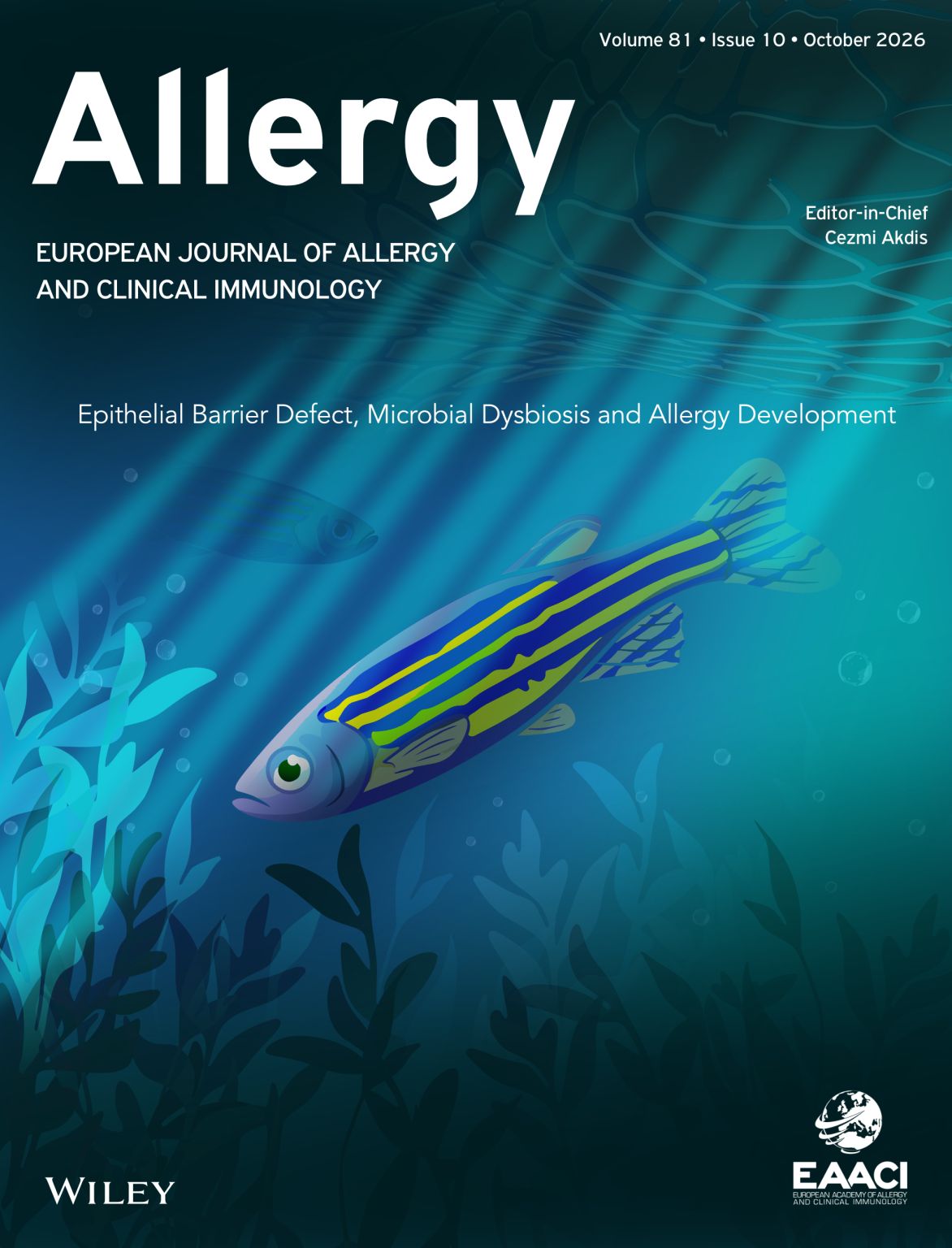
Much as the #zebrafish (Danio rerio) on this issue's cover lives in constant exchange with its surroundings, the #epithelial #barrier functions less as a passive wall than as a dynamic interface that senses external exposure and translates it into immune and microbial change. Overall, these systems provide an excellent model to study the interaction of epithelial barriers, tissue cells, environmental knox, immune system and tumours. A broad range of harmful environmental exposures, including micro- and nanoplastics, food additive emulsifiers, and household cleaners, have been associated with impaired tight-junction function and epithelial barrier integrity across the respiratory, cutaneous, esophageal, and gastrointestinal epithelia. The resident microbiota exhibits comparable environmental plasticity, with exposure- and disease-associated dysbiosis varying substantially according to anatomical site and developmental stage. In this issue, Delaroque et al. review how diet-microbiome-immune crosstalk at the gut mucosa shapes the balance between oral tolerance and food allergy. Ventura et al. present a systematic review linking early-life microbiota signatures, including reduced diversity and Bifidobacterium depletion, to subsequent food allergy risk. Smeekens et al. discuss how the external exposome, including microbial exposures, shapes food allergy risk alongside other environmental factors. Sert and Bilgi et al. show that inhaled polypropylene nanoplastics disrupt the respiratory epithelial barrier and interact differently with plasma proteins between sexes. Galindo et al. report that higher ultra-processed food consumption increases the risk of childhood asthma onset. Gu et al. identify a FUT1-CDH12 fucosylation axis that drives airway epithelial barrier dysfunction and allergic inflammation in asthma. Jakwerth et al. show that distinct nasal epithelial immune signatures in early life predict divergent asthma trajectories through childhood. Tossavainen and Turunen et al. find that climate-altered grass pollen disrupts nasal epithelial barrier integrity and cilia-related gene expression. Werner and Schaier et al. show that ionic and nanoparticulate cobalt penetrate skin differently and elicit distinct immune signatures in allergic contact dermatitis. Fehr et al. find that atopic dermatitis and geography-linked dietary habits significantly shape fecal microbiome composition across Tanzanian and Swiss cohorts. Lemoine et al. show that gut and salivary dysbiosis in children with food protein-induced enterocolitis syndrome partially resolves after tolerance acquisition. Wright et al. demonstrate that sodium dodecyl sulfate-containing toothpaste acutely reduces esophageal mucosal impedance and alters salivary barrier-defense proteins in healthy adults. ...continued in the comments
- LINKEDIN · IMAGESince 25 Sept 2026
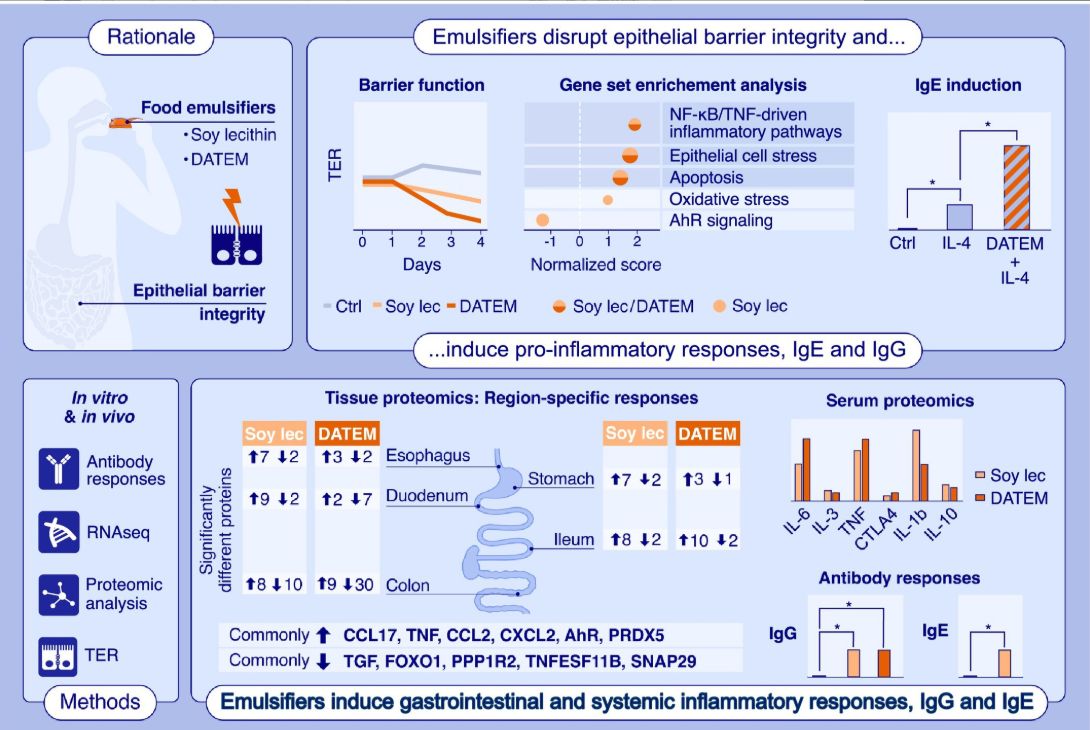
A Strong Proposal for the Reasons of Pandemic Increase in Food Allergies Could common food emulsifiers affect intestinal barrier integrity and IgE immune responses? In this new study, SIAF researchers and their international collaborators investigated soy lecithin and DATEM, two widely used emulsifiers found in processed foods, including some peanut butters. Using human gut-on-a-chip and adult stem cell-derived colon organoid-on-a-chip models, together with human immune cells and mouse models, the researchers found that both emulsifiers: 🔹 Disrupted intestinal epithelial barrier integrity 🔹 Activated pro-inflammatory pathways, including TNF and NF-κB signalling 🔹 Induced local and systemic inflammatory responses 🔹 Stimulated particularly IgEantibody responses Soy lecithin additionally induced oxidative stress and increased IgE levels in mice, while DATEM enhanced IL-4-induced IgE production in human peripheral blood mononuclear cells. These findings support the Epithelial Barrier Theory and highlight the need to consider barrier dysfunction and low-grade immune activation when evaluating the biological effects of commonly used food additives. Further studies are needed to determine their long-term effects in humans. Congratulations to the entire research team on this publication! Read the open-access article: doi.org/10.1111/all.70473 #SIAF #EpithelialBarrier #FoodEmulsifiers #FoodAllergy #GutHealth #Immunology #AllergyResearch #GutOnAChip #Organoids #Inflammation #Davos #ScienceCity #Graubünden #UniversityofZürich #UZH #Allergy_journal Epithelial Barrier and Microbiome journalallergy.com
- LINKEDIN · IMAGESince 24 Sept 2026
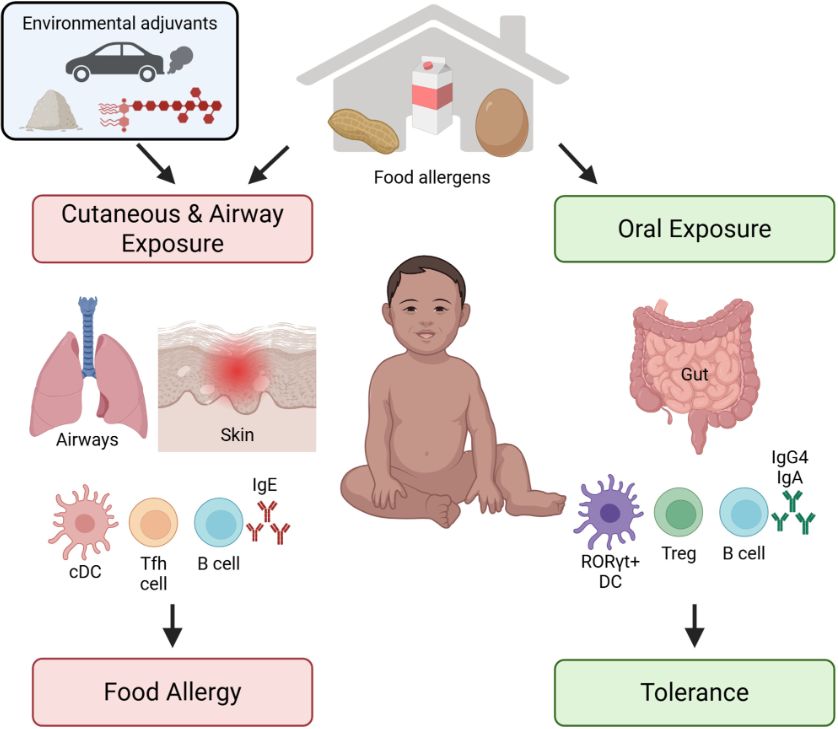
Open Access: The External Exposome and Food Allergy: How Environmental Exposures Shape Disease Risk. First author: Johanna M. Smeekens; corresponding author: Timothy P. Moran Read the article here: doi.org/10.1111/all.70501 With over 150 references, this review article provides an overview of the most important environmental exposures affecting food allergy. It includes a discussion of environmental food exposures via non-oral routes, microbial exposures, air pollution, industrial chemicals, and nutrition. #Allergy_journal Read more articles published in #Allergy on #foodallergy here: https://lnkd.in/gb89TBc
6 of 118 adsSign up to see every Allergy EAACI ad, filter by format and date, and get alerts on new ones.
See all 118 adsWatch the companies you care about.
Filter every ad by industry, country, format and network, and get alerts when a company you watch starts running new ads.