On air · 1 of 3 networks
AGR
- agrinventory.com
- Logistics & Transportation
- IS
- 137 employees
AGR’s ads on LinkedIn, Meta and Google, recorded by adsrunning. Browse the latest here for free. Sign up free to see all 433. Watch AGR with Starter to get each new one in your feed.
Watchlist with Starter · $49/mo
| Network | Status | Live ads | Nov 2025LinkedIn activity · 52 weeksOct 2026 | Checked | Next step |
|---|---|---|---|---|---|
| Running | 17 | Checked 30 Oct 2026 | See all 433 ads → | ||
| Meta | None recorded | 0 | No active ads recorded on the Meta Ad Library | Checked 16 Oct 2026 | Collect them with the API → |
| Not checked | — |
AGR has 17 live LinkedIn ads. Its Facebook page had no active ads on 16 Oct 2026.
Latest ads
- LINKEDIN · IMAGESince 28 Oct 2026
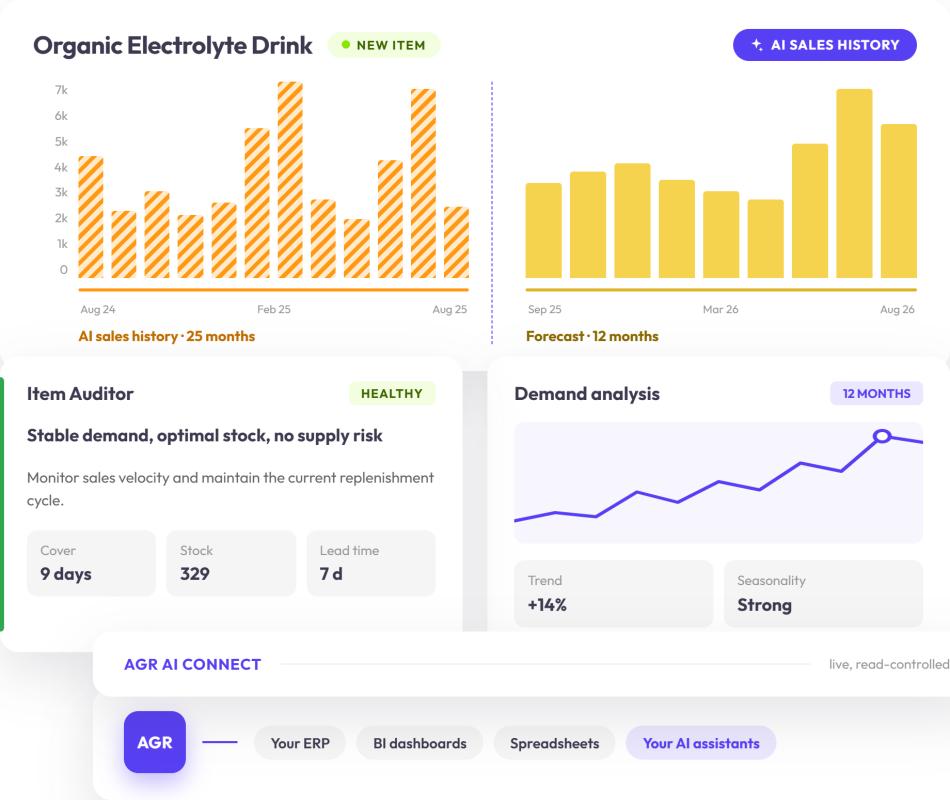
Our customer survey found that 82% of planners require clear logic before they will trust an AI output. That result didn’t surprise me. If anything, it confirmed something that has been core to how we develop at AGR for a long time: transparency has to be built into the product, not added afterwards. It becomes even more important with AI. When we designed AI Sales History, we were asking planners to trust something quite complex: building a sales history for an item based on the behaviour of comparable items. We could simply have surfaced the result. Instead, we show how we got there. Planners can see which comparable items were selected, why they were selected, the weightings applied and how the resulting sales history was constructed. They can question the matches, adjust the inputs if they disagree, and every override is logged so the reasoning remains traceable. That matters because this isn’t just an interesting AI recommendation. The sales history feeds directly into things like safety stock, reorder points and opening order quantities. If a planner can’t understand where the numbers came from, it’s very difficult for them to confidently own the decisions that follow. For me, this is one of the most important principles as we bring more AI into inventory planning. Transparency isn’t a feature of our AI strategy. It’s folded into how we build the product. 👉 https://lnkd.in/eNsHgh2a
- LINKEDIN · IMAGESince 20 Oct 2026
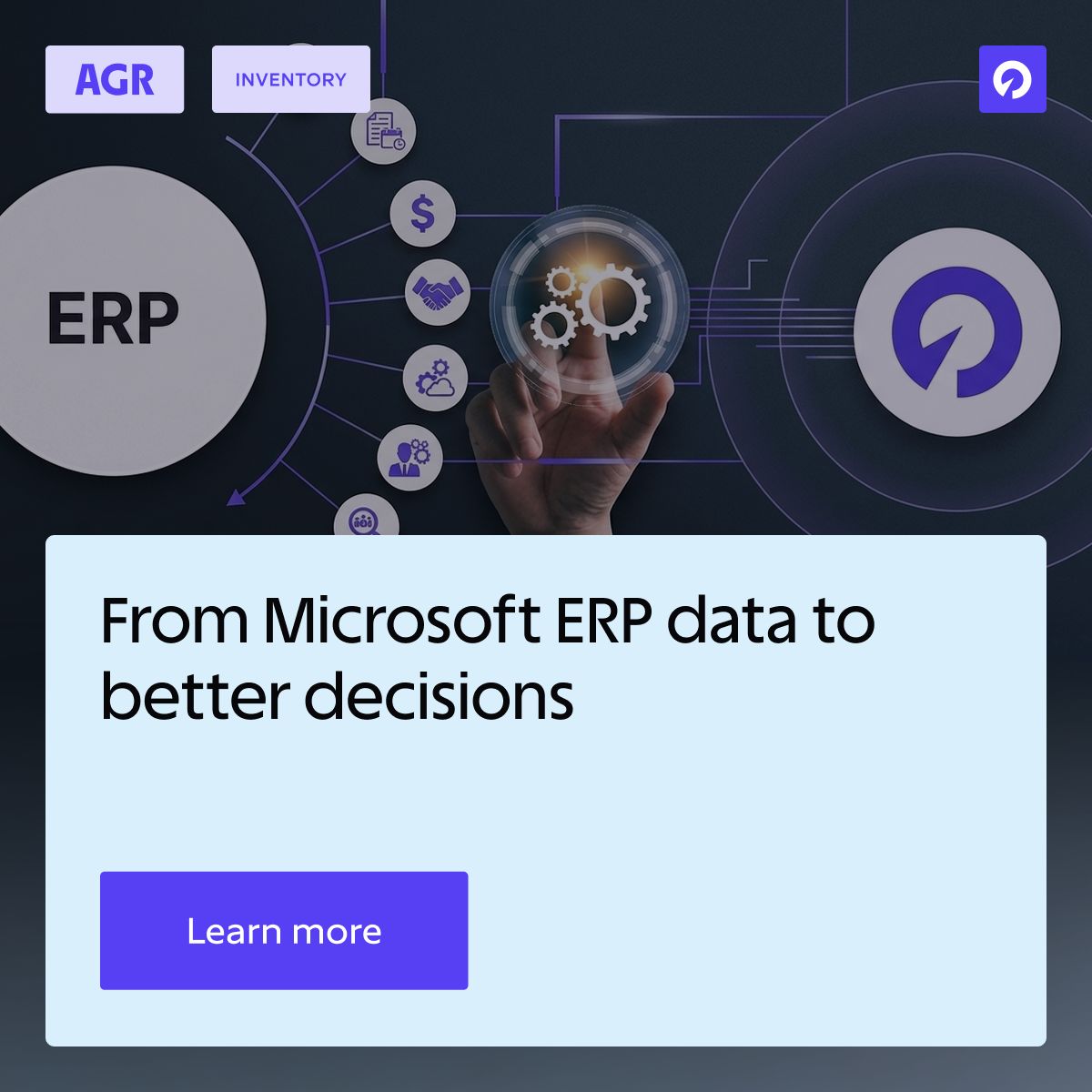
Your Microsoft ERP records what happened. AGR helps you decide what to do next with better planning.
- LINKEDIN · IMAGESince 20 Oct 2026
Extend your Microsoft ERP with advanced forecasting, inventory optimisation and automated replenishment.
- LINKEDIN · IMAGESince 20 Oct 2026
Microsoft ERP data becomes actionable with automated forecasting, replenishment and inventory insights.
- LINKEDIN · IMAGESince 20 Oct 2026
A retailer launching 200 new lines ahead of the Christmas range has a planning problem most systems quietly ignore. No sales history. No baseline. Just a blank field where the forecast should be. The usual fix is a manual estimate - copy a similar product, apply a gut-feel adjustment, and move on. It works for ten items. At 200, it becomes the single biggest source of forecast error in the business, and nobody knows until the markdowns start. New Item Forecast builds that opening estimate from comparable items that have actually sold - matching on attributes, price point, category, and demand behaviour. The planner gets a starting point grounded in real data rather than a copied cell. We asked planners what they needed from AI before they would trust it. 80% said they required the ability to review and override recommendations before acting. New Item Forecast is designed around exactly that - the AI produces the starting forecast, the planner examines it, adjusts it, and owns the decision. What changes is not who decides. It is what they are applying judgement to.👉 https://lnkd.in/e6G6XkqJ
- LINKEDIN · IMAGESince 20 Oct 2026
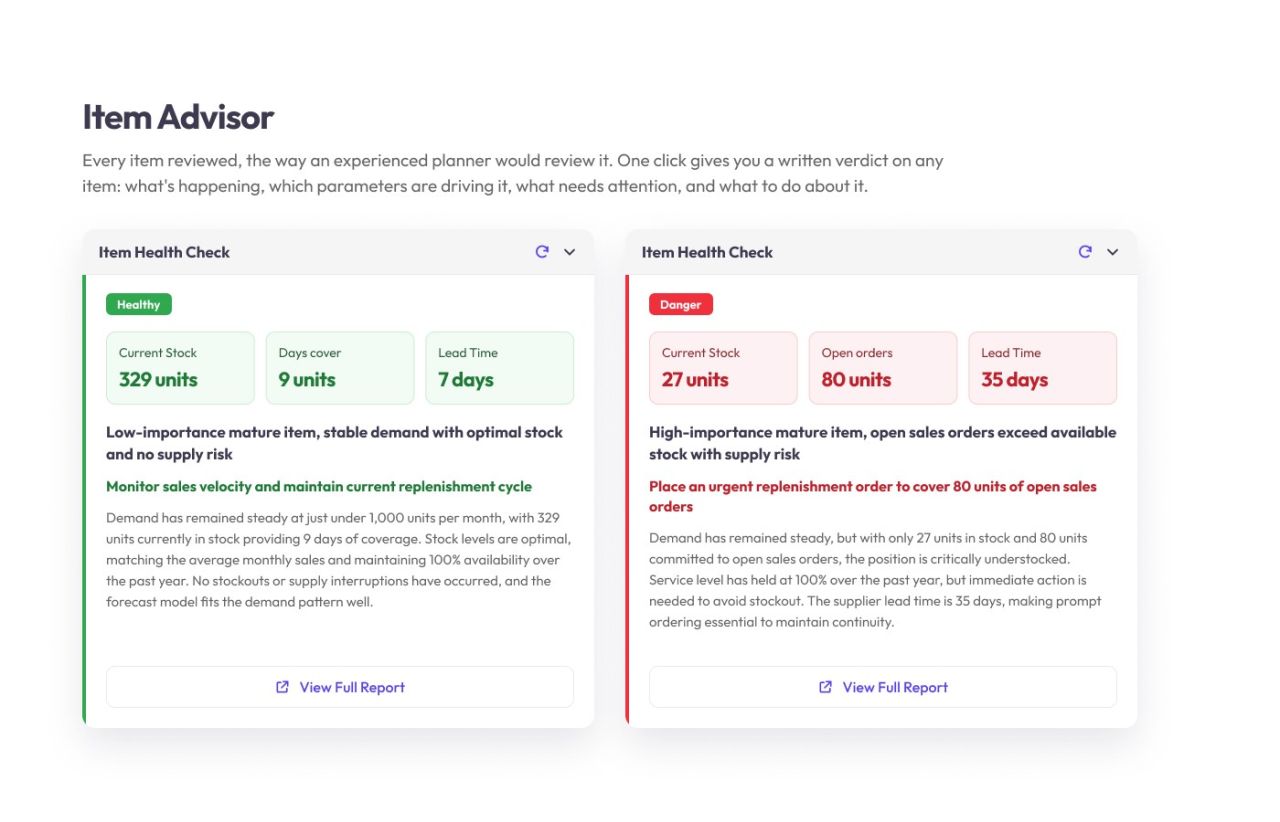
A buying team at a mid-sized wholesale distributor runs a weekly exception report. On a busy week, it has 300 items on it. They look at maybe forty. Not because they are not trying. Because properly reviewing an item - pulling the forecast, checking the lead time, looking at the stock position, understanding why it was flagged - takes fifteen to twenty minutes. At 300 items, that is not a review. It is a selection process, and the criteria for selection are usually proximity to crisis. There is a second problem inside this one. Even the forty items that do get reviewed are often reviewed superficially, because the planner does not have time to understand why the flag was raised - they just act on the fact that it was. 82% of planners say they will not trust an AI output without a clear explanation of the logic behind it. If the flag does not come with reasoning, the review is not really a review. Item Advisor fixes both. One click per item gives the planner forecast logic, risk, ABC classification, lead time position, and item health, written in plain language with a recommendation. The review that took twenty minutes takes two - and it is an actual review, not a rubber stamp. The exception list does not get shorter. But the proportion of it that gets proper attention does. 👉 https://lnkd.in/evtXDZR9

6 of 433 adsSign up to see every AGR ad, filter by format and date, and get alerts on new ones.
See all 433 adsWatch the companies you care about.
Filter every ad by industry, country, format and network, and get alerts when a company you watch starts running new ads.