On air · 1 of 3 networks
Adversa AI
- adversa.ai
- Cybersecurity
- IL
- 19 employees
Adversa AI’s ads on LinkedIn, Meta and Google, recorded by adsrunning. Browse the latest here for free. Sign up free to see all 21. Watch Adversa AI with Starter to get each new one in your feed.
Watchlist with Starter · $49/mo
| Network | Status | Live ads | Nov 2025LinkedIn activity · 52 weeksOct 2026 | Checked | Next step |
|---|---|---|---|---|---|
| None recorded | 0 | Checked 30 Oct 2026 | See all 21 ads → | ||
| Meta | Not checked | — | |||
| Running | 8 | Ads on the Google Ads Transparency Center | Checked 30 Oct 2026 | Collect them with the API → |
Adversa AI has no live LinkedIn ads. We recorded 8 Google ads on 30 Oct 2026.
Latest ads
- LINKEDIN · IMAGESince 26 Oct 2026
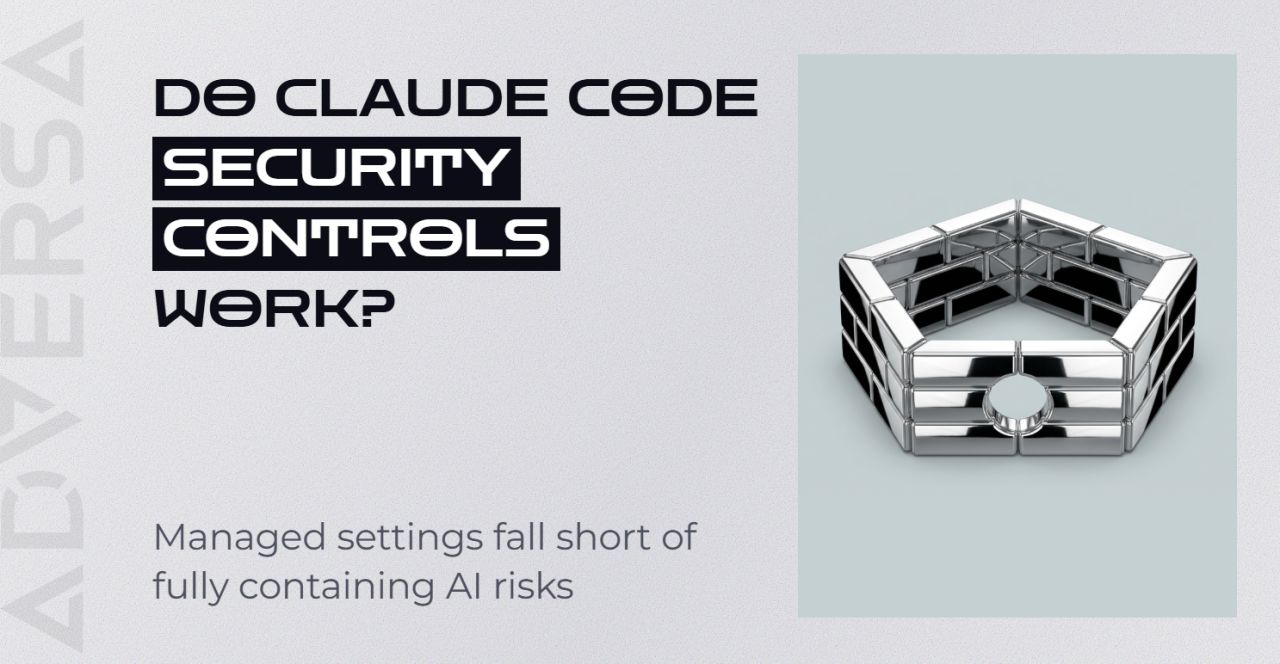
Claude Code's official security controls are a floor, not a containment story. We created a new breakdown of what Anthropic's native security settings cover and where they stop by Anthropic's own account. The short version: managed settings help on locked-down fleets, but they bind one tool, not the rest of the agent zoo on the same laptop. If developers have local admin, cloud-hosted sessions, long-running jobs, or side-channel credentials, the neat policy picture gets messy fast. Nice touches you could have missed in your recent security review: 🔻 Auto mode is not a security control. Anthropic's own numbers show a 17% miss rate on risky actions. That's convenience, not assurance. 🔻 The real attacks hit the harness. The model is less of a target. Pre-trust config execution, approval prompts, config hooks detonating on project open. 🔻 The efficient controls are environmental. Scoped short-lived credentials, egress denied by default, treating config and docs as code, disposable rooms for unattended runs, and runtime visibility into what the agent actually did. Read the full analysis: https://lnkd.in/esa2x244 #ClaudeCode #AIsecurity #AgenticAI #codingagents
- LINKEDIN · IMAGESince 18 Oct 2026
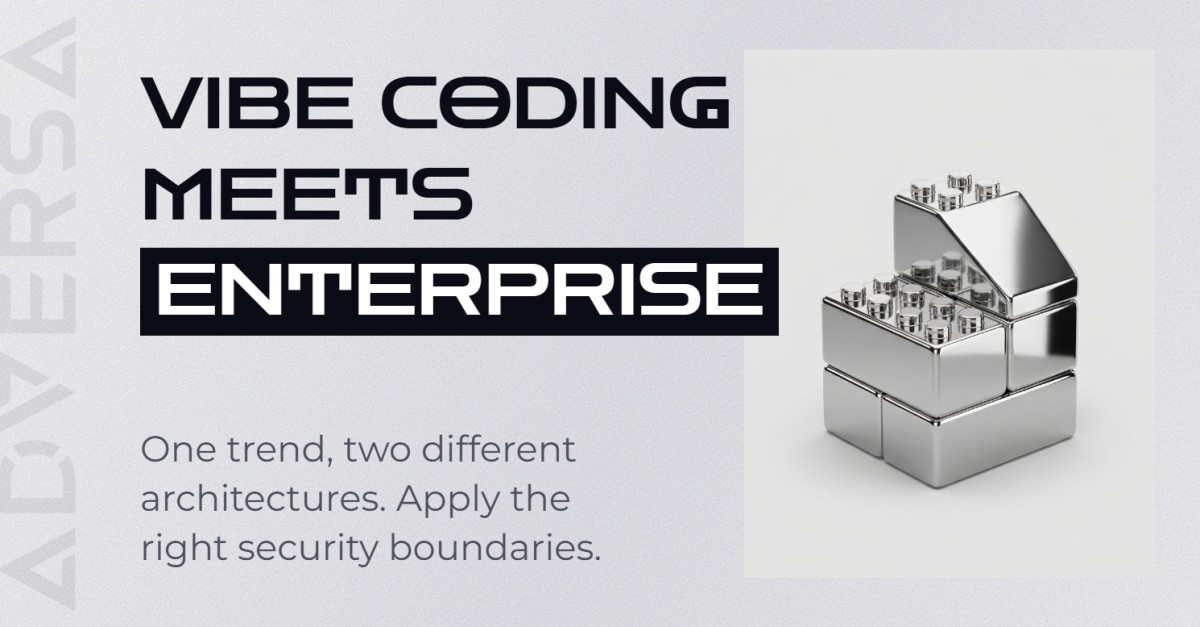
Vibe coding is now an enterprise problem. Employees are building internal dashboards, HR tools, and live CRM integrations. Security teams often don't have visibility into these apps and their build processes. The major conceptual mistake here is to treat "AI coding" as one generic risk category. Vibe coding is a completely new enterprise governance surface. To secure it, you have to split the trend into two materially different architectures: ☁️ Hosted AI builders (SaaS, e.g., Lovable, v0, Base44) The building happens in a vendor's cloud. The main security risks are insecure application design and data exposure, which are often completely invisible to your endpoint security. 💻 Local coding agents (e.g., Claude Code, Cursor, Copilot) These run on employee machines. The additive risk here is an autonomous agent misusing employee privileges and corporate credentials to cause as much damage as a determined insider could. Treating these as the same problem means you're applying the wrong security boundaries. Outright bans don’t work. AppSec, IT, and SOC teams need realistic "paved roads" instead: tenant settings and data classification for SaaS builders, combined with credential scoping, runtime monitoring, AIDR, and identity-level guardrails for local agents. Read our full analysis on how to secure the vibe coding era without relying on "no": https://lnkd.in/eFGnjG3u #Vibecoding #AIsecurity #AIGRC #AgenticAI #AIDR
- LINKEDIN · IMAGESince 18 Oct 2026
Top 10 attacks on Claude Code, mapped to what they actually broke Over the last year, Claude Code has been at the center of worms, CVEs, and quietly declined findings — but almost none of them touch the Anthropic's LLM itself. They hit the harness: config files that execute on project open, trust dialogs that misstate what they authorize, MCP tool definitions that act as exfil channels, plugins and skills that mutate after approval. This breakdown lines up ten attacks, shows exactly which part of the machinery each one compromises, and closes with concrete ways to harden Claude Code or put a runtime control layer in front of it. Read more: https://lnkd.in/e8bW5FnP #Claude #vulnerability #AIsecurity #CodingAgents
- LINKEDIN · IMAGESince 18 Oct 2026
When coding agents wipe databases or leak credentials, the root cause usually isn’t "what the model was thinking" but what the surrounding runtime allowed. Our new article argues that the agent harness is the real security boundary: the loop, tools, memory, approvals, and sandbox around the model. Our article: - Defines the agent harness and maps the ecosystem, with concrete anatomy and examples across Claude Code, Hermes, LangChain Deep Agents, and more. - Catalogs recurring failure classes, from untrusted content and instruction file trust to post-approval mutation and supply chain compromises, lined up with OWASP Agentic ASI risks. - Spells out practical hardening rules. - Connects the guidance to day-to-day operations. We wrote this guide at Adversa AI for teams that already run agents in production and need to harden the actual execution boundary. Read the full article: https://lnkd.in/etJG5gKg #AIsecuiry #AgenticAI #Agentharness
- LINKEDIN · IMAGESince 18 Oct 2026
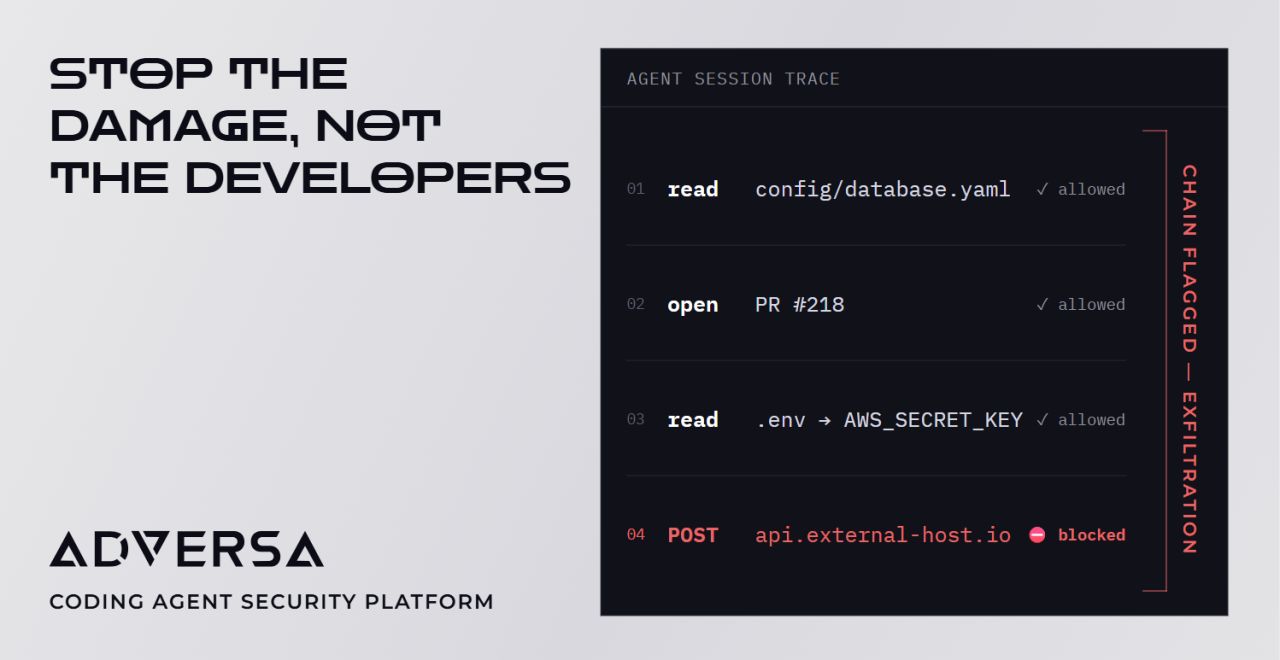
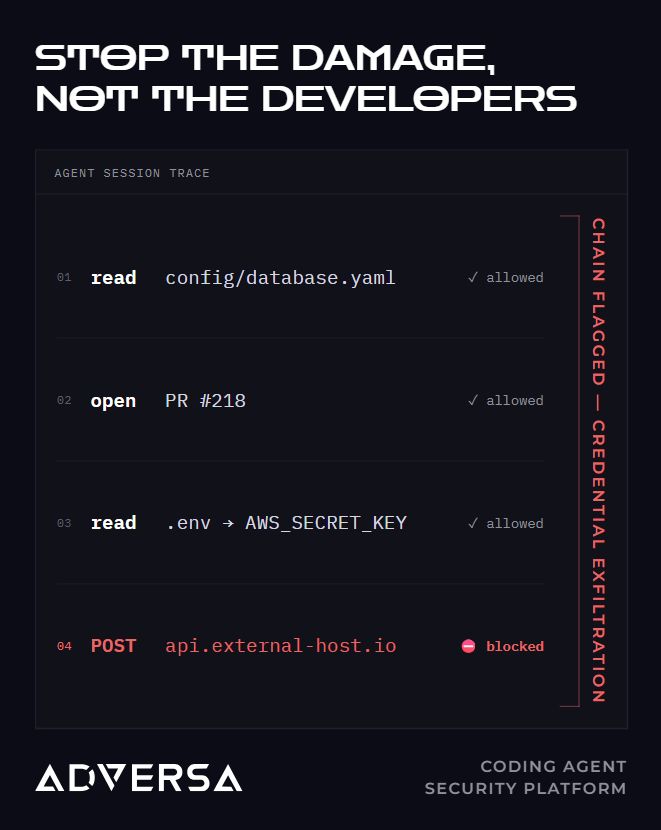
Prevent wiped databases, leaked credentials and backdoored code reaching production. Adversa AI links every action your coding agents take into chains and blocks only the ones that end badly: the wiped database, the leaked credential, the backdoored dependency reaching production. Your developers keep shipping.
- LINKEDIN · IMAGESince 18 Oct 2026
The wiped database. The leaked credential. The backdoored dependency that reached production. Adversa AI links every action your coding agents take into chains and blocks only the ones that end badly. Your developers never feel it.
6 of 21 adsSign up to see every Adversa AI ad, filter by format and date, and get alerts on new ones.
See all 21 adsWatch the companies you care about.
Filter every ad by industry, country, format and network, and get alerts when a company you watch starts running new ads.