On air · 1 of 3 networks
6clickz
- 6clickz.com
- Marketing & Advertising
- CZ
- 16 employees
6clickz’s ads on LinkedIn, Meta and Google, recorded by adsrunning. Browse the latest here for free. Sign up free to see all 27. Watch 6clickz with Starter to get each new one in your feed.
Watchlist with Starter · $49/mo
| Network | Status | Live ads | Nov 2025LinkedIn activity · 52 weeksOct 2026 | Checked | Next step |
|---|---|---|---|---|---|
| None recorded | 0 | Checked 29 Oct 2026 | See all 27 ads → | ||
| Meta | Not checked | — | |||
| Running | 2 | Ads on the Google Ads Transparency Center | Checked 27 Oct 2026 | Collect them with the API → |
6clickz has no live LinkedIn ads. We recorded 2 Google ads on 27 Oct 2026.
Latest ads
- LINKEDIN · IMAGESince 22 Oct 2026
Seven markets in ten years, and not one of them opened with fresh budget. Every new country this coffee e-shop entered was paid for by profit from the countries already running. CZ and SK funded the next one. That one funded the one after. Order went CZ, SK, HU, RO, then BG, HR, SI. Roughly one new market every two years. Slow on purpose. Most expansion plans work the other way around. Someone approves a launch budget, the market gets twelve months to prove itself, and month nine shows up with a ROAS nobody wants to defend. What the profit-funded version changes in practice: 1. the new market opens small, because the money is money someone already earned 2. MER across the whole e-shop stays the KPI, not the new market's own ROAS 3. a weak market does not threaten the group, it just grows slower 4. nobody has to kill it in month nine to protect a budget line The tradeoff is real. This is slower than raising money and buying share, and in a land-grab category it is the wrong model. For an e-shop competing on range and repeat purchase, it turned Google Ads from a cost line into the thing that funded the expansion. Rule: fund new markets from the cash the old ones throw off, and expansion stops being a bet you have to win this quarter. Read more: https://lnkd.in/eUph9atW
- LINKEDIN · IMAGESince 21 Oct 2026
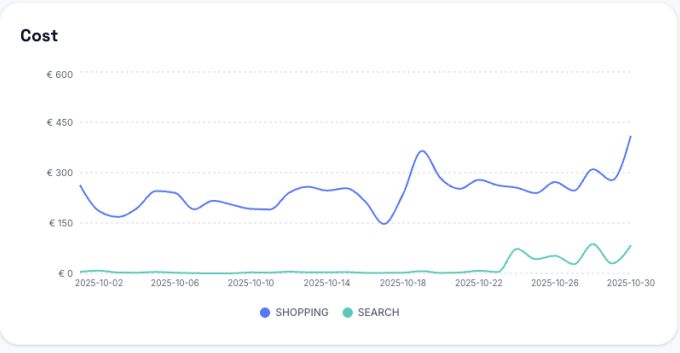
You can change nothing in a PMax campaign and still watch its performance change. What actually governs it is what the rest of your account leaves on the table. Costs rising, conversions flat. The campaign was fairly constrained and had spent months serving almost exclusively in Shopping, so a cost spike under a strict ROAS target made no sense to me. The channel split showed Search. A channel that campaign had barely touched, now taking cost and bringing back close to nothing. Nobody had touched a setting in it that month. The cause sat one campaign over. My exact match Search campaign had stopped delivering the orders it used to, so the decision was to tighten it and raise its ROAS target. What followed: ➡️ The Search campaign went limited ➡️ It started using roughly half its budget ➡️ It stopped entering a chunk of auctions it used to win ➡️ PMax noticed the gap and filled it This took me considerably longer to work out than the label case, because the whole time I was looking inside the wrong campaign. So when a PMax campaign changes behaviour on its own, do not start in PMax. Start with whatever you constrained somewhere else that week. Free PMax Script plus a PDF with the six cases where it saved or made real money on client accounts: https://lnkd.in/diNSkSKx
- LINKEDIN · IMAGESince 20 Oct 2026
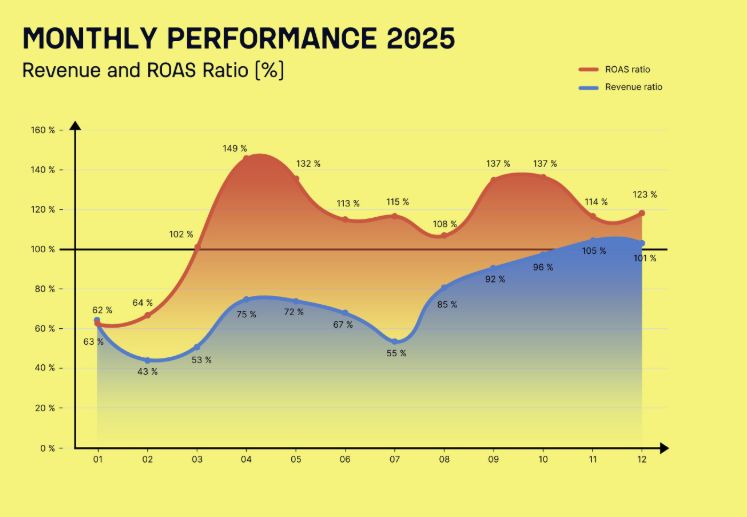
An account doing 53% of last year's revenue in Q1 is not automatically a failing account. On Dedoles that quarter was the plan working. By Q4 the same account was at 102%. ROAS followed the same shape. Q1 at 73% of the previous year, Q4 at 121%. The context matters. One of the largest Slovak e-commerce projects, in restructuring, moving off TV advertising onto performance marketing with hard KPIs. CPC and CPM were up year on year across every platform. The brief was to match last year's revenue and spend less doing it. Q1 went on taking inefficient spend out. Revenue dropped, because that is what happens when you stop paying for the campaigns that were carrying the number. Q2 and Q3 rebuilt volume at a lower click price. October turned out to be the best month of the year. Revenue matched the previous year, ROAS came in 37% better. Anyone reviewing this account on a monthly cadence would have stopped it in March. Rule: a turnaround is shaped like a dip. Agree on the quarter you will be judged in before touching the first campaign, because the dip is where the decisions that produce Q4 get made. Have you had to defend a planned revenue drop to a board? How did that land? Read more: https://lnkd.in/df3Sie28
- LINKEDIN · IMAGESince 15 Oct 2026
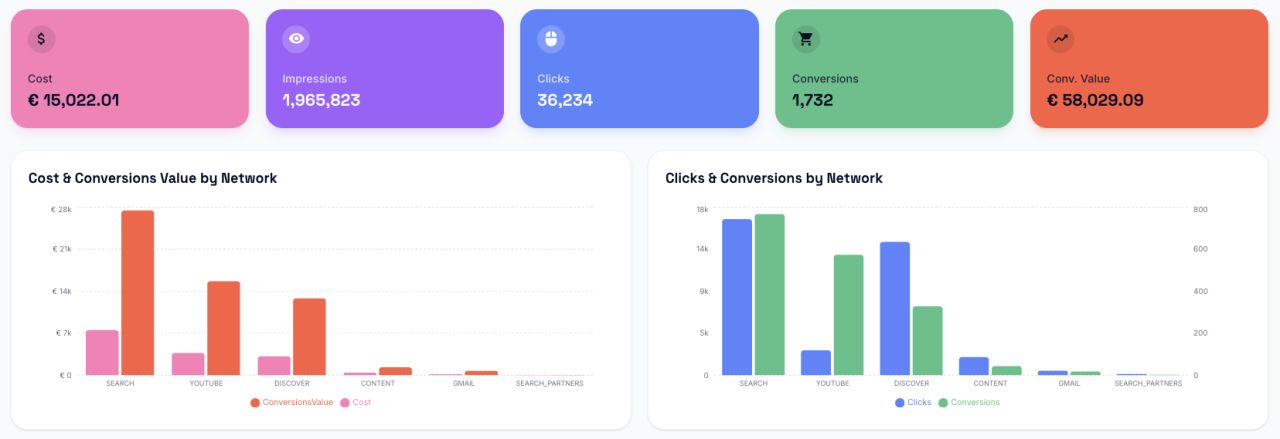
A PMax campaign with no feed often buys Search clicks cheaper than a classic Search campaign does. That result surprised me the first time and it has held up since. No-feed PMax is my favourite campaign type and the one nobody asks me about. Where it goes in: a promo like 30% off everything. Shopping is already covered by campaigns that run, are settled, and do their job. There is no reason to disturb them. Dropping promo creatives into an established Shopping PMax is not much better, because there is a real chance they never serve at all. So you build without a feed. One asset group, promo creatives, scaled into every channel except Shopping. In countries with no Shopping this is not a choice. Every PMax there is a no-feed PMax by default. Two experiments worth your time: ➡️ No-feed PMax against Demand Gen, measured on conversion value. Every channel except Search matters there. ➡️ No-feed PMax against a classic Search campaign, measured on incrementality and on the ordinary metrics. Search terms are visible in the Google Ads interface now, so you can read what the second one actually bought instead of guessing. Both need the campaign kept out of Shopping to stay readable. Then you verify the channel mix, except here the goal flips. Here you want as much Search as you can get. Look at free PMax Script plus a PDF with the six cases where it saved or made real money on client accounts: https://lnkd.in/diNSkSKx
- LINKEDIN · IMAGESince 13 Oct 2026
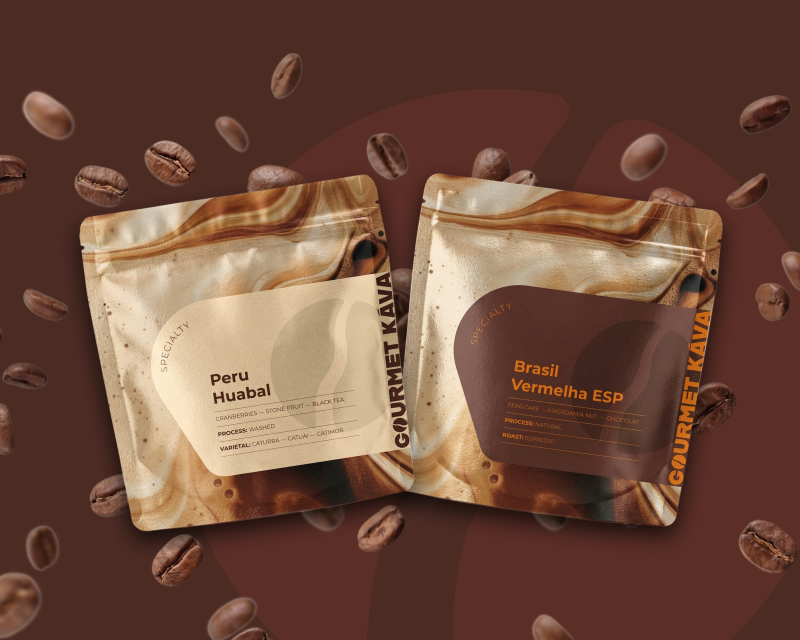
Lowering a target ROAS on purpose is not a mistake when the products underneath it carry different margins. On one coffee e-shop account, dropping the target on a group of Shopping campaigns made the reporting worse and the profit better. The reason sits in the feed, not in the bid strategy. The client roasts their own coffee and owns an accessories brand. Those lines earn far more per order than the brands they resell. One target ROAS across both was quietly costing them money. ✅ own brands: lower target, more volume, more conversions ✅ resold brands: target stays high, because there is no margin to give away Net profit came out higher than it would have been at the ROAS everyone would have called healthy. Agreeing on margin as the primary metric before touching anything is what made that survivable. One limit worth saying out loud: this needs real margin data per product. Without it you are bidding more and hoping. Rule: a target ROAS is not a grade. It is a price you agree to pay, and different products can afford different prices. Read case study: https://lnkd.in/eUph9atW
- LINKEDIN · IMAGESince 8 Oct 2026
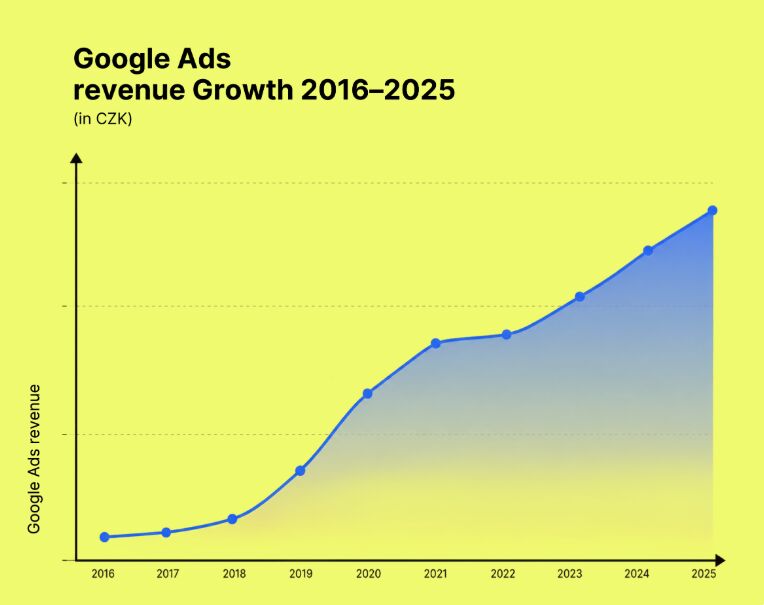
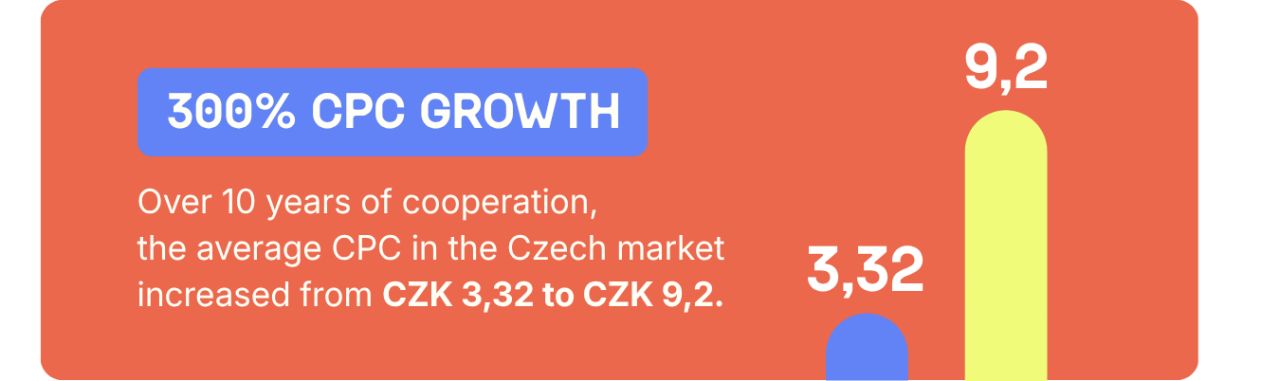
Your CPC did not get worse because you stopped optimising. On one Czech coffee e-shop account, the average click went from 3.32 CZK in 2016 to 9.92 CZK in 2025. Three times the price. Same account, same category, ten years apart. That is the context missing from most "the account is underperforming" conversations. The auction repriced itself over a decade and nobody announced it. What held the account together through that was not a bidding trick. The client roasts their own coffee and owns an accessories brand. Those products earn far more per order than the brands they resell. So the feed stopped being one thing. Own brands got their own targets, resold brands kept theirs. An expensive click only becomes a problem when every product in the feed earns the same. The structure changed too. In 2016 that account ran Single Keyword Ad Groups, one keyword per ad group, because manual control was the only control available. The same structure today would starve automated bidding of the data it needs. Rule: when clicks triple in price over ten years, the fix is not a better bid strategy. It is knowing which products can afford the new price. Read more: https://lnkd.in/eUph9atW What does your CPC curve look like, if you have an account old enough to have one?
6 of 27 adsSign up to see every 6clickz ad, filter by format and date, and get alerts on new ones.
See all 27 adsWatch the companies you care about.
Filter every ad by industry, country, format and network, and get alerts when a company you watch starts running new ads.