On air · 2 of 3 networks
2NSystems
- 2nsystems.com
- IT Services & Consulting
- US
- 36 employees
2NSystems’s ads on LinkedIn, Meta and Google, recorded by adsrunning. Browse the latest here for free. Sign up free to see all 21. Watch 2NSystems with Starter to get each new one in your feed.
Watchlist with Starter · $49/mo
| Network | Status | Live ads | Nov 2025LinkedIn activity · 52 weeksOct 2026 | Checked | Next step |
|---|---|---|---|---|---|
| Running | 21 | Checked 29 Oct 2026 | See all 21 ads → | ||
| Meta | None recorded | 0 | No active ads recorded on the Meta Ad Library | Checked 16 Oct 2026 | Collect them with the API → |
| Running | 17 | Ads on the Google Ads Transparency Center | Checked 27 Oct 2026 | Collect them with the API → |
2NSystems has 21 live LinkedIn ads. Its Facebook page had no active ads on 16 Oct 2026, and we recorded 17 Google ads on 27 Oct 2026.
Latest ads
- LINKEDIN · IMAGERecorded 29 Aug 2026
Our nationwide project team supports critical IT infrastructure for data centers, including UPS systems, cooling, and more. Schedule an assessment today.
- LINKEDIN · IMAGERecorded 29 Aug 2026
Our nationwide project team supports critical infrastructure for complex live environments, including UPS systems, cooling, and more. Schedule an assessment today.
- LINKEDIN · IMAGERecorded 29 Aug 2026
A brief system disruption can lead to major financial losses. We find vulnerabilities before they fail and strengthen the critical systems that keep you running. Stay ahead of downtime, not behind it.
- LINKEDIN · IMAGERecorded 29 Aug 2026
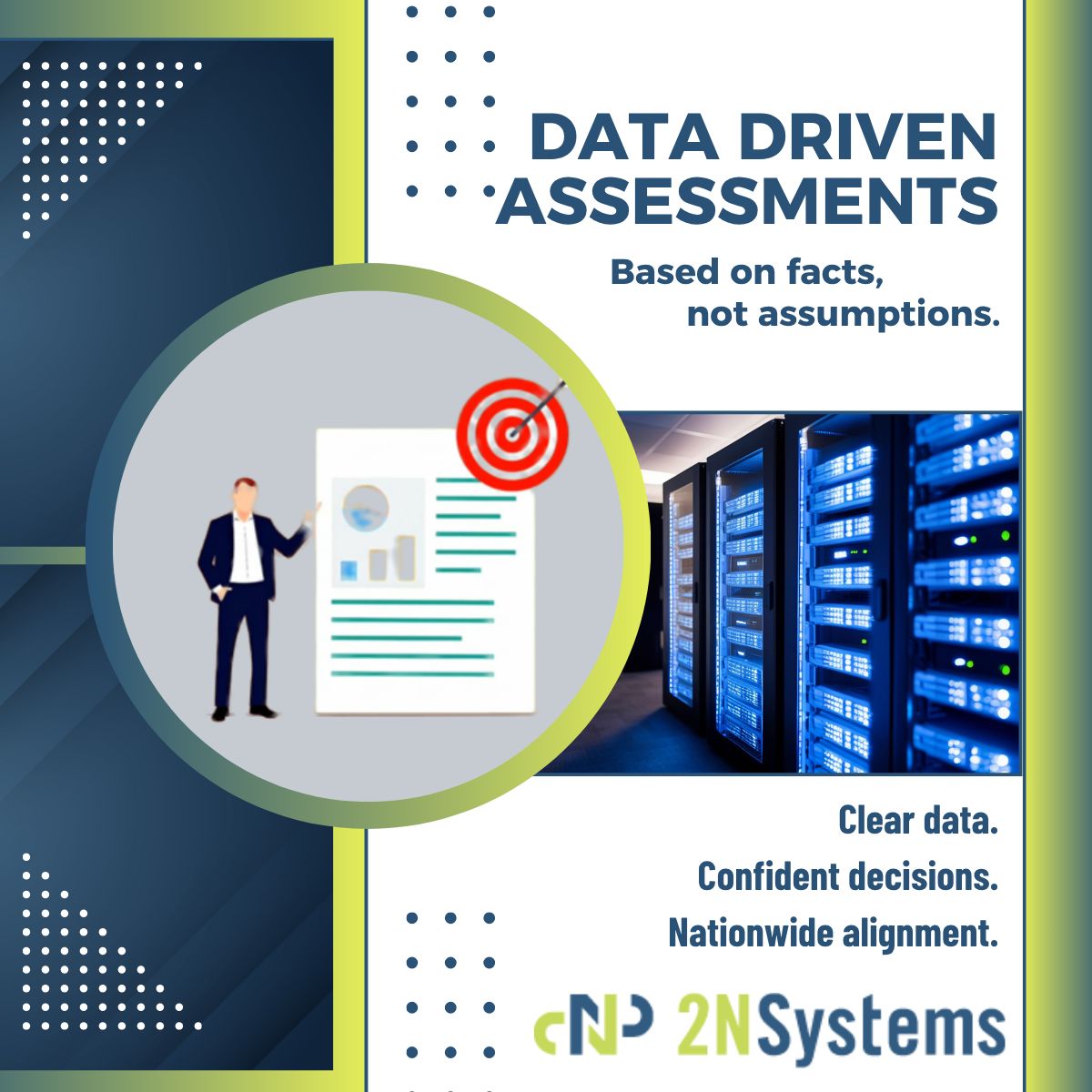
When was the last time your infrastructure baseline was validated? Many organizations operate without updated one lines, asset inventories, or clear capacity documentation. That lack of visibility creates friction between IT, facilities, and leadership. 2NSystems brings everyone to the same page with a standardized, data driven assessment that defines what exists and what needs attention. We help teams align and move forward with confidence across sites nationwide. Start making decisions based on facts, not assumptions. Contact us today! https://zurl.co/0VuLo
- LINKEDIN · IMAGERecorded 29 Aug 2026
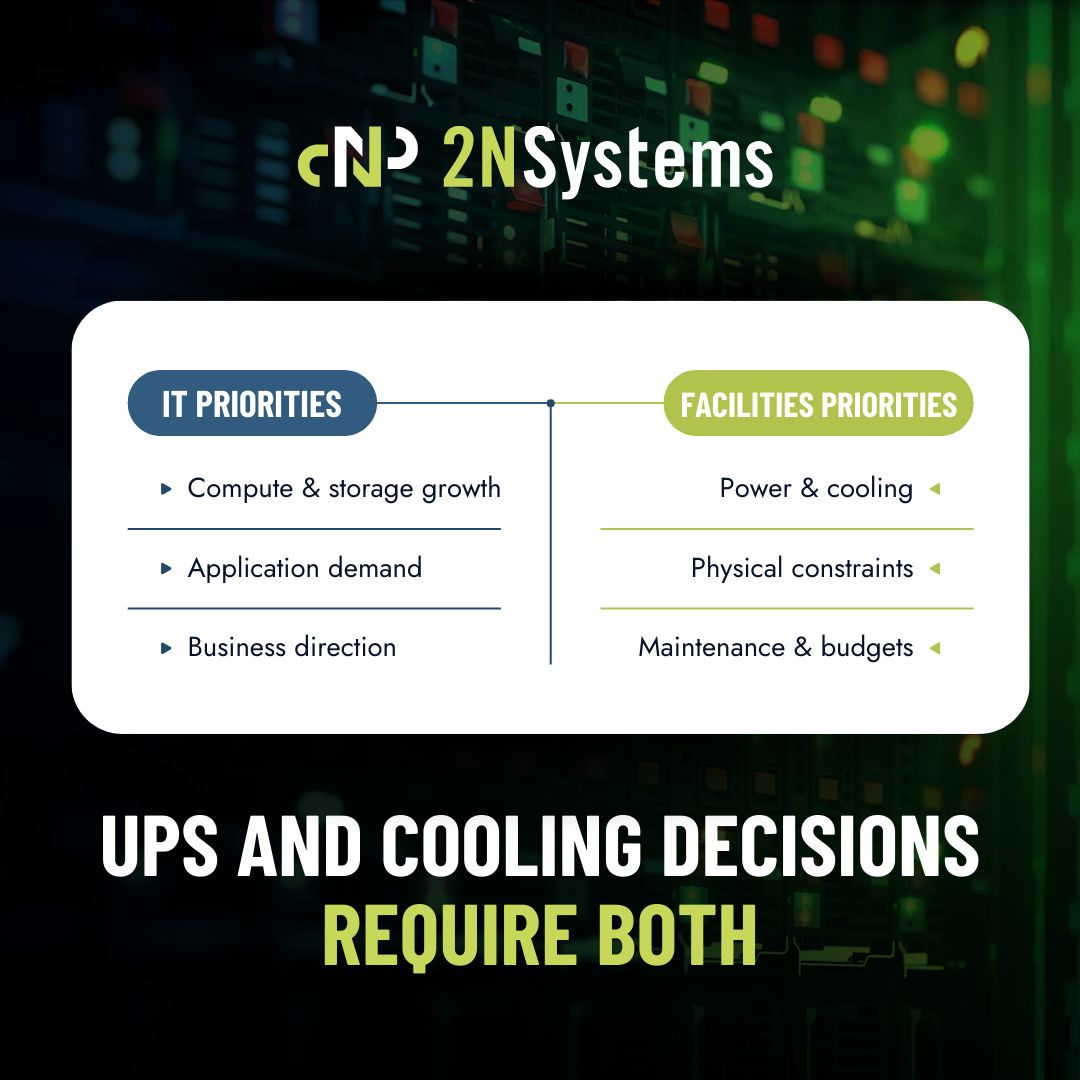
In most organizations, lack of preparedness is not caused by resistance to change. IT is usually involved early, and they are almost always pushing forward. The gap shows up somewhere else. IT understands compute, storage, growth, and where the business is headed. Facilities owns the physical systems that have to support it. That responsibility is broad. The facility manager is responsible for power, cooling, space, maintenance, vendors, and budgets, often at the same time they are dealing with security, buildings, and day-to-day operations. The issue is not effort. It is coverage. Most IT teams do not live in mechanical and electrical systems. Most facility managers do not live in load profiles, redundancy models, or future compute strategy. Yet decisions around UPS and cooling depend on understanding both. IT is often driving the requirements, without enough mechanical and electrical context to guide the right facility design. Preparedness breaks down when no one owns that intersection full time. That is why critical infrastructure planning works best when it is handled by a team that deals with IT facility power and cooling equipment every day, and understands how IT demand translates into power, cooling, and real-world design. Preparedness is not about trying harder. It is about having the right expertise in the room before decisions are locked in. If your team is navigating a UPS, cooling, or critical infrastructure decision, we're the experts that can bridge both sides of the conversation. Learn more: https://lnkd.in/eCvPhdkM
- LINKEDIN · IMAGERecorded 29 Aug 2026
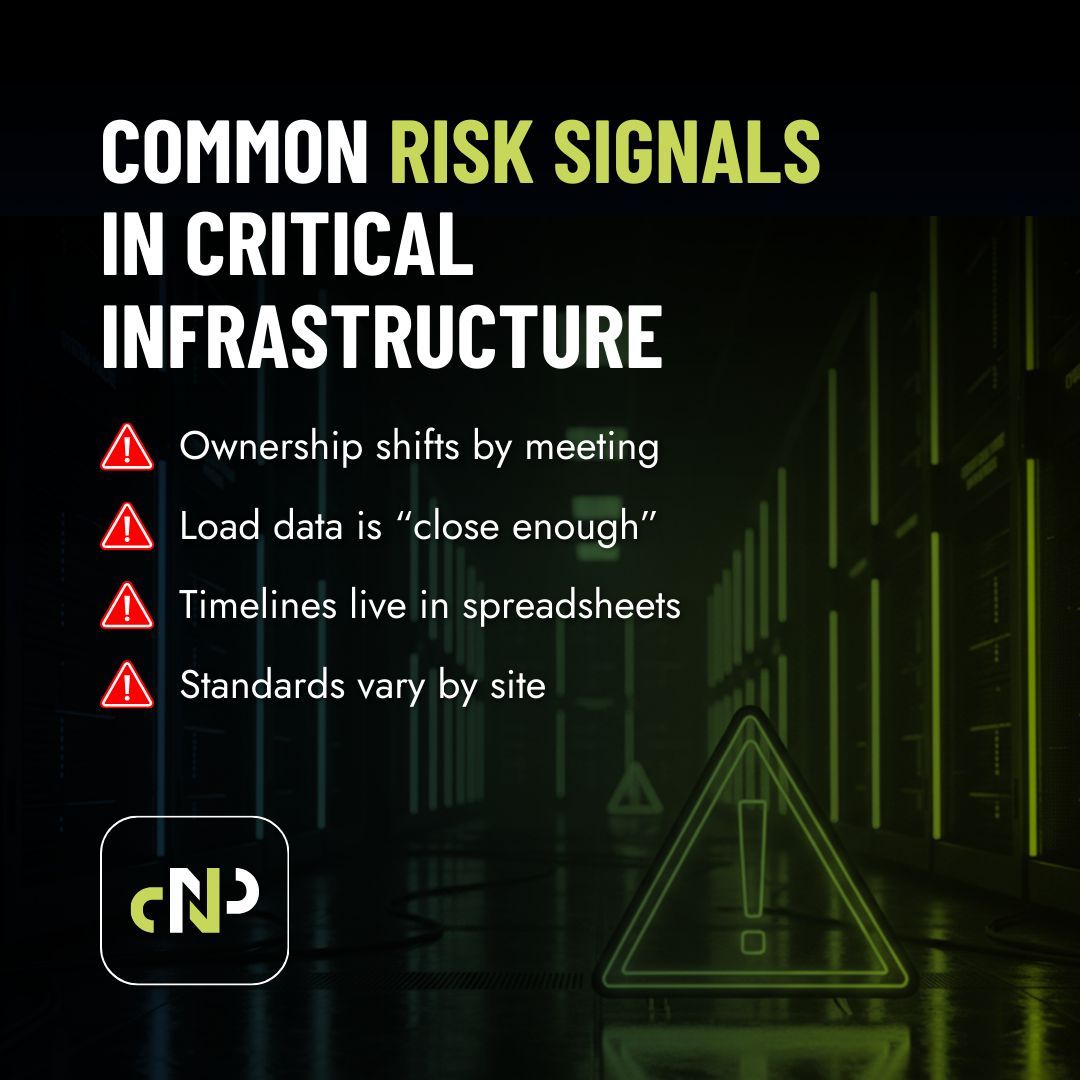
Most outages aren’t caused by a single failure. They’re caused by small gaps that compound over time. Until one day, they don’t stay quiet anymore. When I assess risk in critical infrastructure environments, I look for the same signals over and over: • Ownership changes depending on who’s on the call • Load data is described as “close enough” • Replacement timelines live in spreadsheets no one fully trusts • Each site follows a slightly different set of rules • Budgets appear after incidents, not before • The people closest to the system spend more time explaining than improving None of these feel urgent on a normal day. That’s exactly why they get ignored. I’ve seen environments run like this for years, until a routine failure forces a conversation no one was prepared to have. Silence doesn’t equal stability. It just means risk hasn’t surfaced yet. At 2NSystems, we help teams identify and close these gaps before they become outages. If any of these signals look familiar, see what a proactive infrastructure assessment looks like for your environment: https://lnkd.in/eCvPhdkM

6 of 21 adsSign up to see every 2NSystems ad, filter by format and date, and get alerts on new ones.
See all 21 adsWatch the companies you care about.
Filter every ad by industry, country, format and network, and get alerts when a company you watch starts running new ads.