Not on air · 2 of 3 networks checked
World Fund
- worldfund.vc
- Venture Capital and Private Equity Principals
- DE
- 64 employees
World Fund’s ads on LinkedIn, Meta and Google, recorded by adsrunning. Browse the latest here for free. Sign up free to see all 24. Watch World Fund with Starter to get each new one in your feed.
Watchlist with Starter · $49/mo
| Network | Status | Live ads | Nov 2025LinkedIn activity · 52 weeksNov 2026 | Checked | Next step |
|---|---|---|---|---|---|
| None recorded | 0 | Checked 30 Oct 2026 | See all 24 ads → | ||
| Meta | Not checked | — | |||
| None recorded | 0 | No ads found on the Google Ads Transparency Center | Checked 15 Oct 2026 | Collect them with the API → |
World Fund has no live LinkedIn ads. We recorded no Google ads on 15 Oct 2026.
Latest ads
- LINKEDIN · IMAGESince 29 Oct 2026
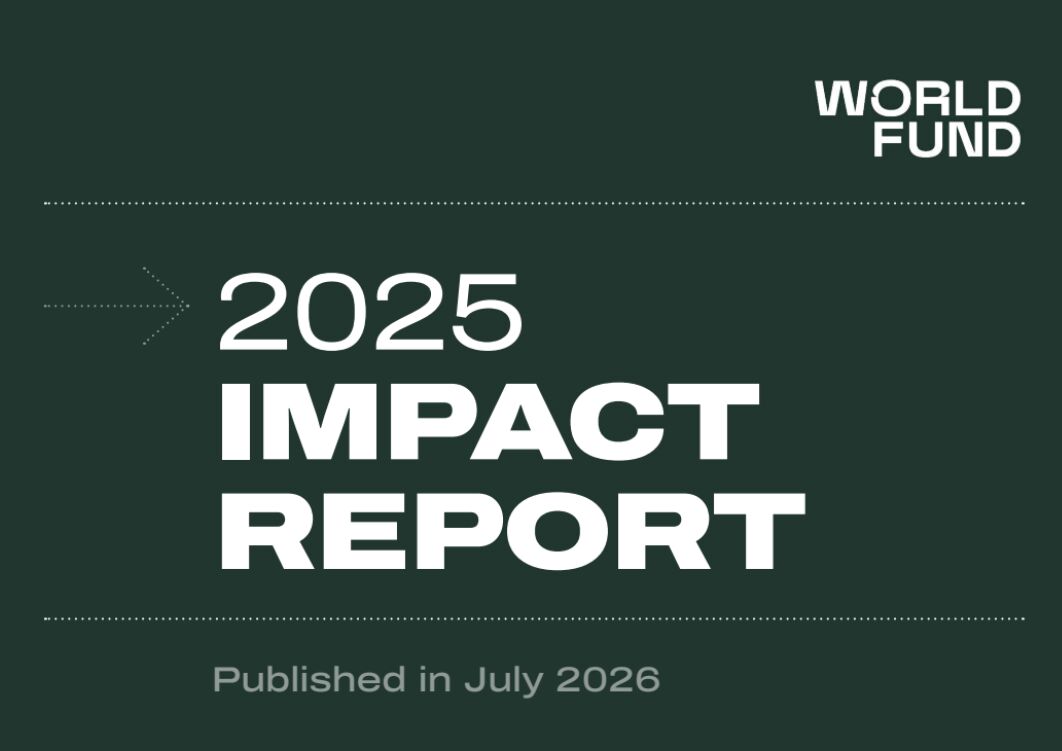
The technologies rebuilding Europe Our 2025 Impact Report is a portrait of the founders building companies in the trillion-dollar sectors that will build Europe’s competitive future. Insights inside: • Spotlight on 25 portfolio companies, €1B+ raised in equity. • Real-world cases: from global supercomputing to the first zero-emission regional flights. • Why the next decade of returns will be defined by who backs founders like these. Click 'Download' below to access the full report.
- LINKEDIN · IMAGESince 20 Oct 2026
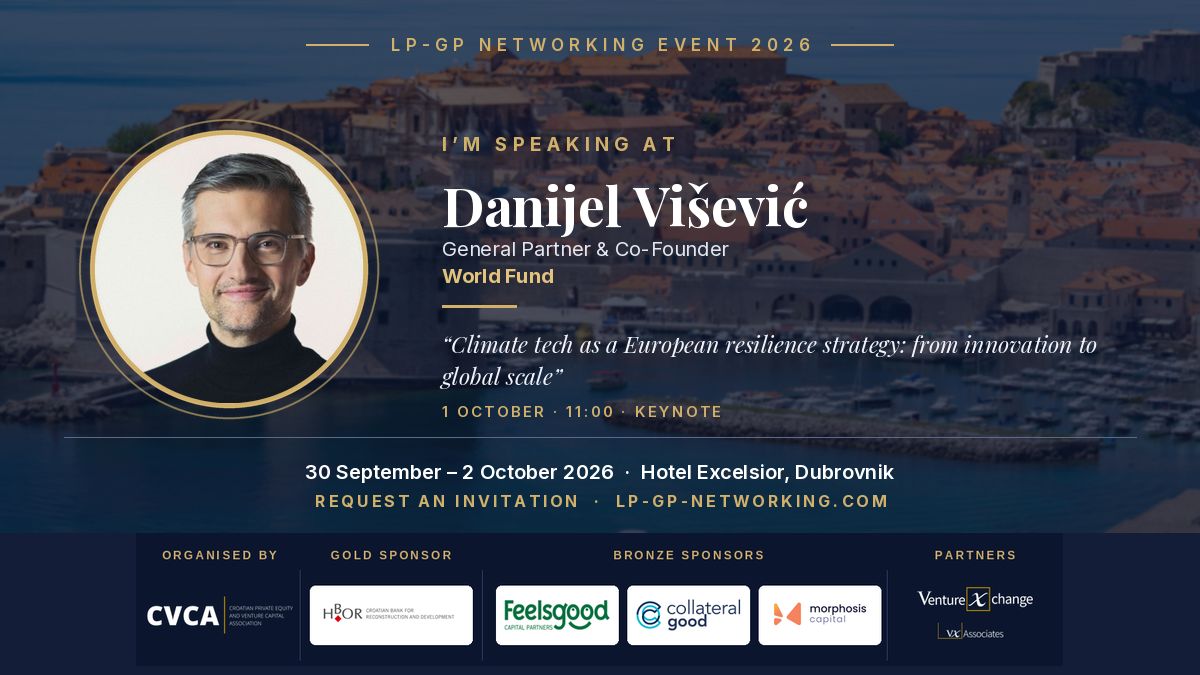
Europe invented the Industrial Revolution. Drove innovation. But in the past 20 years, we chose comfort over leadership. We have the science and the talent. But we need more courage. Right now, we are the brilliant architect: drawing the blueprints and letting others build the house and collect the rent. The result is simple. Our energy is imported. Our industry is abroad. Our security is outsourced. But every dependency is also a market. Energy, industry, critical materials and compute are a $35 trillion opportunity. Tomorrow, I make that case in Dubrovnik, giving a keynote at the LP-GP Networking Event 2026: "Climate tech as a European resilience strategy: from innovation to global scale." Thank you for the invitation Croatian Private Equity and Venture Capital Association and Mirna Marovic. 💙 And I am looking forward to speaking to many of you who will be there: Hrvoje Čuvalo, Marko Primorac, John Mcilwaine, Gordana Neralić, CFA, Tobias Winter, Marija Djordjevic, Dariusz Pietrzak, Tilo BonowTilo Bonow 博蒂洛博蒂洛, Ignacio Garcia, Nenad Marovac, Monika Mikac, Klaus Maximilian Wegener, Damian Hills, and more. Come and find me! 🙌 ohr
- LINKEDIN · IMAGESince 20 Oct 2026
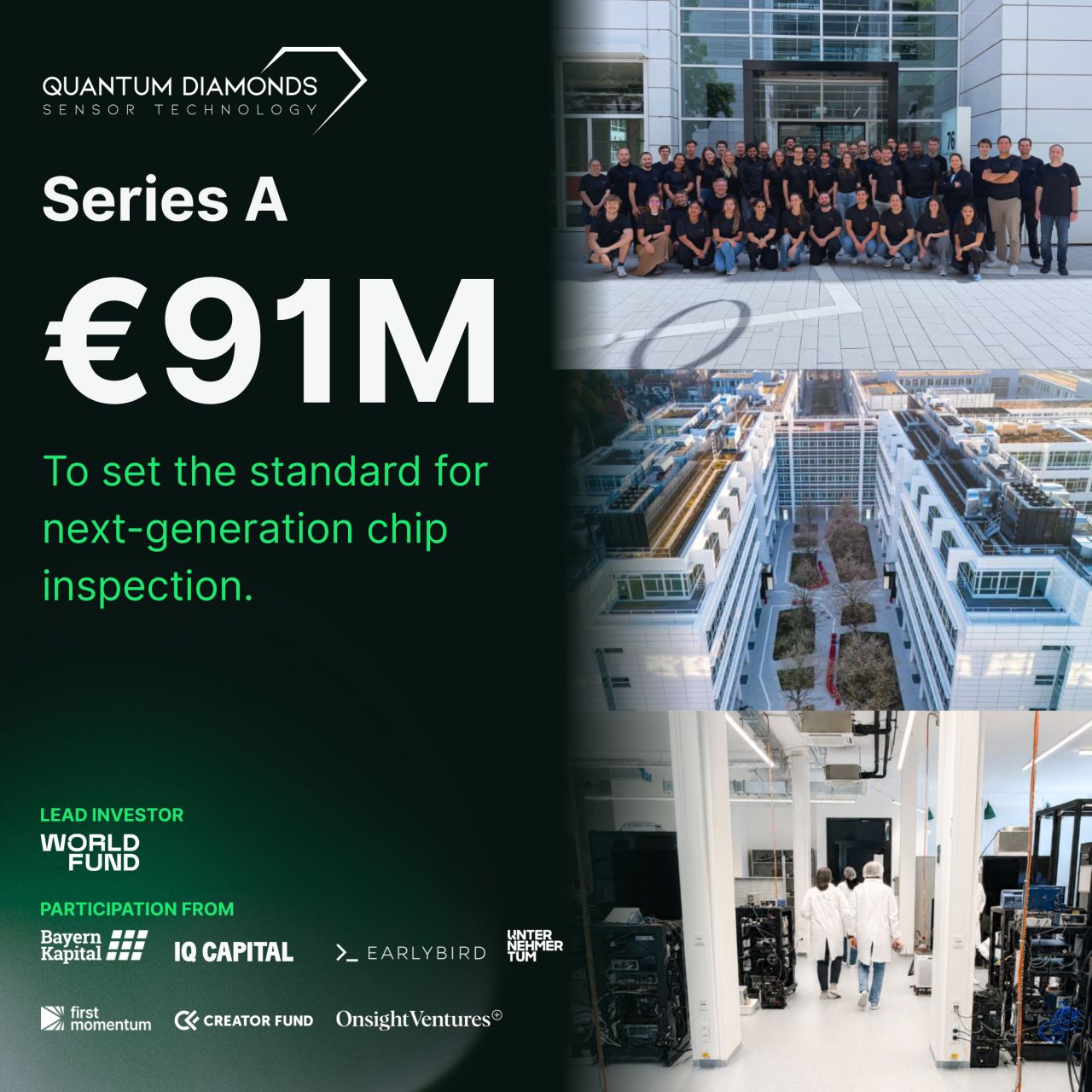
💎 World Fund led QuantumDiamonds’ €15m equity round, alongside €76m in non-dilutive funding from the European Chips Act. 🇪🇺 🙌 So far, QD is the only startup to receive manufacturing funding from the Chips Act. The more advanced chips become, the harder it gets to identify the faults inside them. That means more waste, lower yields, higher costs and slower progress. QuantumDiamonds is changing that. 💚 Kevins team has built a quantum-sensing inspection platform that uses synthetic diamonds to find hidden defects in complex 3D chip architectures with nanometre precision, without destroying the chip. In short: 💎 Non-destructive current imaging for advanced semiconductors 🌍 Engagements with 9 of the world’s top 10 chip manufacturers 🇺🇸🇹🇼 Live deployments in the US and Taiwan 🏭 Serial production ramping in Munich 📈 A $104bn semiconductor equipment market ASML shows that this is where Europe can win: building on deep science to commercialise solutions at the hard, technical layers of the AI economy. And while not immediately obvious, there's a real climate angle: the semiconductor industry faces a massive climate challenge. With production surging, manufacturing emissions are on track to exceed the global 1.5°C carbon budget by a factor of 3.5 by 2050. QuantumDiamonds creates next-generation testing tools that catch semiconductor defects early in the production process, which 💚 Minimises Waste. Traditional testing struggles with complex 3D chip architectures. Quantum sensing closes this gap, reducing lost wafers, excursions, and material scrap. 💚 Slashes Footprints. Because a defective chip consumes the exact same manufacturing energy as a functional one, boosting yield directly drops the carbon footprint per shipped chip. 💚 Drives Scope 3 Efficiency. Cleaner, more efficient fabrication means fewer raw material inputs, maximised output, and drastically lower CO₂ emissions for tech hardware. Better testing is a direct lever for sustainable semiconductor manufacturing! Congratulations to Kevin Berghoff, Fleming Bruckmaier and the whole QuantumDiamonds team!!! And thank you, Daria Saharova and Robin Neff for leading the round from our side together with our friends from IQ Capital, Bayern Kapital, Earlybird Venture Capital, UnternehmerTUM and First Momentum Ventures 🙏 #QuantumSensing #Semiconductors #DeepTech #Sustainability #ClimateTech #GreenInnovation Read more via the link in the comments 👇
- LINKEDIN · IMAGESince 20 Oct 2026
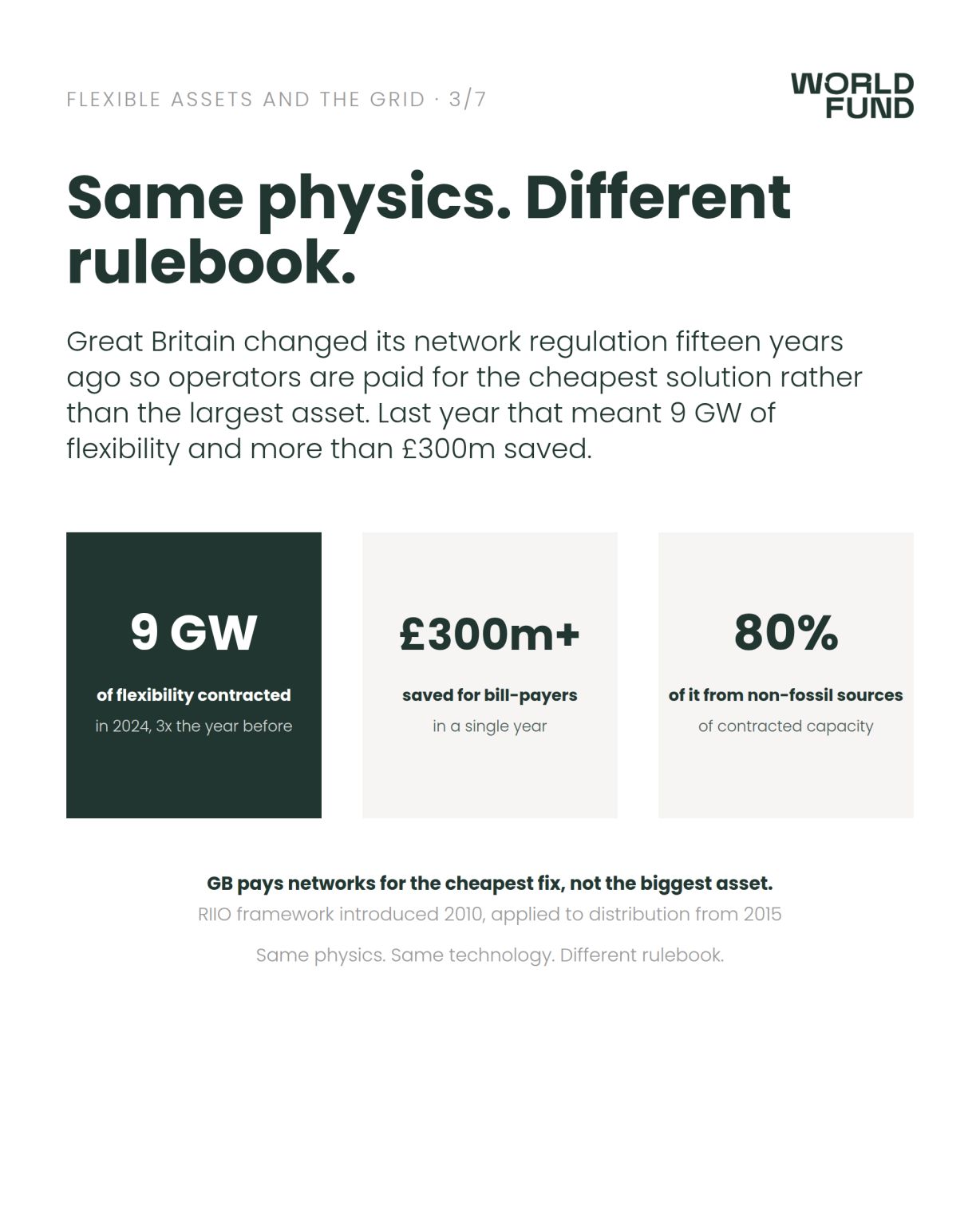
Why the DSO would rather buy copper Two weeks ago I said the grid is empty 95% of the time. Last week, that households can fill it without noticing. So why does the network operator still reach for a new substation? Because that is what it is paid to do. A distribution operators allowed revenue is, roughly, its asset base multiplied by an allowed return, plus operating costs the regulator pushes it to minimise. A transformer goes into the asset base and earns a return for forty years. A flexibility contract is an operating cost. Faced with the same congestion, one solution grows the company and the other shrinks a budget line. Nobody is being lazy. The industry is doing exactly what it was designed to do, in a world whose options have fundamentally changed. I spent three and a half years inside the working groups at the European Commission on this question, and the honest answer is that it has barely moved. Only 11 of 28 European countries have started changing their rules to start addressing this bias. The regulators own body says, in writing, that operators might choose not to utilise potential flexibility because of it. My favourite illustration of this: a software company selling grid-monitoring to a UK network had to put a £5,000 plastic box in the substation. The box did nothing. It existed so the purchase could be booked as hardware. The regulation is necessary, but talking with network engineers added two things it still isnt sufficient for. A network operator will not hand critical network decisions to thousands of devices until it can set operating limits and trust it will be respected. And none of this scales past a pilot without a common way for those devices to talk to the network and know what the state of the network is. Integrations today happen one silo (location) at a time. Now the counter-example. The UK started fixing the incentive in 2010, and its distribution networks have been regulated that way since 2015 (and continues to do so), so operators are rewarded for the cheapest fix rather than the biggest asset. Last year they contracted 9 GW of flexibility and saved bill-payers over £300m. One London network avoided or deferred more than £100m of reinforcement in a single year. Lower cost. Same outcome. Different technology. Different rulebook. Next week: ten years for a substation, ten weeks for a battery. If you work at a network or a regulator: what would it take for a flexibility contract to count the way a transformer does?
- LINKEDIN · FOLLOWSince 30 Sept 2026
Stay informed on industry news and trends
- LINKEDIN · FOLLOWSince 30 Sept 2026
Stay informed on industry news and trends

6 of 24 adsSign up to see every World Fund ad, filter by format and date, and get alerts on new ones.
See all 24 adsWatch the companies you care about.
Filter every ad by industry, country, format and network, and get alerts when a company you watch starts running new ads.