On air · 1 of 3 networks
VisualLabs
- visuallabs.com
- HU
- 29 employees
VisualLabs’s ads on LinkedIn, Meta and Google, recorded by adsrunning. Browse the latest here for free. Sign up free to see all 150. Watch VisualLabs with Starter to get each new one in your feed.
Watchlist with Starter · $49/mo
| Network | Status | Live ads | Nov 2025LinkedIn activity · 52 weeksNov 2026 | Checked | Next step |
|---|---|---|---|---|---|
| None recorded | 0 | Checked 30 Oct 2026 | See all 150 ads → | ||
| Meta | Running | 3 | Active ads on the Meta Ad Library, all countries | Checked 29 Oct 2026 | Collect them with the API → |
| None recorded | 0 | No ads found on the Google Ads Transparency Center | Checked 16 Oct 2026 | Collect them with the API → |
VisualLabs has no live LinkedIn ads. Its Facebook page had 3 active ads on 29 Oct 2026, and we recorded no Google ads on 16 Oct 2026.
Latest ads
- LINKEDIN · IMAGESince 28 Oct 2026
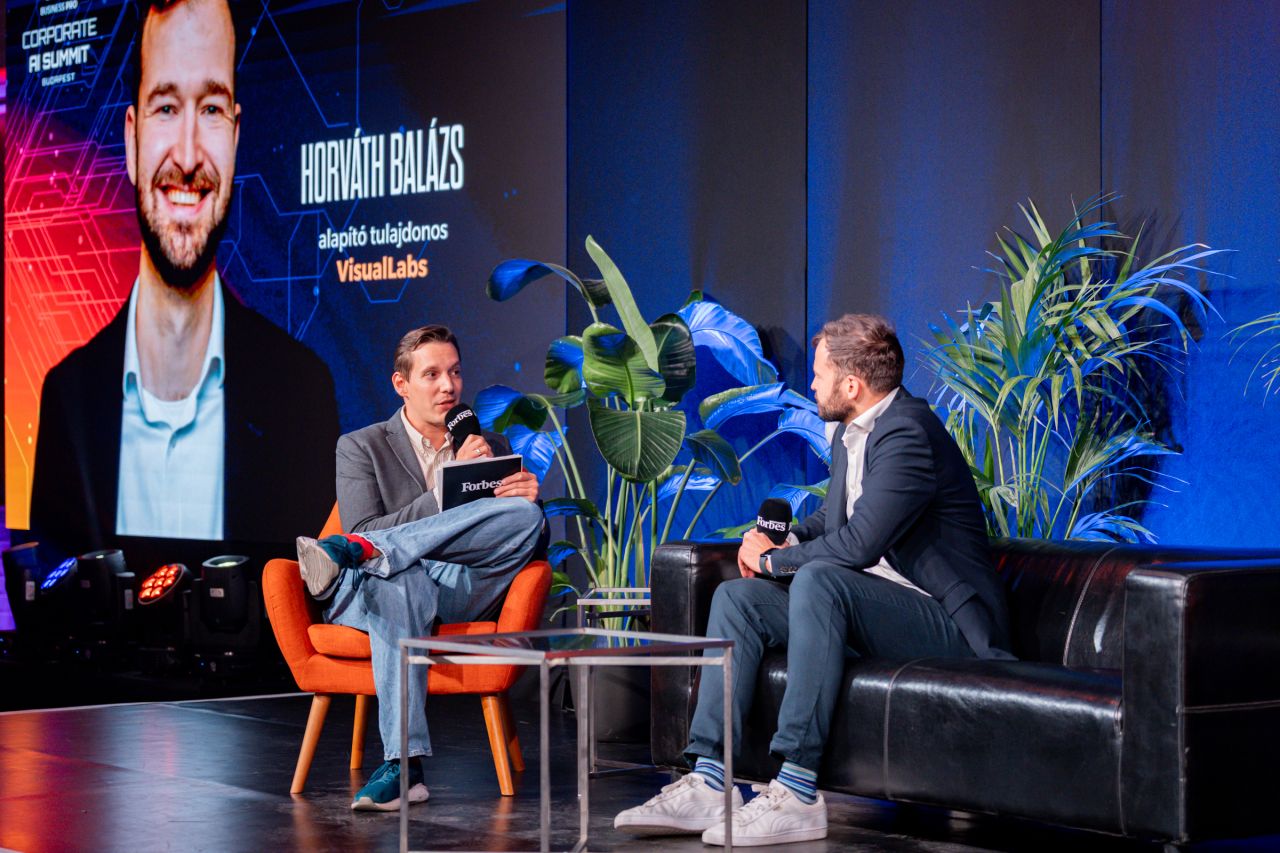
At the Forbes Corporate AI Summit last week I was asked how a company turns AI into a business result. My answer started further back than most people expect, because a good share of our workshops ends up settling which data may go into a cloud model. That is where the rollout sits, long before anyone picks a tool. Four decisions, written down, cover the ground that stalls these projects. Which data classes are allowed. Public, internal, customer, personal. Four categories, four answers. Which tools are approved, by name. Anything off the list is off. Where a human signs off. Customer-facing output, financial figures, anything legal. Which business number should move. One number, with an owner and a starting value. Three hours with the mid and senior leadership is usually enough to agree all four. We have seen that free up a project which had been stuck for months. Is this written down in your company, or does everyone fall back on their own judgement?
- LINKEDIN · IMAGESince 28 Oct 2026
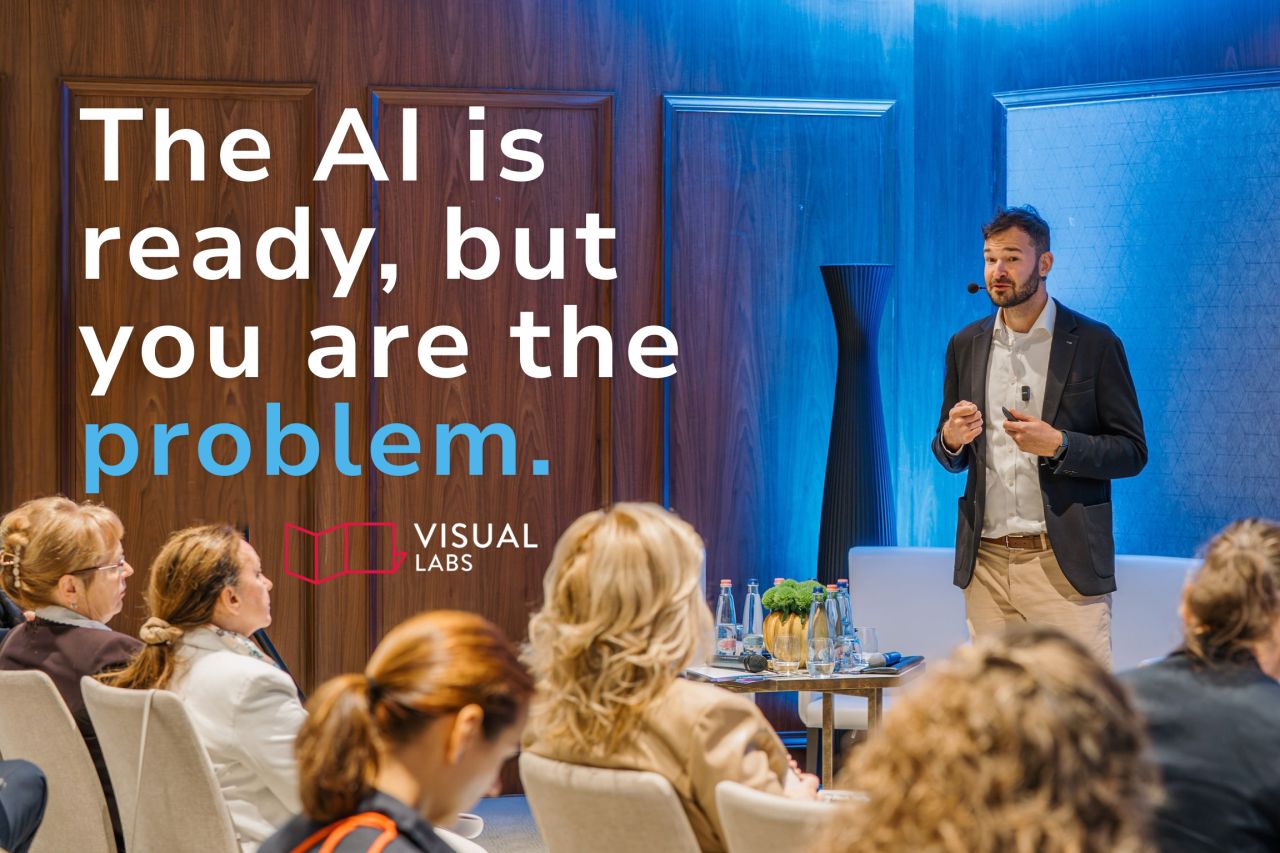
This autumn I’ve had the same conversation with CFOs and IT leaders in Billund, Copenhagen, Vilnius, Boston and Budapest. They all want agents in production next year. Different countries, different industries, yet the same handful of problems stops them from getting started with AI. On Friday 30 October I’m speaking at MITechCon at Oakland University, Michigan, about what I’ve learned from these conversations and the approach I use to give clients AI that creates real business value. The talk is called “The AI is ready, but you are the problem.” I’ll go through what AI readiness looks like in practice, how to close the gap between data and process, and the order I’d fix things in before putting a first agent into production. If you’re at MITechCon, I’m in Ballroom C East at 11:15 ET. Come and tell me where your own foundations feel shaky.
- LINKEDIN · VIDEOSince 28 Oct 2026
Most teams sit somewhere between a shared mailbox and an inbox that agents run on their own, and almost nobody can name the ground in between. We use four stages. A chatbot answers from a script. Retrieval finds the right answer in your knowledge base. A task agent resolves the ticket and updates the record. Fully autonomous runs the queue. A ticketing system with a chatbot bolted on the front is stage one, whatever it cost. Very few companies reach stage four inside the next 2 years, which is fine, because the return is in moving one stage from wherever you actually are. Most companies can name their stage. Far fewer can name what is holding them there, and the pattern we see is that it comes down to three things: the knowledge base is stale, nobody owns the escalation path, or the process was never written down in the first place. Which of those three is yours? If you want to see what the middle stages look like inside a Microsoft environment, our free library maps 10 AI agents to specific departments and roles: https://lnkd.in/ev-7VSWg
- LINKEDIN · VIDEOSince 28 Oct 2026
66% versus 13%. Those two numbers describe where most companies are with AI right now. Microsoft’s 2026 Work Trend Index surveyed 20,000 AI users. 66% say AI gives them more time for high-value work, and 58% are producing work they couldn’t have produced a year ago.The organisation is lagging behind. Only 26% say their leadership is clearly and consistently aligned on AI, and just 13% feel rewarded for redesigning their work with AI when the results are uneven at first. Everyone has a Copilot or a ChatGPT and the person becomes the integration: copy the data out of the system, paste it into the chat, paste the answer back. That’s an individual gain, and it never shows up in the company’s numbers. So how do you decide where AI can make the biggest ROI if your team spends the day copy-pasting? Pick one process and count how many times a colleague copies data between AI and your systems in a week, then multiply by the minutes each round trip takes. Now you know how many hours a week that process loses to copy-paste. The process with the most hours is where your first agent should go. Someone is already doing that work by hand, and now you have a number to measure the agent against.
- LINKEDIN · VIDEOSince 28 Oct 2026
You won't find out from a press release. You'll find out from a quote. Firms that rebuild a process properly don't announce it, so it reaches you second-hand. Their quote turnaround drops from 3 days to the same afternoon. They stop hiring into a function that used to grow with revenue. A customer mentions, in passing, that they got an answer at 9pm on a Sunday. By the time the case study lands, they're 3 or 4 iterations past whatever it describes. That's what makes the Compound Gap hard to react to. It shows up in someone else's response times long before it shows up in your numbers. So here's the cheap version of finding out. Pick the 2 processes where a competitor getting faster would be visible to your own customers, and time yours this week. Not the average, the worst case. That number is your baseline, and without one you can't have a serious conversation about readiness in either direction. Our library maps 10 agents to specific departments and roles inside a Microsoft environment, https://lnkd.in/ecktBPHj
- LINKEDIN · VIDEOSince 28 Oct 2026
How many customers does your company have? It sounds easy. But ask marketing, sales, finance and operations separately, and you might get very different answers. Each one is defensible, because each department is counting something slightly different. That becomes a big problem when AI enters the picture. People know that a certain CRM field is outdated, that “site” means something different to finance than it does to operations, or that the reliable customer information actually lives somewhere else. AI doesn’t automatically know any of this. It works with the context and data we give it. That was the thread of my talk yesterday at CRM Szaknap in Budapest. While everyone uses AI on their own, it’s single-player mode and private context is enough. Once it becomes an organisational tool, it turns into a board game, and everyone at the table needs the same rules. For customer data, that rulebook is the CRM. Thank you to BusinessEvents for having us again, and to everyone who stayed for the conversations afterwards. If you want to see where your customer data would hold an agent back, our Evaluator will show you: https://lnkd.in/dF6HjzXJ
6 of 150 adsSign up to see every VisualLabs ad, filter by format and date, and get alerts on new ones.
See all 150 adsWatch the companies you care about.
Filter every ad by industry, country, format and network, and get alerts when a company you watch starts running new ads.