Not on air · 2 of 3 networks checked
Village Global
- villageglobal.com
- Venture Capital and Private Equity Principals
- US
- 117 employees
Village Global’s ads on LinkedIn, Meta and Google, recorded by adsrunning. Browse the latest here for free. Sign up free to see all 21. Watch Village Global with Starter to get each new one in your feed.
Watchlist with Starter · $49/mo
| Network | Status | Live ads | Nov 2025LinkedIn activity · 52 weeksNov 2026 | Checked | Next step |
|---|---|---|---|---|---|
| None recorded | 0 | Checked 1 Nov 2026 | See all 21 ads → | ||
| Meta | Not checked | — | |||
| Recently | 1 | Ads on the Google Ads Transparency Center | Checked 14 Oct 2026 | Collect them with the API → |
Village Global has no live LinkedIn ads. We recorded 1 Google ad on 14 Oct 2026.
Latest ads
- LINKEDIN · IMAGESince 8 Oct 2026
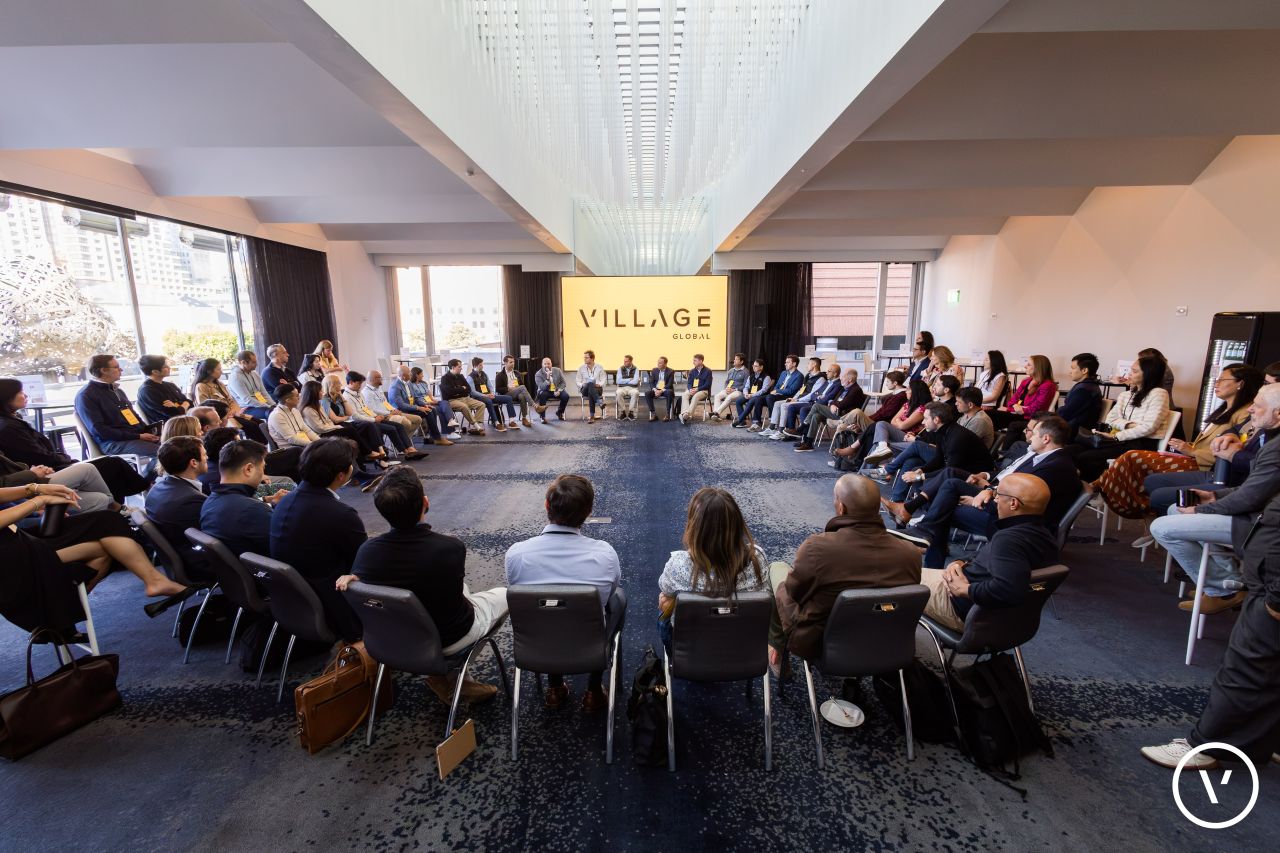
As a GP in early stage venture, we need to move quickly most of the time. Call it 𝐅𝐚𝐬𝐭 𝐌𝐨𝐝𝐞. 80% of the time, we make the best decision we can with incomplete information, often under time pressure. Perhaps a round is coming together in 48 hours, or a talented engineer doesn't have a deck but wants to raise $2M in a week to start building. Etc. That’s the nature of early-stage venture, especially in today's market moment. But perhaps 20% of the time, we need to slow down, deliberate, pressure-test logic. Maybe it’s whether to trim a position in an existing winner. Or whether to do a major follow-on investment in a higher priced round. Or it's about an internal hiring or firm strategy decision. That requires 𝐒𝐥𝐨𝐰 𝐌𝐨𝐝𝐞. Knowing which mode a particular decision requires is a form of decision-making self-awareness. (By the way, this is distinct from the now-popular Type 1 vs. Type 2 decisions framework, because none of these decisions is reversible; they're all one-way doors.) Fast Mode vs. Slow Mode came back to mind last week, when we at Village Global gathered several dozen allocators in San Francisco for a series of off-the-record conversations about the state of investing in the venture market. Interestingly, for LPs the speed mode ratio is often the 𝘪𝘯𝘷𝘦𝘳𝘴𝘦 of GPs. Most of the time, LP investing is a Slow Mode activity. Allocators can study a manager, watch a strategy develop across vintages, compare opportunities, and build conviction over time. But perhaps 20% of the time, speed matters. At our event, several allocators talked about how to prosecute compelling co-invest opportunities on tight timelines. Others talked about managers raising small, capacity-constrained funds. In those moments, an institution whose default mode is deliberation can miss something great. For both GPs and LPs, you need to recognize what kind of decision you’re facing, be aware of the default posture in your culture (Fast or Slow), and then match your decision-making speed to the situation at hand -- which may require a hard pivot from what feels normal. (Tip of the hat to Andrew Golden for sharing this framework on GP vs. LP decision making speed.)
- LINKEDIN · VIDEOSince 8 Jun 2026
A question all of us need to ask ourselves: "How can I become a more creative and lateral thinker?" Practically, how can someone level up cognitively in this area, to be more able to draw connections and generate original ideas? This was inspired by our Village Global event in New York City, when I asked Ray Dalio what kinds of human work survive in an AI-saturated world: "What you know -- the facts you have -- that won't matter much... There are original people who will think laterally and creatively and who will work in partnership with the AI -- they're going to be fantastic."
- LINKEDIN · VIDEOSince 26 May 2026
I asked Ray Dalio how he uses AI in his investing process. "It thinks it's very smart. It's not as smart as it thinks it is, but it can be smart." "I know a lot that it doesn't know. But at the same time... it can teach me." There's a back-and-forth that ensues. It's not one way street. "You have to know your decision-making systems; you can't let it make decisions." In other words, feed the AI your framework and criteria upfront, and then debate it *within the framework you provide*. Video from a recent Village Global event with Ray and Reid Hoffman .
- LINKEDIN · VIDEOSince 5 May 2026
What's the optimal amount of success to have early on in a fund or in a career, if you’re optimizing for long-term franchise or career value? I think there is such a thing as too much success, too early. When evaluating a founder who’s starting their second company, I’m more excited if their first company was a strong performer but not necessarily a spectacular unicorn. They know what success looks like, yes, but they also still possess an extreme learning and hustle drive. In venture funds, if your first fund performs spectacularly well, LP demand explodes. You're tempted to over-scale - raise too much capital, hire too quickly, and give in to strategy drift. That ends up hurting long-term returns. We’ve seen this over and over in the history of venture and PE. Obviously you don't want a poorly performing fund, or even an average fund. You want extremely good performance no matter what. But when evaluating a GP who’s a couple years into their debut Fund I, if I had to choose between 8/10 performance vs. 10/10 performance, it’s likely the 8/10 person will produce better long-term franchise results in their subsequent funds. They’re more likely to scale with discipline and curiosity. This principle applies to careers more generally. Massive success in your early 20s can make you arrogant. You stop learning as quickly. You stop asking questions. A lot of early bright stars fizzle out in their 30s and 40s. “Optimal” is rarely the maximum. When I see someone have 10/10 otherworldly success in the earliest days of a project, including the project that is their career, I get nervous.
- LINKEDIN · VIDEOSince 14 Apr 2026
How do you invest in quality startups at low valuations? There are only two ways. The first is discovery. You find the top founders before everyone else and develop pre-consensus conviction. If you're investing in a non-auction environment, you pay a lower price. YC Demo Day is the canonical VC auction — with nosebleed valuations as a result. The second way is contrarian talent evaluation. You invest in founders that few other VCs believe in, or you back ideas/markets that are out of favor with most other investors. Both are super hard to do well. At Village Global, we're mainly in the discovery business. A lot of the founders we back haven’t yet incorporated in Delaware or just finished doing so. Their backgrounds are fairly central casting — exceptional technical ability, chasing huge and growing markets, etc. But we aim to find them first, and then align on a valuation that reflects our early conviction and the inception-stage risk of the business.
- LINKEDIN · IMAGESince 14 Apr 2026
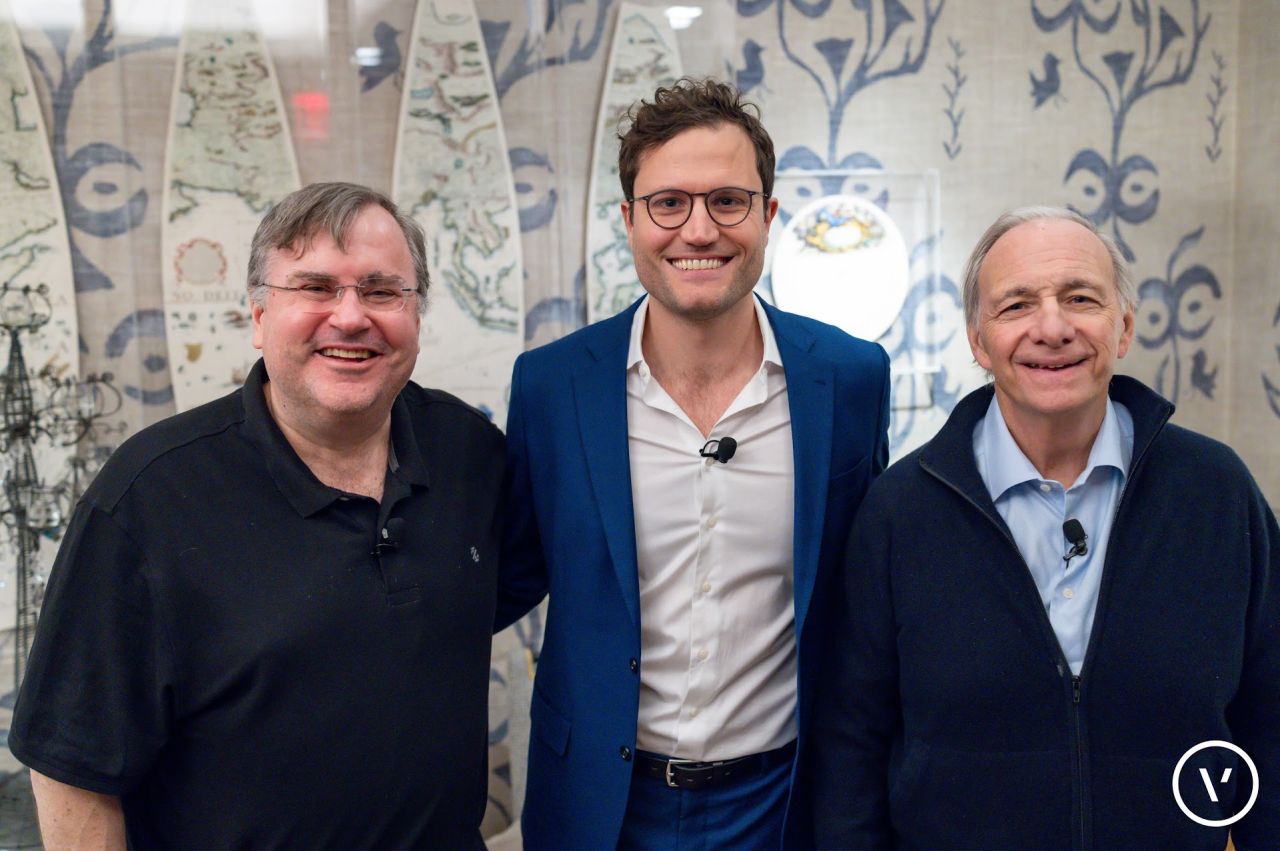
It was an honor to have two legendary entrepreneurs, investors, and big thinkers in conversation with each other and with Village Global founders in New York City the other day. In times of tremendous uncertainty, both Reid Hoffman and Ray Dalio emphasized the importance of emotional fortitude. Ray said we are in Stage 6 of what he’s termed the Big Cycle: “There is great disorder arising from being in a period in which there are no rules, might is right, and there is a clash of great powers.” How do you learn how to hold onto the handlebar as you ride the rollercoaster of markets and life? How do you become more comfortable with uncertainty, with not knowing? Is this -- emotional fortitude, comfort with uncertainty -- one of the most important meta skills / emotional dispositions for humans to develop in the age of AI and geopolitical dislocation? Those are the questions I'm still thinking about.
6 of 21 adsSign up to see every Village Global ad, filter by format and date, and get alerts on new ones.
See all 21 adsWatch the companies you care about.
Filter every ad by industry, country, format and network, and get alerts when a company you watch starts running new ads.