On air · 1 of 3 networks
Valamis
- valamis.com
- FI
- 121 employees
Valamis’s ads on LinkedIn, Meta and Google, recorded by adsrunning. Browse the latest here for free. Sign up free to see all 117. Watch Valamis with Starter to get each new one in your feed.
Watchlist with Starter · $49/mo
| Network | Status | Live ads | Nov 2025LinkedIn activity · 52 weeksNov 2026 | Checked | Next step |
|---|---|---|---|---|---|
| Running | 49 | Checked 30 Oct 2026 | See all 117 ads → | ||
| Meta | None recorded | 0 | No active ads recorded on the Meta Ad Library | Checked 28 Oct 2026 | Collect them with the API → |
| None recorded | 0 | No ads found on the Google Ads Transparency Center | Checked 14 Oct 2026 | Collect them with the API → |
Valamis has 49 live LinkedIn ads. Its Facebook page had no active ads on 28 Oct 2026, and we recorded no Google ads on 14 Oct 2026.
Latest ads
- LINKEDIN · IMAGESince 26 Oct 2026
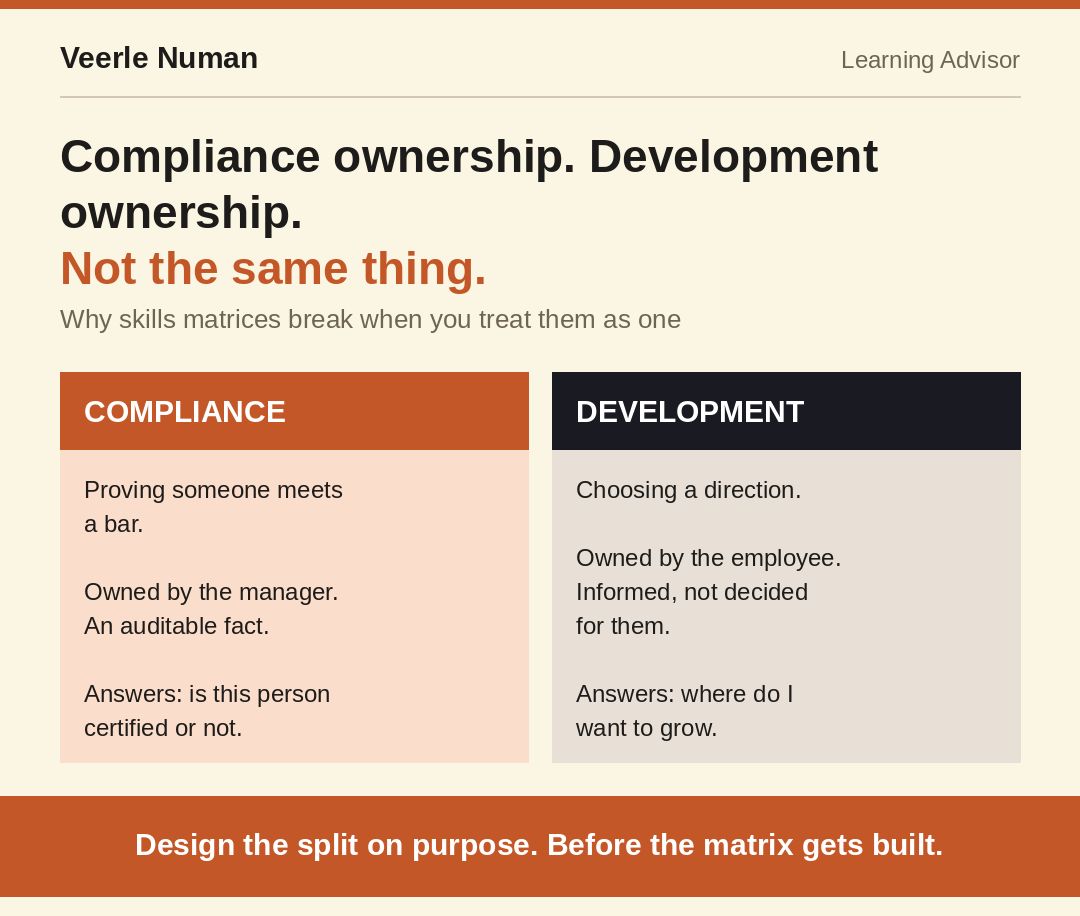
A truck driver needs a valid license. Non-negotiable, checked regularly, no room for interpretation. But not every driver wants the same career from there. Some want to specialize. Some want to move into logistics. Some are happy exactly where they are. Same role. Two different kinds of ownership, layered on top of each other. Most skills matrices aren't built to handle that layering. Keeping the matrix current is part of a manager's role. Not the whole of it, and not without support. But part of it. Track certifications. Flag gaps. Employees, meanwhile, are expected to own their own development: what they want to learn, where they want to grow, how it fits their career. Both expectations are real. Most L&D systems don't say which one wins when they conflict. A manager updates the matrix to reflect what the role requires today. An employee wants to build a skill that points toward where they want to be in three years. Most systems were never designed to say which plan wins. Compliance-ownership and development-ownership are not the same thing. Compliance is about proving someone meets a bar. A manager's job, an auditable fact, like that license. Development is about direction. Partly personal: the things that pull someone's energy and curiosity, whether or not they show up in this year's role. Partly practical: the requirements attached to wherever they actually want to go next. Neither side owns that alone. Build a system that only tracks the first, and you get a compliant workforce with no visible path for growth. Build one that only supports the second, and you can't answer the most basic compliance question: is this person certified or not. The split isn't a formula you apply once. It follows from something bigger: what your organization actually believes about growth. A culture built on autonomy and opportunity can't run on a matrix that only managers control. A matrix built purely on employee input can't survive an audit. The design has to match that belief, not fight it. The systems that actually work separate the two on purpose. Not as a philosophy. As a design decision, made before the matrix gets built.
- LINKEDIN · IMAGESince 19 Oct 2026
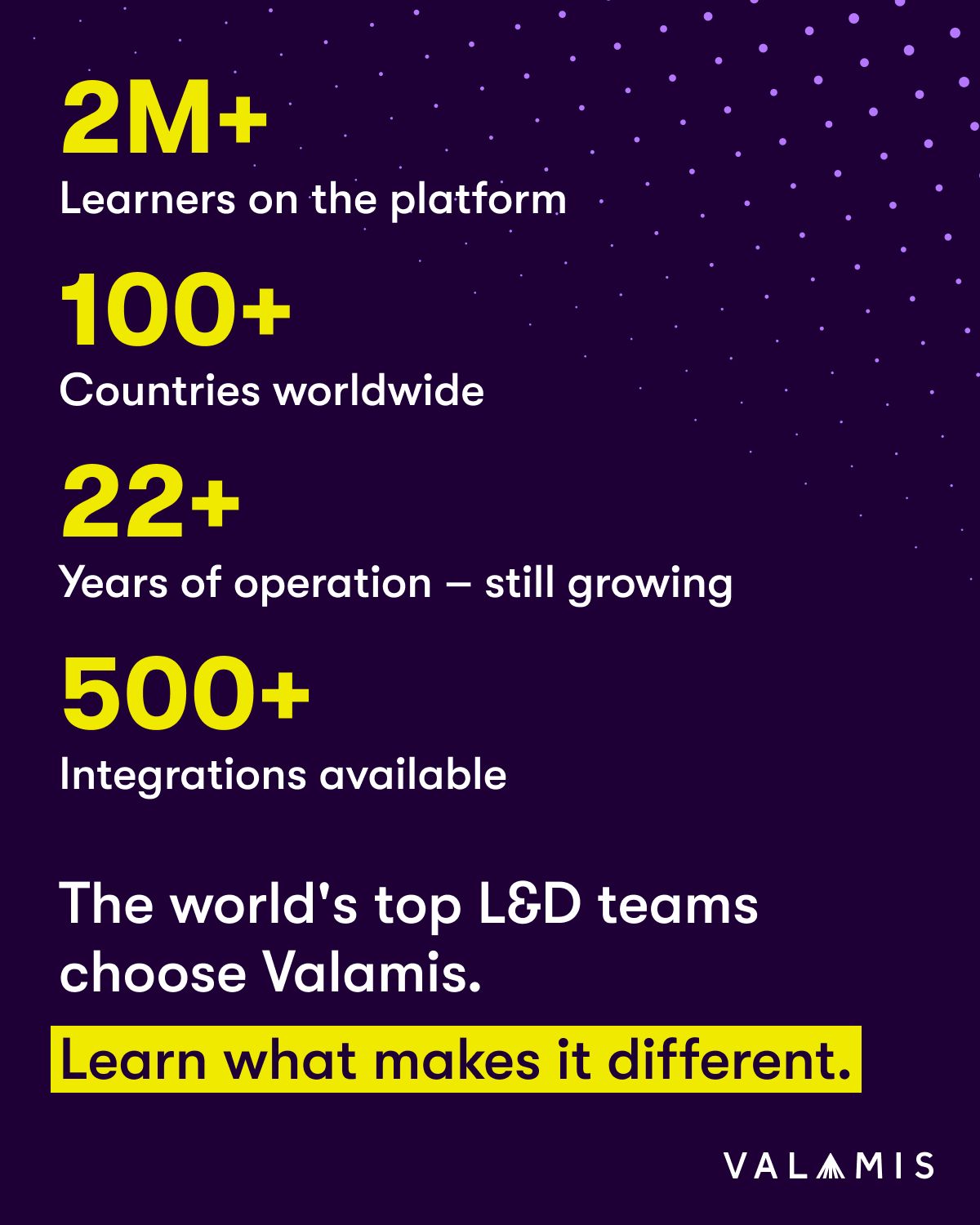
500+ integrations. 100+ countries. 2M+ learners. Valamis fits the systems top L&D teams already run, instead of replacing them.
- LINKEDIN · IMAGESince 19 Oct 2026
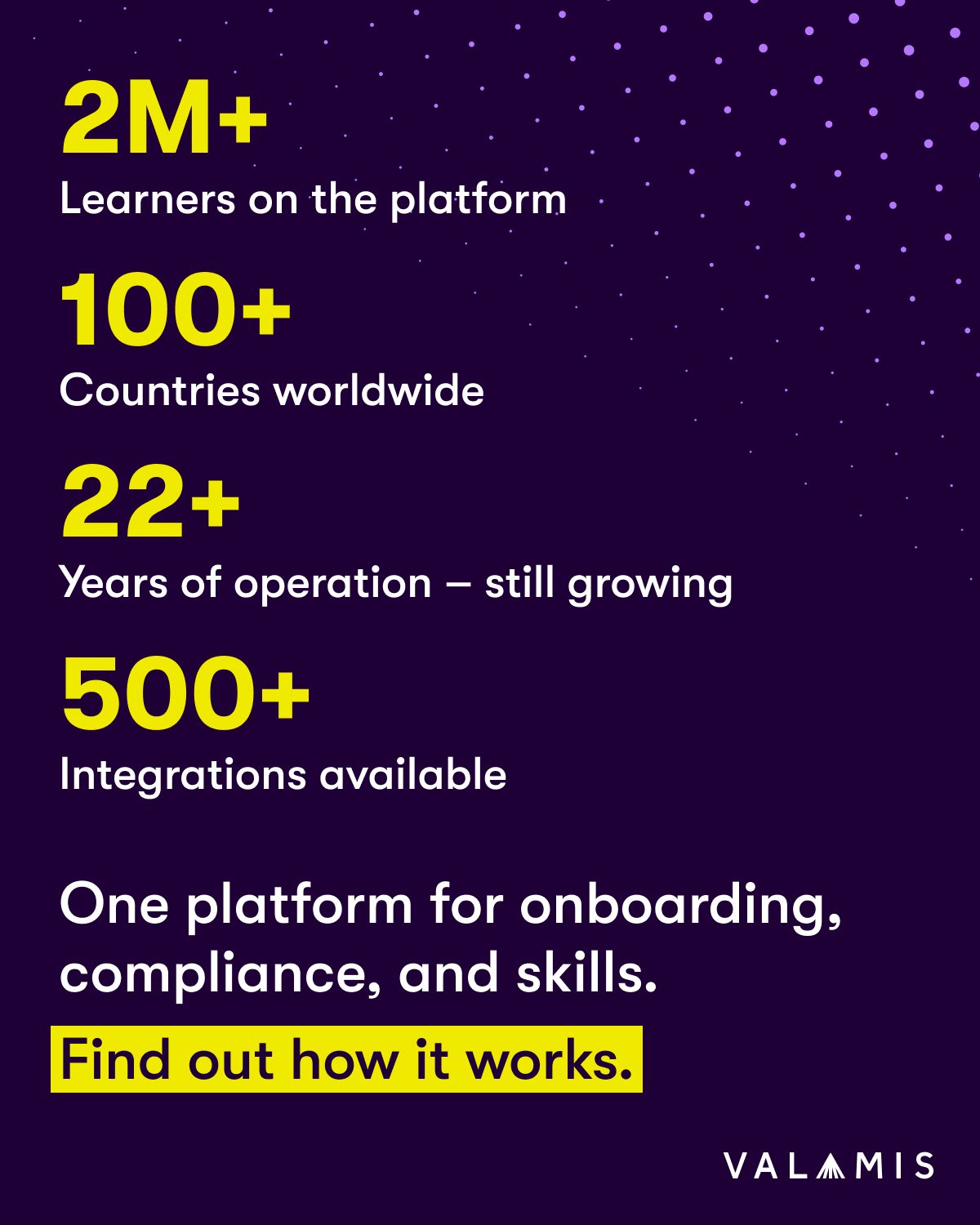
2M+ learners. 100+ countries. 500+ integrations. Onboarding, compliance, and skills on one platform. All with Valamis.
- LINKEDIN · IMAGESince 1 Sept 2026
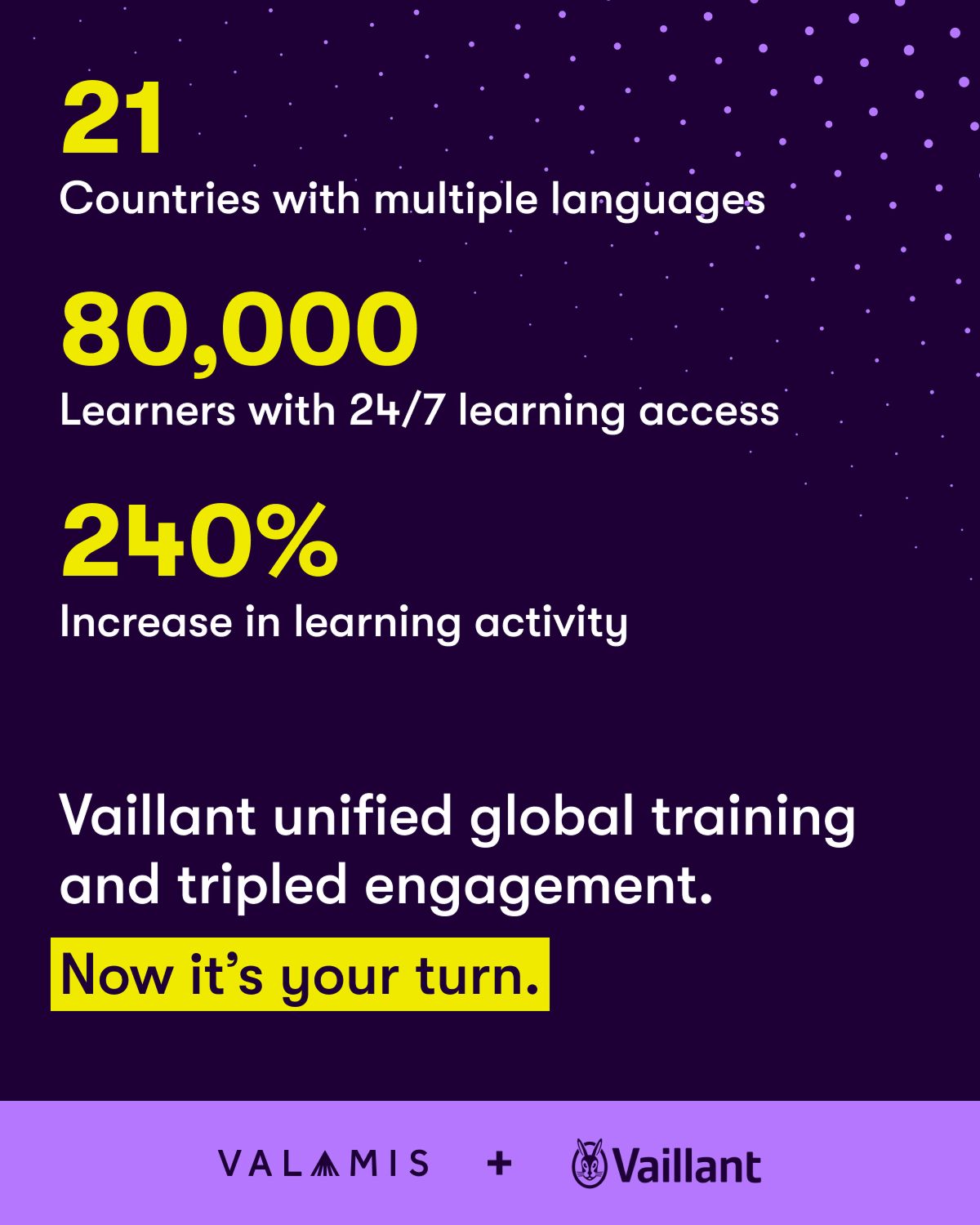
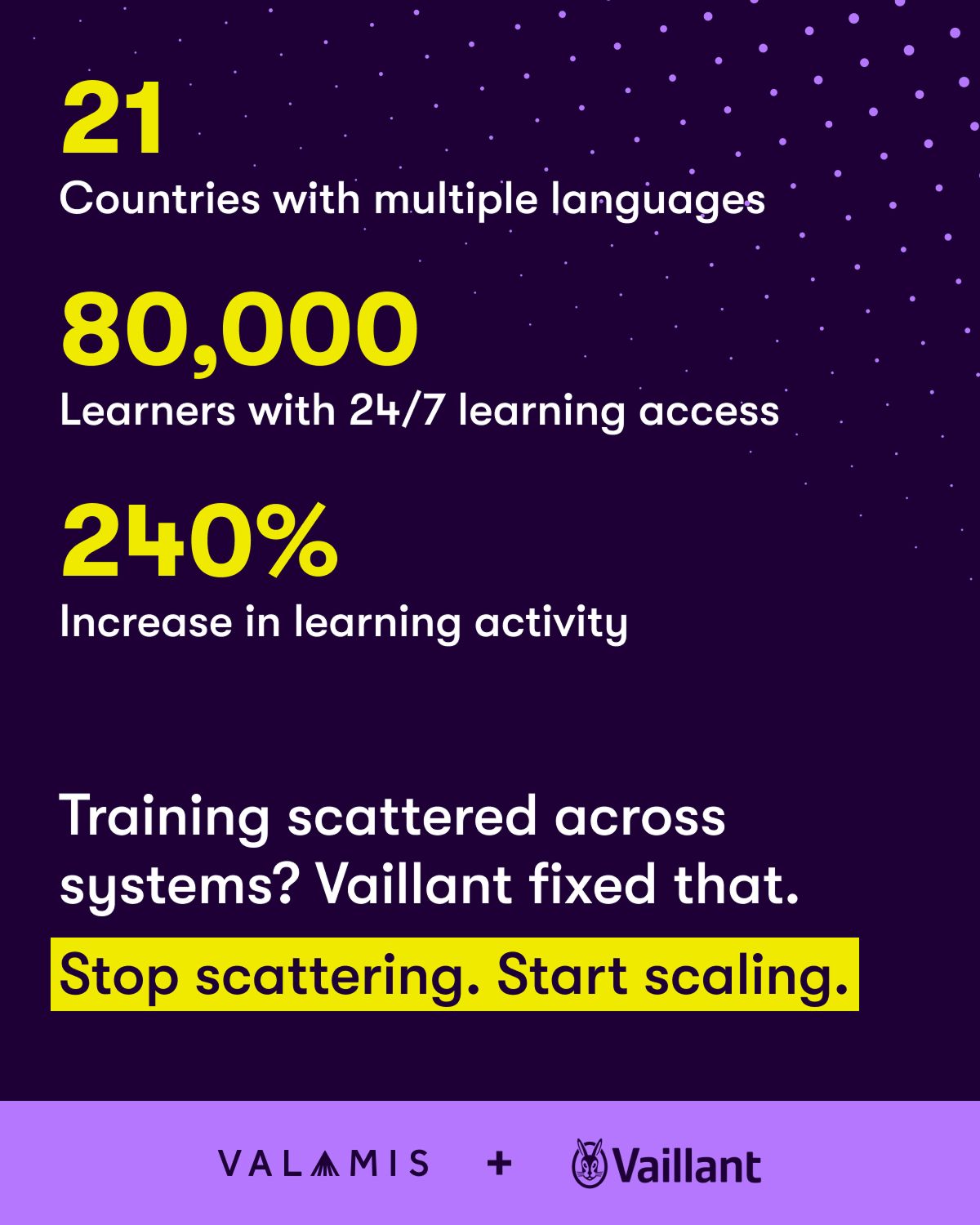
80,000 learners across 21 countries, all on one platform. Here's the proof.
- LINKEDIN · IMAGESince 1 Sept 2026
240% more learning activity. All from replacing scattered systems with one platform.
- LINKEDIN · IMAGESince 27 Aug 2026
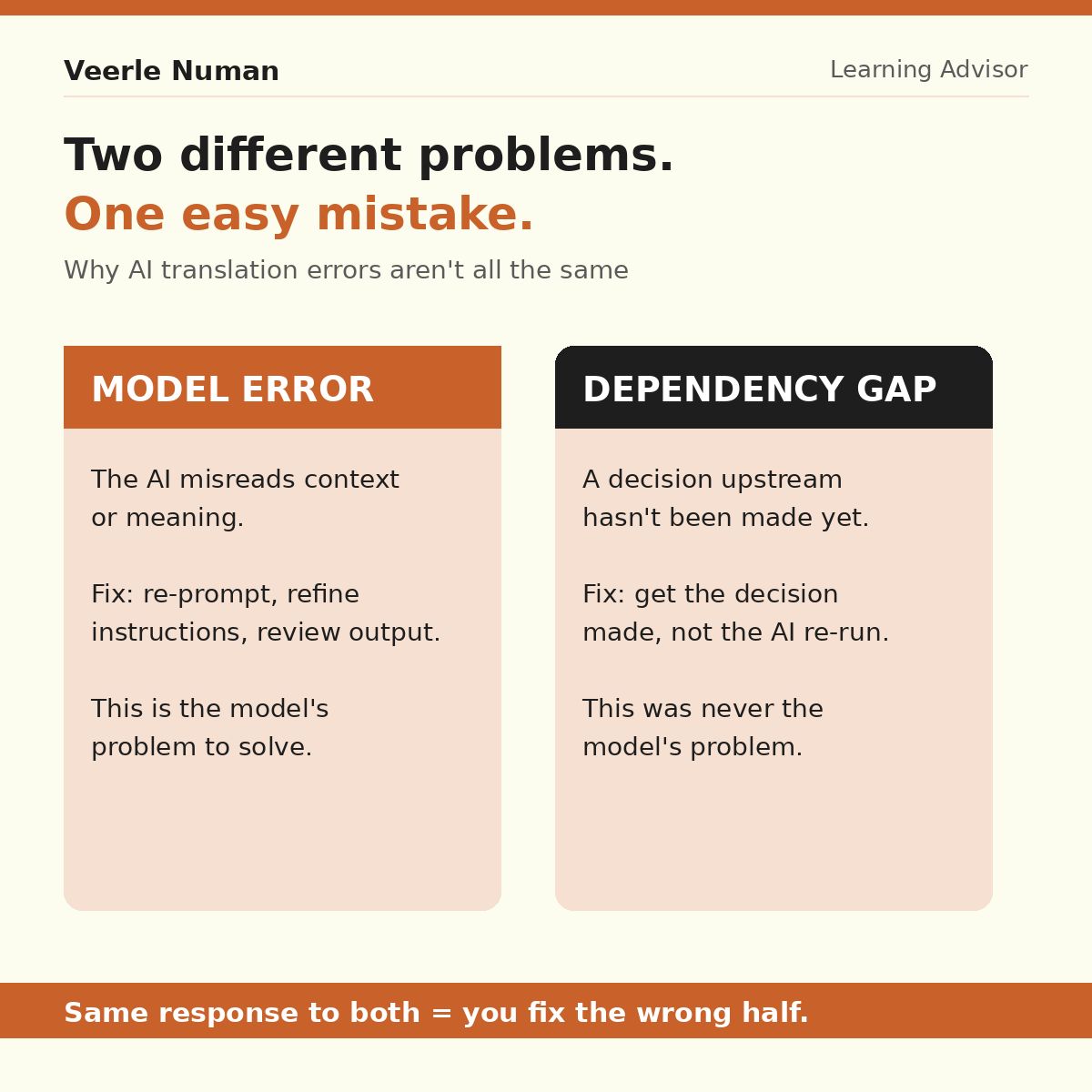
Speed isn't the bottleneck anymore. Judgment is. Job specs in L&D now say "ship in weeks, not months." AI made that possible. But speed without human judgment just means broken output, faster. Here's what I mean. When AI translates training content, the errors fall into two different problems. Some are real model errors, the AI just gets the meaning wrong. Others aren't AI failures at all. They're upstream decisions nobody made yet. A term that hasn't been finalized. A definition still sitting with product or compliance. No model can correctly translate a word that doesn't have an agreed answer yet. Treat both the same way and you fix the wrong half. Re-prompting solves the first one and does nothing for the second, because the second was never the model's problem to begin with. This is the layer I build into every program now, before a single piece of content gets generated. Which decisions are mine to make. Which ones are still upstream and not settled. What actually gets reviewed before it reaches a learner. That's the real job now, at every level above execution. Not generating content faster. Knowing what's ready to automate and what isn't yet. Skip that, and you don't move faster. You find out later, when changes have to be made after release. That frustrates the learner. It frustrates whoever built it. It costs more than doing it right the first time. And it chips away at your credibility.
6 of 117 adsSign up to see every Valamis ad, filter by format and date, and get alerts on new ones.
See all 117 adsWatch the companies you care about.
Filter every ad by industry, country, format and network, and get alerts when a company you watch starts running new ads.