On air · 1 of 3 networks
UN Climate Change
- unfccc.int
- DE
- 1,612 employees
UN Climate Change’s ads on LinkedIn, Meta and Google, recorded by adsrunning. Browse the latest here for free. Sign up free to see all 27. Watch UN Climate Change with Starter to get each new one in your feed.
Watchlist with Starter · $49/mo
| Network | Status | Live ads | Nov 2025LinkedIn activity · 52 weeksOct 2026 | Checked | Next step |
|---|---|---|---|---|---|
| Running | 12 | Checked 30 Oct 2026 | See all 27 ads → | ||
| Meta | None recorded | 0 | No active ads recorded on the Meta Ad Library | Checked 28 Oct 2026 | Collect them with the API → |
| Recently | 10 | Ads on the Google Ads Transparency Center | Checked 13 Oct 2026 | Collect them with the API → |
UN Climate Change has 12 live LinkedIn ads. Its Facebook page had no active ads on 28 Oct 2026, and we recorded 10 Google ads on 13 Oct 2026.
Latest ads
- LINKEDIN · VIDEOSince 24 Jun 2026
Football connects billions of people, from local pitches to the World Cup. But climate change is reshaping the conditions the game is played in. We are in the red zone. Yet football shows what’s possible when people come together. The shift to clean energy and stronger resilience is already underway, but we need to move faster. What’s at stake goes far beyond the pitch. It’s the people and communities that make the game possible. The future of football depends on the choices we make now. #WorldCup #ClimateChange
- LINKEDIN · IMAGESince 19 Jun 2026
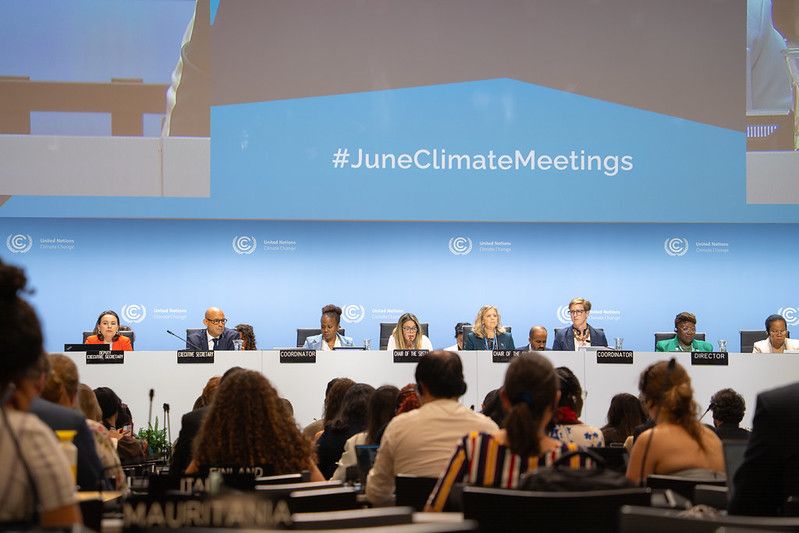
The #JuneClimateMeetings made important strides forward in some areas, but in other areas we saw side-stepping and progress stalling. Starting with the good news: on just transition, countries took vital steps towards turning the promise of the just transition mechanism into a reality, and to set up the review of the just transition work programme. On Action for Climate Empowerment, we laid crucial groundwork for deepening participation and engagement across societies. We’ve heard the COP31 Türkiye Presidency announce targets for electrification, city resilience and efficiency, and waste under the Action Agenda. Minister Kurum, Minister Bowen and I are in lock-step: the negotiations and the Action Agenda are both vital, separate but parallel and complimentary tracks. COP31 must made strong progress in both, as must COP32 and beyond, to support faster and wider implementation on the ground. In these and other important areas, the June Meetings showed climate cooperation at work, and this process doing its job. In others areas, we saw some familiar tendencies towards "you-first-ism": groups refusing to deliver commitments or allow the process to move forward unless others go first. This is a recipe for gridlock when we need all negotiating tracks to be moving in the fast lane. On adaptation and mitigation, Parties voiced the need to deepen and accelerate action, but very disappointingly, did not deliver on that in Bonn. We must all deliver on existing obligations and plans under the Convention and Paris Agreement. And we simply cannot afford to re-open previous decisions, to renegotiate existing targets, or to backslide. All Parties must be comfortable and confident in restating our existing global commitments – without cherry-picking those that suit tactically in the moment. Commitments made in the first global stocktake; commitments that respond to the science and the 1.5 degrees limit; on Loss and Damage; on 300 billion; on 1.3 trillion; on tripling adaptation finance; and more. So that we make real progress towards implementation in Antalya and Addis Ababa. And arrive at the second global stocktake at COP33 much closer to delivering on the pledges made at the first. I urged all delegates to bring in Ministers as soon as possible, in the weeks and months ahead. Particularly on the thorniest issues. Last year, I asked a group of experts to consider ways that our process could be optimised or evolve – recognising all that it has achieved, and its Party-owned nature and foundations. This week, they shared some of their independent ideas. A summary will be made available in the weeks ahead. The secretariat is very much in listening mode, and very clear on our mandates. We particularly want to hear from Parties and other stakeholders, and we'll provide information soon on a process and timelines to do that. We must press forward. https://bit.ly/4fQr4PU
- LINKEDIN · IMAGESince 8 Jun 2026
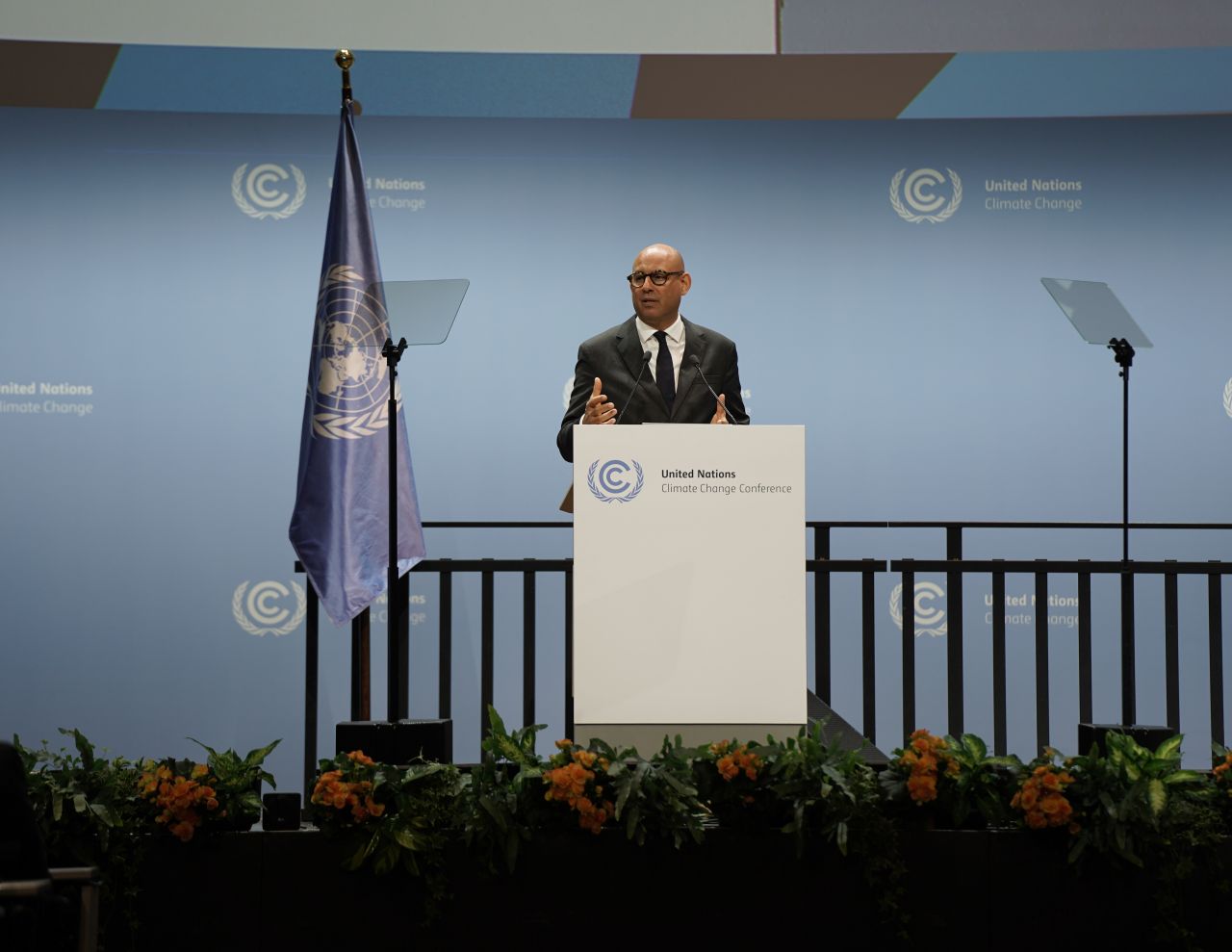
Tackling the global climate crisis is the hardest, but most important, thing humanity has ever tried to do together. It is worth doing, because we have no choice. Every economy and population depends on it. It is never easy. But together, our climate process has navigated negotiations, pushed past setbacks, found ways for nations who disagree on nearly everything, to agree. And now, climate action and the global economy are moving. We are not where we need to be. But we are somewhere we have never been before. This is the hard work starting to pay off. People the world over need this process to keep delivering, and at increasing speed and scale. We don't have time to re-open past debates or renegotiate commitments already made. Because we hear the frustrations of those denied the benefits of climate action – now. And we’re witnessing the imperative to accelerate – now: as deadly heat kills thousands in a single day. As El Niño impacts – supercharged by the climate crisis – promise further suffering and inflationary shocks. As war in the Middle East causes immense human suffering and sparks a fossil fuel cost crisis that’s strangling economies everywhere. It’s crystal clear: continuing our fossil fuel dependency means continuing to import inflation and economic instability, while exporting energy security, sovereignty and policy autonomy, leaving economies and communities exposed to climate disasters, taking a wrecking ball to lives and prosperity everywhere. Here in Bonn, we must advance key issues, including on ambition, adaptation, the delivery of the first global stocktake outcomes, a just transition, and climate finance. And much more We must bring the work of this process closer to the real economy. We hear calls from many to elevate the Global Climate Action Agenda – complementing negotiations, bringing together governments, companies, innovators, investors, cities and regions, and civil society. I urge everyone to use the Action Agenda to address major challenges their governments face: Boosting energy security, fortifying food security and reducing waste, strengthening the resilience of cities, and tackling methane – to avoid deadly tipping points. The hard work continues. Let's make these two weeks count. My full speech at the #JuneClimateMeetings opening: https://lnkd.in/epZ_HcTx
- LINKEDIN · IMAGESince 1 Jun 2026
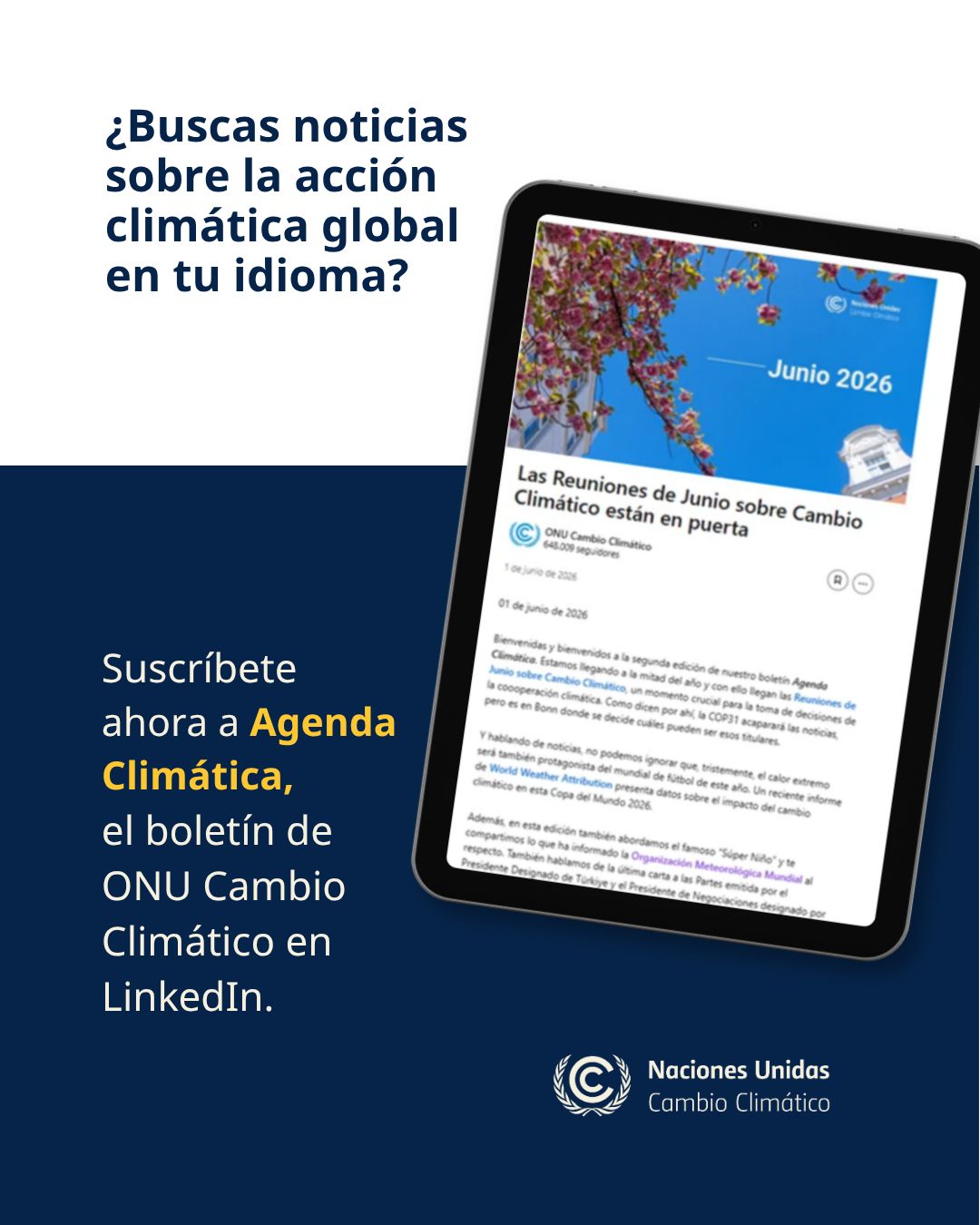
Una nueva edición de nuestro boletín Agenda Climática ya está disponible. ¿Qué encontrarás en esta edición? Las Reuniones de Junio sobre Cambio Climático están a la vuelta de la esquina El calor extremo podría marcar el próximo Mundial de Fútbol ¿Qué es un Súper Niño? Te lo explicamos Camino a la #COP31: primera carta conjunta del presidente designado y del presidente de las negociaciones Disfruta la lectura y no olvides suscribirte ➡️ https://lnkd.in/gxRJ2y2R
- LINKEDIN · IMAGESince 27 Apr 2026
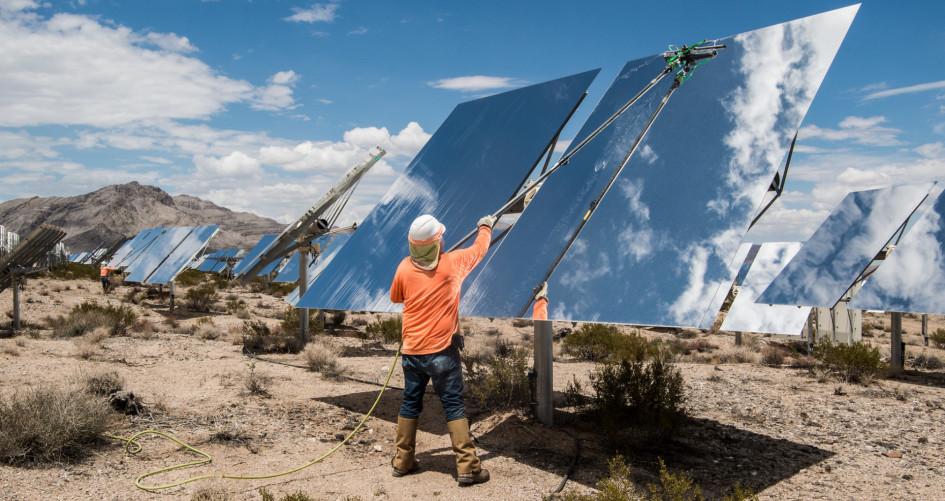
As the head of UN Climate Change, I’m used to making the case for clean energy. Now, this fossil fuel driven energy crisis is doing the job for me. War in the Middle East has exposed a brutal truth: fossil fuel dependency rips away countries’ sovereignty and security, putting food prices, household budgets, business bottom lines, and entire economies at the mercy of geopolitical shocks. The latest conflict has unleashed what the International Energy Agency has called, "the greatest global energy security threat in history", constricting oil and gas supplies and sending prices soaring. Now families and businesses face higher bills and hard choices. The impacts are reverberating around the world. Rising food and fuel costs, and supply chain disruptions, could mean record levels of hunger in 2026, according to the World Food Programme. The good news is there is a clear solution to both the climate and energy crisis: Accelerating the shift to renewables. Sunlight and wind don’t depend on narrow and vulnerable shipping straits. Solar and wind power allow nations to regain control of their economies and security, while creating jobs, cutting pollution, improving health, and lowering costs. Today’s turmoil underscores - clean energy and climate cooperation are essential, not despite global instability but because of it. https://lnkd.in/dGr6h66s
- LINKEDIN · IMAGESince 25 Apr 2026
Der Krieg im Nahen Osten hat eine brutale Wahrheit offenbart: Die Abhängigkeit von fossilen Brennstoffen raubt Ländern ihre Souveränität und Sicherheit und macht Lebensmittelpreise, Haushaltsbudgets, Unternehmensgewinne und ganze Volkswirtschaften von geopolitischen Schocks abhängig. Der jüngste Konflikt hat das ausgelöst, was die Internationale Energieagentur als „die größte globale Bedrohung der Energiesicherheit in der Geschichte“ bezeichnet hat. Er schränkt die Verfügbarkeit von Öl und Gas ein und treibt die Preise in die Höhe. Inflation folgt unweigerlich, was wiederum zu höheren Ausgaben für Familien und Unternehmen jeder Größe führt. Europa und Deutschland sind nach wie vor stark von importiertem Öl und Gas abhängig. Die Kosten für gasbefeuerten Strom in der EU stiegen in den ersten zehn Tagen nach Beginn des Krieges im Nahen Osten um mehr als 50 %. Die gute Nachricht ist, dass es eine klare Lösung sowohl für die Klimakrise als auch für die Kostenkrise bei fossilen Brennstoffen gibt: Die Beschleunigung des Übergangs zu sauberen Energiesystemen – in denen erneuerbare Energien den Strom liefern, unterstützt durch moderne Netze und Speicher, und saubere Technologien wie Elektrofahrzeuge umweltschädliche Alternativen ersetzen. Sonnenlicht und Wind sind nicht von engen und anfälligen Schifffahrtsstraßen abhängig. Saubere Energien wie Solar- und Windenergie lassen Länder die Kontrolle über ihre Wirtschaft und Sicherheit zurückgewinnen; sie schützen vor globalen Turbulenzen und schaffen gleichzeitig Arbeitsplätze, verringern die Umweltverschmutzung, verbessern die Gesundheit, fördern die Stabilität und senken die Kosten. Erneuerbare Energien sind die günstigsten, die es gibt. Investitionen in saubere erneuerbare Energie schützen Deutschland nicht nur vor globalen Preisschocks und Unterbrechungen der Lieferketten für fossile Brennstoffe. Sie festigen auch Deutschlands Rolle als Vorreiter für erneuerbare Energie und stärken die Wettbewerbsfähigkeit Deutschlands und Europas. Je schneller Deutschland handelt, desto größer sind die Gewinne – und der Klimawandel wartet nicht.
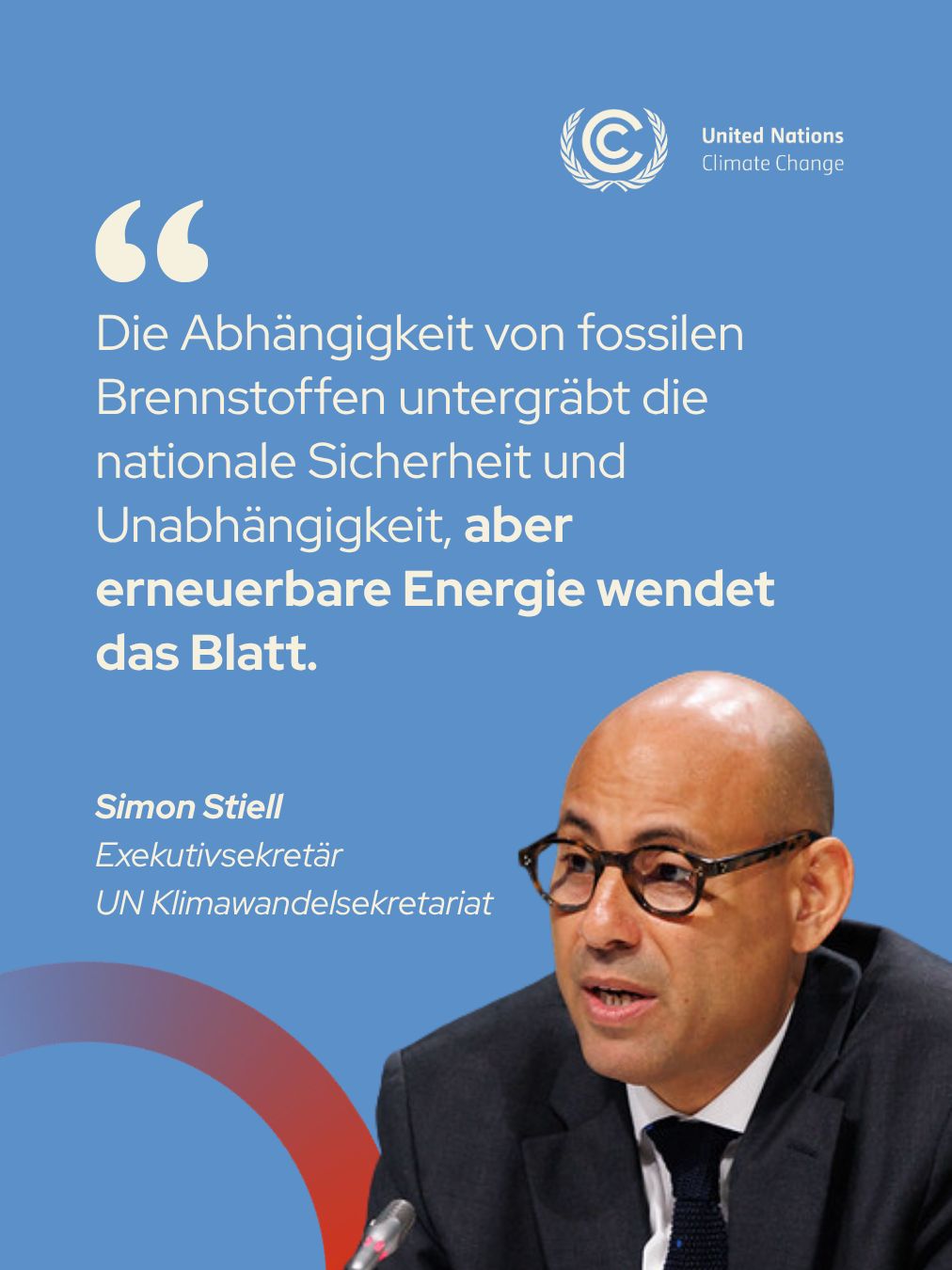
6 of 27 adsSign up to see every UN Climate Change ad, filter by format and date, and get alerts on new ones.
See all 27 adsWatch the companies you care about.
Filter every ad by industry, country, format and network, and get alerts when a company you watch starts running new ads.