Not on air · 2 of 3 networks checked
Threedy
- threedy.io
- Software Development
- DE
- 51 employees
Threedy’s ads on LinkedIn, Meta and Google, recorded by adsrunning. Browse the latest here for free. Sign up free to see all 283. Watch Threedy with Starter to get each new one in your feed.
Watchlist with Starter · $49/mo
| Network | Status | Live ads | Nov 2025LinkedIn activity · 52 weeksNov 2026 | Checked | Next step |
|---|---|---|---|---|---|
| None recorded | 0 | Checked 1 Nov 2026 | See all 283 ads → | ||
| Meta | Not checked | — | |||
| Recently | 16 | Ads on the Google Ads Transparency Center | Checked 12 Oct 2026 | Collect them with the API → |
Threedy has no live LinkedIn ads. We recorded 16 Google ads on 12 Oct 2026.
Latest ads
- LINKEDIN · IMAGESince 28 Oct 2026
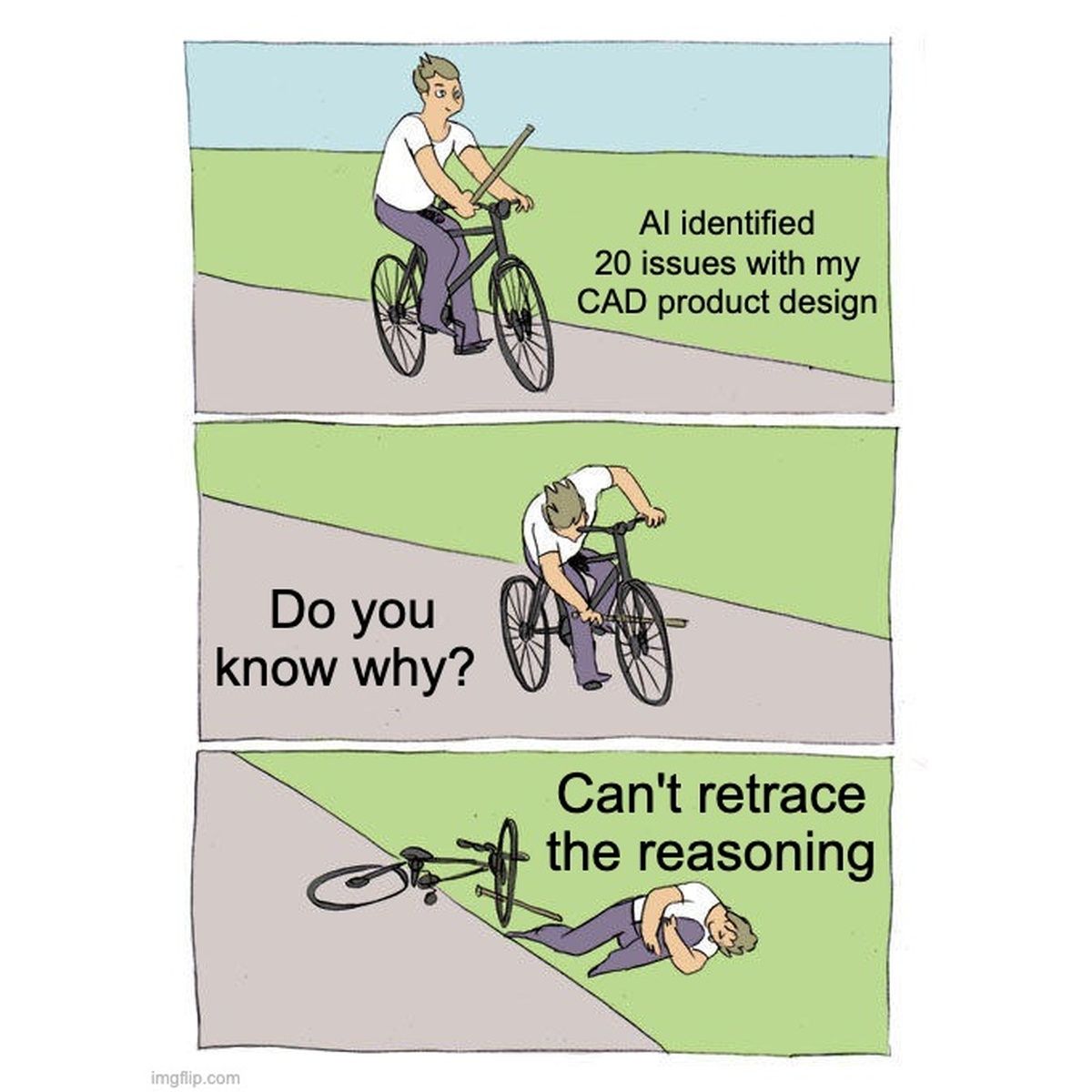
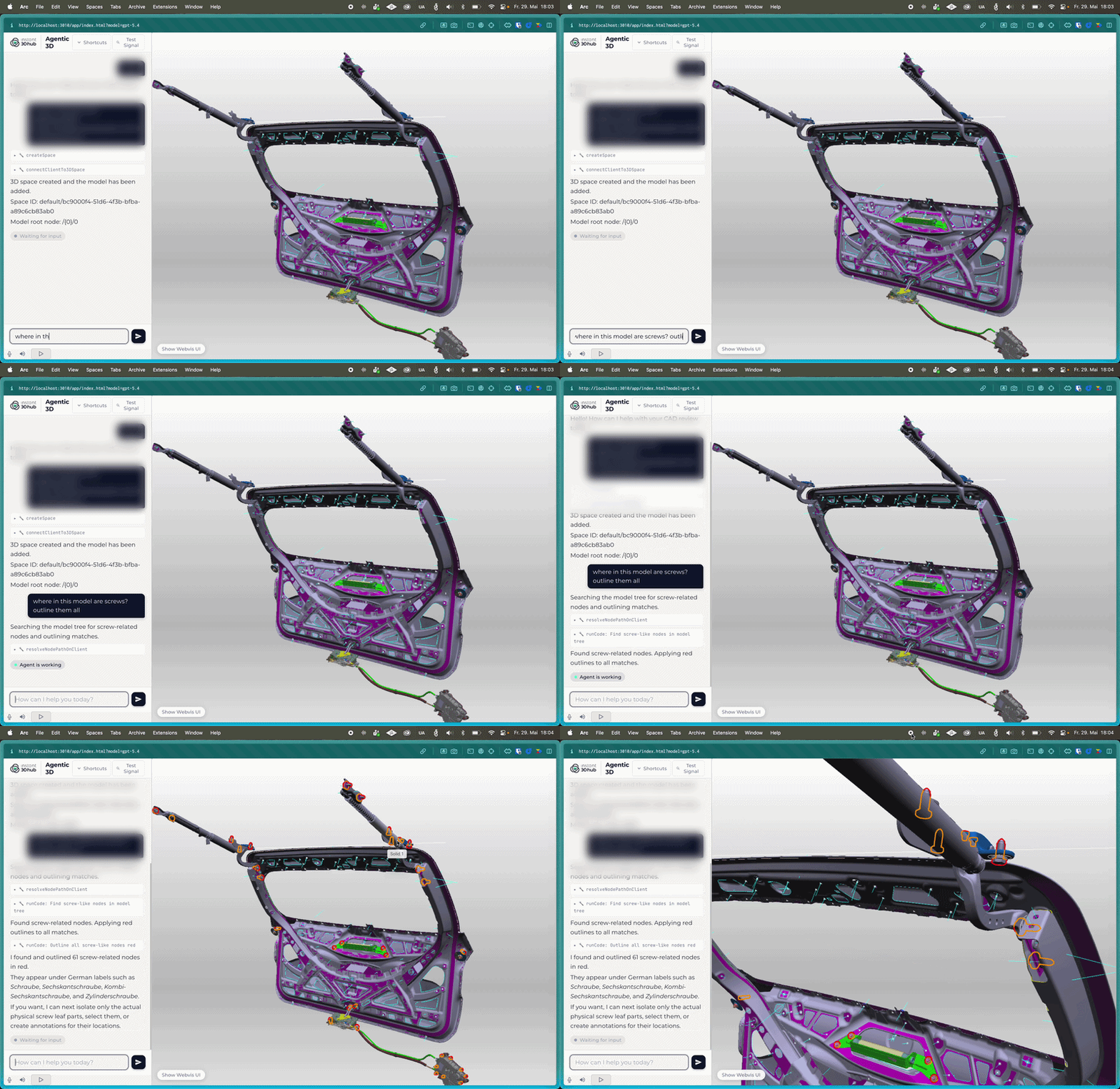
Every engineering team that puts an AI agent on a design review runs into the same dead end eventually. First the pitch is speed. But then: An agent can find issues in a model faster than anyone opening the file by hand ever could. The requirement to sign off hasn't changed though: the engineer still has to explain why each finding is real. So you end up re-checking the agent's work by hand, or signing off on a list you can't actually verify. LLM maturity isn't the constraint here: the result just lacks a layer that persists what got checked. The gap only exists if "the AI reviewed it" means a verdict with nothing underneath: 20 issues, pass or fail, no reference to what was actually checked. No engineer should sign off on such a version, and most wouldn't. Agentic 3D's answer is to attach deterministic evidence to every finding: the requirement it's checking against, the geometry it points to, the measured value against the required one, all sitting right next to the conclusion. So a finding stops being something you trust blindly or redo from scratch, and turns into something you can check in the time it takes to read it. Finding an issue and proving it stop being the same step. We're building this now with a small group of engineering teams. If your team is stuck on exactly this tradeoff, we can set up an early-access environment on your own data and show you where the line actually sits. Take a look: https://lnkd.in/dnrcYsPQ
- LINKEDIN · IMAGESince 28 Oct 2026
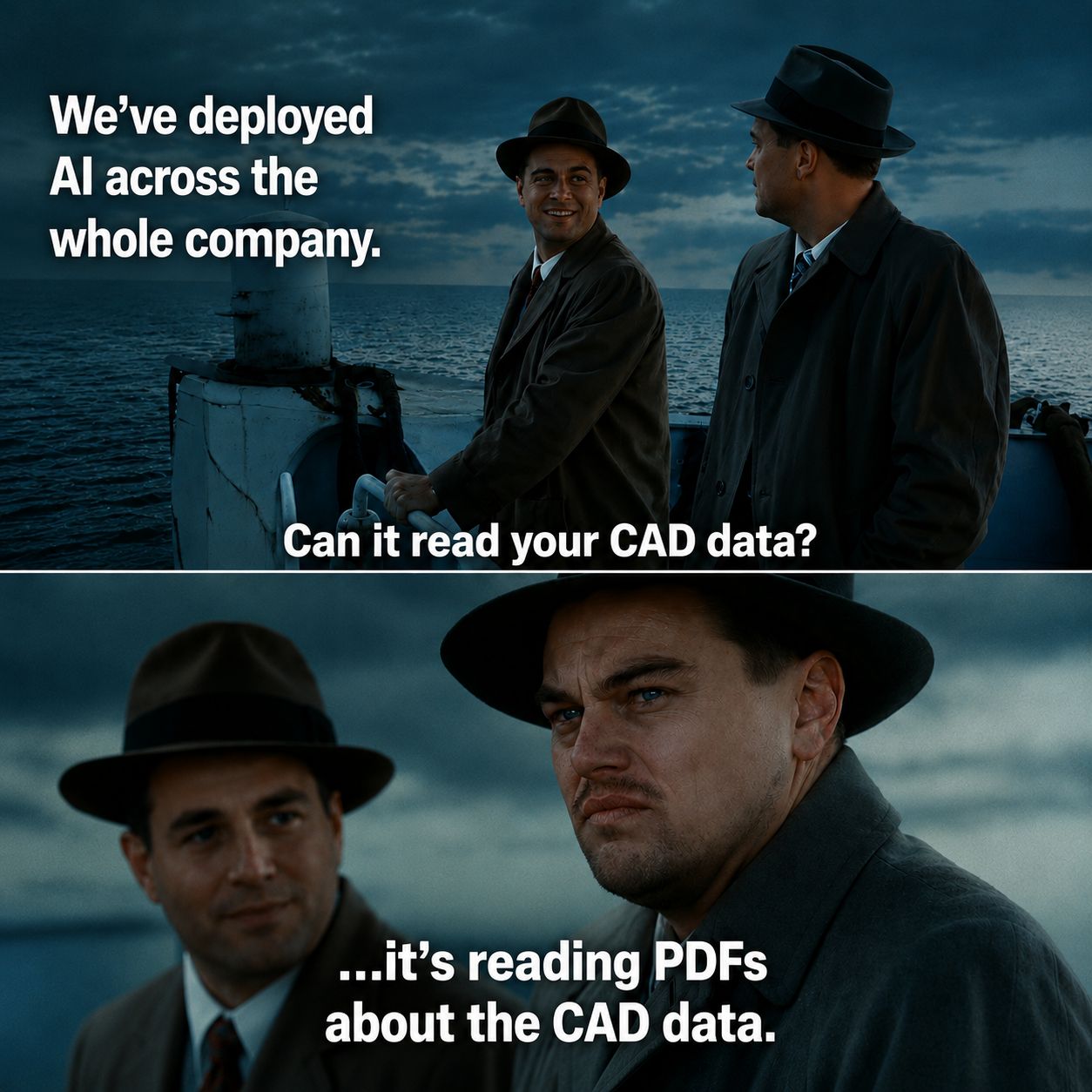
Your AI can read every requirements doc, spec, and manual about your product. Ask it to look at the actual 3D data, and it goes quiet. Current solutions offer no way for an LLM to interact with your CAD geometry. This is the gap I see in automating 3D workflows with an industrial AI model: It can summarize a requirements doc, but can’t look at the actual geometry and tell you whether a cable runs too close to a heat source. Your 3D data, the single most detailed asset engineering owns, is invisible to the AI you just rolled out. Two reasons it happens: - Your 3D data lives in fragmented formats that need converting and exporting before anything can read it (and every export is a stale copy) - Feeding raw CAD to an external model feels like handing over your core IP Both are solvable. Threedy’s Agentic 3D works against your live geometry directly, without export or conversion. It identifies the parts involved in a check, measures clearances between them, compares a design against the requirements you define, and flags any failures. Then it reports back in full geometric context. Raw files stay in-house: only structured descriptions of the geometry reach the AI, never your source CAD. A engineering review that used to take hours of clicking through the model becomes minutes of work. Your engineers still make the final call. We're building Agentic 3D with the help of a few select teams. If it’s relevant to what you’re working on right now, sign up for early access: https://lnkd.in/emMHZUVf
- LINKEDIN · IMAGESince 28 Oct 2026
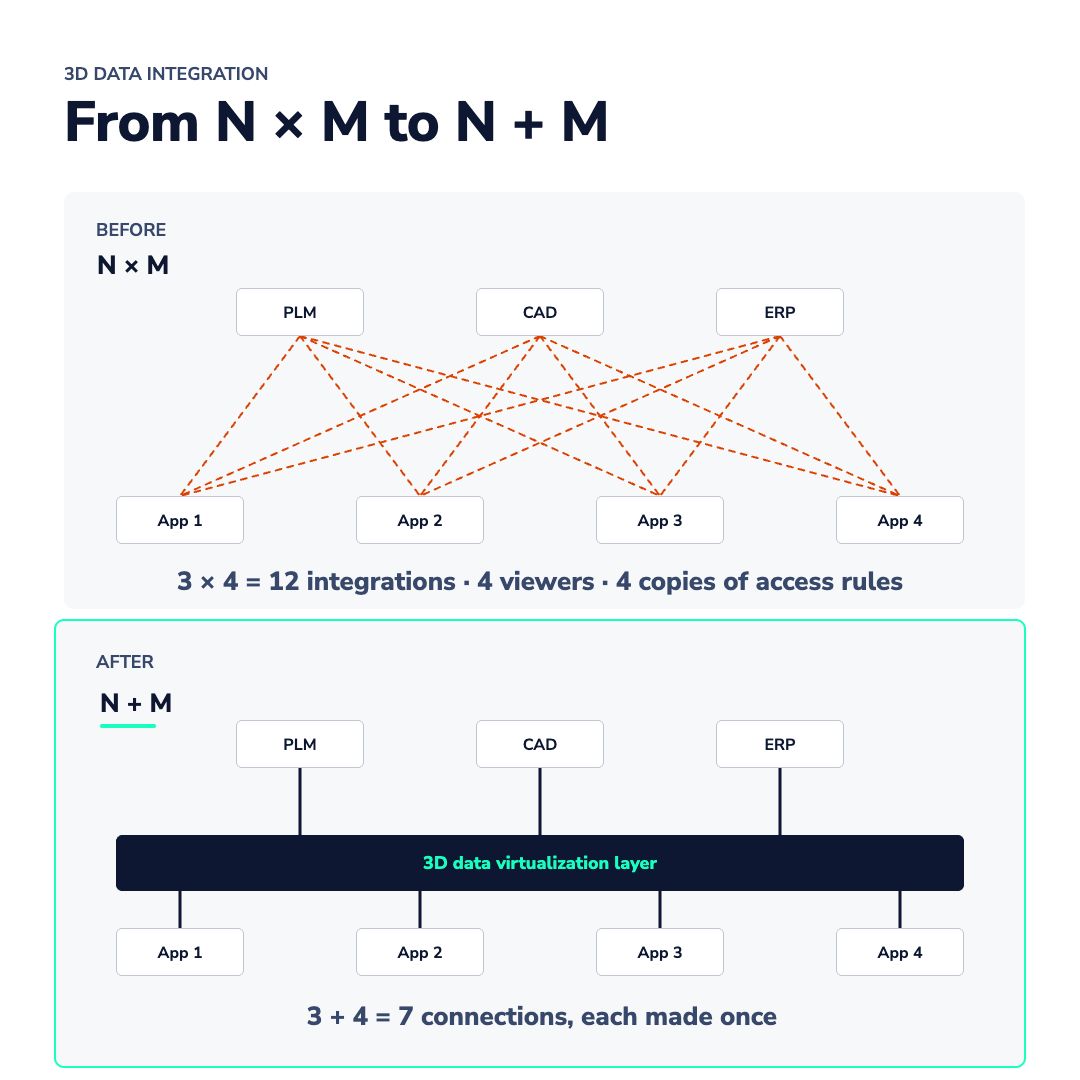
For 16 years, I was an engineer who made copies of 3D data for a living, but I rarely asked whether the copy needed to exist. If you lead IT or PLM at a large manufacturer, you manage those copies every day. Your teams work with multiple CAD systems, decades-old PLM and ERP, and suppliers across several tiers. Every new application rebuilds three things: a PLM connection, a CAD conversion pipeline and a viewer. Three source systems and four applications mean 12 integrations. Each one keeps its own copy of the data and its own access rules. A fifth application adds three more. Each copy starts to age the day it leaves the source. A change released this morning is missing from the shop floors file this afternoon, and someone has to work out which revision is current. Across a supplier network, that happens again with every release. Recently, I watched a full product assembly open in a browser on a standard laptop. It streamed live from the source, without complex conversion. It was Threedy and its 3D data virtualization layer that sits between your source systems and your applications. Each source and each application connects once, to the layer. Three sources and four applications need seven connections. N × M becomes N + M. PLM stays the master and the access rights stay where you already defined them. The design office and the genba see the same revision. Where does an export still sit between your source systems and your teams? If you lead IT, PLM or engineering, see how the 3D data virtualization layer works: https://lnkd.in/eQaamaxS
- LINKEDIN · IMAGESince 28 Oct 2026
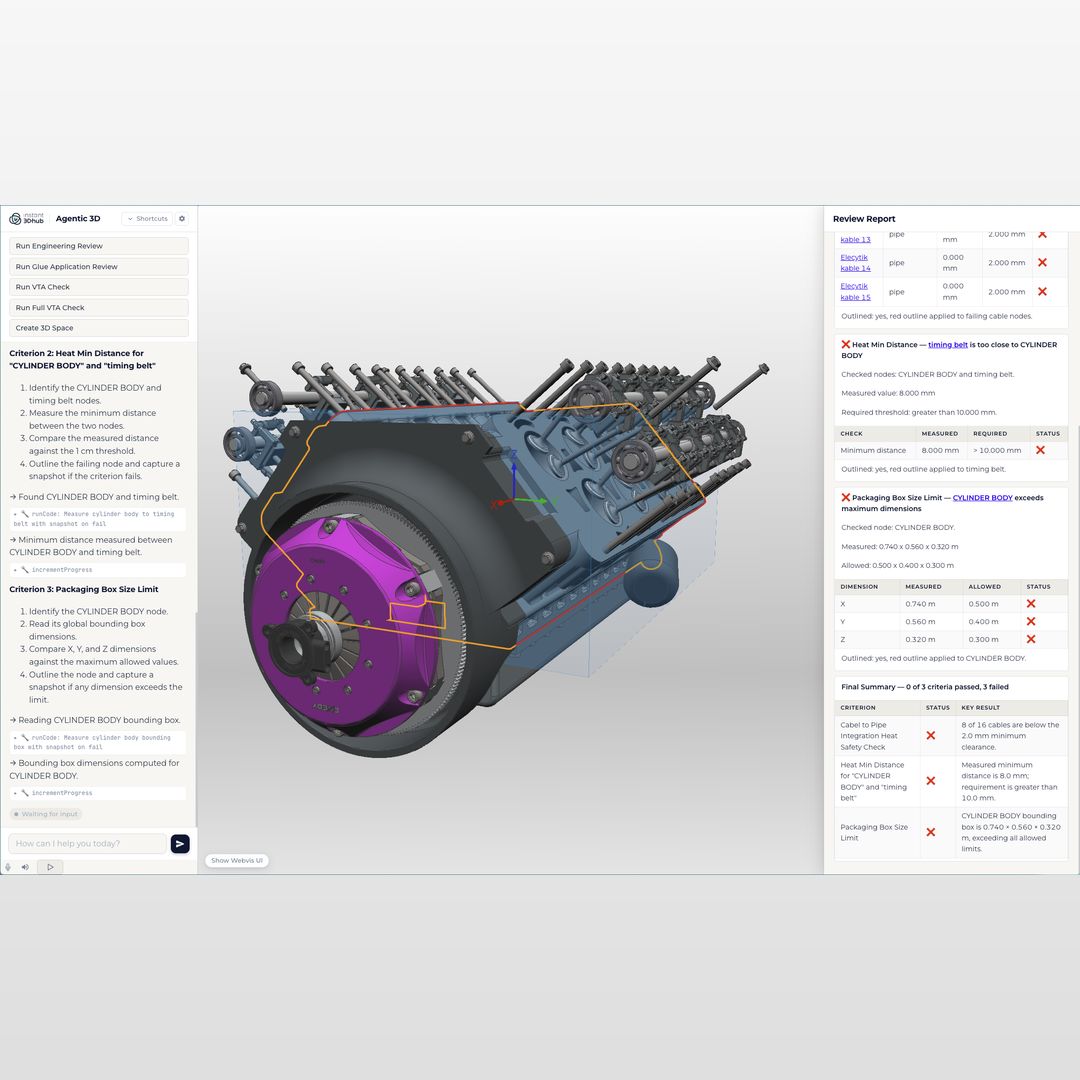
Many engineering leaders I speak with are exploring AI agents but their agents still struggle to answer questions about a product because they lack access to the 3D geometry and engineering context behind it. Meaning, the work that depends on it stays manual. That work adds up. Often engineers spend 5 to 7 hours a week finding and reviewing 3D data. Not designing, just checking. Take a simple question: does the cable harness keep 15 mm from the exhaust? Answering it means: - finding the latest model, opening it in a viewer, and waiting for it to load - pulling up the Excel sheet and the spec side by side, - clicking through the assembly, - taking screenshots of what looks wrong. Then the design changes, and the loop starts again. To solve this issue, AI agents need to have direct access to the 3D model: product structure, geometry, metadata, and PMI, whether the team works in Copilot, Claude, or its own agent. You ask the clearance question in plain language, and the agent measures every cable - not a sample - and outlines each spot that falls short. In the same request, it can check the part against your design rules document. That's exactly the way we built instant3Dhub. To become your 3D infrastructure layer, the agent does the manual 3D work while you can get back to Engineering. Want to see an agent run your first check on your own 3D model? Send me a DM or book a session here, and I’ll show you live: https://lnkd.in/eDfh8RfQ
- LINKEDIN · IMAGESince 28 Oct 2026
Your AI can read every requirements doc, spec, and manual about your product. Ask it to look at the actual 3D data, and it goes quiet. The most detailed asset engineering owns, invisible to the AI you just rolled out. So the reviews stay manual. An engineer told us one design review means measuring around 150 clearances by hand: open the area, isolate the parts, measure, log it in the spreadsheet. Then a new revision lands, nobody knows which of the 150 numbers moved, and the honest answer is: measure again. A large part of a design review involves navigating information: finding the right precedent, checking what has already been decided, and identifying potential conflicts. While engineering judgment remains essential, much of this preparation could be supported or automated, giving engineers more time to focus on the decisions that truly require their expertise. That's the split we built Threedy's Agentic 3D around. It works against your live geometry, without export or conversion: finds the parts involved in a check, measures the clearances, compares results against the requirements you define, and flags what fails, in full geometric context. The numbers are measured against the CAD data, not generated by AI. Your source files stay in-house; only structured descriptions of the geometry reach the model. The engineer reads flagged results instead of hunting them, and the final call is theirs. You can test Agentic 3D on your own models. We set up a demo environment with your data, you bring a model you've already reviewed, and you see whether it flags anything you missed: https://lnkd.in/ebFPPEky
- LINKEDIN · VIDEOSince 8 Oct 2026
An AI model can read every record about a product. But it cannot read its geometry, let alone link its parts to other records. Requirements, change requests, warranty claims - what the Digital Thread links about a product, a language model can read as it is. But the geometry sits in CAD files, spread over several systems and many revisions, and every file has to be exported, converted and loaded before anyone can ask a question. That is why demonstrations of AI in engineering still mostly run on text or on simple geometry built for the purpose - last month’s included, when general models began to operate CAD and 3D creation tools. Hence the question we hear most often: “Why not connect our PDM straight to a model provider?” Because a direct connection hands the model copies at file level, one system at a time. Rebuilding the systems to make them AI-native takes years and ends only with systems that are newer, not AI-native. A second data landscape is paid for three times - built, kept in sync, migrated - and every synced copy shows the world as it was at the last sync. An agent working on it will, in IDC’s words, keep “confidently executing on a picture of the world that’s gone stale.” Our answer is different. The data stays in the systems that hold it; what becomes usable is the access. Using instant3Dhub, an agent asks a question and receives a computed answer - a distance, a clash, the neighboring parts affected by a change - read from the source at the moment of the question, with exactly the rights of the person it works for. The model calls tools that operate on the raw geometry; it does not ingest the geometry itself. The platform was not built for agents in the first place, yet agents are natural consumers: every consumer gets only the data fragments the task at hand needs - for an agent, a question of a few hundred tokens instead of one it cannot process at all. Since this summer, several large CAD and PLM vendors have opened their own data to agents, each inside its own portfolio, and some of them already charge by the call for getting data out, beyond a free allowance. We bring agents to the infrastructure a company already has, across systems and vendors - for checking, comparing, locating and explaining. Access for agents - through our MCP Server and Microsoft 365 Copilot - is available today. We make our customers’ data usable by agents - without touching the systems. More on the how: https://lnkd.in/eJP78uxi
6 of 283 adsSign up to see every Threedy ad, filter by format and date, and get alerts on new ones.
See all 283 adsWatch the companies you care about.
Filter every ad by industry, country, format and network, and get alerts when a company you watch starts running new ads.