On air · 1 of 3 networks
The smarter E
- lnk.bio
- DE
- 4 employees
The smarter E’s ads on LinkedIn, Meta and Google, recorded by adsrunning. Browse the latest here for free. Sign up free to see all 458. Watch The smarter E with Starter to get each new one in your feed.
Watchlist with Starter · $49/mo
| Network | Status | Live ads | Nov 2025LinkedIn activity · 52 weeksOct 2026 | Checked | Next step |
|---|---|---|---|---|---|
| Running | 2 | Checked 31 Oct 2026 | See all 458 ads → | ||
| Meta | Not checked | — | |||
| Not checked | — |
The smarter E has 2 live LinkedIn ads.
Latest ads
- LINKEDIN · IMAGESince 29 Oct 2026
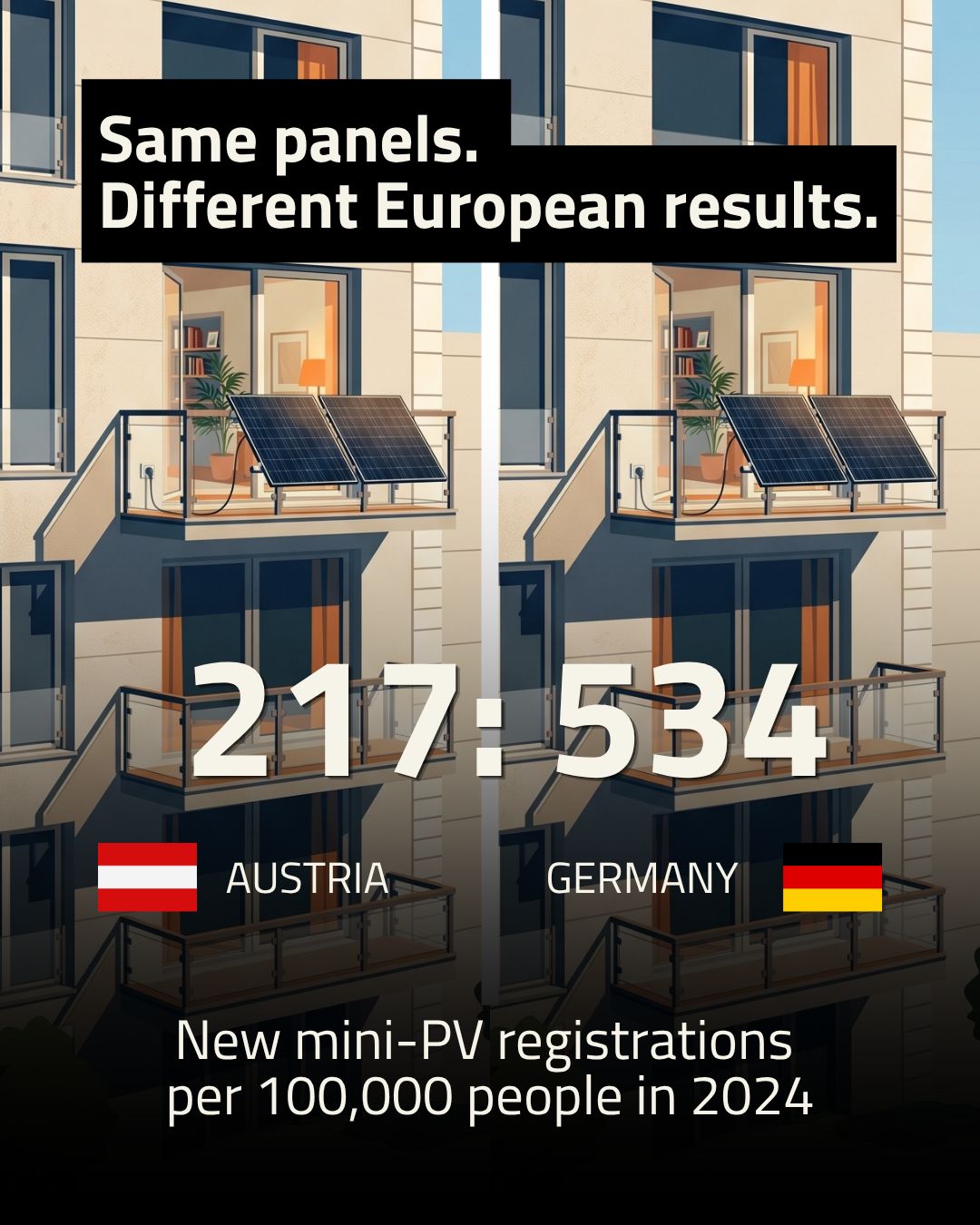
🥱 Balcony solar took off when Germany made it boring. By July 2026, Germany had 1.46 million registered plug-in systems with a total capacity of 1.57 GW. Around 800,000 were registered at the end of 2024. The rise is steep. But the interesting part is not the panels. 🚧 The panels were never the bottleneck. Germany made the process feel less like a construction project. A household can buy an 800 W system from Lidl with a standard plug. Registration is down to five fields. Eligible systems no longer need a separate grid-operator notification. Qualifying systems carry 0% VAT. Individually, these changes sound procedural. Together, they remove several moments when someone might decide that solar is simply too much trouble. Then you cross a border. 📖 Same panels, different rulebook. Austria allows systems up to 800 W without grid-operator approval, but requires advance notification. France adds an administrative step when surplus electricity enters the grid. Spain can require a zero-discharge device. Belgium only legalised plug-in solar in 2025. The same two panels can therefore be an appliance in one market and a small infrastructure project in another. That matters for tenants and households without control of their own roof. Below 800 W, there is no detailed EU-wide registration and technical regime. National rules still decide whether getting started feels ordinary or exceptional. 🏘️ Simple for households. Visible to the grid. Safety cannot disappear. Neither can grid visibility. But seeing distributed capacity does not require every small generator to navigate a rooftop-scale connection process. Europe needs a clearer common design language: shared definitions, interoperable product standards, proportionate registration and transparent rules for plugs and surplus electricity. Balcony solar is not just a consumer trend. It is a practical test of European energy-system architecture. Get the doorway right, and millions of small generators can join the system without making it less safe or less visible. Sometimes the next solar market is built through better rules, not better modules. 📚 Learn more … Renewable EI: “Plugin-PV - How Germany Made Solar Accessible to All” https://bit.ly/3VP16UU Sustainability Forum Nexus Forum: “The role of economic, technological, and ecological considerations among different consumer attitudes – an evidence from Germany” https://bit.ly/4B7aPWN ScienceDirect: “Free plug-in photovoltaics for rental apartments in Germany: A win-win-win financial opportunity for landlords, tenants and society” https://bit.ly/47UdeXm .
- LINKEDIN · IMAGESince 29 Oct 2026
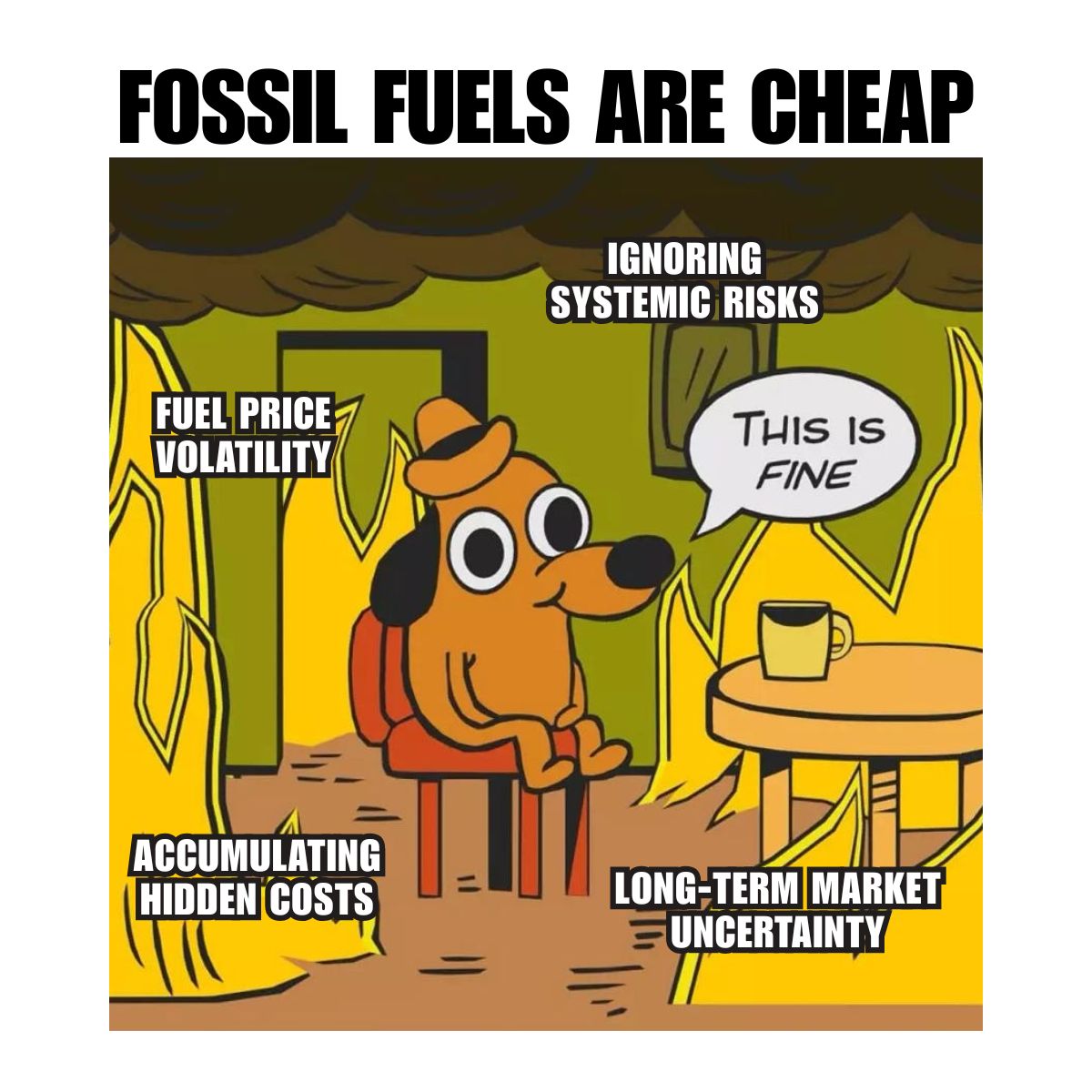
🤑 Cheap to operate today, 😫 expensive once you can't hide the fuel bill. Most cost debates about the energy transition still run the other way: that it's cheaper to keep an old fossil plant running than to build new renewables. The data says otherwise. In 2024, 91% of newly commissioned utility-scale renewable projects produced power at a cost below that of the cheapest new fossil-fuel alternative, and renewable generation avoided USD 467 billion in fossil-fuel costs worldwide, according to IRENA's 2024 cost report. That's a planning-horizon distinction, not just a cost dispute. The claim compares a sunk-cost operating bill today to a twenty-year decision. It also quietly drops the fuel price risk utilities carry for as long as that plant stays open. Coal and gas prices move with global markets, not with a utility's budget cycle. That risk sits on top of whatever the plant costs to run this year. U.S. investment bank Lazard's 2025 LCOE+ (Levelized Cost of Energy, plus risk and flexibility costs) analysis shows the same pattern on the finance side: the gap between the cost of new wind and solar and the marginal cost of running existing gas plants continues to widen, even as gas prices remain relatively low. Two utilities already acted on this math instead of debating it. NIPSCO in Indiana (USA) chose 1,500 MW of solar and storage plus 150 MW of wind over continuing to run its coal fleet because the renewable bids it received came in cheaper than the coal plants' operating costs. Xcel Energy is retiring its 1,067-MW Tolk coal plant in Texas four years early, in 2028, for the same reason: the plant's economics stopped working before its planned retirement date. Before you repeat a "fossil is cheaper" claim in a deck or a comment section, run three questions. Is this comparing new-build cost to new-build cost, or new-build cost to an old plant's running cost? Does the number represent the fuel price risk for the next 10-20 years, or just this year's fuel price? Is the data from this decade or from a pre-2023 slide that was never updated? Ask the questions before you share the claim. The utilities already doing the math aren't debating this anymore. 📚 Learn more … Lazard: “Levelized Cost of Energy+” https://bit.ly/4BbGIxE International Renewable Energy Agency (IRENA): “Renewable power generation costs in 2025” https://bit.ly/4B51Qp7 International Energy Agency (IEA): “Global coal demand in 2025 grew moderately, remaining near 2024 levels” https://bit.ly/4yjZEYe .
- LINKEDIN · IMAGESince 23 Oct 2026
🤓☝️ Innovation hat immer ein Gesicht. Die Adolf Goetzberger-Stiftung sucht Menschen, deren persönliche Beiträge das Energiesystem nachhaltig verändern. Ab sofort läuft die Bewerbung für den Preis 2027. Er ist mit 25.000 Euro dotiert und wird zum dritten Mal vergeben. „Innovationen für die Energiewende entfalten ihre volle Kraft dort, wo Technologie, Praxis und internationaler Austausch aufeinandertreffen“, sagt Thomas Nordmann, Vorsitzender des Kuratoriums. 🚀 Was jetzt gesucht wird Gefragt sind Konzepte, Prototypen oder Prozesse aus dem gesamten Spektrum der Solarenergienutzung: Photovoltaik, Solarthermie, Wärmepumpen, Speicher inklusive Power-to-X, digitale Steuerung und Netzintegration. Wer mehrere Technologien intelligent verbindet, ist ausdrücklich willkommen. Die interdisziplinäre Jury achtet auf Innovationsgrad und technische Reife, vor allem aber auf das Umsetzungspotenzial und den konkreten Nutzen für Umwelt, Versorgungssicherheit und Gesellschaft. 📈 Warum sich die Bewerbung lohnt Der Preis wird am 8. Juni 2027 verliehen, am zweiten Messetag der The smarter E Europe. Der Preis richtet sich vor allem an Bewerberinnen und Bewerber aus Europa, steht jedoch auch internationalen Einreichungen offen. Eigenbewerbung und Nominierung durch Dritte zählen gleich viel. Adolf Goetzberger hat die Solartechnologie zur Grundlage einer nachhaltigen Energiewende gemacht. Wer setzt seinen Weg fort? Jetzt bewerben oder nominieren: www.goetzbergerstiftung.de .
- LINKEDIN · IMAGESince 20 Oct 2026
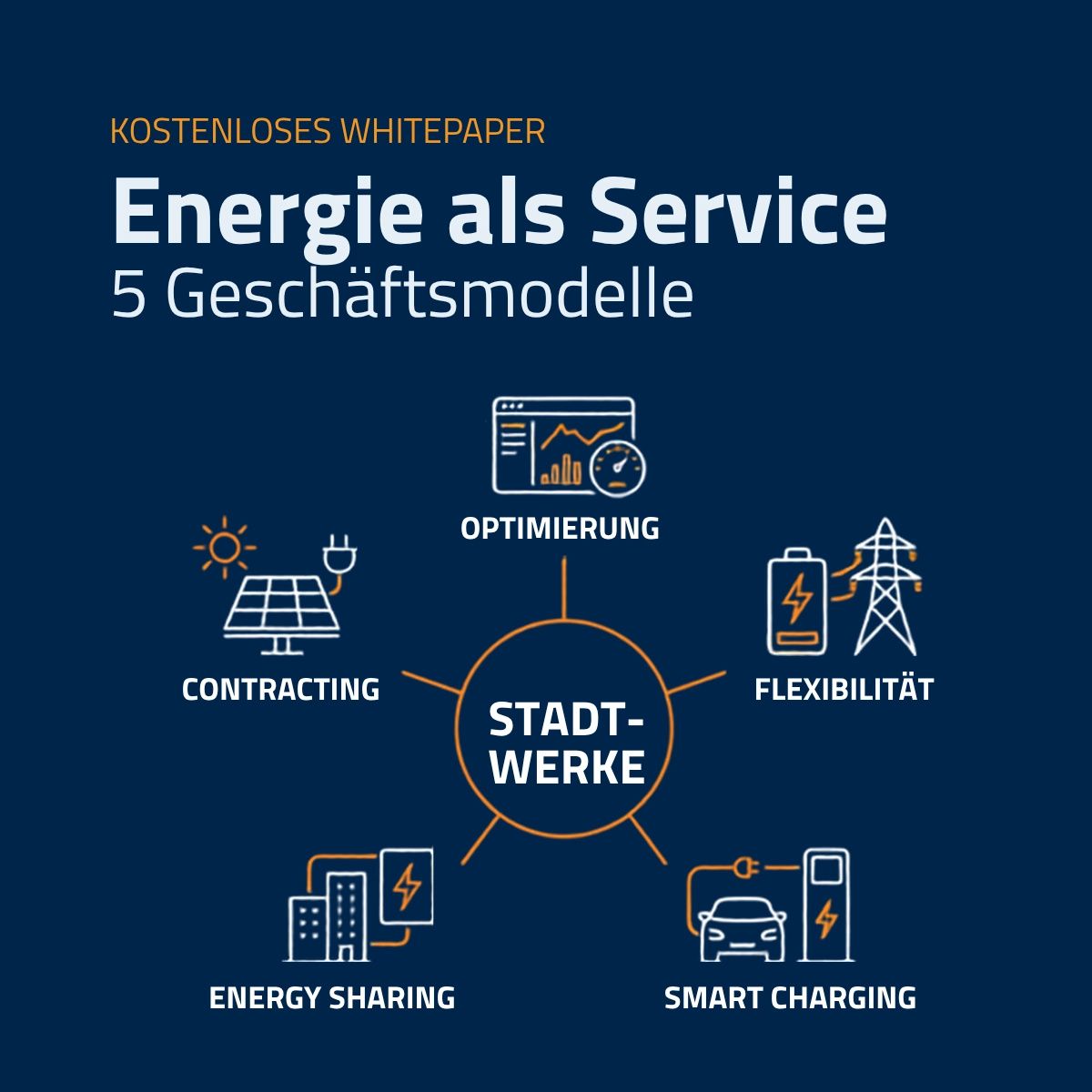
Die Stadtwerkestudie 2026 macht den Druck sichtbar: 9 von 10 Stadtwerken erwarten steigende Investitionen. 92 Prozent sehen sich nicht in der Lage, sie aus eigener Kraft zu stemmen. Das Whitepaper “Neue Geschäftsmodelle für Stadtwerke und Energieversorger” ordnet fünf mögliche Wege ein: Asset-Contracting, Flexibilitätsvermarktung, Smart Charging, digitale Energieoptimierung und Energy Sharing. Konkrete Praxisbeispiele zeigen, welche Erlöslogiken dahinterstehen und was bei der Umsetzung zählt. Jetzt herunterladen und die passenden Optionen für das eigene Stadtwerk priorisieren.
- LINKEDIN · IMAGESince 19 Oct 2026
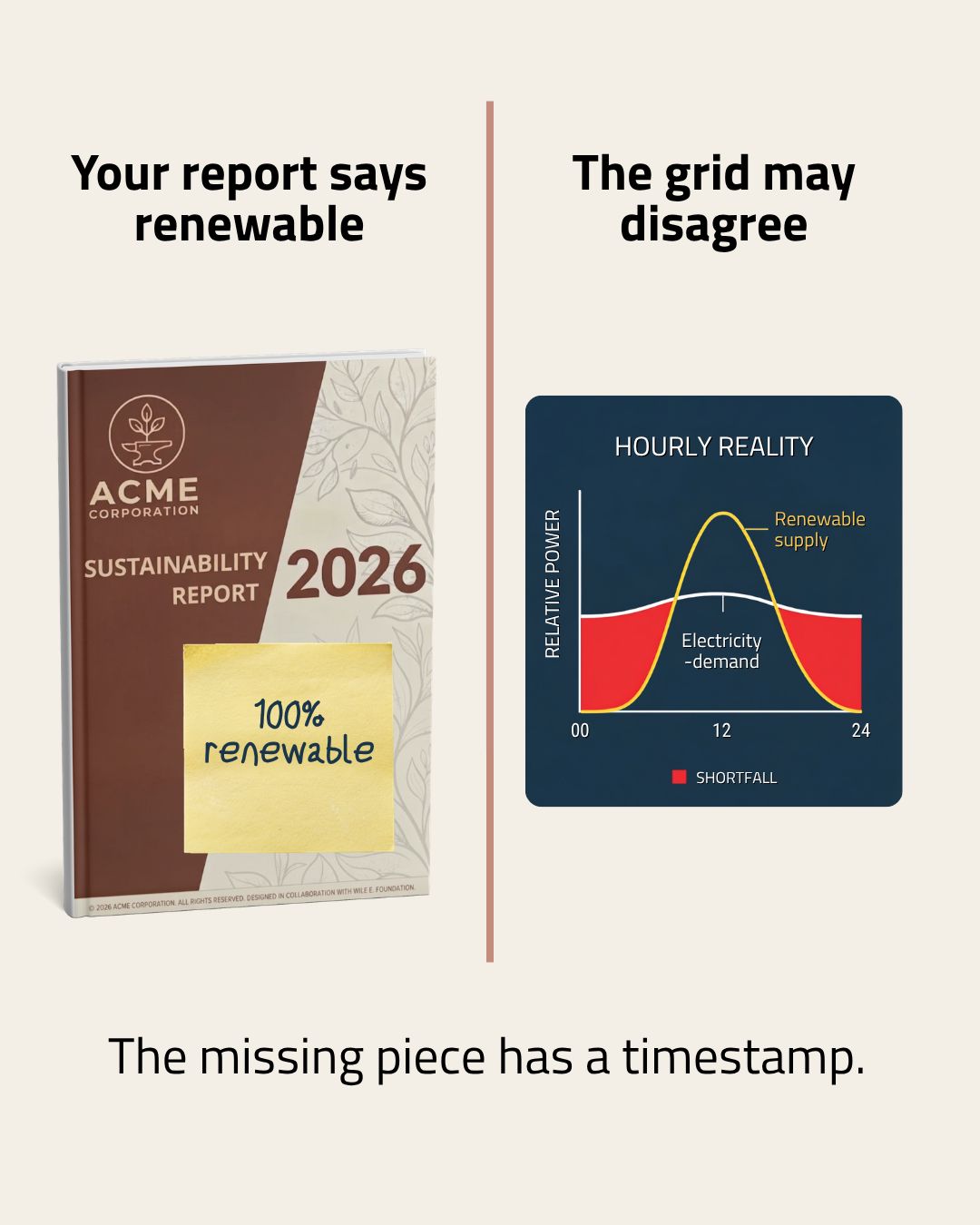
Your annual report says renewable. Hourly grid data could tell another story. Scope 2 tracks indirect emissions from purchased electricity. Annual certificate matching can use renewable generation from one period to support consumption in another. The totals may balance, but one question remains open: was renewable electricity available when and where the company used power? 🔄 SHIFT — standards and expectations The Greenhouse Gas Protocol closed its Scope 2 revision consultation in January 2026. It asks when and where renewable power should be matched, but the standard is not final. In June 2026, the Science Based Targets initiative published version 2.0 of the Corporate Net-Zero Standard. It strengthens transparency around hourly matching and recognises early adopters. Energy and sustainability leaders should own this baseline together ahead of the next contract or disclosure. 🔍 PROOF — evidence and implementation In 2025, EnergyTag reported that Flexidao, a clean-energy certification firm, converted over 10.5 terawatt-hours from Google’s portfolio across seven countries into validated hourly certificates. The pilot linked meter data to energy attribute certificates and used audit controls against double counting. EU law provides a second example. Regulation 2023/1184 covers renewable fuels produced from electricity. From 2030, qualifying production must use renewable electricity from the same one-hour period. It does not govern Scope 2, but it shows that regulators can require hourly timing in practice. The International Energy Agency adds the system view: same-grid hourly matching can support a diverse, flexible clean power mix. That gives procurement teams a reason to look beyond annual totals. 🏁 START — practical next steps Corporate buyers do not need 100% hourly matching first. They need one shared data baseline. Put those records side by side: • Connect site consumption, contracts and certificates. • Compare annual, monthly and hourly positions. • Note missing meter data and weak geographic matches. • Test procurement options before standards harden. • Use the same figures across procurement and sustainability. The first pass exposes the gaps. Your team can then decide what to fix before the next procurement decision or disclosure. So the roadmap is clear: renewable power claims should match the grid, hour by hour and market by market. Which data gap would you test first? 📚 Learn more …. EnergyTag: “Global Hourly Energy Accounting Initiative” https://bit.ly/4judgMX Greenhouse Gas Protocol (GHG Protocol): “Frequently Asked Questions: Scope 2 and Electricity Sector Consequential Accounting Public Consultations” https://bit.ly/47cU4vF Science Based Targets initiative: “Understanding scope 2 in the updated Corporate Net-Zero Standard V2.0” https://bit.ly/4hV4CVk .
- LINKEDIN · IMAGESince 19 Oct 2026
🥈🔋 The battery is not the first investment decision. “For co-location projects, the grid connection is probably the single most important factor,” says Klaas Bauermann of Statkraft Germany. For developers, that changes what comes first. Secure import and export capacity, test the existing infrastructure, and then choose which markets to serve. That is more than a financing detail. Germany’s Federal Network Agency treats charging and discharging capacity as a grid-connection requirement rather than an afterthought. Fraunhofer ISE also warns that market-led dispatch can intensify local peaks when location and operation are poorly matched. The projects now being built show how those choices come together. Statkraft reports that it commissioned its Zerbst/Anhalt solar-plus-storage project in 2025, pairing 46.4 MWp of solar with a 57 MWh battery built to smooth grid feed-in. RWE commissioned 220 MW and 235 MWh at Hamm and Neurath, where proximity to the grid shaped site selection. Storage can shift a solar profile and open access to intraday and balancing markets. That value depends on fitting grid rights, battery size and marketing strategy. The full Statkraft interview explores what that means for solar PPAs, merchant storage and project development: https://bit.ly/4hvHbBy .

6 of 458 adsSign up to see every The smarter E ad, filter by format and date, and get alerts on new ones.
See all 458 adsWatch the companies you care about.
Filter every ad by industry, country, format and network, and get alerts when a company you watch starts running new ads.