On air · 2 of 3 networks
The Kids Research Institute Australia
- thekids.org.au
- AU
- 1,023 employees
The Kids Research Institute Australia’s ads on LinkedIn, Meta and Google, recorded by adsrunning. Browse the latest here for free. Sign up free to see all 20. Watch The Kids Research Institute Australia with Starter to get each new one in your feed.
Watchlist with Starter · $49/mo
| Network | Status | Live ads | Nov 2025LinkedIn activity · 52 weeksOct 2026 | Checked | Next step |
|---|---|---|---|---|---|
| Running | 18 | Checked 30 Oct 2026 | See all 20 ads → | ||
| Meta | Running | 7 | Active ads on the Meta Ad Library, all countries | Checked 27 Oct 2026 | Collect them with the API → |
| Recently | 36 | Ads on the Google Ads Transparency Center | Checked 11 Oct 2026 | Collect them with the API → |
The Kids Research Institute Australia has 18 live LinkedIn ads. Its Facebook page had 7 active ads on 27 Oct 2026, and we recorded 36 Google ads on 11 Oct 2026.
Latest ads
- LINKEDIN · EVENTSince 9 Oct 2026
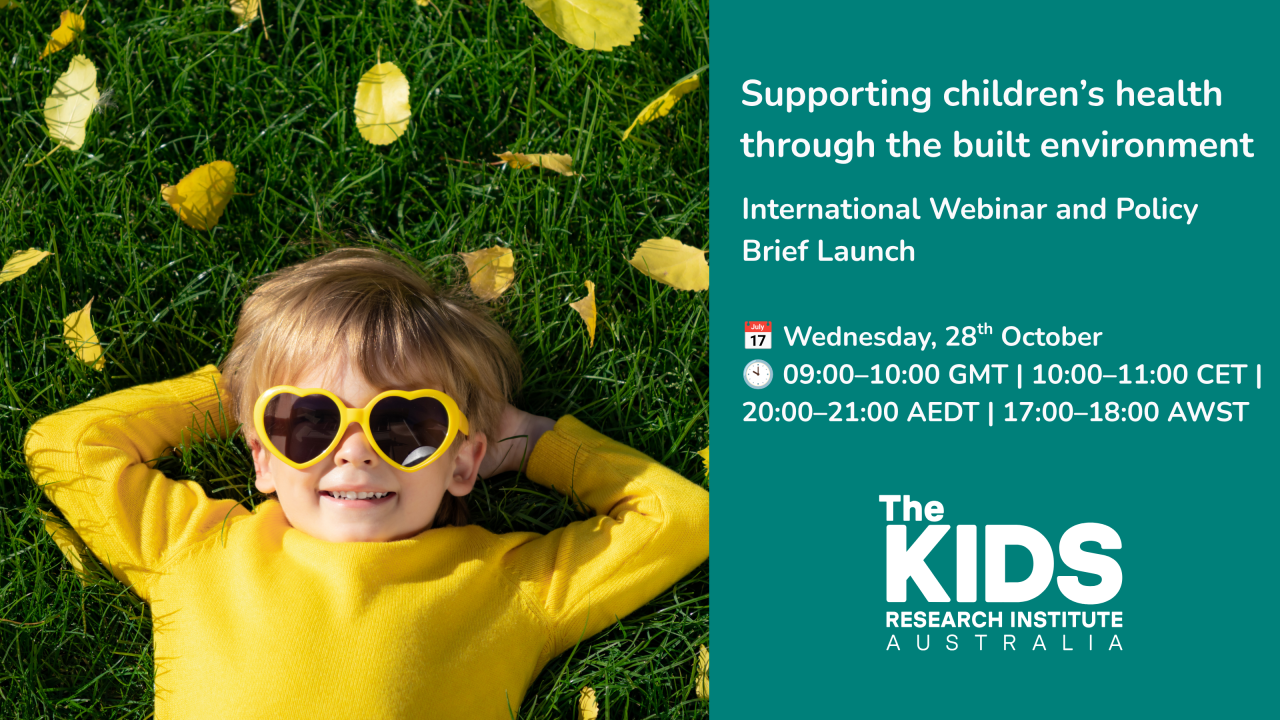
At The Kids, we know that children experience our cities and communities differently to adults. Good design, policy, and planning can make a big difference to children's lifelong healthy development. Join an international panel of experts exploring best practice examples from across the world, highlighting how the built environment can positively influence children's physical activity, play, health and wellbeing. The webinar will feature internationally recognised experts including Tim Gill (UK), our own Professor Hayley Christian AM and Dr Ming Zhao, Dr Melanie Lowe (Melbourne), Skye Duncan (New Zealand) and Dr Mads Rosenkilde (Denmark). Attendees will hear new research findings, learn about global policy indicators and explore practical actions that governments, planners and health professionals can take to create communities where children can thrive.
- LINKEDIN · VIDEORecorded 17 Oct 2026
How do sleep problems, loneliness, and depression develop in young people over time? That’s the question Zhenmei Yeap is working to answer for her PhD project. Developmental changes in sleep occur at the same time that social stress and loneliness increase, and together these factors contribute to the rise of mental health challenges in young people. This Mental Health Week, Zhenmei draws her science, highlighting ‘Jane’s’ story, and it’s not an uncommon one. Mental health and wellbeing challenges early in life shape how young people develop, connect and cope over time. At The Kids, our research aims to better equip families, schools and communities with simple, evidence-based tools and resources, giving kids access to the right support at the right time, wherever they live and learn. Research like Zhenmei's doesn't just help us understand these challenges, it also informs new approaches to supporting young people's mental health and sleep. If you're aged 18-24 and experiencing low mood, you may be eligible to take part in a current study testing the effectiveness of a digital sleep treatment. Learn more or register your interest: https://lnkd.in/gtBgzmrJ
- LINKEDIN · ARTICLERecorded 12 Oct 2026
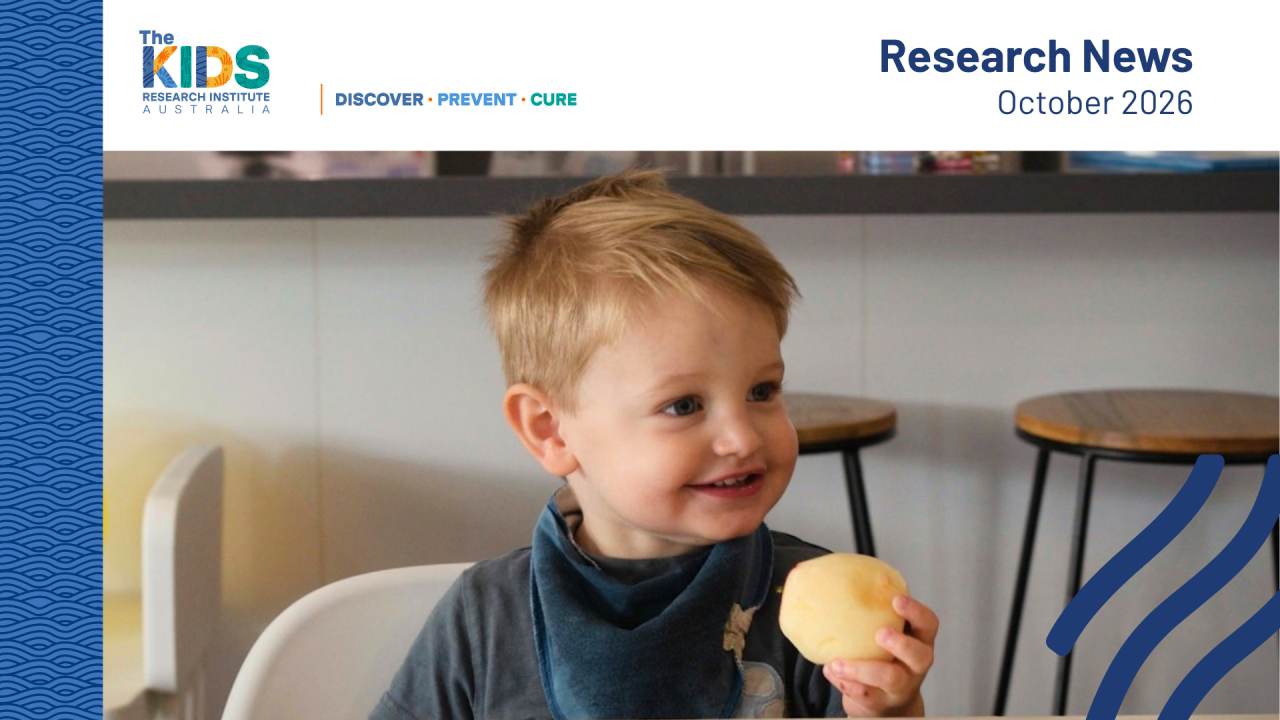
Australia has some of the highest rates of childhood food allergy in the world. New research from The Kids involving more than 2,100 pregnant and breastfeeding women is helping provide clearer answers for families about allergy prevention. That's just one of the stories featured in this month's newsletter, alongside research tackling sepsis, recognition for our researchers at the WA Premier's Science Awards, new insights into children's health and climate change, and an upcoming webinar exploring how the built environment influences children's health. Together, these stories demonstrate why research designed specifically for kids matters.
- LINKEDIN · ARTICLERecorded 1 Oct 2026
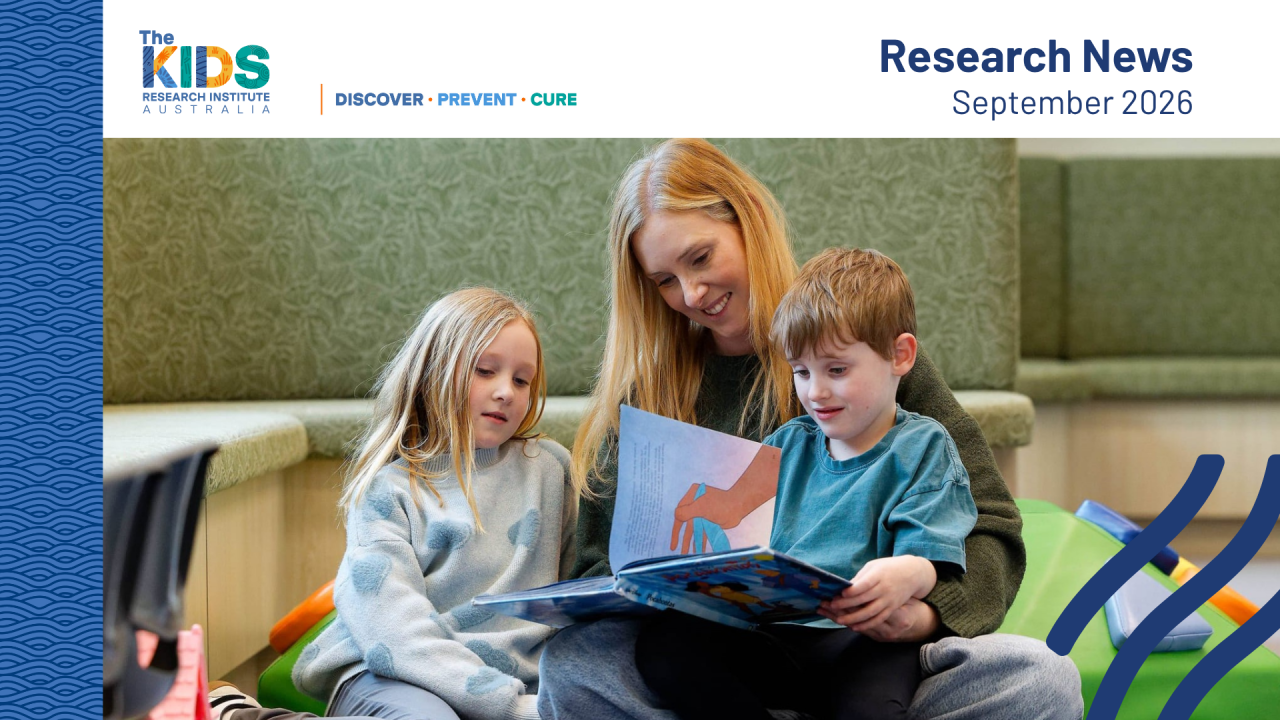
At The Kids, we know children are not little adults. Their needs are unique, which is why we focus on research and support designed specifically for them, shaped by the experiences of children, families and communities. In this month's Research News we're highlighting COMPASS, a groundbreaking new program from our CliniKids team that aims to transform communication support for autistic children through a world-first, personalised assessment approach. Backed by more than $11 million in funding, COMPASS will help children receive the right support, at the right time. You'll also discover how our researchers are tackling some of the biggest health challenges facing kids, from protecting babies against RSV to advances in genome engineering, malaria research, and opportunities for families to help shape healthier futures for children.
- LINKEDIN · IMAGERecorded 1 Oct 2026
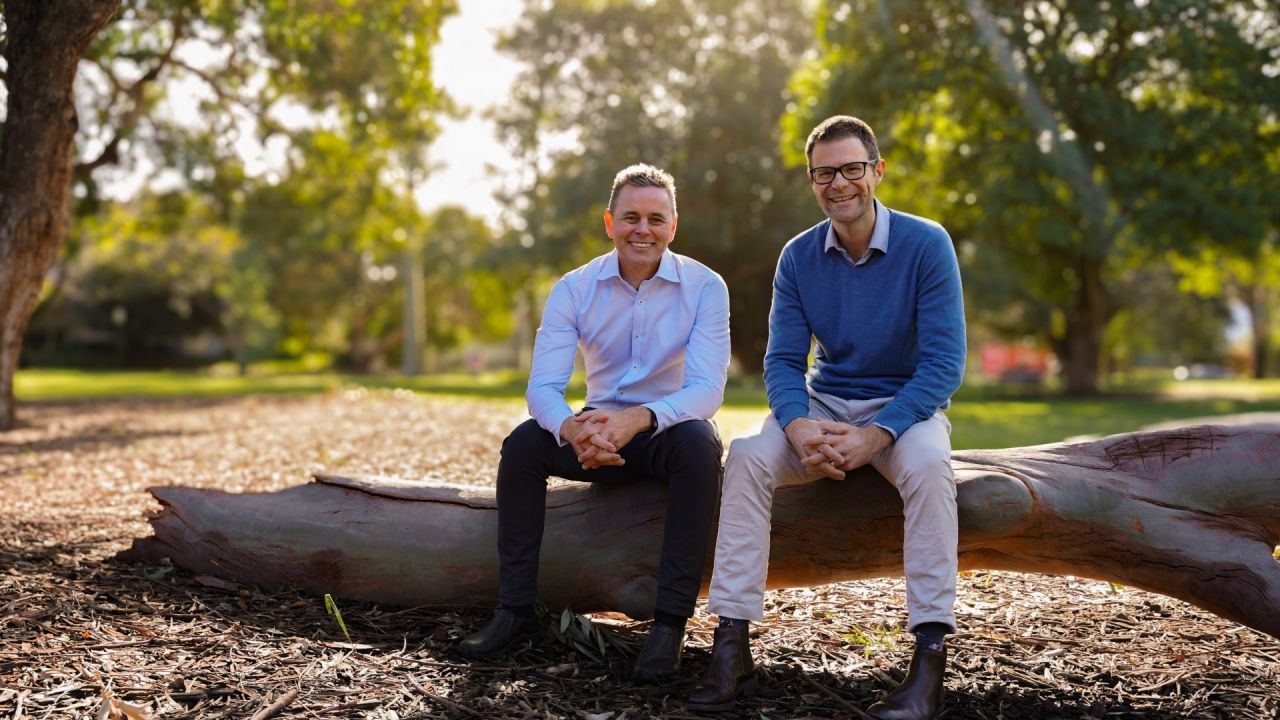
A game-changing approach to autism support that aims to have all autistic kids in WA able to communicate effectively by school entry has received more than $11 million in funding. About two in three autistic children experience major communication challenges. So, researchers from CliniKids at The Kids Research Institute Australia are undertaking a five-year research program to develop a world-first personalised approach to better communication outcomes. COMPASS — short for COMmunication through Personalised ASsessment and Support — will develop a new computerised adaptive assessment tool (CAT), which is the world’s first adaptive testing protocol for characterising autism. The program will deliver a more efficient and personalised assessment approach, allowing autistic kids to receive the right supports, earlier. CAT is faster than current assessment models, is available remotely and can cut appointment costs for families. Program co-lead Professor David Trembath, Senior Principal Research Fellow at CliniKids, said this bold program was the first step towards transformational change, using science to develop a new approach. “COMPASS will provide a more accessible, efficient, and personalised assessment approach, reducing time spent on waitlists and appointment costs for families,” Professor Trembath said. The Stan Perron Charitable Foundation has committed significant funding to COMPASS over five years, with additional support provided by the Channel 7 Telethon Trust for the first two years. Read more: https://lnkd.in/gdwmg3K5 Stan Perron Charitable Foundation Telethon7
- LINKEDIN · IMAGERecorded 1 Oct 2026
A major international study led by The Kids has challenged a common assumption about maternal diet and food allergies, finding that eating more eggs and peanuts during pregnancy and breastfeeding does not reduce a baby’s risk of developing egg or peanut allergies. The results from the trial, which included 2,137 pregnant and breastfeeding women across Australia assigned a diet of standard or increased consumption of eggs and peanuts, were today published in The New England Journal of Medicine - one of the world’s oldest and leading medical journals. Lead author, Associate Professor Debbie Palmer, said the team’s original hypothesis was that mothers who ate more peanuts and eggs perinatally would reduce the risk of these food allergies in their babies. “There were no indications that higher maternal egg and peanut ingestion reduced (or increased) the risk of infant egg or peanut sensitization, egg or peanut allergy individually, or eczema,” Associate Professor Palmer said. “The findings reinforce the importance of previous research from The Kids demonstrating that introducing egg and peanut into an infant's diet soon after they commence eating solid foods can reduce the risk of developing food allergies, including among babies with a family history of allergic disease.” Congratulations to Associate Professor Palmer and her team. Understanding how food allergies develop in early life is critical to improving prevention and treatment. 👉 Read our full release: https://lnkd.in/gDqFGThN NEJM Group | Associate Professor Debbie Palmer | National Health and Medical Research Council (NHMRC) | SAHMRI | Joondalup Health Campus | Child and Adolescent Health Service | ORIGINS | The Kids Research Institute Australia
6 of 20 adsSign up to see every The Kids Research Institute Australia ad, filter by format and date, and get alerts on new ones.
See all 20 adsWatch the companies you care about.
Filter every ad by industry, country, format and network, and get alerts when a company you watch starts running new ads.