On air · 1 of 3 networks
Teramind
- teramind.co
- US
- 202 employees
Teramind’s ads on LinkedIn, Meta and Google, recorded by adsrunning. Browse the latest here for free. Sign up free to see all 1,017. Watch Teramind with Starter to get each new one in your feed.
Watchlist with Starter · $49/mo
| Network | Status | Live ads | Nov 2025LinkedIn activity · 52 weeksOct 2026 | Checked | Next step |
|---|---|---|---|---|---|
| Running | 840 | Checked 30 Oct 2026 | See all 1,017 ads → | ||
| Meta | Not checked | — | |||
| Recently | 300+ | Ads on the Google Ads Transparency Center | Checked 16 Oct 2026 | Collect them with the API → |
Teramind has 840 live LinkedIn ads. We recorded 300+ Google ads on 16 Oct 2026.
Latest ads
- LINKEDIN · VIDEOSince 12 Aug 2026
"I just pasted it into ChatGPT to clean it up." The roadmap. The salaries. The client list. The source code. Nobody meant any harm. Everybody was just trying to move faster. That is what modern insider risk actually looks like. Not a hooded figure in a basement. A high performer, mid-stride, handing your data to a tool you never approved. The breach is already running. The only question is whether you can see it. Teramind. Before it becomes a headline. 👇
- LINKEDIN · IMAGESince 25 May 2026
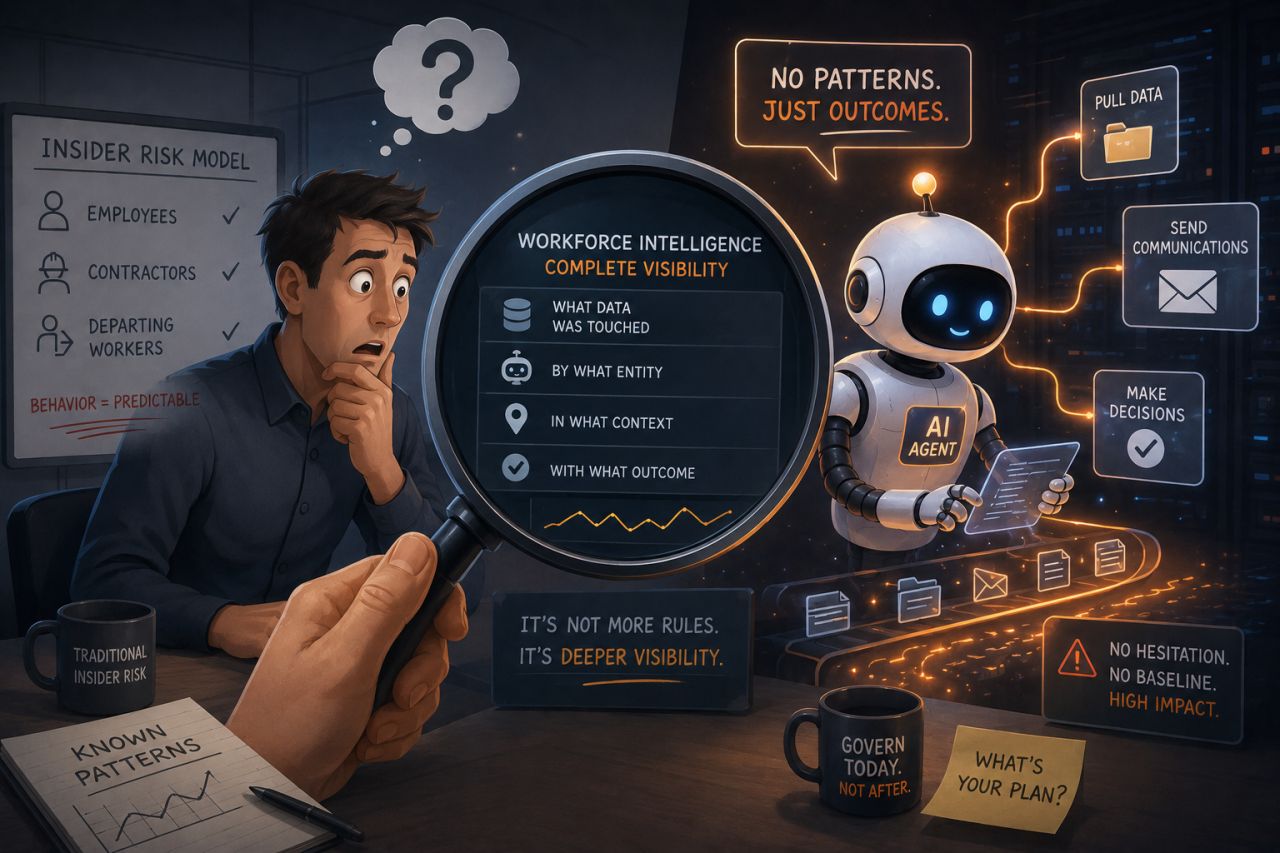
The Agent Problem Nobody’s Talking About The way we think about workforce risk is being rewritten in real time. For the last decade, insider risk programs were built around a relatively stable cast of actors; employees, contractors, departing workers. We knew their patterns. We built detection around those patterns. AI agents don't have patterns. Not ones we recognize yet. When an autonomous agent executes a workflow — pulling data, sending communications, making decisions — it doesn't flag in any behavioral model we built for humans. It doesn't trigger anomaly detection because we haven't established what "normal" looks like for it. And unlike a human actor, it doesn't hesitate. At Teramind, this is the problem we've been stress-testing: what does workforce intelligence look like when some of the "workforce" isn't human? The answer isn't more rules. It's deeper visibility. You need to understand what data was touched, by what entity, in what context, with what outcome — at a granularity that most organizations have never had to care about before. The companies getting ahead of this aren't waiting for an incident. They're rethinking their visibility architecture now, before AI agents become load-bearing infrastructure. What's your organization's plan for governing AI agents operating inside your environment?
- LINKEDIN · IMAGESince 20 May 2026
AI Governance is Failing Enterprises Right Now - Here’s Why Let me be direct: Most enterprise AI governance programs are security theater. I don't mean that as a criticism of the people running them. I mean it as a structural observation. The frameworks that exist were designed for a world where AI was a discrete tool you deployed in a controlled environment. That world is gone. Employees are using AI tools, many of them unauthorized, embedded in every workflow they touch, yet the governance model still assumes AI is something IT provisions and controls. The gap is a visibility problem first. You cannot govern what you cannot see. Most organizations have no reliable answer to a basic question: what AI tools are being used in this environment right now, by whom, with what data? Without that answer, your policy is aspirational. Your controls are theoretical. Your risk exposure is unmeasured. This is the problem space I work in every day at Teramind. Not AI governance as compliance documentation, but AI governance as operational control. The capability has to start with visibility. Everything downstream — usage controls, data protection, audit trails — depends on knowing what's actually happening inside the environment. Be honest: do you know what AI tools your employees are using right now?
- LINKEDIN · IMAGESince 20 May 2026
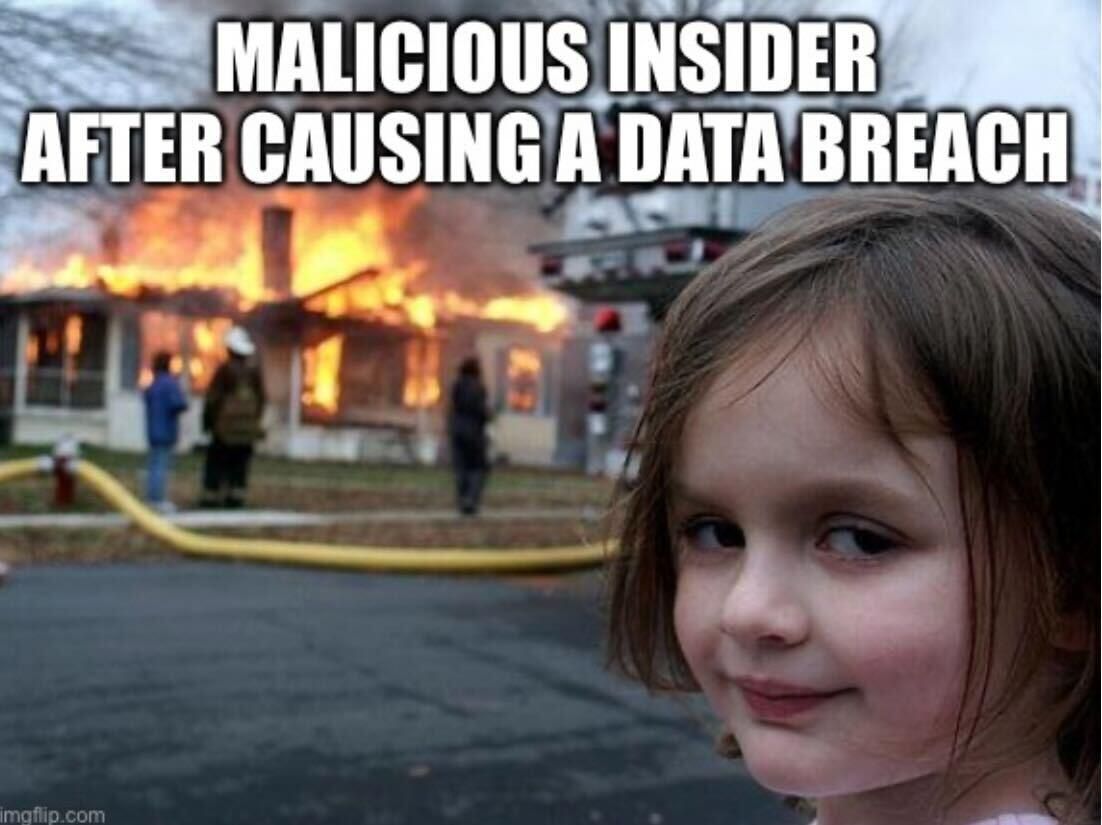
The Insider Threat Program that Misses the Actual Threat After spending years as an Insider Risk practitioner and now working alongside security teams in the field, I can tell you the most common insider threat program failure I see: it's scoped to the wrong population. Most programs are built around the malicious leaver archetype. The disgruntled employee who knows they're departing, decides to take something on the way out, and executes a data theft. It's a real scenario. It's also, statistically, not your most common or most expensive insider problem. The biggest category by volume, and increasingly by financial impact, is the negligent insider. The employee who shares a file with the wrong group. The contractor who puts sensitive data in personal cloud storage for convenience. The developer who pushes credentials to a public repo because the internal one is slow. Nobody is trying to cause harm. The harm happens anyway. The programs that perform well treat negligent and malicious insider risk as distinct use cases with different detection logic, different response playbooks, and different root causes to address. At Teramind, the behavioral analytics capability is designed to surface both, not by treating every anomaly as a malicious signal, but by contextualizing behavior against what's normal for that individual and role. How does your insider risk program currently distinguish between negligent and malicious insider behavior?
- LINKEDIN · IMAGESince 9 Apr 2026
Insider threats continue to be one of the hardest risks for organizations to discover. Leaders know the damage a malicious insider can cause, but struggle to confidently identify who poses a real risk before it’s too late. The challenge isn’t just detection, it’s ambiguity. Normal employee behavior often looks identical to early-stage malicious activity. File exploration can look like curiosity or reconnaissance. Job searching can look like career growt or disengagement. Instead of trying to predict intent, focus on patterns that consistently precede insider incidents: 1️⃣ Excessive file and directory discovery Employees who repeatedly search, browse, and enumerate large volumes of files may be mapping out where sensitive data lives before taking it. 2️⃣ Active job-seeking behavior Employees preparing to leave, especially if disengaged, introduce elevated risk. This doesn’t mean they’re malicious, but it does mean their incentives may be shifting. Are you able to see these patterns in your environment today, or are you relying on luck to catch insider threats after the damage is done? If not, it may be worth exploring solutions like Teramind to help you surface these early indicators before data walks out the door. https://bit.ly/3Qgeb6L
- LINKEDIN · IMAGESince 3 Apr 2026
A few years ago, an engineer working for Google stole over 500 files to start his own AI company, and nobody found out until the FBI got involved. His method was honestly quite simple: 1. He’d copy and paste internal data into Apple Notes 2. Then convert the notes into PDF files 3. And finally upload them to his personal cloud In January, he was convicted on 14 counts of economic espionage and trade secret theft, making it the first ever AI-related espionage conviction in the US. It's also a textbook example of why insider risk detection matters. Platforms like Teramind are trying to tackle this by analysing user behaviour in real-time and flagging anomalies before they become breaches. You can try a free interactive demo here: https://lnkd.in/e8UBsj7z #advertisement



6 of 1,017 adsSign up to see every Teramind ad, filter by format and date, and get alerts on new ones.
See all 1,017 adsWatch the companies you care about.
Filter every ad by industry, country, format and network, and get alerts when a company you watch starts running new ads.