On air · 1 of 3 networks
Telenor IoT
- iot.telenor.com
- SE
- 510 employees
Telenor IoT’s ads on LinkedIn, Meta and Google, recorded by adsrunning. Browse the latest here for free. Sign up free to see all 230. Watch Telenor IoT with Starter to get each new one in your feed.
Watchlist with Starter · $49/mo
| Network | Status | Live ads | Nov 2025LinkedIn activity · 52 weeksOct 2026 | Checked | Next step |
|---|---|---|---|---|---|
| Running | 40 | Checked 29 Oct 2026 | See all 230 ads → | ||
| Meta | Not checked | — | |||
| Recently | 26 | Ads on the Google Ads Transparency Center | Checked 11 Oct 2026 | Collect them with the API → |
Telenor IoT has 40 live LinkedIn ads. We recorded 26 Google ads on 11 Oct 2026.
Latest ads
- LINKEDIN · IMAGESince 26 Oct 2026
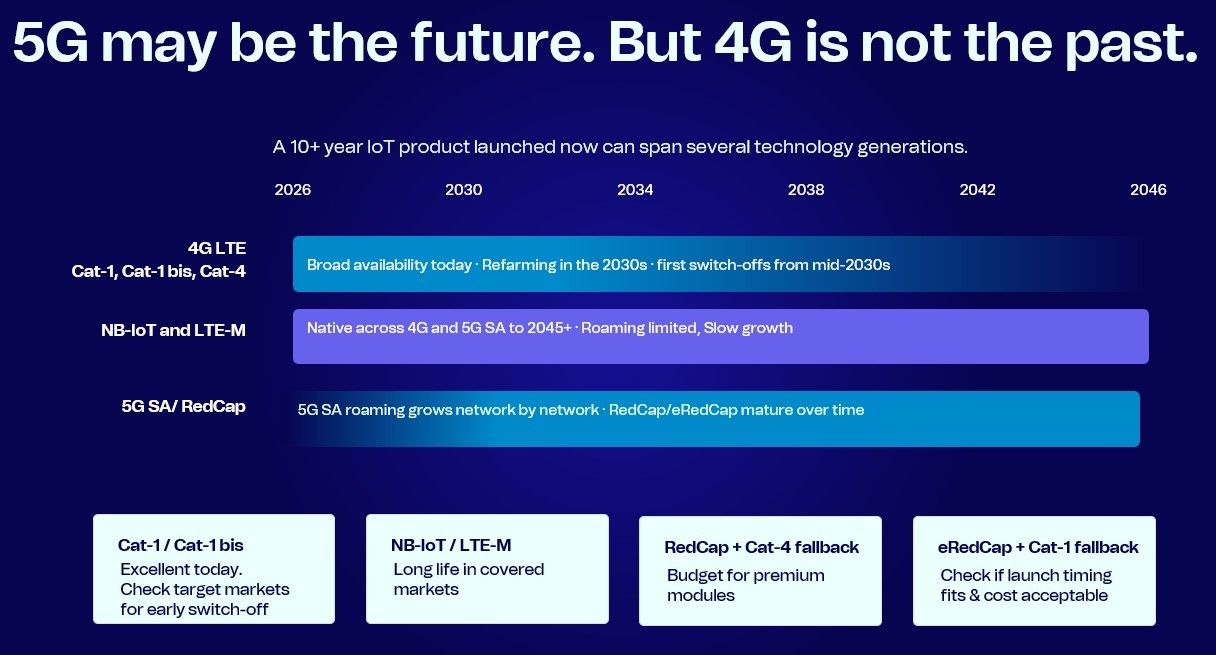
For a long time, mobile technology transitions were fairly easy to describe. One generation replaced another. I think it’s becoming clear that the next phase of IoT will not be quite that simple. What we see instead is a more hybrid landscape, where 4G, 5G and other technologies will coexist for many years. 4G still provides broad global reach and a mature device ecosystem. 5G Standalone is developing, but availability and global roaming support are still uneven, and technologies such as RedCap are not yet a universal replacement for 4G. That makes the technology decision more complex. A device launched in 2027 may still be operating around 2040. So the question is not simply: “Should we choose 4G or 5G?” It is: “What connectivity setup makes sense for this product throughout its lifetime?” For many products, 4G will remain a very sensible choice for years to come. Our current view is that 4G will remain broadly available well into the 2040s. And the forecasts support that picture. Berg Insight expects LTE Cat-1/Cat-4+ connections to continue growing through 2030, reaching around 4.2 billion connections, compared with roughly 0.75 billion for 5G. For others, particularly products with very long lifecycles, it may make sense to build in support for both 4G and 5G SA. That can mean higher hardware cost and complexity, and the ecosystem is not equally mature for every use case. And the landscape is broader than simply 4G versus 5G. RedCap, LTE-M, NB-IoT and, for some applications, satellite connectivity will all have different roles to play depending on the use case. This means future-proofing is becoming less about choosing the technology that will “win” and more about building for a landscape where several technologies coexist. At Telenor IoT, these are discussions we have increasingly often with customers. If you are reviewing your own connectivity roadmap, we have gathered our latest view and recommendations in our recent webinar: https://lnkd.in/dyDU6uw3. My takeaway is fairly simple: don’t start with the technology. Start with how long the product needs to live, where it needs to work and what you need from it over time.
- LINKEDIN · IMAGESince 14 Sept 2026
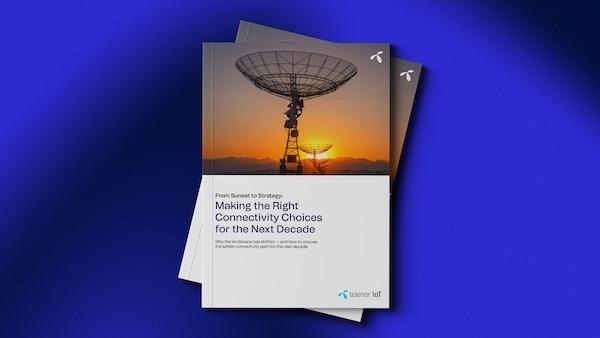
If you made your 2G/3G migration decision in 2021, 𝐈 𝐰𝐨𝐮𝐥𝐝 𝐫𝐞𝐯𝐢𝐞𝐰 𝐢𝐭 𝐚𝐠𝐚𝐢𝐧 𝐭𝐨𝐝𝐚𝐲. Not because the decision was necessarily wrong at the time, but because the connectivity landscape has changed. Over the past five years, we have learned a lot from real-world LPWA deployments. 4G has matured and is expected to remain a backbone for global IoT well into the 2030s. LTE Cat-1 and Cat-1 bis have become increasingly compelling options for global deployments, with instant global compatibility and roaming. eSIM gives us new ways to manage connectivity over a device’s lifetime. And while 5G RedCap has an important future role to play, global availability and roaming are not there yet. For me, there is a broader lesson here. 𝐅𝐮𝐭𝐮𝐫𝐞-𝐩𝐫𝐨𝐨𝐟𝐢𝐧𝐠 𝐈𝐨𝐓 𝐢𝐬 𝐧𝐨𝐭 𝐚𝐛𝐨𝐮𝐭 𝐜𝐡𝐨𝐨𝐬𝐢𝐧𝐠 𝐭𝐡𝐞 𝐧𝐞𝐰𝐞𝐬𝐭 𝐭𝐞𝐜𝐡𝐧𝐨𝐥𝐨𝐠𝐲. 𝐈𝐭 𝐢𝐬 𝐚𝐛𝐨𝐮𝐭 𝐦𝐚𝐤𝐢𝐧𝐠 𝐜𝐡𝐨𝐢𝐜𝐞𝐬 𝐭𝐡𝐚𝐭 𝐜𝐚𝐧 𝐰𝐨𝐫𝐤 𝐭𝐨𝐝𝐚𝐲 𝐚𝐧𝐝 𝐚𝐝𝐚𝐩𝐭 𝐭𝐨 𝐜𝐡𝐚𝐧𝐠𝐞. A connected product may stay in the field for ten years or more. During that time, networks will evolve, regulations will change and technologies that look promising today may develop differently than expected. That makes flexibility, global coverage and lifecycle management just as important as the technology itself. In our new Sunset Strategy Guide, we have brought together some of the most important lessons from the past five years, including where early migration strategies have worked, where they have fallen short, and how the technology landscape has evolved along the way. There is a lot to learn from the companies that have already made this journey. Hopefully, these experiences can provide useful perspectives for anyone making connectivity decisions for the years ahead. If you are interested, you can find the guide here: https://lnkd.in/drUtwdi2 Telenor IoT
- LINKEDIN · VIDEOSince 7 Sept 2026
96% of our customers say our expertise stands out. That’s encouraging — but what’s really interesting is why it matters so much right now. We’re entering a phase where AI significantly increases what individuals and companies can produce. As more tasks become automated and more tools become widely accessible, competitive advantage shifts. From access to technology to how well you apply it; how you design systems, solve complex problems, and create long-term value for customers. When more work can be replicated or carried out via AI, companies without a clear core competence risk rapid commoditization. It raises a tougher question: what, in your business, truly can’t be automated or copied? For us, it’s deep expertise — built over years and strengthened through close, personal partnership with our customers. 96% tells us we’re on the right path. It reflects years of deliberate work. Now the focus is simple: keep building, keep learning, and keep raising the standard.
- LINKEDIN · VIDEOSince 7 Sept 2026
Proud moment for our team today. Today we are delivering the world’s first standardized SGP.32 SIM cards— and we did it on time. Personally, I’m not surprised. This didn’t happen by chance. It’s been an all-hands-on-deck effort across the company, bringing together deep expertise, collaboration, and determination. What may look like a small step is actually a big leap: more flexible, future-proof IoT connectivity. It’s about removing constraints and minimizing lock-ins. It’s about full flexibility for our customers, who will now be able to manage SIM profiles from multiple providers on our platform. This is what progress looks like. And to make it a bit more fun — our Account Manager handled the first delivery in person. It’s worth a watch.
- LINKEDIN · IMAGESince 6 Aug 2026
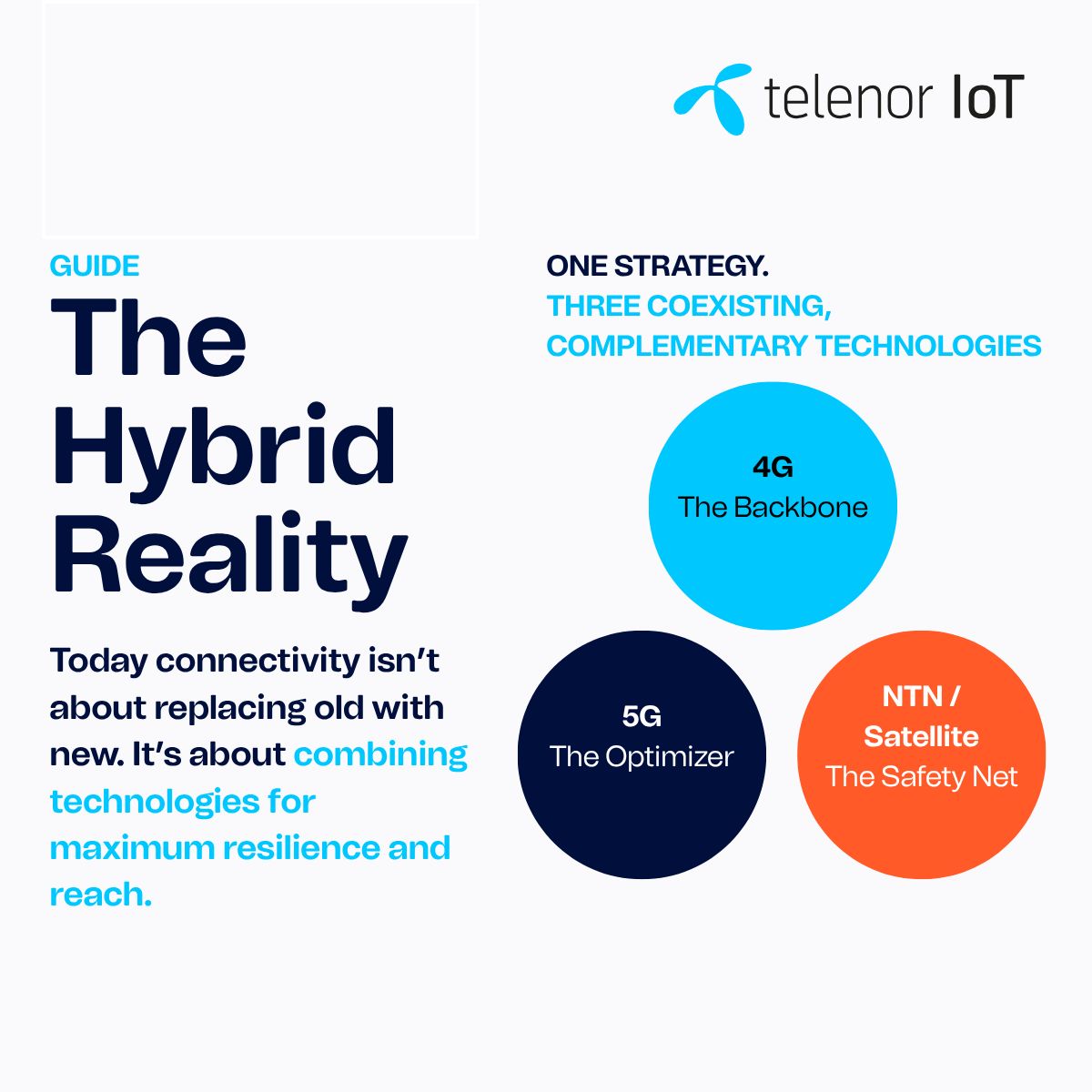
Future-proofing your IoT connectivity starts with the right strategy. As cellular networks evolve and new technologies mature, businesses need a connectivity approach that balances performance, coverage, resilience, and longevity. Download our latest 5G guide to learn how to: - Navigate the 4G → 5G transition - Understand where RedCap fits - Build resilient connectivity with satellite backup
- LINKEDIN · IMAGESince 6 Aug 2026
Download our latest 5G guide to learn how to: - Navigate the 4G → 5G transition - Understand where RedCap fits - Build resilient connectivity with satellite backup
6 of 230 adsSign up to see every Telenor IoT ad, filter by format and date, and get alerts on new ones.
See all 230 adsWatch the companies you care about.
Filter every ad by industry, country, format and network, and get alerts when a company you watch starts running new ads.