Not on air · 3 of 3 networks checked
SimScale
- simscale.com
- Software Development
- DE
- 143 employees
SimScale’s ads on LinkedIn, Meta and Google, recorded by adsrunning. Browse the latest here for free. Sign up free to see all 511. Watch SimScale with Starter to get each new one in your feed.
Watchlist with Starter · $49/mo
| Network | Status | Live ads | Nov 2025LinkedIn activity · 52 weeksNov 2026 | Checked | Next step |
|---|---|---|---|---|---|
| None recorded | 0 | Checked 1 Nov 2026 | See all 511 ads → | ||
| Meta | None recorded | 0 | No active ads recorded on the Meta Ad Library | Checked 25 Oct 2026 | Collect them with the API → |
| Recently | 100+ | Ads on the Google Ads Transparency Center | Checked 9 Oct 2026 | Collect them with the API → |
SimScale has no live LinkedIn ads. Its Facebook page had no active ads on 25 Oct 2026, and we recorded 100+ Google ads on 9 Oct 2026.
Latest ads
- LINKEDIN · VIDEOSince 22 Oct 2026
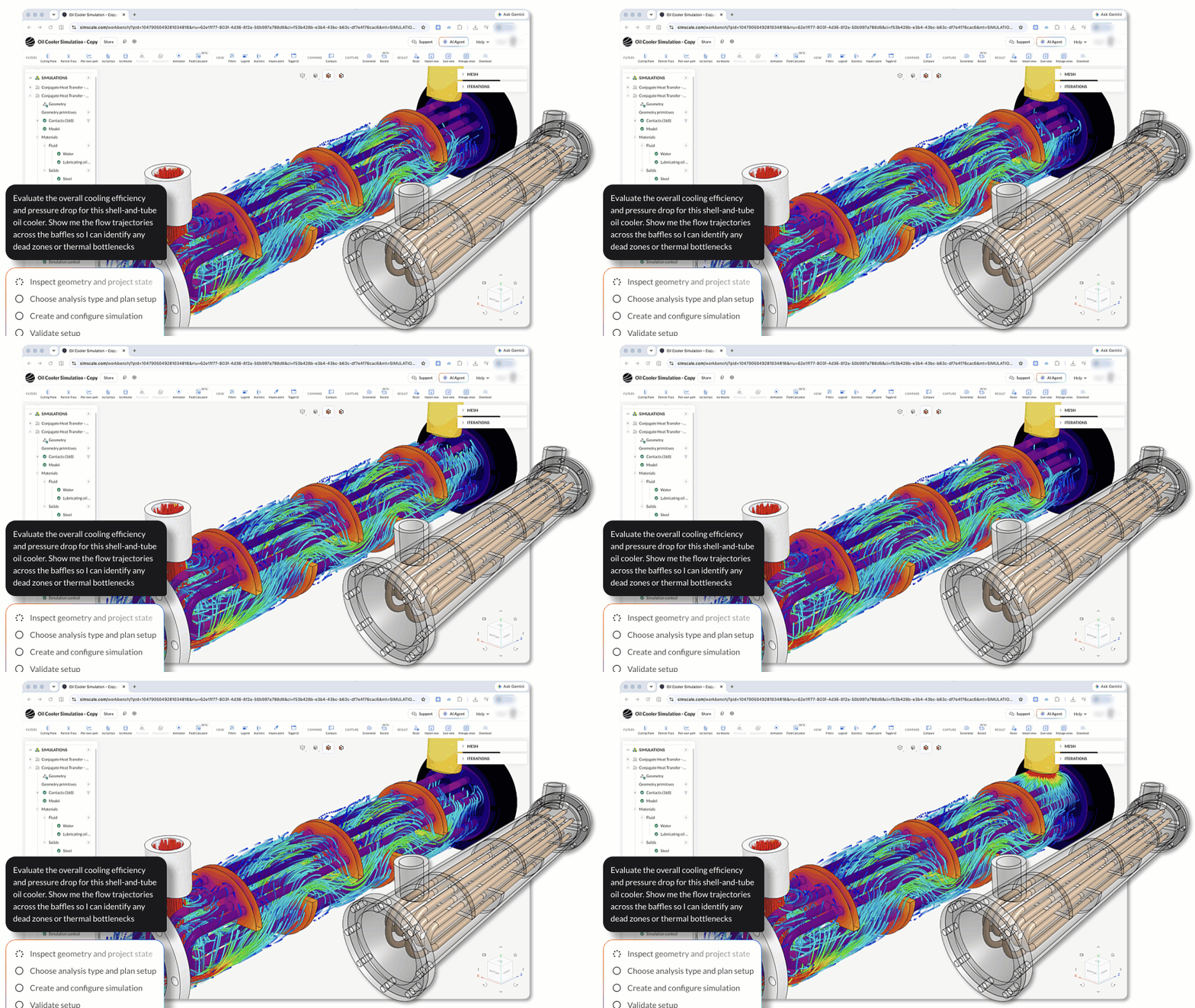
Can an AI agent understand the design intent of raw, unlabeled CAD and set up end-to-end simulations? SimScale's AI agent can! Check out this quick video of me trying out a valve characterization with a single prompt. https://lnkd.in/dDiYx7c4
- LINKEDIN · IMAGESince 22 Oct 2026
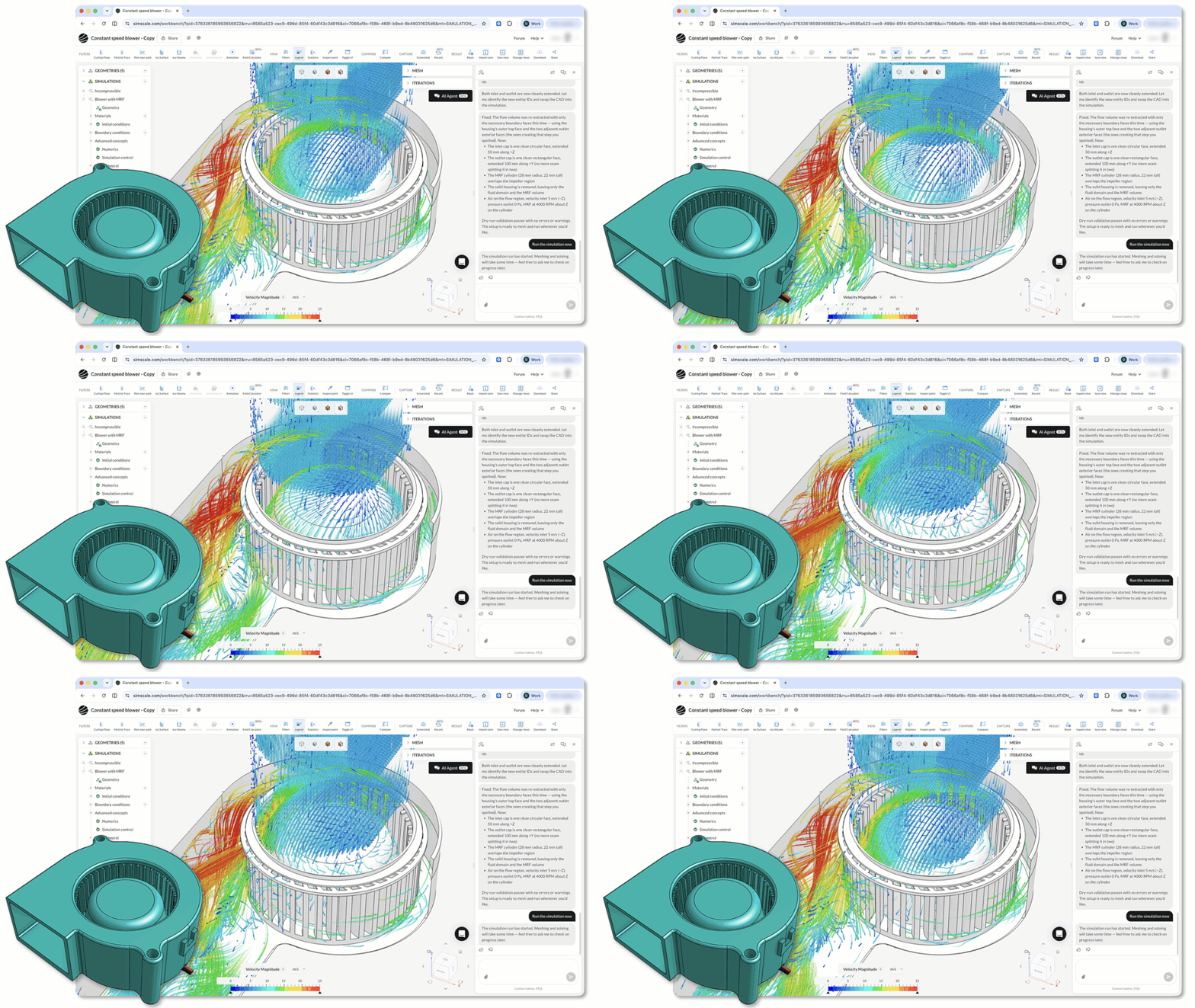
An MCP server can create a lot of value quickly in many enterprise software domains. In CAD/CAE it seems trickier as the tooling often needs work first. In many enterprise software categories, the state an agent needs is already text. So when the default API gets wrapped, an agent can “see” a lot quickly and act on it. In engineering software, many things that matter like geometry, mesh quality or result fields aren’t text, and the typical APIs were not designed to provide everything required for reasoning. So a thin MCP makes the API easier to call, but that was not the bottleneck. We found that tooling and API need work with these new use cases in mind, enabling more perception and judgment work, so an agent isn't limited by what raw APIs expose. That holds however capable new models get as they can't reason about what they can't see. Once that part is taken care of, users can be provided with flexibility to compose models and workflows - we’ll ship more in that direction soon. If you're thinking about how AI can help in simulation workflows, we'd be happy to swap notes. More via the link below
- LINKEDIN · IMAGESince 22 Oct 2026
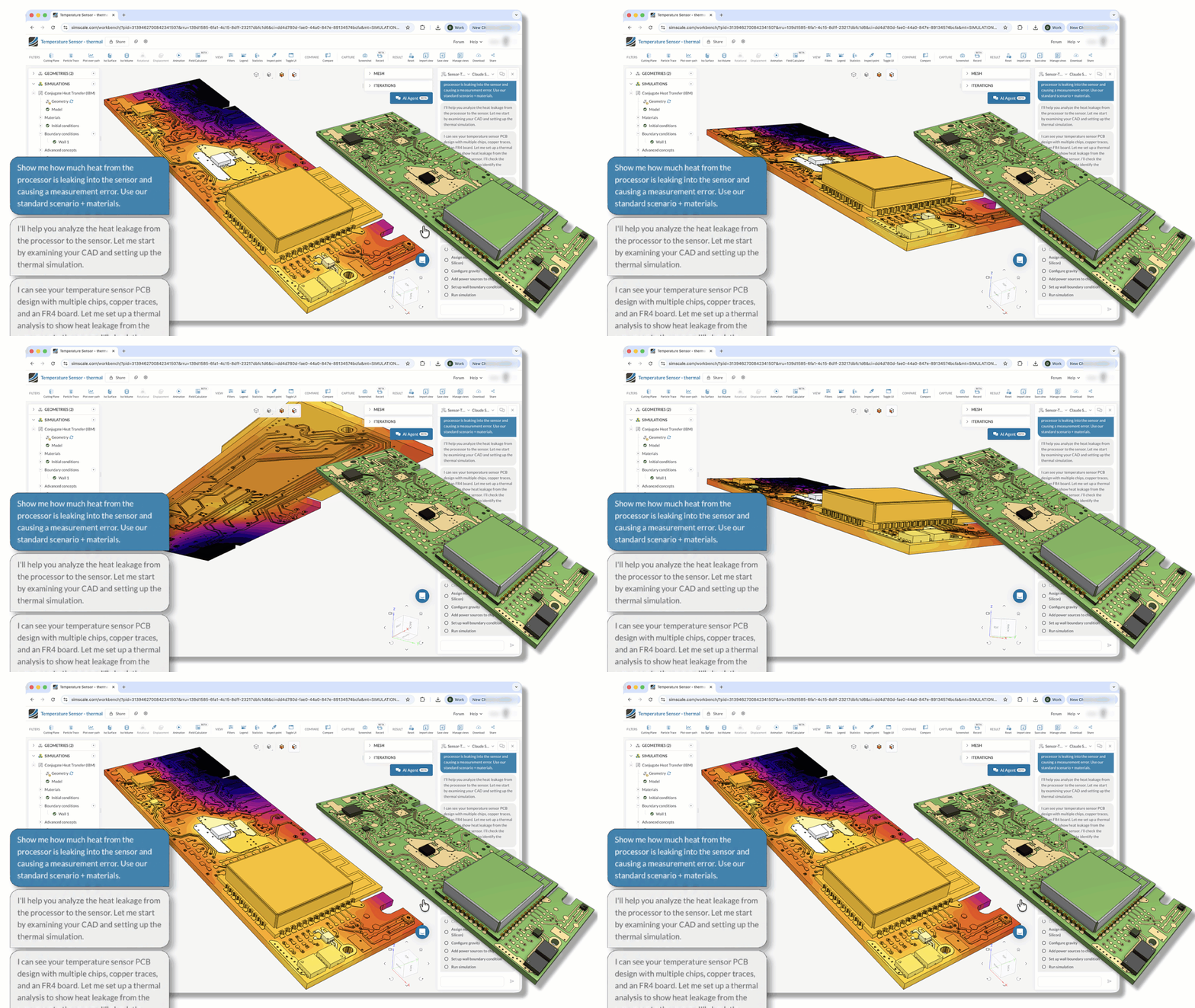
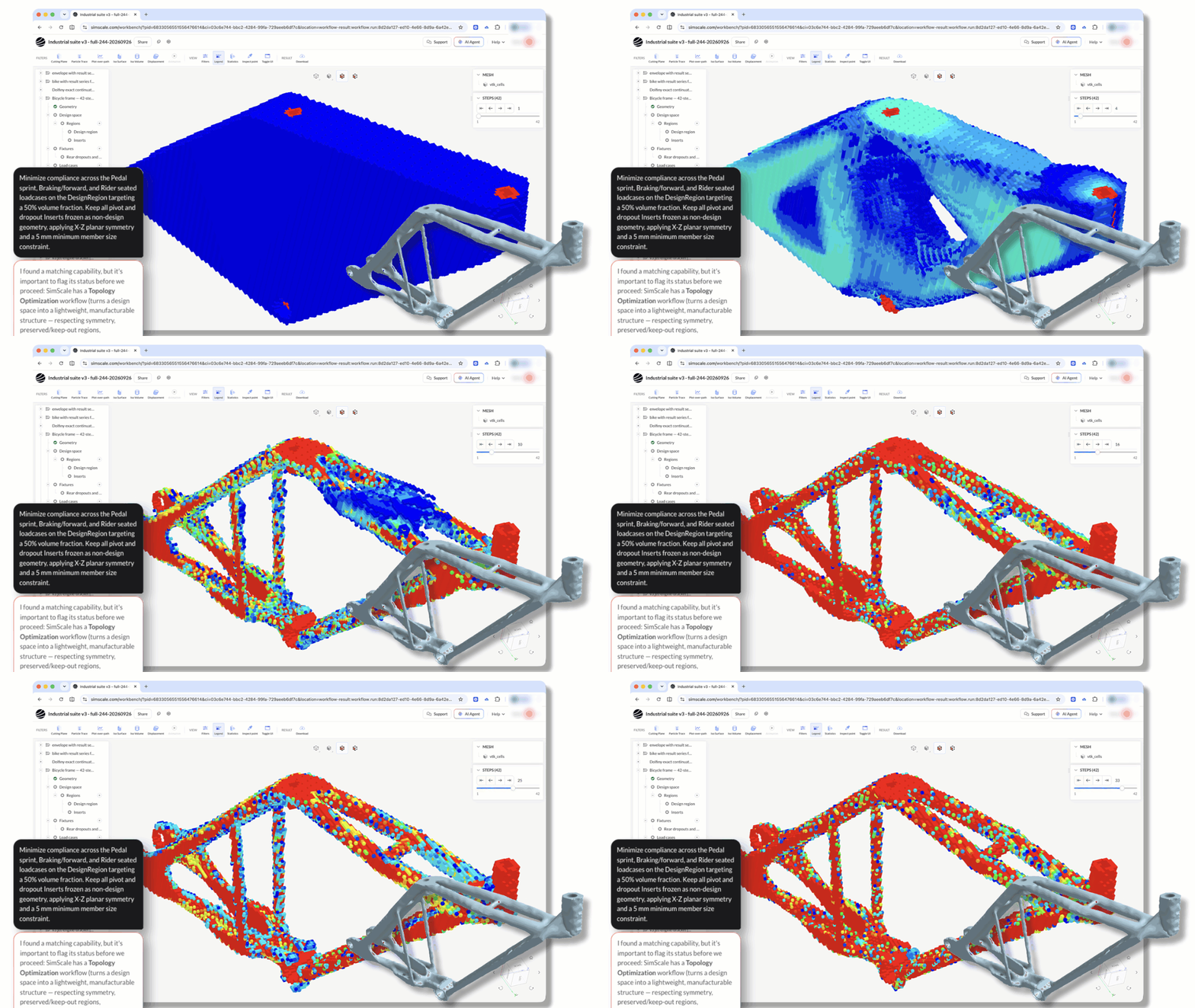
Last week around 10% of CAD edits on SimScale were made by an AI agent. That is the highest it has been, and probably the lowest it will ever be again. When bringing AI into engineering, the easy assumption is that the same workflows run faster. But a lot of today’s methods are practical shortcuts, taken because the full version was unaffordable: simulation only at the end, one representative load case instead of all, a few variants instead of the whole space. Agentic CAD work and Physics AI are two examples that change the cost structure in engineering and hence what is feasible in product development. Searching a design space becomes possible where you previously worked through a handful of candidates by hand. Some workflows will get handed over as they are, and that happens gradually. Others will look very different than they do today. We’re learning daily with customers how that applies to many different simulation workflows — reach out if that is relevant to your team.
- LINKEDIN · IMAGESince 22 Oct 2026
A year ago (ish), a lot of engineering leaders we spoke with were AI skeptics. Today, most conversations moved to "How fast can we get this into real work?" The main reason seems to be that everyone now has seen frontier models handle text and code remarkably well. It’s become a daily tool for almost every team we speak to. And so many are now exploring how to gain similar speed-ups in the multi-modal world of hardware engineering (messy CAD, complex physics, 2D, 3D, ECAD etc.). Making AI work here is obviously harder, but we’re finding that out of all the different steps and tools in engineering, simulation comes with certain properties making it not a bad place to look at: - Code-like aspects: simulation inputs are structured, containing best practices and rigid rules, that are inherently “machine-legible” - Contains at times serious button clicking: There is a lot of engineering judgement needed for good simulation, but everyone who has cleaned a model knows that sometimes also a lot of button clicking. And if a workflow involves a sequence of clicks requiring little thought, it’s worth looking at an agent. - It's a big bottleneck: Between expensive licenses, HPC provisioning, and the limited availability of a few experts, organizations have been forced to build centralized, chronically backlogged functions. There is still a lot of dust in the air on where to automate with AI vs. good old rule-based automation, but the direction is becoming clearer by the day. If you’re working on your organization’s engineering AI strategy and want to swap notes, get in touch or check out more info via the link below
- LINKEDIN · IMAGESince 22 Oct 2026
The Engineering AI agent in SimScale is now in use across thousands of users and tens of thousands of runs, surfacing a lot of customer conversations around agent governance. Observability is the obvious part - non-negotiable, must be provided and mature. Everyone agrees they need to see what an agent did, why and have a human easily intervene. The harder question is how much of an agent's knowledge and behaviour gets set centrally. Methods group defines how things are done and teams work inside that, or teams adapt the agent to their problem and the central group curates what proves out. Many want both and have to decide where the line sits. That creates data management challenges quickly, something that arguably was already a challenge for simulation before agentic AI. Centrally enforced knowledge needs versioning and permission management. Locally adapted knowledge needs scoping, so a team's preference doesn't leak into work it wasn't validated for. A lot of teams are working this out in the field right now. If you are too, get in touch to swap notes or learn more via the link below
- LINKEDIN · VIDEOSince 22 Oct 2026
"Set up my simulation" — and the agent did, from a bare drone geometry to a fully meshed, ready-to-run model in SimScale. That was Episode 4 of Agentic Engineering Live, where I showed how to turn your team's simulation best practices into a reusable AI agent in SimScale. One piece of knowledge captured and 'codified' that can build a setup from scratch, check an existing model against the same standard or even walk a new user through the process (and many other uses besides - you tell me!). Clip above. If you want to see the full build (and the part where it catches my earlier mistakes), full episode is linked below. #SimScale #EngineeringAI #AIAgent #CFD #Simulation #CAE #drones #dronesimulation #LinkedInLive #aerodynamics
6 of 511 adsSign up to see every SimScale ad, filter by format and date, and get alerts on new ones.
See all 511 adsWatch the companies you care about.
Filter every ad by industry, country, format and network, and get alerts when a company you watch starts running new ads.