Not on air · 2 of 3 networks checked
Senken
- senken.io
- DE
- 23 employees
Senken’s ads on LinkedIn, Meta and Google, recorded by adsrunning. Browse the latest here for free. Sign up free to see all 63. Watch Senken with Starter to get each new one in your feed.
Watchlist with Starter · $49/mo
| Network | Status | Live ads | Nov 2025LinkedIn activity · 52 weeksOct 2026 | Checked | Next step |
|---|---|---|---|---|---|
| None recorded | 0 | Checked 29 Oct 2026 | See all 63 ads → | ||
| Meta | Not checked | — | |||
| None recorded | 0 | No ads found on the Google Ads Transparency Center | Checked 9 Oct 2026 | Collect them with the API → |
Senken has no live LinkedIn ads. We recorded no Google ads on 9 Oct 2026.
Latest ads
- LINKEDIN · IMAGESince 23 Oct 2026
4 German insurers asked me the same question in one week. "Can we just buy German carbon credits?" You certainly can. Here's what it costs: --> The cheapest credible German project, regenerative agriculture, is around €50 a tonne. --> Peatland is closer to €100. --> Biochar is around €170 and more. Average that and you're at €70 to €100 a tonne. I don't know a lot of German companies willing to pay that tbh... A mixed portfolio with an international share lands at €25 to €55. Soooo what I usually suggest: 1. Write down your requirements first. Then build the portfolio. Not the other way round. 2. Keep 1-2 German projects. The ones that you also want to visit. 3. Fill the rest internationally and let the ratings and ICVCM do the work. At least BBB, ideally A or better. And skip the old "trick" of pairing a nice local project with a cheap registry credit. That model was built to say "climate neutral". That claim is gone. And it is very much 2022. Local is a story. On its own, it's not a quality signal. How much of your portfolio has to be local before your board is happy?
- LINKEDIN · IMAGESince 9 Oct 2026
We walked away from €22 million this year alone. Why? "Adrian, don't you want to make money - are your investors not giving you pressure?" Believe me I am my biggest enemy on pressure anyways but the problem is: ~80% of the RFPs and tenders we get, we dont touch. We see them. We dont participate. Why: our project quality would never fit. There’s still so much low-quality credit demand baked into those briefs. That’s not what Senken & I stand for. Imho a lot of these companies still live in an old world. They underestimate the risk they’re taking: --> Empowering Consumers Directive / EmpCo is coming for green claims. --> CSRD is turning scrutiny and transparency into a public file. If you as a company only have 6€ per carbon credit to spend, then you should quickly overthink your strategy on carbon markets. What I would do instead: - Lower the amount of carbon credits you buy, so you can get to at least 25€/tCO2 - Apply Oxford Principles for a balanced portfolio - Use ICVCM to check what you shouldn't buy - Make a list of what else is important for you: water, biodiv, regionality etc. If you see a RFP or tender with these old market criterias, please flag it to the company. Wake up. What do you think? Does this mean €22m lost or better than nothing!?
- LINKEDIN · IMAGESince 9 Oct 2026
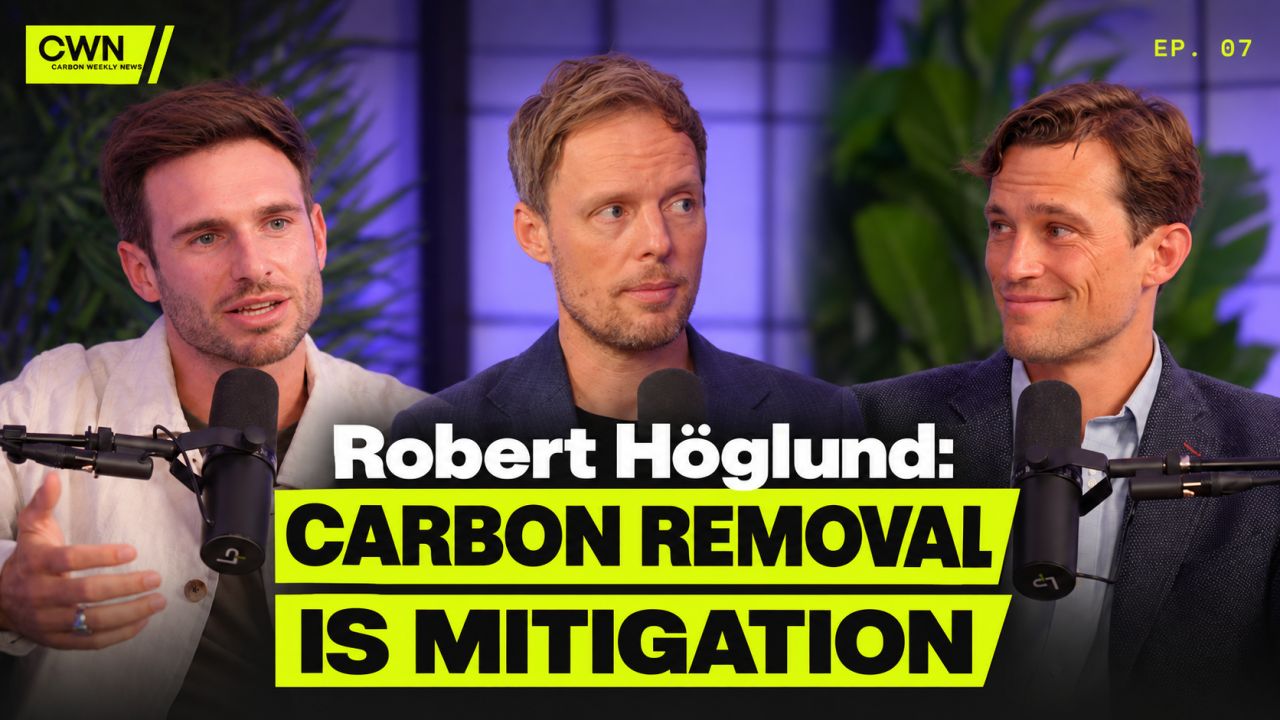
"Carbon Removal should be allowed for achieving near-term targets." A phrase that probably splits crowds into two camps. The one arguing we need to cut emissions as quickly as possible and thats the no1 priority. The other saying lets use all the tools in the toolbox. We sat down with Robert Höglund at Carbon Weekly News (CWN) to discuss this topic amongst others. Tune in to hear: 1. Why the current net zero frameworks won't work and what else companies should do 2. The reason for using carbon removal to achieve near-term targets as a replacement for some emission cuts 3. Which carbon removal method Robert is sceptical about 4. Why SAF maybe is not the best use of money for aviation
- LINKEDIN · IMAGESince 2 Oct 2026
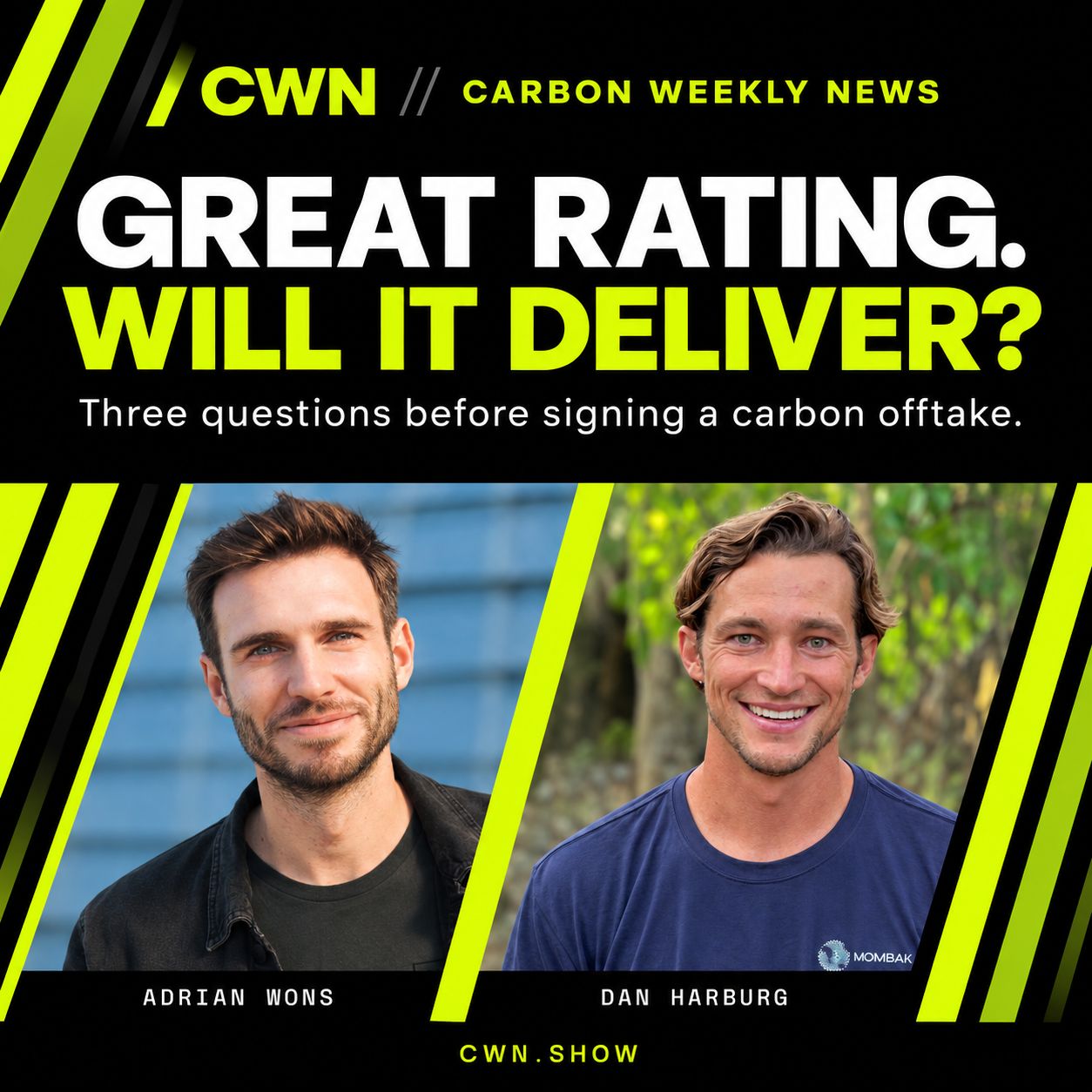
A carbon credit rating is not a delivery guarantee. If you’re signing an offtake, that distinction belongs in the investment memo. Dan Harburg and I talked about this on the latest CWN, after Deep Sky’s pre-issuance rating from Sylvera. One clarification: Sylvera’s assessment already includes delivery risk next to integrity. The integrity piece that got announced was a range, A to AAA. Compressing that into a headline score loses useful info. Your job as a buyer is to actually read the assessment and decide what the leftover uncertainty means for the purchase. Before I sign, I want three things clear: 1. When do we need the credits? Forecast issuance and your company deadline have to line up. How much delay can the plan absorb? Who finds replacement supply if it can’t? 2. What has to go right for that forecast to hold? Look at the assumptions behind the volumes. Commissioning, energy, operating performance, verification, depending on the project. What’s already done? What’s still uncertain? What changes in the downside? 3. What happens if delivery falls short? Read the contract with the assessment. Delivery windows, remedies, replacement obligations, refunds. Then: can the counterparty actually deliver on those remedies when you need them? A clause that only works on paper doesn’t help you. My take: buyers will increasingly want a rating, a delivery assessment, and a contract that deals with the risks they’re taking. A strong headline score alone won’t get an offtake approved. For procurement: Use the full assessment to focus diligence on the assumptions that actually matter. Build contingency around your own deadlines and portfolio. Even a well-assessed project can leave you exposed if too much hangs on one delivery date. For your next offtake: which assumption hurts your plan most if it turns out wrong? Full CWN discussion in the comments. Disclosure: Senken works with Deep Sky and has arranged an offtake with the company.
- LINKEDIN · IMAGESince 23 Sept 2026
Someone told me this week our messaging is “too negative” “Stop saying 95% of projects fail. Talk about opportunity.” I get it. Fear doesn’t make a pretty website. But the person who buys from us usually isn’t the budget holder yet. They’re the internal champion. And their biggest fear isn’t missing upside. It’s a bad headline with their name next to a junk credit. So yes, we talk about what goes wrong. Not to trash the market. To make the champion look smart when finance and legal ask hard questions. Fear isn’t the strategy. Protecting the person who sticks their neck out is. And everyone who knows me, knows I am the complete opposite of negative ;-) Stay positive & safe ;-)
- LINKEDIN · IMAGESince 11 Sept 2026
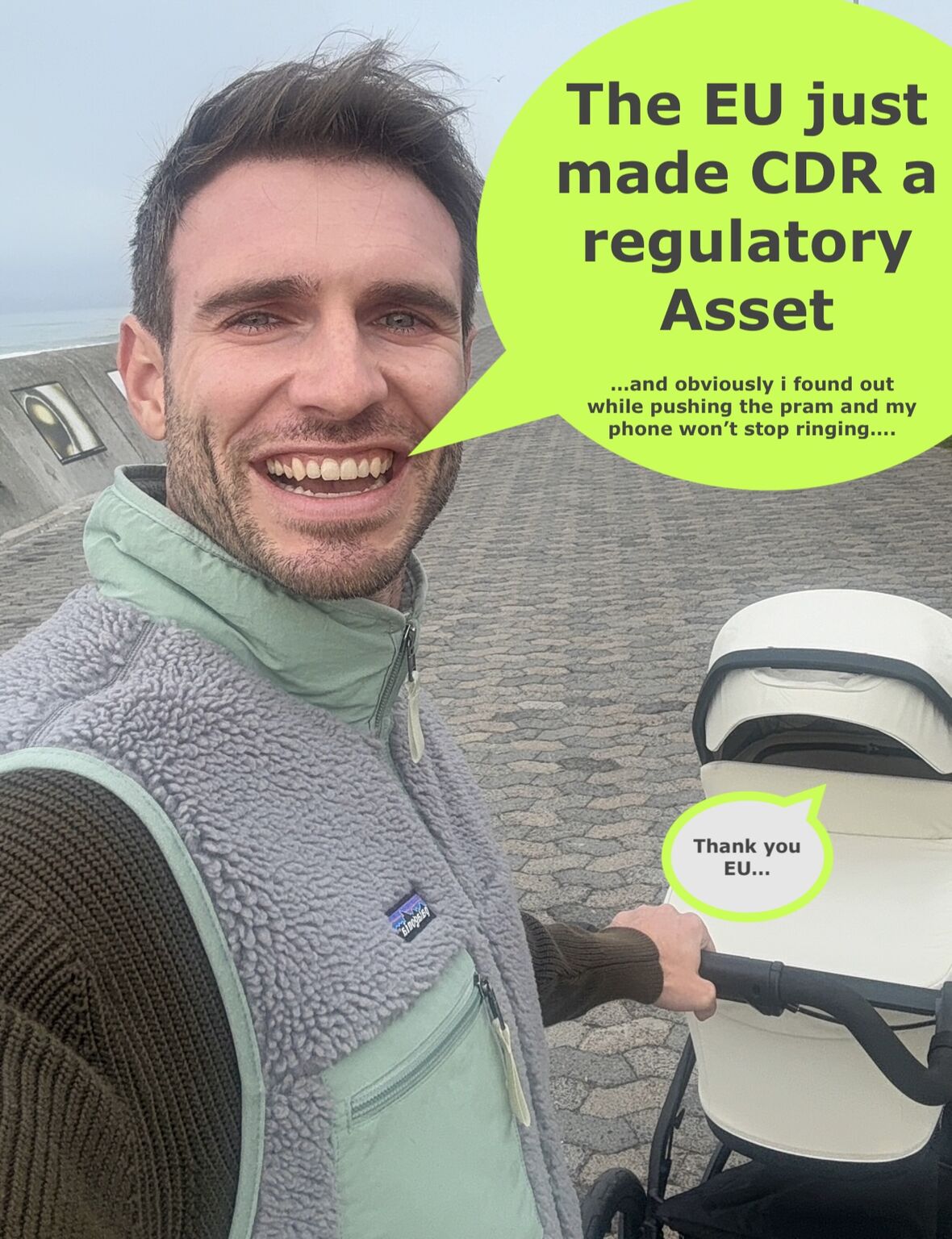
"Can we still afford carbon removals in 2031?" Your board should be asking this question today. WHY? Because the European Commission just proposed making the EU itself the largest buyer of carbon removals in history. If you are responsible for carbon procurement in a corporate: here is what changed, and what it means for you. (And where it will compete with your SBTi strategy) 𝗥𝗲𝗺𝗼𝘃𝗮𝗹𝘀 𝗷𝘂𝘀𝘁 𝗲𝗻𝘁𝗲𝗿𝗲𝗱 𝘁𝗵𝗲 𝗰𝗼𝗺𝗽𝗹𝗶𝗮𝗻𝗰𝗲 𝗺𝗮𝗿𝗸𝗲𝘁. From 2031, permanent carbon removals become part of the EU ETS. The Commission will be mandated to buy CRCF-certified BioCCS and DACCS, issuing one new allowance per tonne bought, on top of the cap. The net target stays intact. 𝗧𝗵𝗲 𝘃𝗼𝗹𝘂𝗺𝗲𝘀 𝗮𝗿𝗲 𝗮𝗯𝘀𝘂𝗿𝗱. Roughly 250Mt of purchases between 2031 and 2040, ramping towards 48Mt per year. Today's entire global durable CDR market delivers around 1Mt per year. At €150 to 300 per tonne, that is a €35 to 75 billion purchase programme. Funded by allowance sales, not national budgets. 𝗕𝗿𝘂𝘀𝘀𝗲𝗹𝘀 𝗷𝘂𝘀𝘁 𝗮𝗱𝗺𝗶𝘁𝘁𝗲𝗱 𝘄𝗵𝗮𝘁 𝗿𝗲𝗺𝗼𝘃𝗮𝗹𝘀 𝗿𝗲𝗮𝗹𝗹𝘆 𝗰𝗼𝘀𝘁. The Commission receives additional allowances specifically to cover the price gap between removals and the EUA price. A regulator writing into law that quality removals cost multiples of the carbon price, and funding it anyway. 𝗧𝗵𝗲𝗿𝗲 𝗶𝘀 𝗮 𝗯𝗮𝗰𝗸 𝗰𝗵𝗮𝗻𝗻𝗲𝗹 𝗳𝗼𝗿 𝗶𝗻𝗱𝘂𝘀𝘁𝗿𝘆. ETS operators can compensate their own fossil emissions 1:1 with BioCCS they generate themselves, capped at net zero per installation. Waste-to-energy, pulp and paper, cement with biogenic streams: the build signal is direct. 𝗪𝗵𝗮𝘁 𝘁𝗵𝗶𝘀 𝗺𝗲𝗮𝗻𝘀 𝗳𝗼𝗿 𝘆𝗼𝘂𝗿 𝗯𝘂𝘆𝗶𝗻𝗴 𝘀𝘁𝗿𝗮𝘁𝗲𝗴𝘆. From 2031, your voluntary purchases compete with a sovereign buyer for scarce supply. Companies securing durable offtake in 2026 to 2028 are buying ahead of a structural repricing. Waiting for "regulatory clarity" makes the squeeze worse, not better. (The 2035 removal target for SBTi companies can become a blood bath) Yes, this is a proposal. Negotiations will take 12 to 18 months and volumes may move. The direction will not. Durable removals are becoming a compliance asset. Supply is not growing fast enough to serve two markets. Secure yours before you are bidding against Brussels. (In April I wrote that ETS integration was not a question of if, but which model. Base case confirmed. Sometimes this job is satisfying...) (Also why do these updates always come out when i take a day off 🙈 )



6 of 63 adsSign up to see every Senken ad, filter by format and date, and get alerts on new ones.
See all 63 adsWatch the companies you care about.
Filter every ad by industry, country, format and network, and get alerts when a company you watch starts running new ads.