On air · 1 of 3 networks
SCHOTT
- schott.com
- DE
- 5,838 employees
SCHOTT’s ads on LinkedIn, Meta and Google, recorded by adsrunning. Browse the latest here for free. Sign up free to see all 559. Watch SCHOTT with Starter to get each new one in your feed.
Watchlist with Starter · $49/mo
| Network | Status | Live ads | Nov 2025LinkedIn activity · 52 weeksOct 2026 | Checked | Next step |
|---|---|---|---|---|---|
| Running | 204 | Checked 29 Oct 2026 | See all 559 ads → | ||
| Meta | None recorded | 0 | No active ads recorded on the Meta Ad Library | Checked 17 Oct 2026 | Collect them with the API → |
| Recently | 700+ | Ads on the Google Ads Transparency Center | Checked 9 Oct 2026 | Collect them with the API → |
SCHOTT has 204 live LinkedIn ads. Its Facebook page had no active ads on 17 Oct 2026, and we recorded 700+ Google ads on 9 Oct 2026.
Latest ads
- LINKEDIN · FOLLOWSince 27 Oct 2026
Get the latest jobs and industry news
- LINKEDIN · IMAGESince 26 Oct 2026
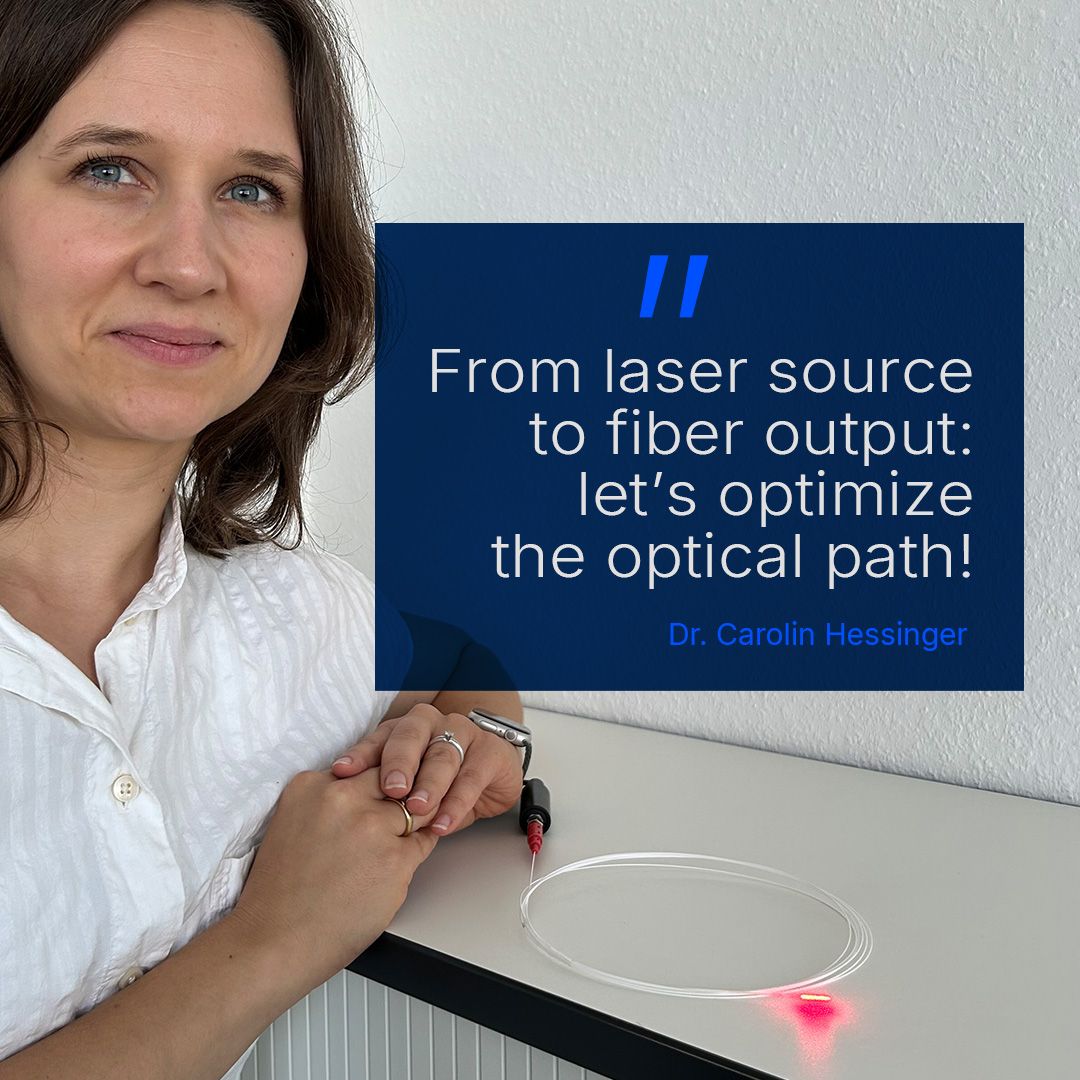
Generating the right laser light for #medtech applications is only one part of the challenge. For applications such as #lithotripsy, #PDT, #LITT, and vascular treatments, the optical signal must reach the target exactly as intended. Treatment performance depends on the complete optical path, not on a single component. Key factors include: • Fiber selection • Laser-to-fiber coupling • Power transmission • Device integration and routing • Emission geometry at the treatment site Every element influences how efficiently and consistently energy reaches the target tissue. That's why our application engineers work closely with medical device development teams to discuss the complete optical system – including wavelength, power, fiber characteristics, emission concepts, mechanical constraints, and manufacturing considerations. Considering the light delivery system early in development can help avoid redesign loops later and support the right balance between optical performance, device integration, manufacturability, and scalability. What is the biggest challenge in your optical path design? Discuss with our Application Engineer Medical Carolin Hessinger, and learn more about medical laser light delivery solutions: https://lnkd.in/ghBGDgF8
- LINKEDIN · IMAGESince 15 Oct 2026
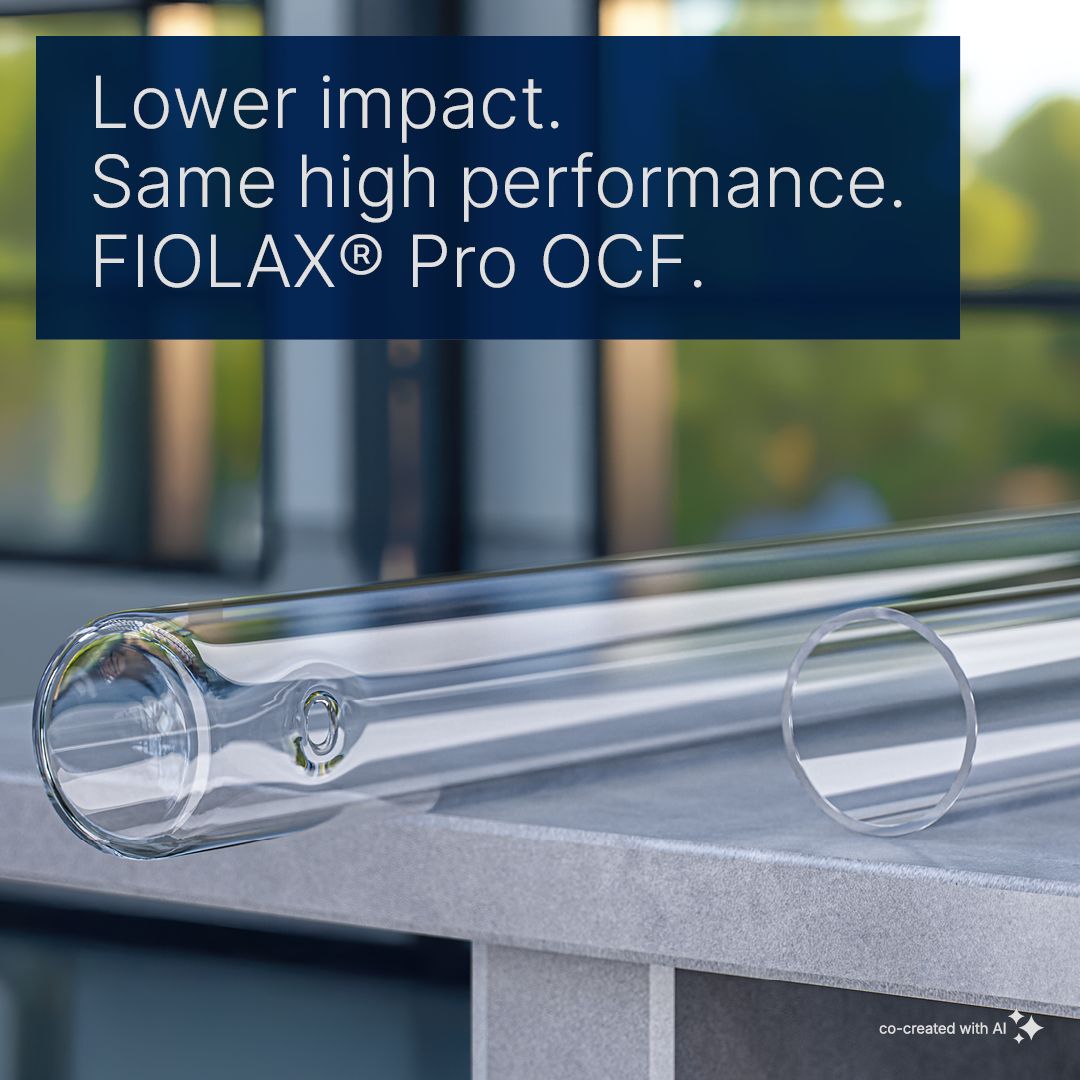
Can pharmaceutical glass become significantly lower in emissions without compromising performance? It has to. For pharmaceutical packaging, decarbonization cannot come at the expense of the stringent quality requirements the industry depends on. That is where FIOLAX® Pro OCF comes in. Building on FIOLAX® Pro, an advanced Type I borosilicate glass designed for the future requirements of pharmaceutical packaging, the product line FIOLAX® Pro OCF combines the same chemical and physical properties with an approximately 50% lower product carbon footprint*. Why is this important? Reducing CO2e-emissions requires reliable product-level data and solutions that integrate seamlessly into existing pharmaceutical packaging strategies, without compromising glass performance requirements. Starting in March 2027, FIOLAX® Pro OCF will be produced in Germany using a new electric melting tank powered by 100% of electricity in the melting process covered by renewable energy Guarantees of Origin.* March 2027 marks the production milestone, but preparation for packaging development and technical teams should begin now. Now is the time to evaluate FIOLAX® Pro, assess the potential of FIOLAX® Pro OCF for future packaging strategies, and coordinate sample requirements. 👉🏼 More details on FIOLAX® Pro OCF: https://lnkd.in/eXrcSGXY * Natural gas is only used in the separate refining unit and working tank part for technical reasons. ** Calculation of greenhouse gas emissions from cradle-to-gate per kilogram of saleable glass tubing compared to the market average for borosilicate glass tubing [average value according to ecoinvent 3.10; glass tube production, borosilicate // DE]. The value currently calculated is based on empirical values and simulation data. Relevant information about the FIOLAX® Pro OCF product line and the electrical tank can be found in the implementation plan.
- LINKEDIN · JOBSince 2 Oct 2026
- LINKEDIN · IMAGESince 29 Sept 2026
When is the right time to prepare for the next generation of pharmaceutical glass? If you’re planning new drug products or future packaging platforms, the answer is: NOW! 2027 may still sound a long way off. But material evaluation, process assessment, qualification and alignment across the pharmaceutical packaging value chain take time. That’s why 2027 should not be seen as the starting point. It should be the milestone we start preparing for today. ✅ FIOLAX® Pro is already available as our future-proof Type I glass for pharmaceutical packaging. It builds on the proven strengths of FIOLAX® while advancing pharmaceutical glass performance. And the next step is approaching: 🚀 Starting in March 2027, FIOLAX® Pro and FIOLAX® Pro OCF will be produced in Germany. 🌱 The OCF product line will offer the same chemical and physical properties as FIOLAX® Pro, with an approximately 50% lower product carbon footprint.* This gives pharmaceutical companies the opportunity to plan ahead rather than react later. When developing new drugs or future packaging platforms, I encourage teams to begin discussions now: ★ Evaluate FIOLAX® Pro, ★ Consult with your packaging supplier about future requirements, and ★ Consider how FIOLAX® Pro OCF could fit into your roadmap. Because being ready for tomorrow starts with the decisions we make today. 👉🏼 Find out more: https://lnkd.in/didTbp8S * Calculation of greenhouse gas emissions from cradle-to-gate per kilogram of saleable glass tubing compared to the market average for borosilicate glass tubing [average value according to ecoinvent 3.10; glass tube production, borosilicate // DE]. The value currently calculated is based on empirical values and simulation data. Relevant information about the FIOLAX® Pro OCF product line and the electrical tank can be found in the implementation plan.
- LINKEDIN · VIDEOSince 29 Sept 2026
Welcome to “Bruchsa(a)l” – meet our certified “glass breakers”. 🔨 What does it take to make high-index optical glass both lightweight and robust enough for everyday #AR smart glasses? That challenge is at the heart of 𝗦𝗖𝗛𝗢𝗧𝗧 𝗥𝗲𝗮𝗹𝗩𝗶𝗲𝘄® 𝟮.𝟬 𝗹𝗶𝗴𝗵𝘁𝘄𝗲𝗶𝗴𝗵𝘁. The new optical glass combines a 2.0 refractive index with low density, high transmittance, and outstanding mechanical strength – a combination of material properties designed to expand what’s possible for next-generation #AR waveguides. Check out our latest episode of Walk the Talk to hear Dr. Frederik Bachhuber, Senior Product Manager RealView®, explain how our teams developed this new, challenging glass composition, why material strength matters from wafer processing through daily use, and what it could enable for future smart glasses. Join this episode’s moderator, Michael Mueller, meet Florian Maurer, Principal Expert in fracture mechanics and fractography, and see for yourself how much stress our latest addition to the high-index wafer portfolio can take.

6 of 559 adsSign up to see every SCHOTT ad, filter by format and date, and get alerts on new ones.
See all 559 adsWatch the companies you care about.
Filter every ad by industry, country, format and network, and get alerts when a company you watch starts running new ads.