Not on air · 2 of 3 networks checked
Scaling Tales
- scalingtales.com
- 15 employees
Scaling Tales’s ads on LinkedIn, Meta and Google, recorded by adsrunning. Browse the latest here for free. Sign up free to see all 31. Watch Scaling Tales with Starter to get each new one in your feed.
Watchlist with Starter · $49/mo
| Network | Status | Live ads | Nov 2025LinkedIn activity · 52 weeksNov 2026 | Checked | Next step |
|---|---|---|---|---|---|
| None recorded | 0 | Checked 29 Oct 2026 | See all 31 ads → | ||
| Meta | Not checked | — | |||
| None recorded | 0 | No ads found on the Google Ads Transparency Center | Checked 9 Oct 2026 | Collect them with the API → |
Scaling Tales has no live LinkedIn ads. We recorded no Google ads on 9 Oct 2026.
Latest ads
- LINKEDIN · IMAGESince 29 Oct 2026
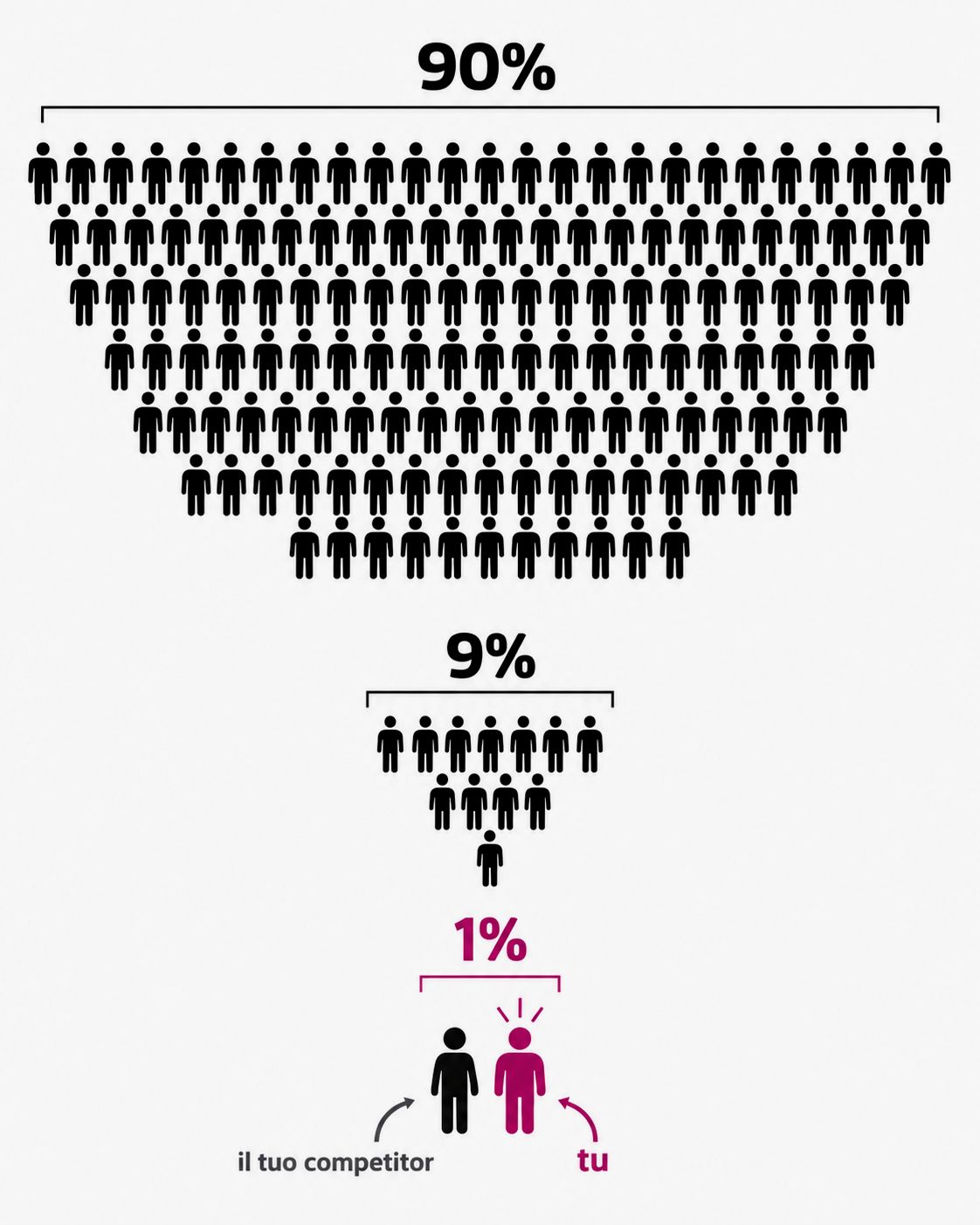
“+29% delle persone che pubblicano su LinkedIn almeno una volta alla settimana in un anno”. Sì, siamo passati dall’1,4% del 2025 all’1,8% del 2026.* Se curi il tuo personal branding su LinkedIn, questo momento può sembrare deprimente. Metti la stessa cura di un anno fa, forse anche di più, e vedi l’engagement crollare del 50% ogni 6 mesi. Vale la pena però allontanarsi un attimo e guardare la piramide della partecipazione, che descrive abbastanza bene ogni social network. Il 90% delle persone guarda e basta (lurker puri). Il 9% interagisce con i contenuti altrui (contributor). L’1% fa content con costanza e manda avanti la piattaforma (creator). Non è che siamo passati dal 2021 pre-AI con l’1% di creator al 2026 post-AI con il 40% di creator. Eppure questa è l’impressione che potresti avere quando apri il feed. Classico availability bias: tendiamo a giudicare frequente ciò di cui ci vengono in mente più esempi. E il feed, per definizione, ti mostra solo chi pubblica. Chi non posta non compare da nessuna parte: nessuna notifica ti dice “oggi 1.400 tuoi contatti sono rimasti in silenzio”. Ma alla fine, se scendi al vertice della piramide, ci trovi sempre e solo te e la manciata di competitor che prendono sul serio la propria esposizione pubblica. Siete in pochi, quindi se si aggiunge qualcuno, si nota. Ma pensa a tutti quelli che fanno il tuo stesso mestiere e non si sono mai esposti. Anche oggi sono la stragrande maggioranza. Il che rende te, che ti esponi, ancora una rarità. Non farai i numeri di reach organica dell’epoca d’oro della piattaforma, ma puoi ancora cogliere grandissime opportunità. P.S. con la mia azienda, Scaling Tales, ci occupiamo proprio di questo: https://lnkd.in/d4x3pxPe Riccardo *Fonte: Algorithm Report 2026 — Richard van der Blom.
- LINKEDIN · IMAGESince 29 Oct 2026
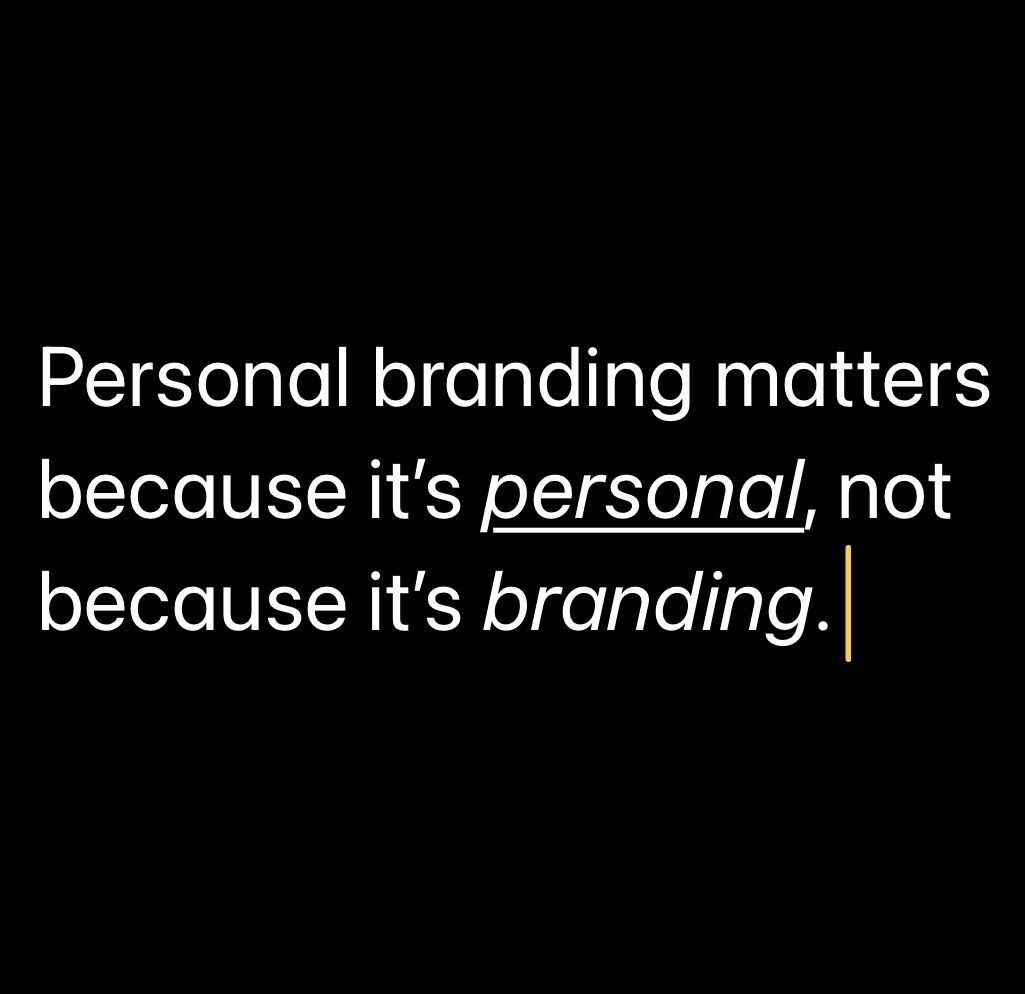
Freelancers are NOT “one-person companies.” I hear this all the time—and I think it’s a misleading frame. A company is a system an entrepreneur builds so value can be created beyond their constant, hands-on execution: processes, roles, redundancy, scalability. Put simply: the business should keep working *without* them. A freelancer works differently. The value doesn’t live in the system. It lives in the person. In their skills, yes—but also in their - perspective, - judgment, - taste, - decision-making, - problem framing, - pattern recognition, - trade-off awareness - context sensitivity - accountability - outcome ownership - ability to say no - adaptability - (very) opinionated thinking - solutions they decide are worth pursuing. That’s why freelancers usually lose when they try to market themselves like companies. Companies win by looking reliable and standardized. Freelancers win by being sharply different—and by highlighting their uniqueness. The biggest mistake professionals make is positioning around what makes them comparable. Personal branding flips the axis. You position around what makes you distinct: your point of view, your taste, your tradeoffs, your way of solving. It’s how you say: “If you want to solve problem X, in a very specific way Z, I’m your person.” Jacopo P.S. If you’re a freelancer or solopreneur who wants to build a personal brand around what makes you uniquely valuable—without looking like a one-person company—let’s talk. Book 15 min here: https://lnkd.in/dDDqymPi
- LINKEDIN · IMAGESince 29 Aug 2026
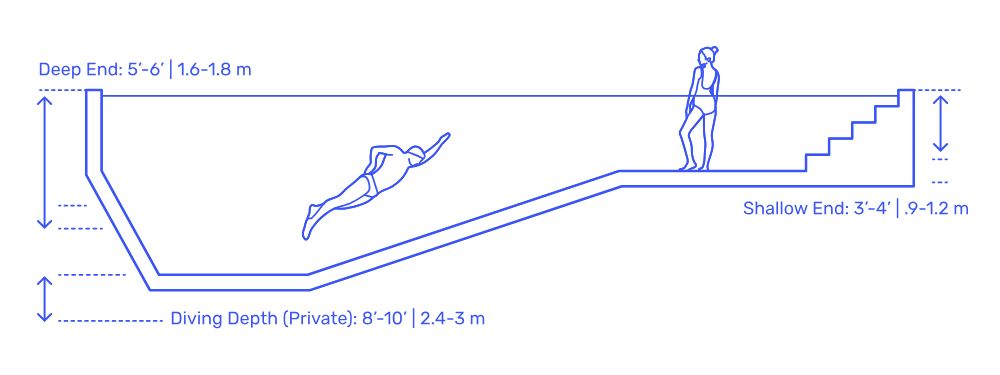
È incredibile quante persone si lamentino di non avere follower, poi vai a controllare il loro profilo e ci sono 5 commenti senza risposta sotto l’ultimo post. Fare personal branding non è solo questione di ampiezza - numero di contenuti pubblicati, follower raggiunti, canali aperti. È anche, soprattutto, questione di profondità. E la profondità, purtroppo o per fortuna, non si può delegare. Mi spiego con una metafora. Se il tuo personal brand fosse una piscina, delegarne la gestione sarebbe come chiedere a un esperto di piscine di allargartela. Prima avevi una piscina 5x5, quella persona te la porta a 20x20. Improvvisamente la superficie aumenta. Fuor di metafora: più visibilità, più persone che ti vedono, più distribuzione. Ma questo non aggiunge nulla alla profondità della piscina. La profondità nel personal branding è: → rispondere alle persone che ti scrivono nei DM. → rispondere a chi ti lascia un commento interessante sotto un contenuto. → dedicare tempo a conversazioni vere, anche quando non c’è un ritorno immediato. In una frase: trattare le persone come persone, non come “follower”. Questa azione è squisitamente tua. Richiede tempo, attenzione, energia. E non può essere delegata fino in fondo. Il ritorno, sul lungo periodo, è enorme: costruisci relazioni VERE. Le persone imparano a fidarsi di te. E la fiducia è il primo requisito di qualsiasi relazione commerciale seria. Insomma, ne vale la pena. Però ha un costo di cui devi essere consapevole: non puoi delegare al 100% la tua esposizione pubblica. Riccardo P.S. se stai cercando degli esperti per “allargare la tua piscina”, mentre tu ti occupi della profondità, sentiamoci → scalingtales.com
- LINKEDIN · IMAGESince 13 Aug 2026
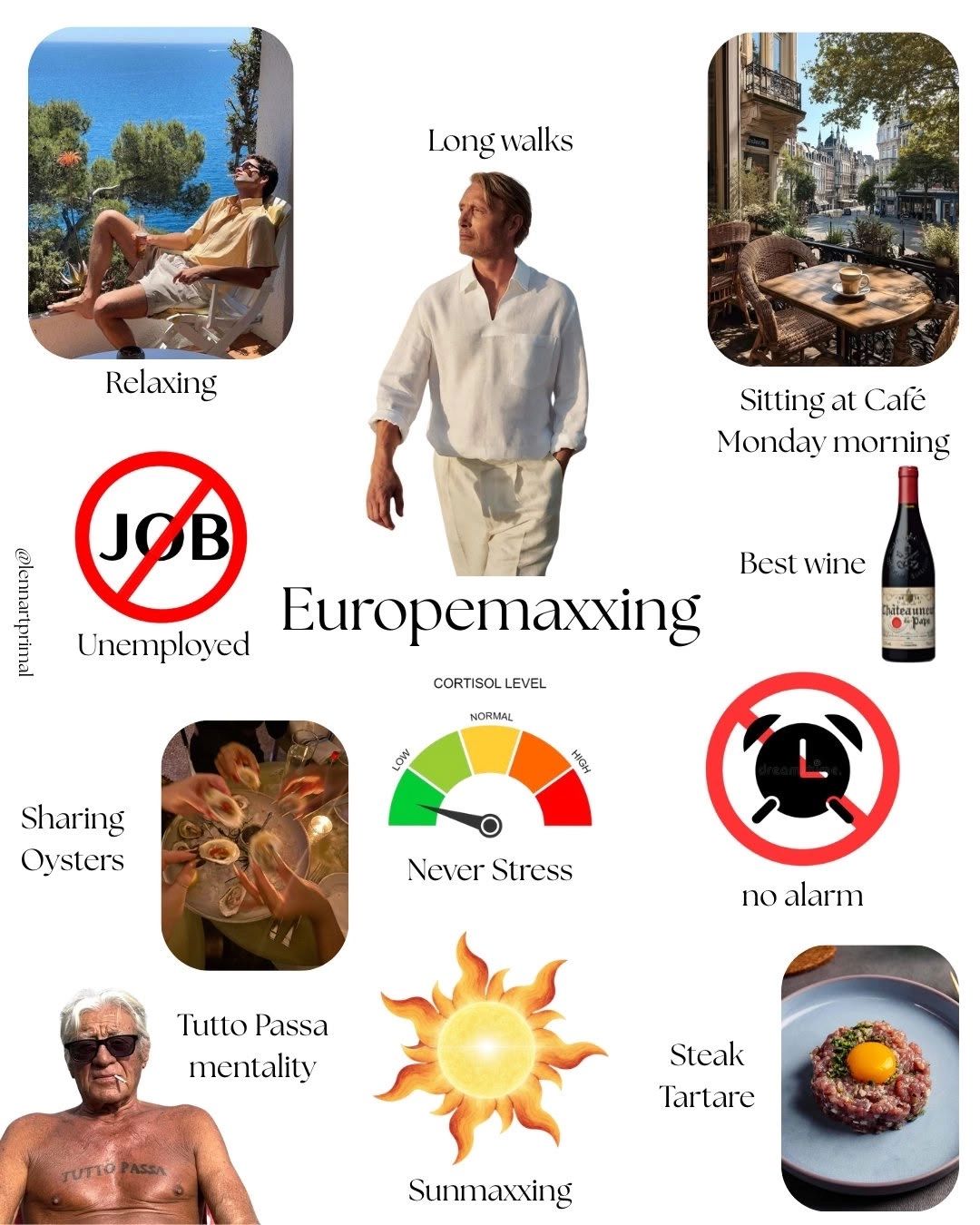
Europemaxxing: don't fall for the meme. Every August a certain kind of American founder will post a screenshot of a European out-of-office reply, or a photo of people drinking spritz at 3pm on a Tuesday, as evidence that their European peers don't want it badly enough. It's rage-bait, obviously. I've worked closely with more than 50 founders and executives over the past 2 years and empirically, at that level, I found no difference in work ethic based on nationality. What I found instead is a difference in what I call "marketing ethic". By marketing ethic I mean the discipline of talking publicly about the work you are doing WHILE you're doing it: the half-finished take, the quick selfie with your new hire, the case study you'd rather sit on until the numbers get prettier, a last-minute launch over an exciting new feature, etc. And on that, from what I can observe, European professionals struggle a bit more. The thing is, work ethic is unobservable. Nobody outside your company can audit how hard you go, they can only read what’s public. That’s why the trajectory of two entrepreneurs with identical “substance”, one publishing consistently and one publishing nothing, will diverge over the long run. You stay competent and invisible, and your louder competitor gets repriced upward on evidence you also had, but never made public. Still, I'm empathetic. I know that every European culture has its own version of the same instruction around self-promotion, and that stepping outside that comfort zone can be uncomfortable: 🇩🇪 "Eigenlob stinkt" → self-praise stinks 🇫🇷 "Qui se loue s'emboue" → he who praises himself gets covered in mud 🇪🇸 "El buen paño en el arca se vende" → good cloth sells even from inside the chest But realistically, while these may be excellent manners for a dinner party, they are a terrible distribution strategy: in a large, competitive, trust-dependent market, work does NOT speak for itself. Somebody has to speak for it. Ideally the founder, the executives, the people best positioned to represent the company in public. Enjoy your summer 🌞 Riccardo P.S. Building your personal brand in a way that works without turning you into a guru is exactly what we do at Scaling Tales , my company. Book 15 min with me to see if we are a fit: https://lnkd.in/eppDWyYa
- LINKEDIN · IMAGESince 12 Aug 2026
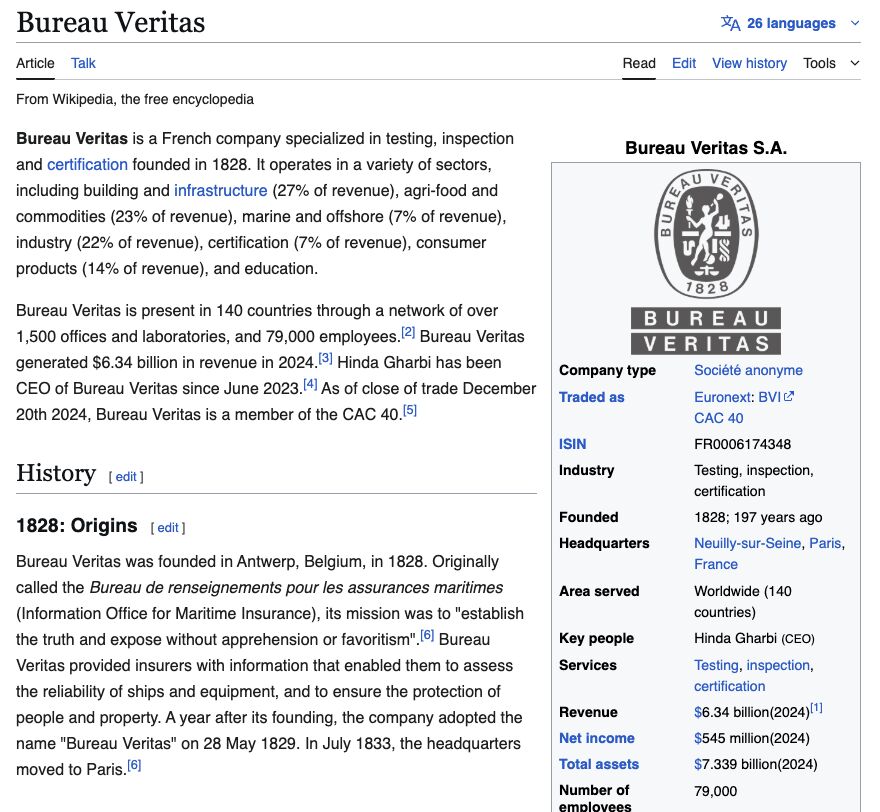
While mindlessly scrolling through Wikipedia, I stumbled upon the page of a France-based company that has been around for nearly two centuries. Their business? Selling trust. Bureau Veritas was founded in Antwerp in 1828 with a mandate to “establish the truth and expose facts without apprehension or favoritism.” Today, it’s a global powerhouse with 79,000 employees and more than six billion dollars in annual revenue. Three things explain its remarkable longevity: -1- Complexity creates an information gap. High-stakes transactions often stall because the buyer lacks the technical expertise required to verify a seller's claims. Bureau Veritas fills this gap by providing impartial verification, turning an uncertain gamble into a calculated decision based on evidence. -2- Reliability is a biological requirement for trade. Proving competence is as old as humanity itself. This company has endured since the nineteenth century because it solves a problem embedded in our biology—the need to know who can be trusted. -3- We use new labels for very old ideas. In 2026, we call it Personal Branding, but the underlying goal is the same as it was in 1828. At Scaling Tales, the company I co-founded with Riccardo Demi, we manage the digital presence of founders and CEOs to give the market verifiable evidence of their expertise—consistent, public signals that offer people a concrete reason to trust the person behind the business. Technology evolves, names change, but the market’s currency stays the same: trust. If you’re not building it, you’re not building something that lasts. Jacopo P.S. On point 3: helping founders and CEOs turn their expertise into visible signals of trust is exactly what we do at Scaling Tales. If you’re curious whether we could help you too, you can book a 15-minute call here: https://lnkd.in/dcW9Bztw
- LINKEDIN · IMAGESince 15 Jul 2026
***Cerco beta tester*** Con Riccardo Demi pensiamo di aver trovato una soluzione nuova per un problema che hanno le aziende che stanno crescendo, quando si parla di pubblicare contenuti coordinando diverse personalità importanti. Hanno luogo due paradossi: 1. Ogni settimana i founder e le figure chiave fanno, dicono e decidono cose che meriterebbero di essere rese note. È una forma di proprietà intellettuale che nasce dentro l'azienda ogni giorno e ogni giorno resta… sconosciuta! Il patrimonio cresce, ma il valore che genera fuori è zero. 2. L'approccio istintivo è mettere ordine tra i vari profili: guideline, approvazioni, il Ministero della Propaganda Aziendale che decreta "questo sì, questo no". Ma governare un parco di personal brand come si governava l'account aziendale non funziona: il personal brand è *personal* per definizione, non è mica dell'azienda! È il singolo che decide cosa scrivere, mica puoi prescriverglielo. Forse potresti, ma secondo me prima o poi la Cassazione… :-) Quindi il controllo top-down è da escludere, OK, ma anche il laissez-faire non porta a niente! La nostra ipotesi: non governare cosa le persone scrivono, ma da cosa partono. Se la persona giusta ha già siglato il pensiero dell'azienda su un tema e quel pensiero è disponibile nel momento in cui uno dei colleghi crea un contenuto, l'allineamento smette di passare da mail e riunioni. Si sposta nel processo! Le persone continuano a postare con la loro voce, verso il loro pubblico mentre cambia solo la *fonte* (questa sconosciuta anche a tanti giornalisti!) da cui partono quando parlano dell'azienda. Lo chiamiamo Content Engineering: il sistema che chiude il buco tra la proprietà intellettuale che generate e i contenuti che ne dovrebbero nascere, end-to-end. Cerchiamo 3 aziende beta customer. Fai al caso nostro se: A) Ti muovi veloce. Founder e key people producono ogni settimana tanta roba che meriterebbe di uscire e invece non esce mai. B) Sei seduto su un patrimonio di IP che si genera ogni giorno e non diventa mai contenuto. C) Il processo si rompe quando alzi il volume. Più post, più voci, più frequenza e il team marketing va in burnout. I tentativi di automatizzare la creazione di contenuti sono promettenti ma incompleti: nessuno ha ancora trasformato il processo end to end. Vogliamo validare la nostra soluzione con chi il problema lo vive sulla propria pelle. Se ti suona familiare, parliamone → https://lnkd.in/daU7ybxX Jacopo

6 of 31 adsSign up to see every Scaling Tales ad, filter by format and date, and get alerts on new ones.
See all 31 adsWatch the companies you care about.
Filter every ad by industry, country, format and network, and get alerts when a company you watch starts running new ads.