On air · 1 of 3 networks
Scala Biodesign
- scala-bio.com
- IL
- 34 employees
Scala Biodesign’s ads on LinkedIn, Meta and Google, recorded by adsrunning. Browse the latest here for free. Sign up free to see all 43. Watch Scala Biodesign with Starter to get each new one in your feed.
Watchlist with Starter · $49/mo
| Network | Status | Live ads | Nov 2025LinkedIn activity · 52 weeksOct 2026 | Checked | Next step |
|---|---|---|---|---|---|
| Running | 30 | Checked 29 Oct 2026 | See all 43 ads → | ||
| Meta | Not checked | — | |||
| None recorded | 0 | No ads found on the Google Ads Transparency Center | Checked 9 Oct 2026 | Collect them with the API → |
Scala Biodesign has 30 live LinkedIn ads. We recorded no Google ads on 9 Oct 2026.
Latest ads
- LINKEDIN · EVENTSince 26 Oct 2026
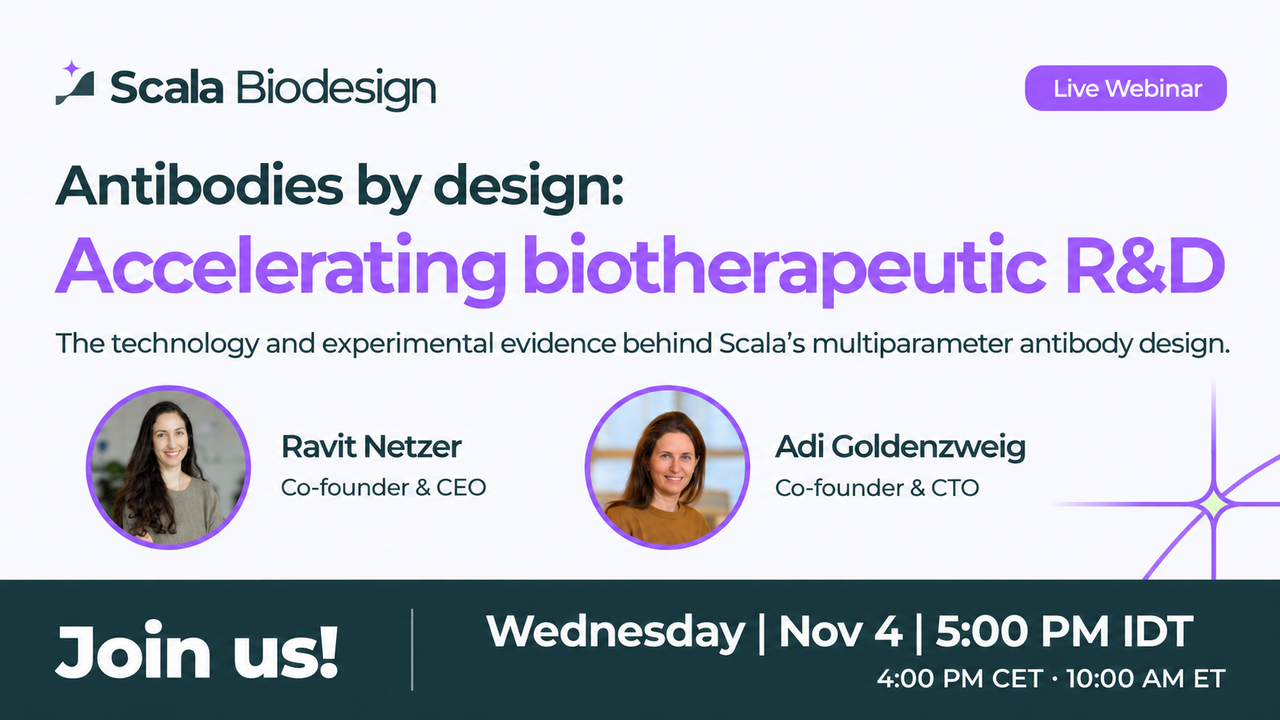
Join us on November 4th to discuss the science and experimental evidence behind Scala Biodesign's antibody design technology. Scala’s co-founders Ravit Netzer and Adi Goldenzweig will explain how we combine AI and physics-based calculations to improve multiple antibody properties. They’ll walk through experimental case studies, the challenges each project set out to solve, and what the results mean for teams developing therapeutic antibodies. Wednesday, November 4 | 5 PM IL · 4 PM CET · 10 AM ET
- LINKEDIN · IMAGESince 19 Jun 2026
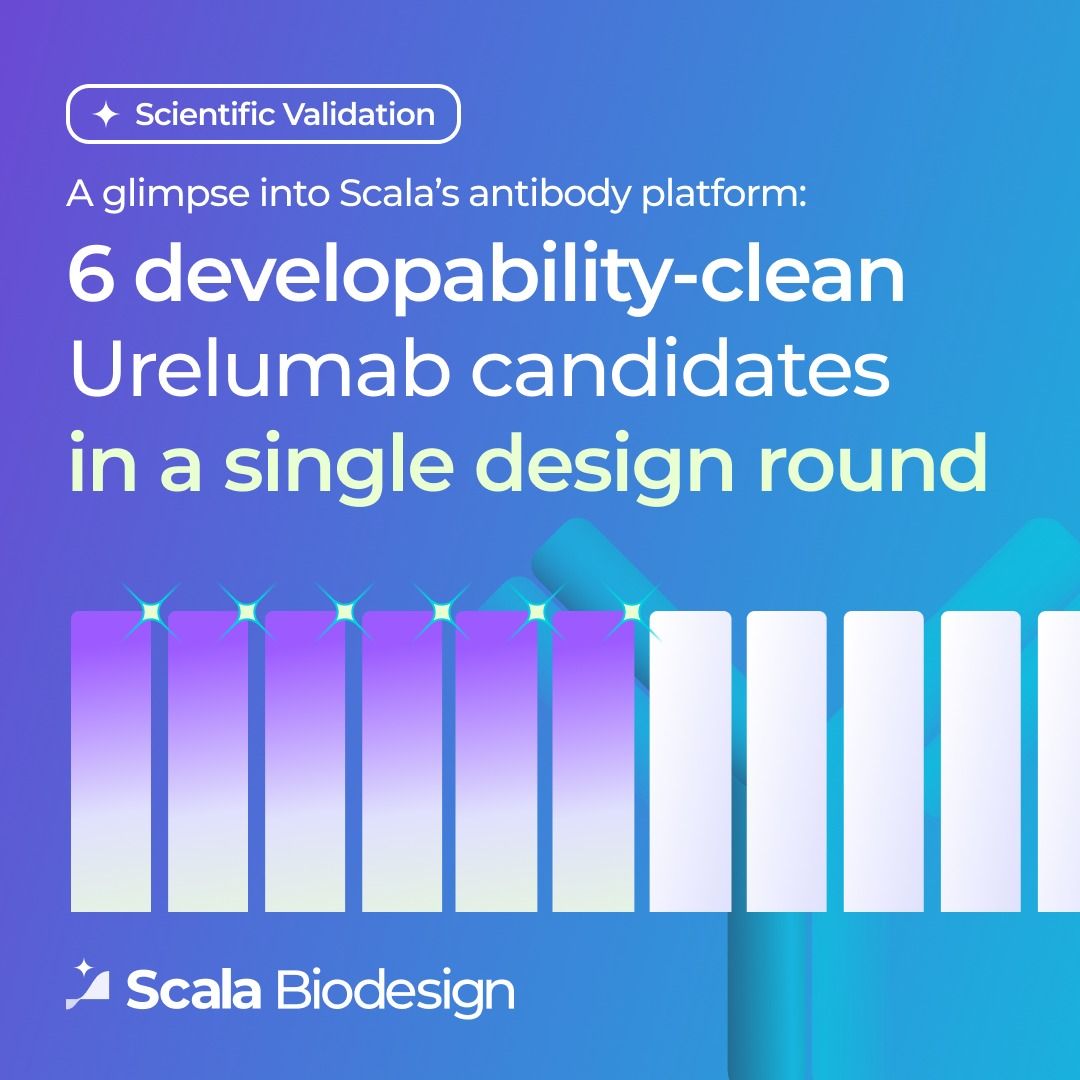
Searching for faster, more reliable ways to design developable antibody candidates? This work may be especially interesting to you. Six developability-clean Urelumab candidates in a single design round🎯 Urelumab is a well-studied agonistic antibody targeting 4-1BB, a key immune costimulatory receptor. Despite promising anti-tumor activity, clinical trials initially halted due to dose-limiting hepatotoxicity. A mechanism of action is not enough. A therapeutic antibody also needs to be developable, but UrelumAb has high reversible self association and relatively low thermal stability. In recent work, Scala Biodesign’s technology was applied by Ariel Tennenhouse, and colleagues (Sarel Fleishman lab) to explore exactly this challenge. The goals were specific: 👉 Reduce Urelumab’s self-association 👉 Avoid creating new developability flags 👉 Maintain affinity to 4-1BB 38 variants were designed in one round and experimentally assayed for expression, binding, and five developability features, including self-association, thermal stability, non-specific binding, and aggregation. The designs carried 4 to 6 CDR mutations from Urelumab, and were diverse. ✅ 26 / 38 (~70%) maintained affinity ✅ 22 / 38 showed an improved self-association profile ✅ 35/38 improved thermal stability, with top variants improving by ~7℃ Most importantly: 🎯 Six variants passed the full developability panel, with preserved Urelumab-like affinity to 4-1BB. That is the real result. Because antibody design is never just about improving one property in isolation. Affinity, stability, specificity, and developability need to move together. The implications go beyond this single antibody. For R&D teams, Scala’s technology offers a more efficient path from design to validation: 🧪 Better candidate prioritization before experimental testing 🧬Early removal of developability liabilities without losing affinity ➡️ Stronger candidates entering downstream development At Scala Biodesign, an advanced version of this technology powers our antibody design software, enabling R&D teams to design high-performing antibody candidates faster and with greater confidence in downstream success. To learn more about our antibody design platform, reach out to us here on LinkedIn or schedule a demo with our scientific team: https://www.scala-bio.com Read the full article in the first comment. #AntibodyEngineering #ProteinDesign #Biologics #ImmunoOncology #DrugDiscovery #ComputationalBiology #Biotech
- LINKEDIN · IMAGESince 19 Jun 2026
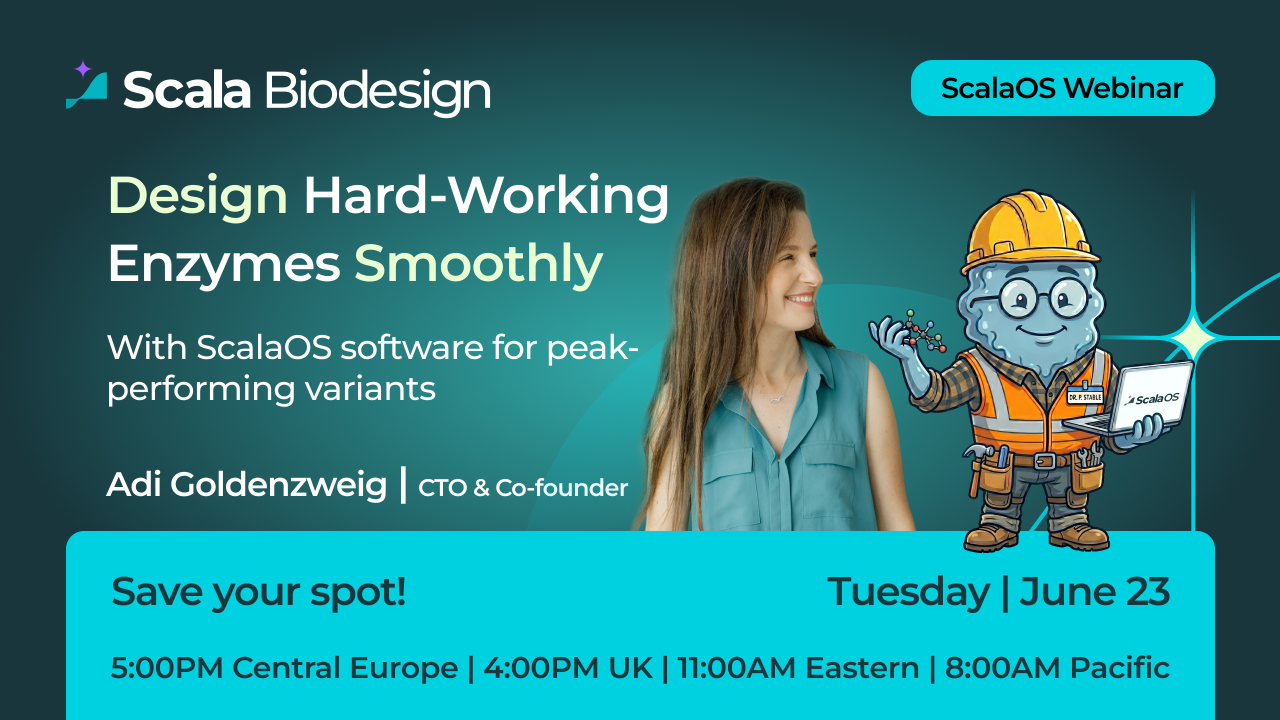
Webinar: Design Hard-Working Enzymes Smoothly with ScalaOS Software
- LINKEDIN · IMAGESince 14 Jun 2026
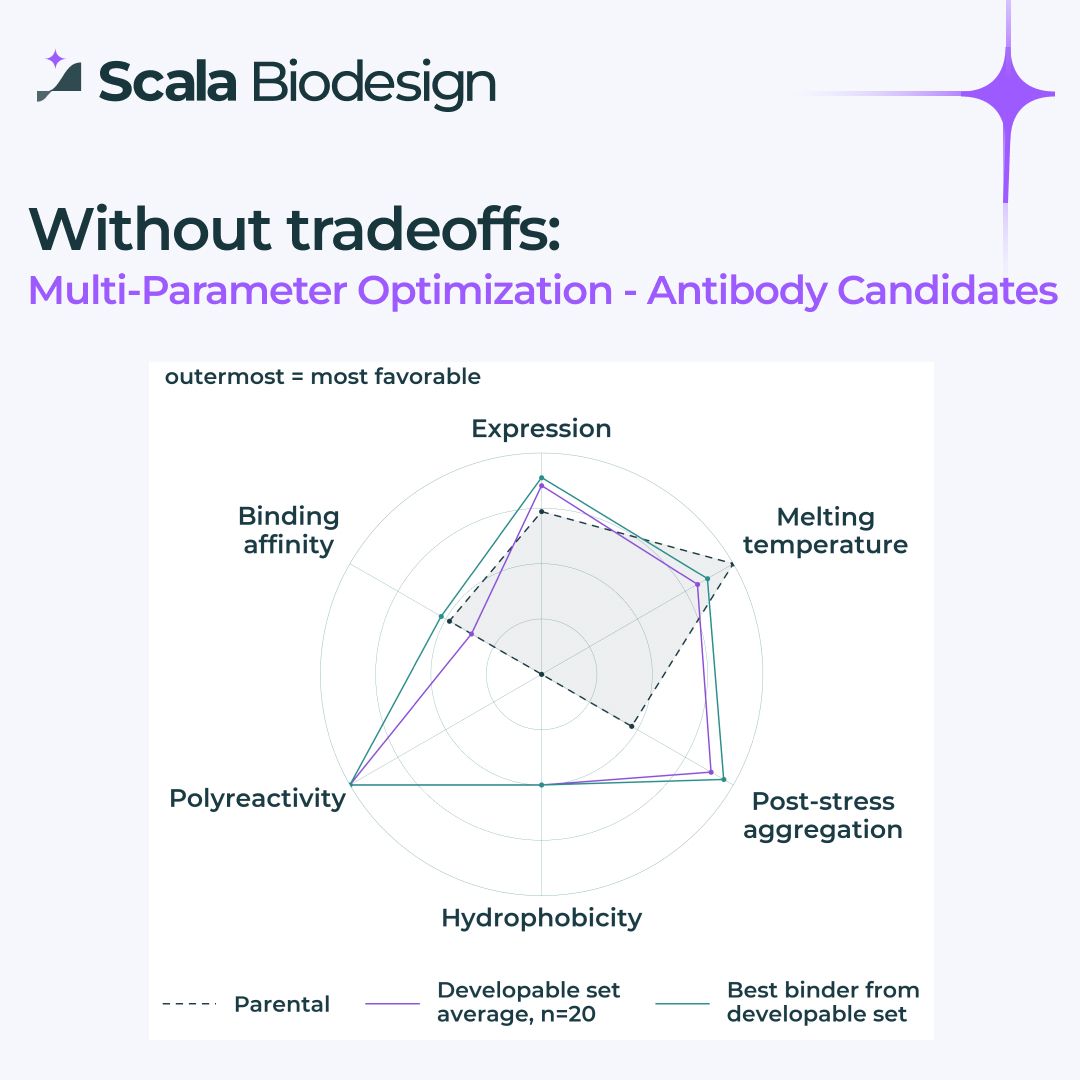
What began as a therapeutic challenge turned out to be unusually revealing. A top-10 pharmaceutical company gave us a high-affinity humanized antibody and a simple objective: provide us a diverse set of designs that improve the molecule’s developability, without compromising affinity. But there was a catch. The challenge was fully blinded. We were not told what was wrong with the molecule. No diagnosis. No hints. Just the antibody sequence, the general objective, and the expectation that better antibodies with diverse properties could be designed. Only after the experimental results came back did we learn what the platform had been up against: the parental antibody suffered from multiple developability liabilities, including aggregation, polyreactivity, and unfavorable HIC behavior. That is why blinded tests matter. It allows you to truly evaluate the strength of the underlying technology in the most comprehensive way. In a single design round: ✅ Rescued the key developability liabilities. 20 variants rescued all three developability liabilities - aggregation, polyreactivity and HIC w/o introducing new liabilities. ✅ Maintained affinity and expression in over 50% of the variants. ✅ Obtained distinct V-gene combinations within the fully rescued set For me, the meaningful result was not only that the molecule was improved. It was the diversity of the solutions. Rather than converging on a single framework answer, the platform generated a broad pool of successful antibodies across different VH/VL human germline combinations with different surface properties. That kind of diversity creates a real advantage for development, providing a set of solutions to jungle with as the molecule progresses through downstream assays, without the need to go back to engineering. The project also reinforced a core concept in Scala Biodesign antibody platform: antibody optimization does not have to rely on small tweaks. By exploring broad framework diversity while preserving binding, it is possible to address multiple developability challenges at once and uncover many viable paths forward, not just one. Seeing these results generated and evaluated by a top-10 pharma partner was an important moment for me, for Scala's antibody team and for Shira Warszawski, our head of therapeutics team, who leads this team and the technology we are building. #AntibodyEngineering #Biologics #DrugDiscovery #Developability #ProteinEngineering #Biotech Orly Avraham Or Weinstein Jonathan Weinstein Bastian Bräuning Kobi Grossman
- LINKEDIN · EVENTSince 9 Jun 2026
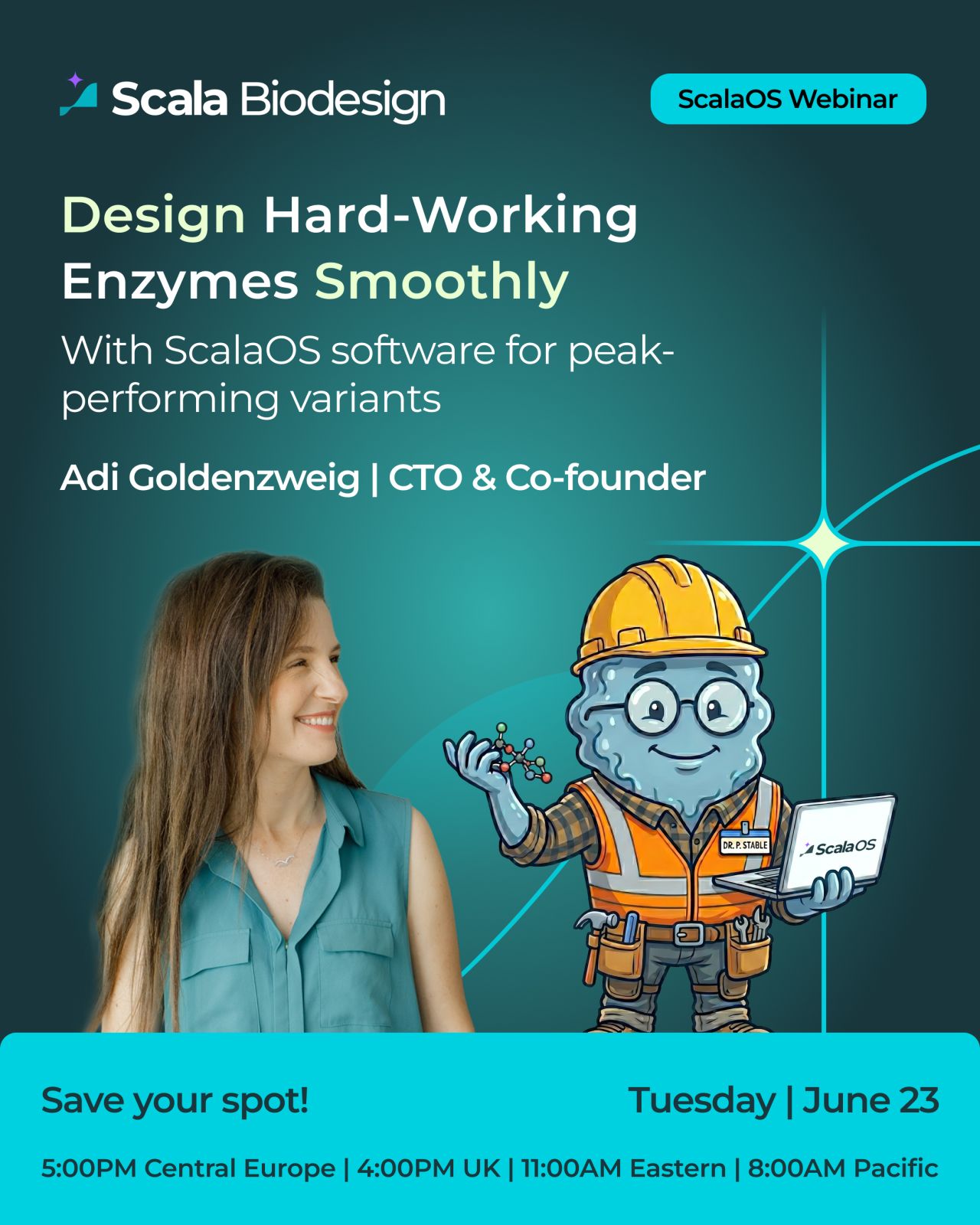
Want to design enzymes that work harder for you? 🎯 Join our 30-minute webinar with Adi Goldenzweig, Scala Biodesign CTO & Co-founder, to see how ScalaOS software helps design peak-performing enzyme variants through atomistic calculations, evolutionary analysis, and AI. The session will show how this simple and intuitive workflow, used independently by scientists in various top-20 pharma and industrial biomanufacturing companies, handles complex multi-trait optimization. It improves stability and activity parameters that impact the development and manufacturing of enzyme-related products, often in a single design round. 💫 Register below to save your spot!
- LINKEDIN · IMAGESince 8 Jun 2026
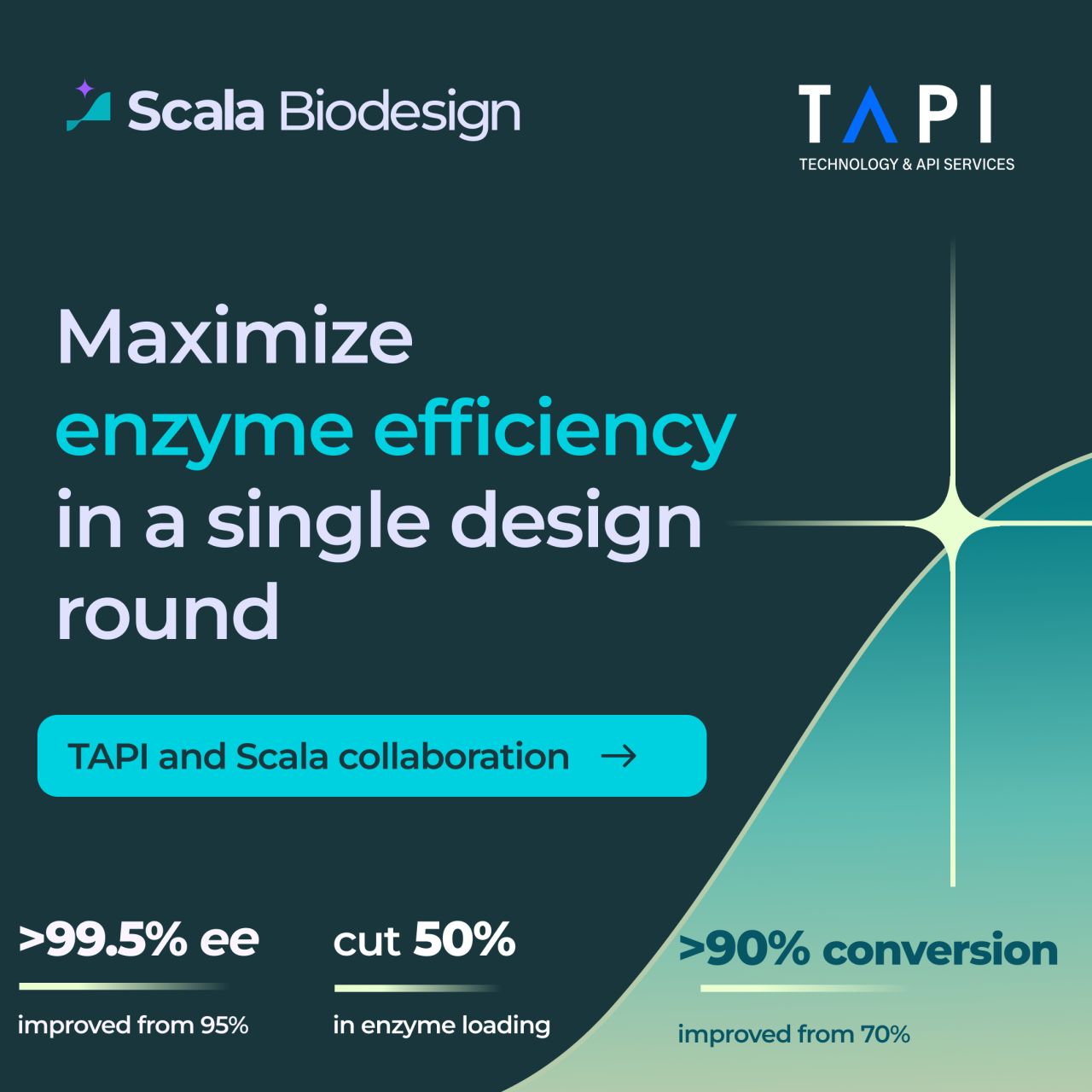
What if one design round could turn a good enzyme into an exceptional biocatalyst? 🧬✨ We’re happy to share a customer success story from our collaboration with TAPI , Teva Active Pharmaceutical Ingredients, on drug manufacturing. The goal was to turn a demanding API production step into a more reliable, scalable manufacturing process by pushing an already strong biocatalyst beyond its current limits, reducing waste, improving consistency, and enabling broader access to high-quality medicines. In collaboration with Scala Biodesign, TAPI used Scala’s computational protein design workflow, integrating AI, evolutionary analysis, and physics-based calculations, to generate a diverse set of active-site variants. TAPI rapidly tested the variants and selected top performers for evaluation under process-relevant conditions. The outcome: Under real process conditions, TAPI achieved: ✅ Conversion improved from ~70% to >90% ✅ Enantiomeric excess improved from ~95% to >99.5% ee ✅ Enzyme loading reduced by 50%, improving process efficiency This optimization delivered significant improvements in production efficiency and enantioselectivity, with additional gains in process economics through reduced enzyme usage, helping translate enzyme performance into real manufacturing value. ScalaOS Enzyme platform is built to unlock the potential of both: 🔹 Enzymes that struggle with fundamental challenges in the lab 🔹 Enzymes that already perform well and need to exceed their limits Cheers to TAPI for leveraging Scala’s platform to advance their manufacturing capabilities. 🚀 Big picture: Elevating enzyme performance at this level turns manufacturing constraints into scalable opportunities — reducing cost, lowering waste, and increasing access to medicine. #Biocatalysis #EnzymeEngineering #PharmaManufacturing #APIManufacturing
6 of 43 adsSign up to see every Scala Biodesign ad, filter by format and date, and get alerts on new ones.
See all 43 adsWatch the companies you care about.
Filter every ad by industry, country, format and network, and get alerts when a company you watch starts running new ads.