On air · 1 of 3 networks
Roland Berger
- rolandberger.com
- DE
- 4,743 employees
Roland Berger’s ads on LinkedIn, Meta and Google, recorded by adsrunning. Browse the latest here for free. Sign up free to see all 1,713. Watch Roland Berger with Starter to get each new one in your feed.
Watchlist with Starter · $49/mo
| Network | Status | Live ads | Nov 2025LinkedIn activity · 52 weeksOct 2026 | Checked | Next step |
|---|---|---|---|---|---|
| Running | 474 | Checked 29 Oct 2026 | See all 1,713 ads → | ||
| Meta | None recorded | 0 | No active ads recorded on the Meta Ad Library | Checked 25 Oct 2026 | Collect them with the API → |
| Recently | 100+ | Ads on the Google Ads Transparency Center | Checked 8 Oct 2026 | Collect them with the API → |
Roland Berger has 474 live LinkedIn ads. Its Facebook page had no active ads on 25 Oct 2026, and we recorded 100+ Google ads on 8 Oct 2026.
Latest ads
- LINKEDIN · IMAGESince 27 Oct 2026
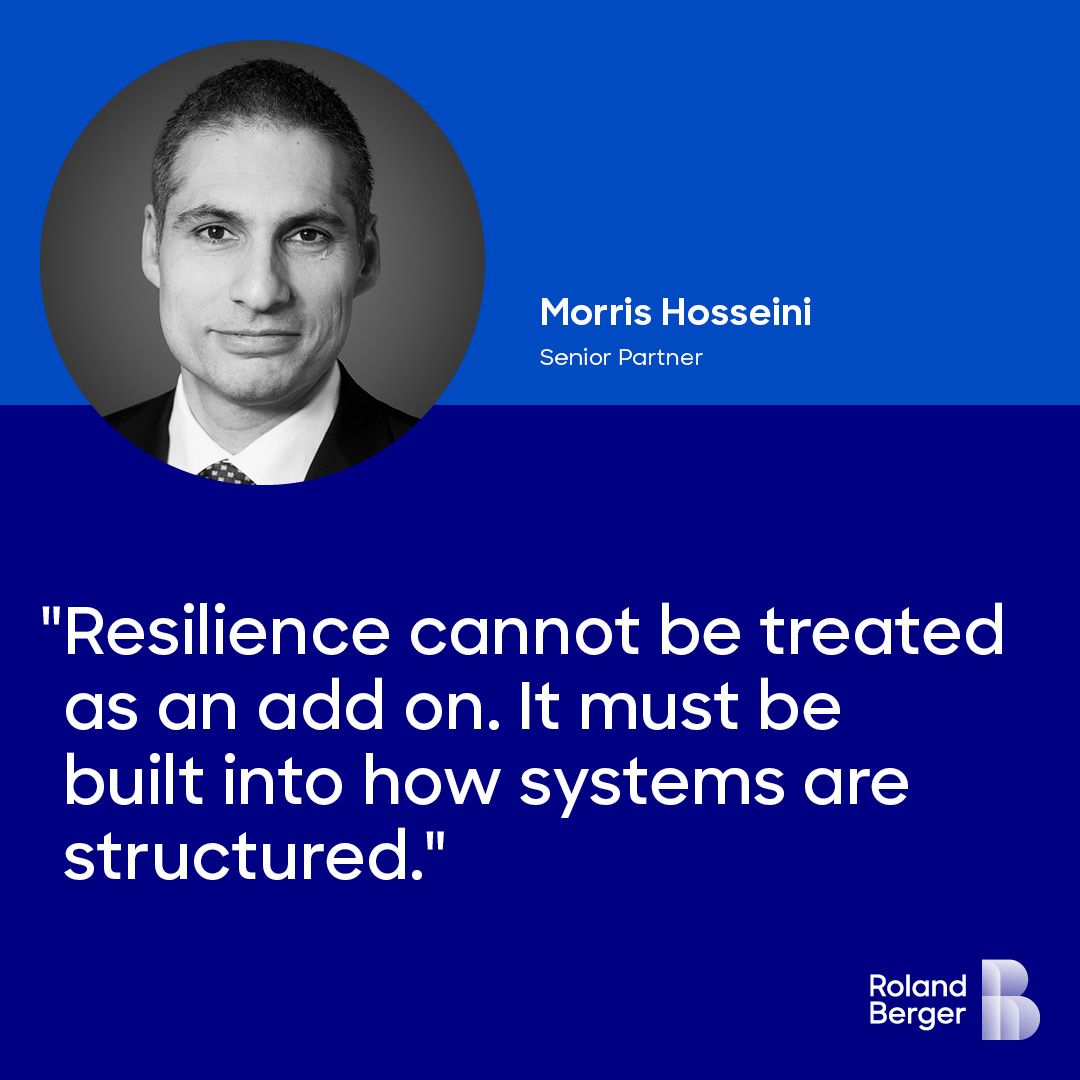
🧠 Most healthcare systems still organize preparedness as a separate project. In my experience, that is exactly why it rarely works when it is needed. Our new Future of health study, based on a survey of 486 experts across the healthcare value chain, describes resilience as five competences that have to run continuously: anticipating emerging risks, responding quickly, maintaining essential services under pressure, recovering efficiently and adapting afterwards. What I find compelling is how dependent they are on one another. A system that recovers yet cannot anticipate will always be reactive. A system that plans yet cannot protect routine care fails at the moment that counts. The harder question is ownership. Responsibility today sits across national ministries, regional authorities, European bodies, public health agencies and providers, and no single actor holds both the authority and the incentive to drive readiness at system level. That is not an analytical gap. It is a design gap. In my view the sequence matters: define the central architecture first, meaning authority, binding frameworks and resources, and only then decide what is executed locally within it. Governance reform is not restructuring for its own sake. It is what turns a stated priority into a working feature of the system. Where does accountability for resilience actually sit in your system today? Download the PDF now! 📩 #RolandBerger
- LINKEDIN · IMAGESince 27 Oct 2026
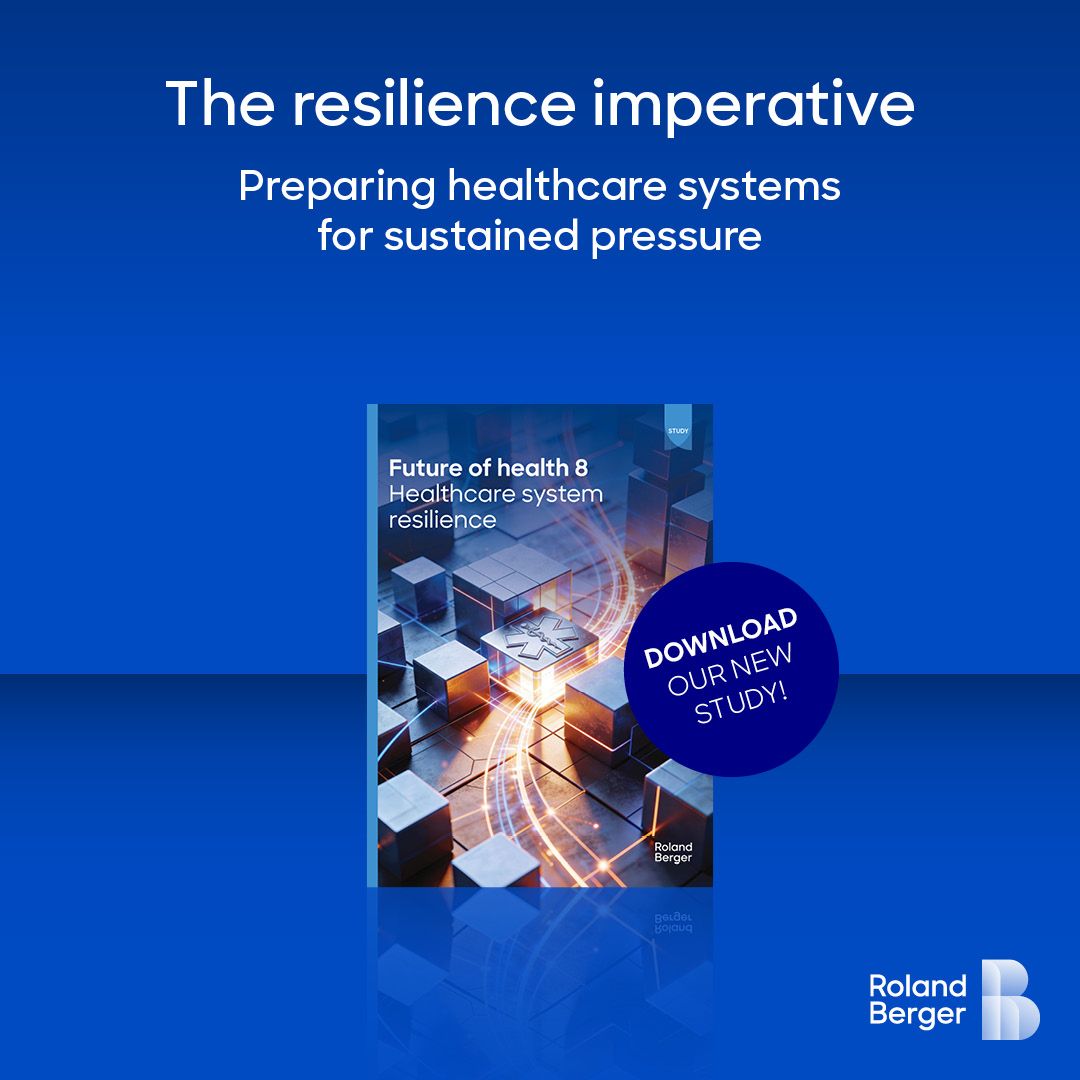
📉 The resilience gap in healthcare 81 percent of healthcare leaders say system resilience is becoming more important. Almost none feel prepared for the pressures they rank as most critical. Our new Future of health study, the eighth in our series, is based on a survey of 486 experts across the healthcare value chain. Today the pressures arrive all at once: health emergencies, cyberattacks and geopolitical conflict now overlap with demographic change, workforce shortages and climate change. Where the gap is widest: 🔹 Demographic change ranks as the top concern, yet preparedness is rated low, particularly in Europe 🔹 Workforce shortages reinforce that pressure, with Europe facing a projected shortfall of 4.1 million healthcare workers by 2030 🔹 On geopolitical conflict, not a single respondent considers their system fully equipped What this means in practice: resilience cannot be switched on once a crisis arrives. Our findings indicate it has to be built into how systems are financed, governed and run, which makes it a transformation and corporate performance agenda rather than an emergency plan. Download the PDF now! 📩 #RolandBerger
- LINKEDIN · IMAGESince 27 Oct 2026
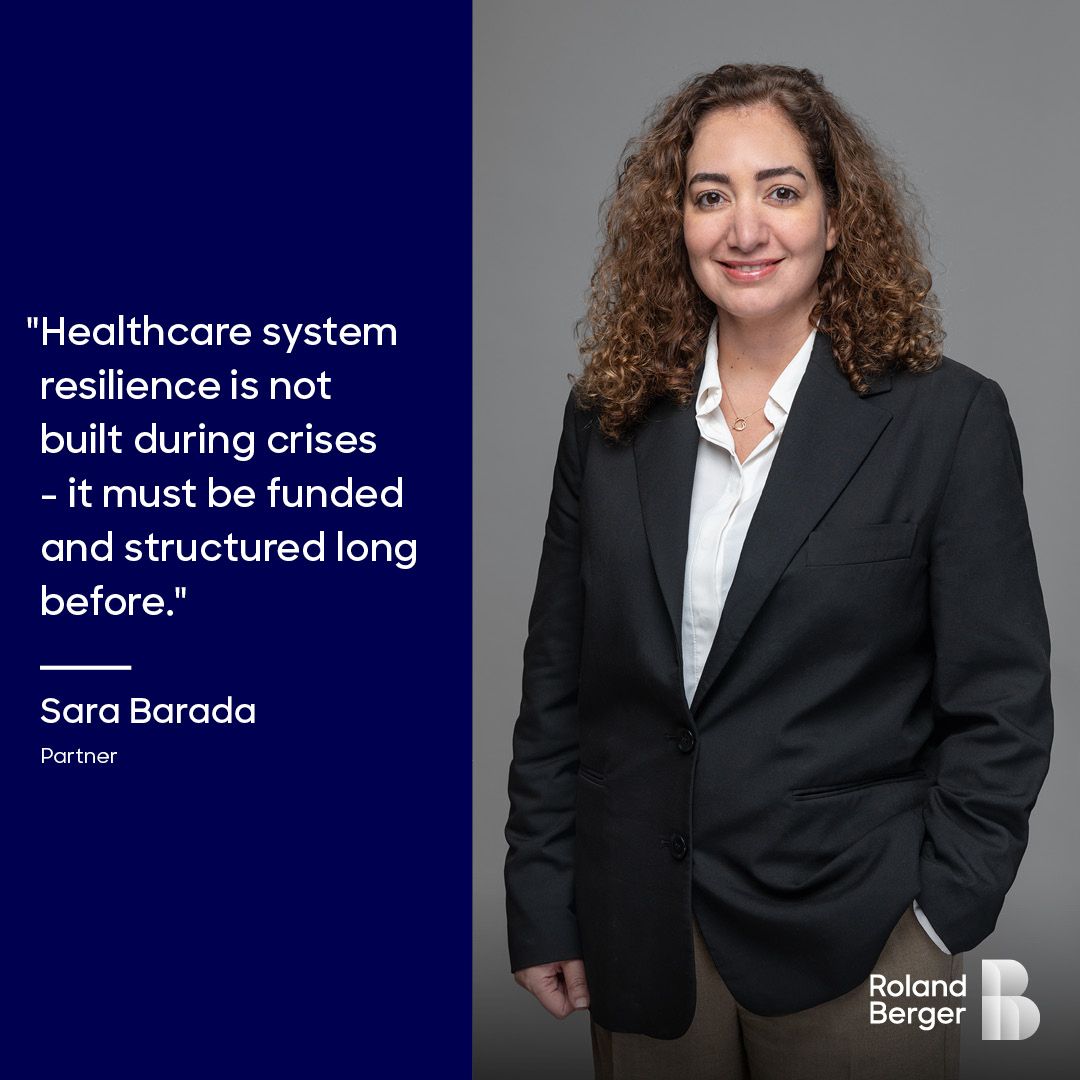
📌 Preparedness is decided in calm periods, not in the middle of a crisis. Our new Future of health study looks at what that requires in practice, based on insights from 486 experts across the healthcare value chain. The appetite is clearly there: 73 percent lean toward investing in resilience rather than containing costs and reacting once disruption hits, rising to 84 percent in the United States and 78 percent in Europe. Turning that into readiness means fixing two things in advance. The first is funding. Budgets built around daily activity leave no room for reserve capacity, and short political cycles make long term preparedness fragile once a crisis fades from memory. Our recommendation is to ring fence resilience funding, subject it to independent audit and tie it to clear preparedness benchmarks, with a harmonized minimum floor at European level. The second is structure. Business continuity planning belongs at every level of the workforce rather than with senior leadership alone, so staff know their crisis roles and escalation protocols before they need them. Stockpiling needs binding rules: governments set the mandatory floor, manufacturers hold buffer stocks as a condition of market access, and payers accept that resilience linked contracts carry a premium. Our analysis treats that premium as the price of security rather than inefficiency. Download the PDF now! 📩 #RolandBerger
- LINKEDIN · IMAGESince 27 Oct 2026
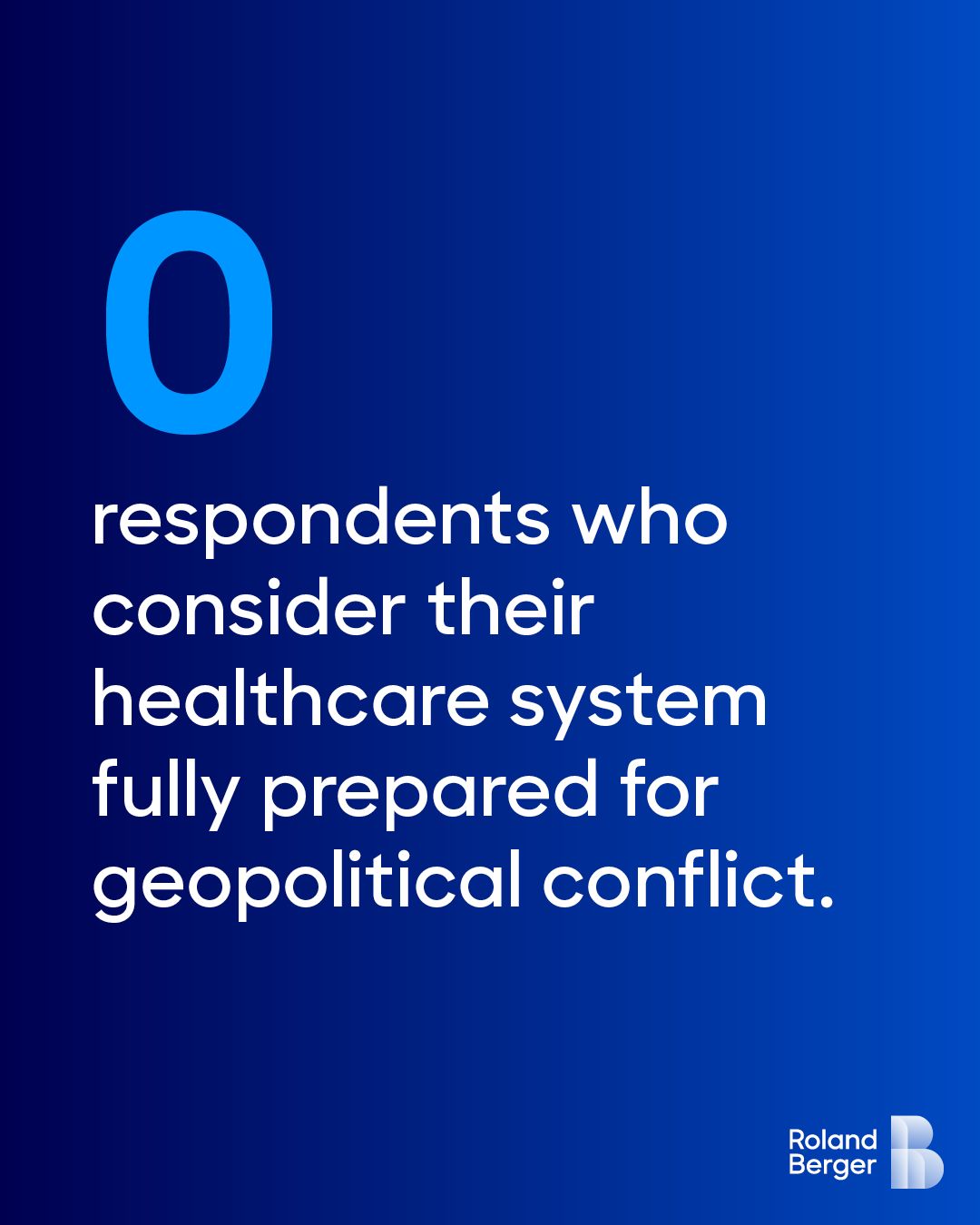
🎯 Four regions, none fully prepared Among the 486 experts surveyed for our new Future of health study, not a single respondent considers their healthcare system fully equipped to manage geopolitical conflict. That matters, because the same respondents rank geopolitical conflict among the three biggest pressures on their systems, alongside demographic change and workforce shortages. The preparedness gap is widest exactly where the concern is highest. Saudi Arabia and the United Arab Emirates are the notable exceptions. The exposure is concrete. Critical medicines and vaccines come from a small number of production hubs, while procurement built around lowest price tendering narrows supply security further. In Germany, policy discussions currently center on whether the healthcare system could manage up to 1,000 seriously wounded people per day in a large scale conflict. Our recommendation is a binding stockpiling framework: governments define the mandatory floor and enforce it, manufacturers hold buffer stocks as a condition of market access, and payers accept that resilience linked contracts carry a premium. That premium is the price of security, not inefficiency. Download the PDF now! 📩 #RolandBerger
- LINKEDIN · IMAGESince 27 Oct 2026
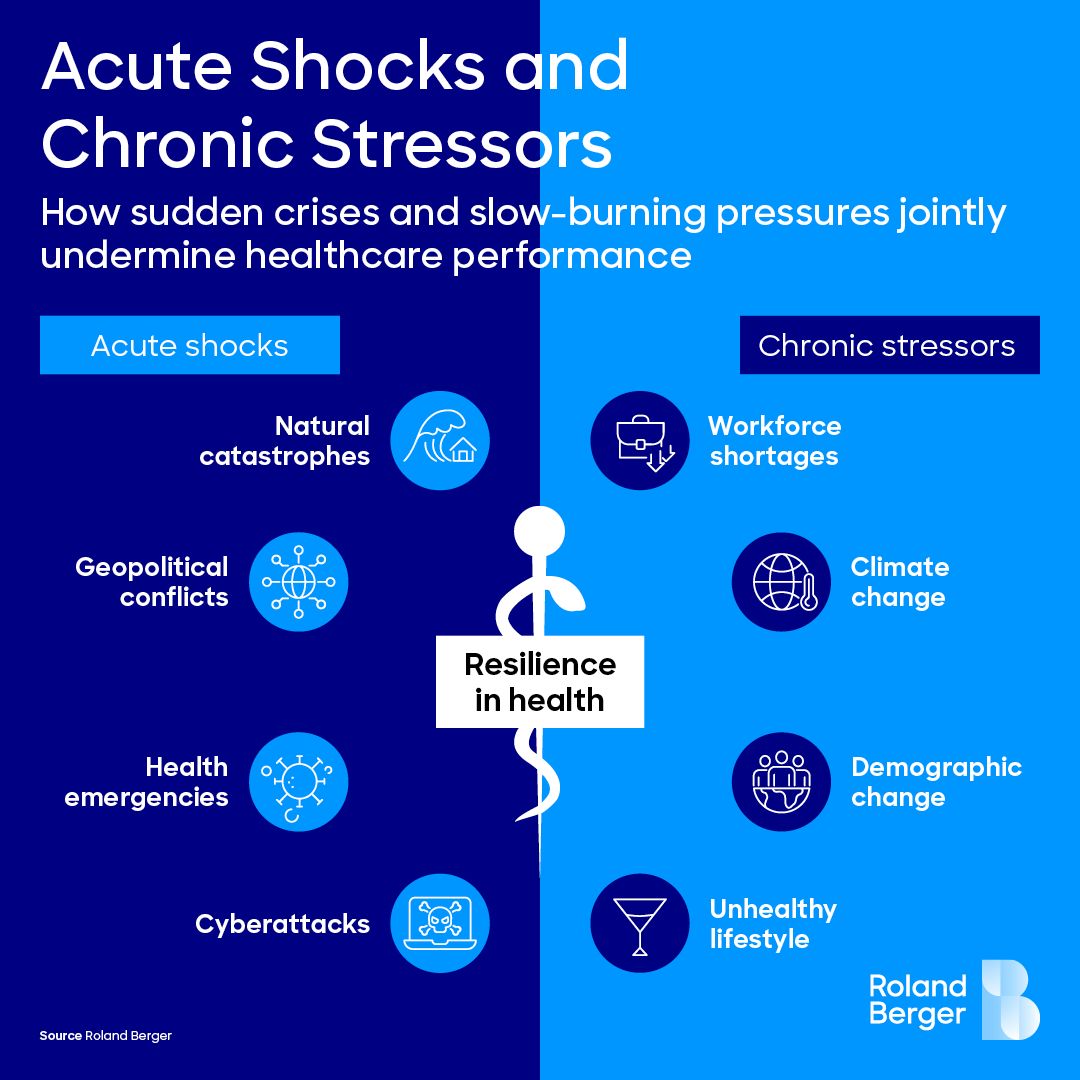
⚡ Eight pressures, arriving together Healthcare systems have always had to absorb change. What has shifted is how the pressures now overlap. Our new Future of health study groups the eight most significant stressors into two categories: 🔹 Acute shocks: natural catastrophes, health emergencies, geopolitical conflicts, cyberattacks 🔹 Chronic stressors: workforce shortages, demographic change, climate change, unhealthy lifestyles The numbers behind them are substantial. The WHO expects a shortage of 4.1 million healthcare workers in the European Union by 2030. In the OECD, the old age dependency ratio is projected to rise from 31 percent in 2023 to 52 percent by 2060. During recent health emergencies, essential services were disrupted in 92 percent of countries surveyed by the WHO. Each category stretches the same five resilience competences across a different timeframe: compressed into days during an acute shock, spread across decades under chronic pressure. Our recommendation is therefore to build flexible, generic capacities rather than a separate structure for every conceivable risk. What matters are scalable arrangements that can be activated and expanded when pressure increases. Download the PDF now! 📩 #RolandBerger
- LINKEDIN · IMAGESince 27 Oct 2026
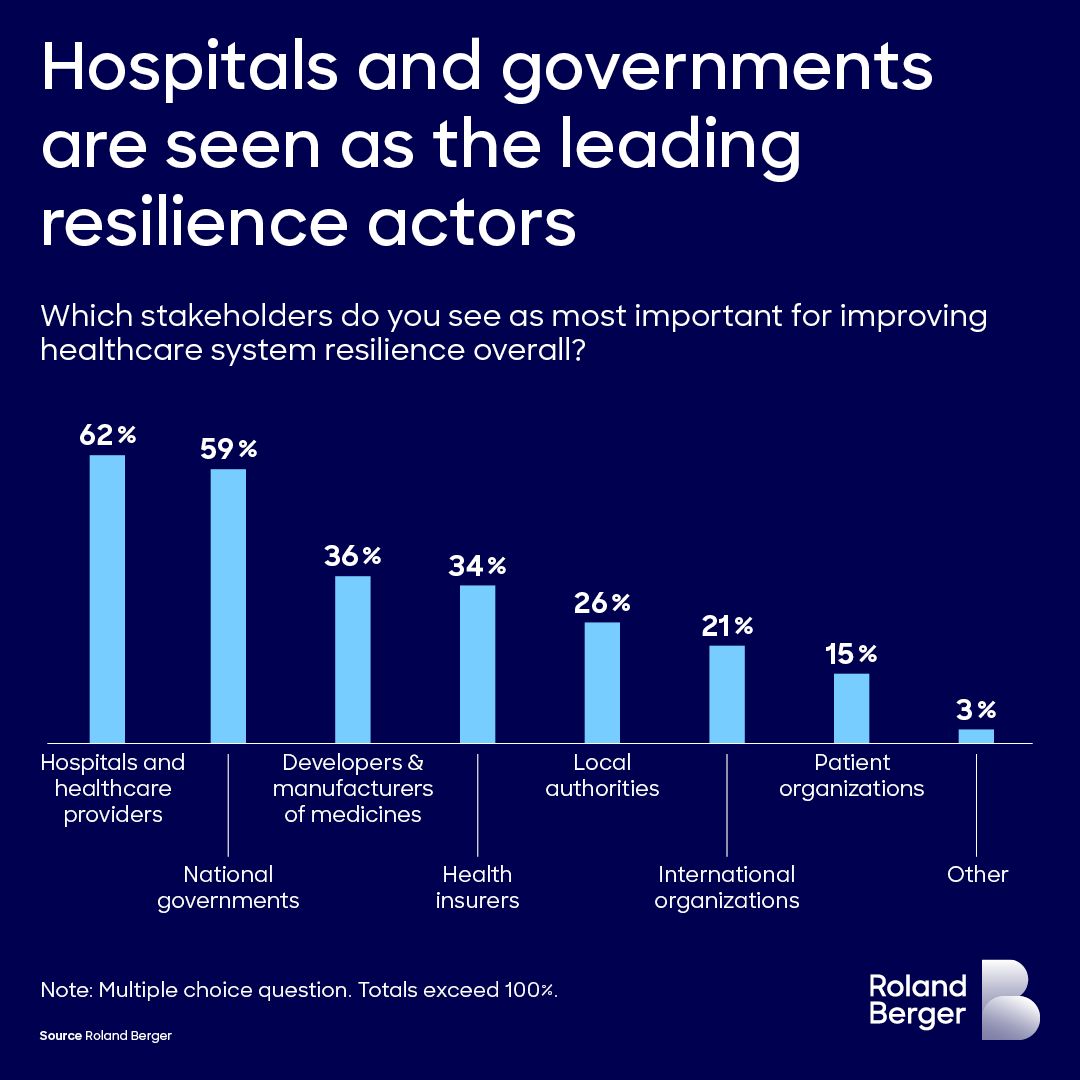
📌 Everyone agrees. No one owns it. Who is accountable for healthcare system resilience? In our new Future of health study, 486 senior stakeholders give a clear answer, and it reveals a structural mismatch. 🔹 62 percent name hospitals and healthcare providers as the most important actors 🔹 59 percent point to national governments 🔹 60 percent place primary accountability with public institutions overall 🔹 International organizations rank lowest Hospitals therefore carry the operational burden while their financing rewards cases and throughput. Reserve capacity generates no revenue in normal times and remains systematically underfunded. Health insurers stay an underused resilience actor, since current incentive structures do not reward risk pooling for preparedness. Two recommendations follow from this. Hospitals should assign named executive accountability for resilience and track it with their own indicators, from available surge capacity to time needed to mobilize additional staff. Governments should reward measurable preparedness through performance linked reimbursement, rather than throughput alone. Download the PDF now! 📩 #RolandBerger
6 of 1,713 adsSign up to see every Roland Berger ad, filter by format and date, and get alerts on new ones.
See all 1,713 adsWatch the companies you care about.
Filter every ad by industry, country, format and network, and get alerts when a company you watch starts running new ads.