On air · 1 of 3 networks
RIS Rx
- risrx.com
- US
- 131 employees
RIS Rx’s ads on LinkedIn, Meta and Google, recorded by adsrunning. Browse the latest here for free. Sign up free to see all 84. Watch RIS Rx with Starter to get each new one in your feed.
Watchlist with Starter · $49/mo
| Network | Status | Live ads | Nov 2025LinkedIn activity · 52 weeksNov 2026 | Checked | Next step |
|---|---|---|---|---|---|
| Running | 82 | Checked 30 Oct 2026 | See all 84 ads → | ||
| Meta | Not checked | — | |||
| Recently | 8 | Ads on the Google Ads Transparency Center | Checked 16 Oct 2026 | Collect them with the API → |
RIS Rx has 82 live LinkedIn ads. We recorded 8 Google ads on 16 Oct 2026.
Latest ads
- LINKEDIN · IMAGESince 27 Jun 2026
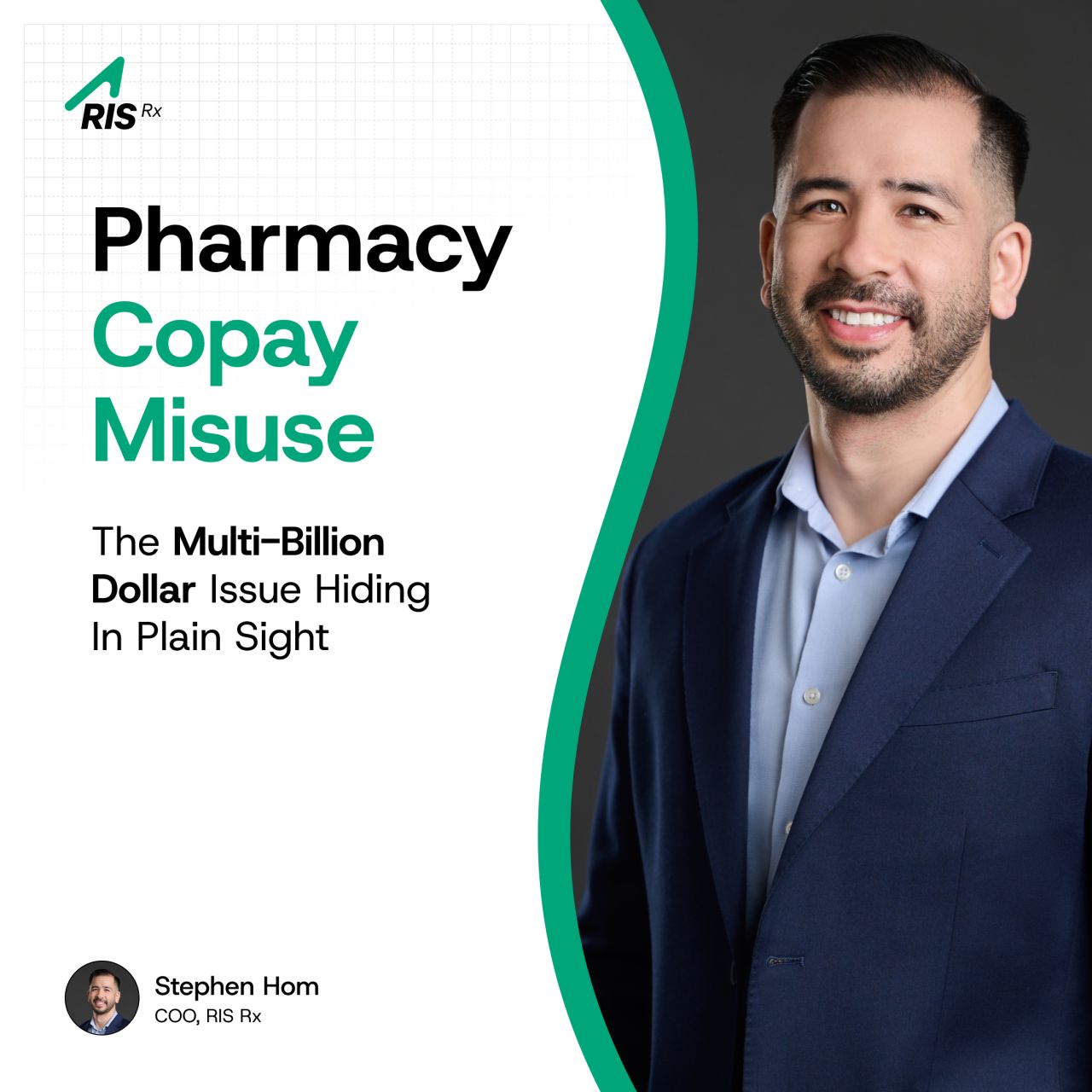
Every field transmitted through the pharmacy billing process can be manipulated at the pharmacy terminal. Data fields, coverage classifications, reimbursement details—all of it can be altered. That can lead to enormous GTN exposure. At RIS Rx, we estimate pharmacy and payer leakage copay misuse represents billions in annual leakage risk across the industry, with roughly one in ten pharmacies engaging in some form of copay misprocessing. Manufacturers are often able to catch a suspicious new pharmacy, an unusually high claim volume, or a pattern that looks wrong through automated flagging or pre-payment detection. But what they usually don’t see are the thousands of smaller manipulations happening. At the heart of it, pharmacy copay misuse isn’t an algorithm problem, but an operational problem—teams lack the deep pharmacy experience to intervene when something is detected. When the GTN team does detect something off, the pharmacy explains why, the explanation is accepted at face value, and the behavior continues. RIS Rx’s pharmacy copay misuse solution—Affordability, Audit & Assurance (Triple A)—was built and continues to operate under PharmD expertise to spot inconsistencies. Our team has more than 20 PharmDs on board, including our leadership. We’ve seen hundreds of thousands of claims billed through various pharmacy systems. Effective intervention requires pharmacist interpretation: understanding how claims are adjudicated, how reimbursement pressures influence pharmacist behavior, and how manipulation patterns appear within pharmacy operations. Once you have that data, the quality of intervention changes dramatically. One brand saw covered benefit spend drop 48% after Triple A went live—despite a WAC (wholesale price) increase—tripling cost savings from $9M to $27M year-over-year. Another brand saved $21M across 43,000 monthly transactions only two months after go-live. When a new drug manufacturer begins working with RIS Rx, we can already see which pharmacies are creating the majority of exposure because we’ve seen those same patterns elsewhere. That network effect allows us to identify issues faster, intervene right away, and drive operational change far more quickly than fragmented review processes. If you want to read more, check out our latest piece on Drug Channels Institute, an HMP Global Company here: https://lnkd.in/gqzx92Ej
- LINKEDIN · IMAGERecorded 28 Oct 2026
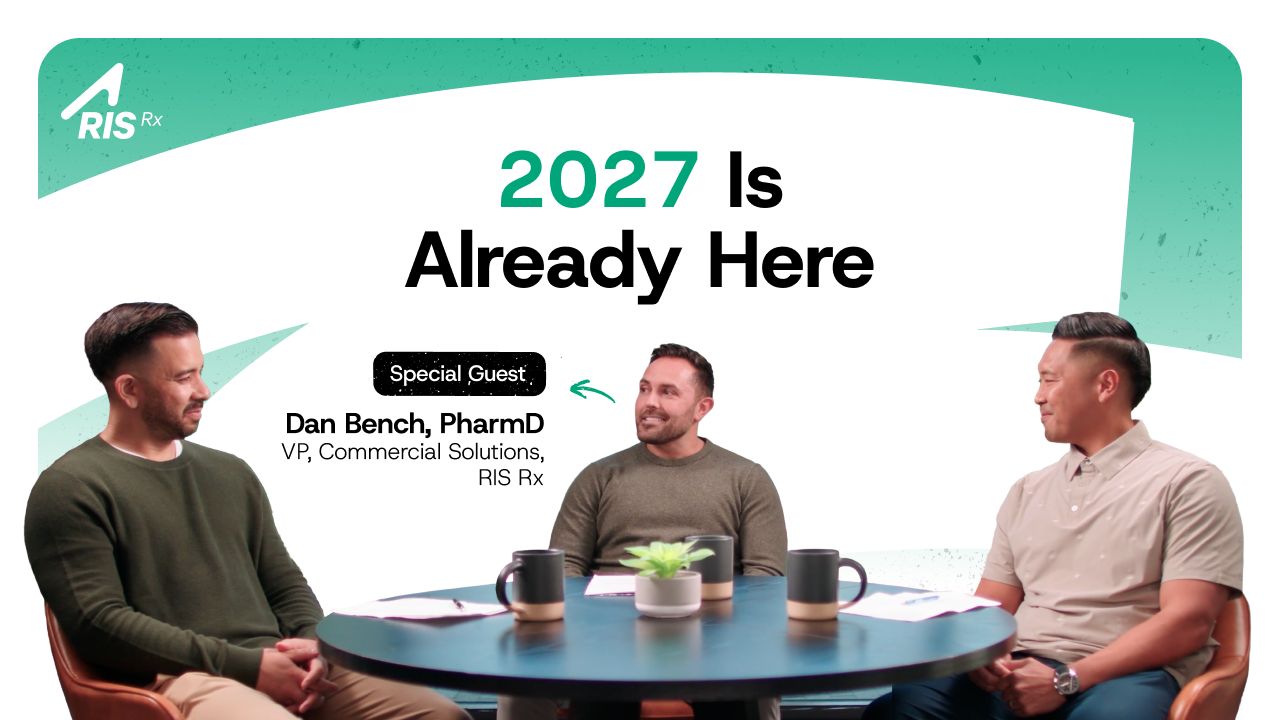
Ask any pharmacist who's worked the January 1st opening shift and they won’t mention a thing about hangovers. They’ll tell you what the screen looks like: rejection, rejection, rejection. It looks like Groundhog Day, but it’s the calendar. Two to three out of every ten patients change benefits year over year. Our latest episode of The GTN Edge Podcast digs into how to get ready for the first day of 2027 where Stephen Hom and I hosted Dan Bench, RIS Rx's new VP of Commercial Solutions. We've seen too many $5,000 copay surprises mid-January that should've been zero with the right benefit applied. These avoidable surprises affect patient confidence, provider patience, call center capacity, and your bottom line. At enrollment, roughly 2-3 in 10 patients should be flagged as maximizer-impacted, and another 2-3 in 10 as accumulator-impacted. If your solution isn't holding those percentages, the gap isn't in the market, it's in your solution. On top of this, if a PBM shifts its algorithm and your platform needs weeks to catch up, that lag can cost millions. Average cost per claim should move the way your program adjustments say it should, not according to a PBM's workaround. The 2027 playbook, in three moves: 1. Segment before reverification — pre-tag your maximizer/accumulator patients in December so you're only catching the exceptions in January. 2. Close the FTE gap before it opens — re-verify your full patient population up front as the call surge from re-verifying only part of it costs more. 3. Reach out before they call you — turn a hundred adjudication attempts into a proactive outreach list. Market access, patient services, copay, and hub each hold a piece of the puzzle — and right now, the data between them is siloed. 2027 rewards the brands that connect those pieces before welcome season, not after. Check it out here → https://lnkd.in/g6Tr8Bnb
- LINKEDIN · IMAGERecorded 15 Oct 2026
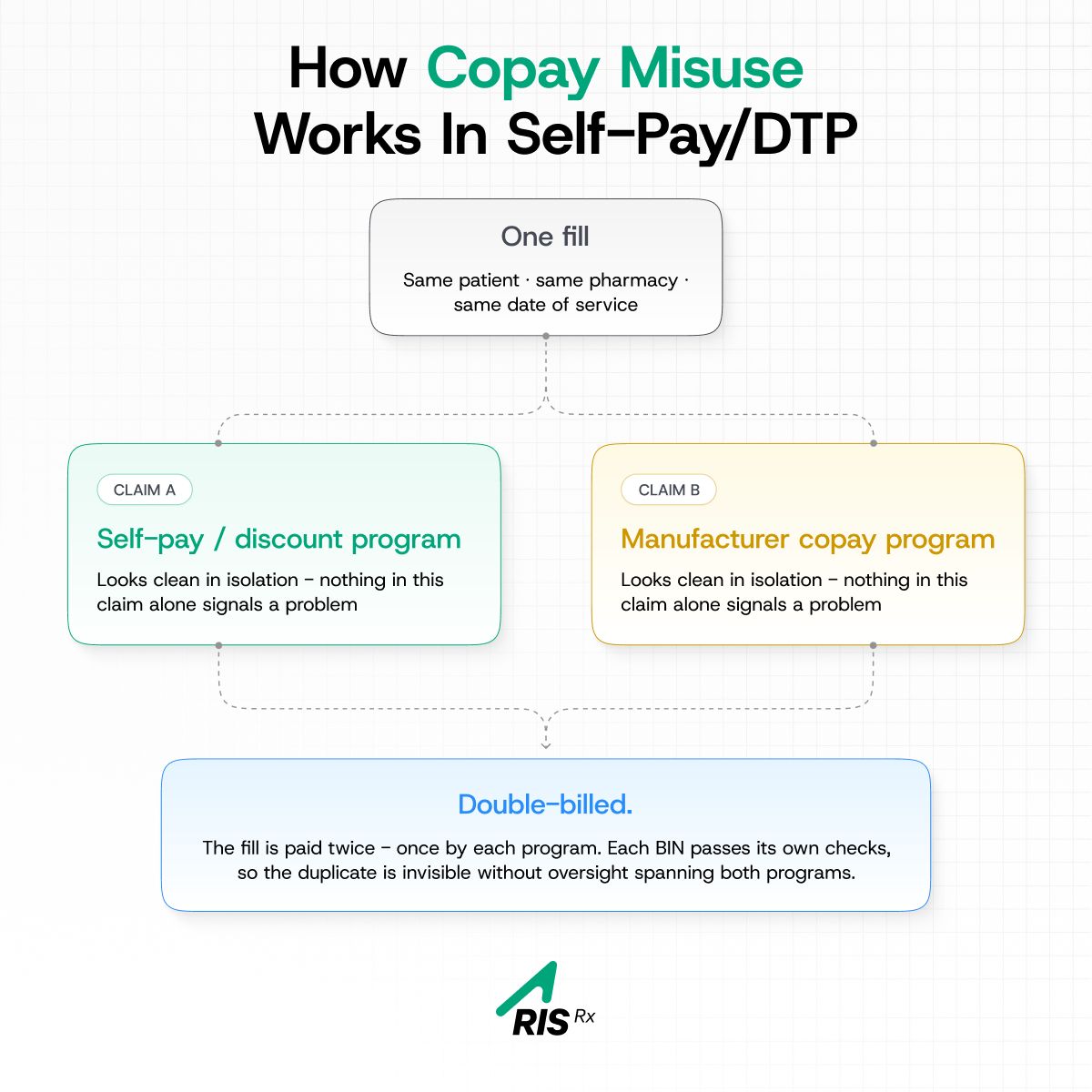
50% of people we polled about copay misuse at our recent Xtalks webinar had little to no visibility into self-pay or DTP transactions. There are new vectors in claim-level copay misuse and it’s showing up in a new channel: self-pay and direct-to-patient. Self-pay is a step in the right direction for our industry. But what's missing in this channel are point-of-sale guardrails determining whether or not a prescription is covered by commercial insurance and what the patient owes. Here are three things that happen as a result: 1. The manufacturer copay card is applied to a self-pay patient who isn't eligible for it. 2. A discount card is layered in at the pharmacy to synthesize a rejection so the copay card can then be billed as the payer, bypassing the manufacturer’s rules. 3. A transaction that should have stayed as cash is rerouted to an affordability program to capture the funded amount, another form of duplicate discount. One fill, same patient, same pharmacy, same data service → two claims One claim goes through the self-pay program, the other through the manufacturer’s copay program. The fill is paid twice, once by each program, and no one catches it. Each claim passes its own check. The self-pay program has no reason to look at copay claims. The copay program has no visibility into the cash transaction. Both vendors are reporting success, both are telling the truth. Neither is spotting leakage. The problem is structural. Neither program can catch this alone. Only oversight that spans between both services will surface the duplicate. The same story plays out when you go direct-to-patient. Misuse doesn't appear when programs move direct-to-patient. It migrates, following the funded dollar into whichever channel has the least oversight. If you're one of that 50%, let's find your blind spots before it costs you more. → https://lnkd.in/dhnz3nJe
- LINKEDIN · IMAGERecorded 10 Oct 2026
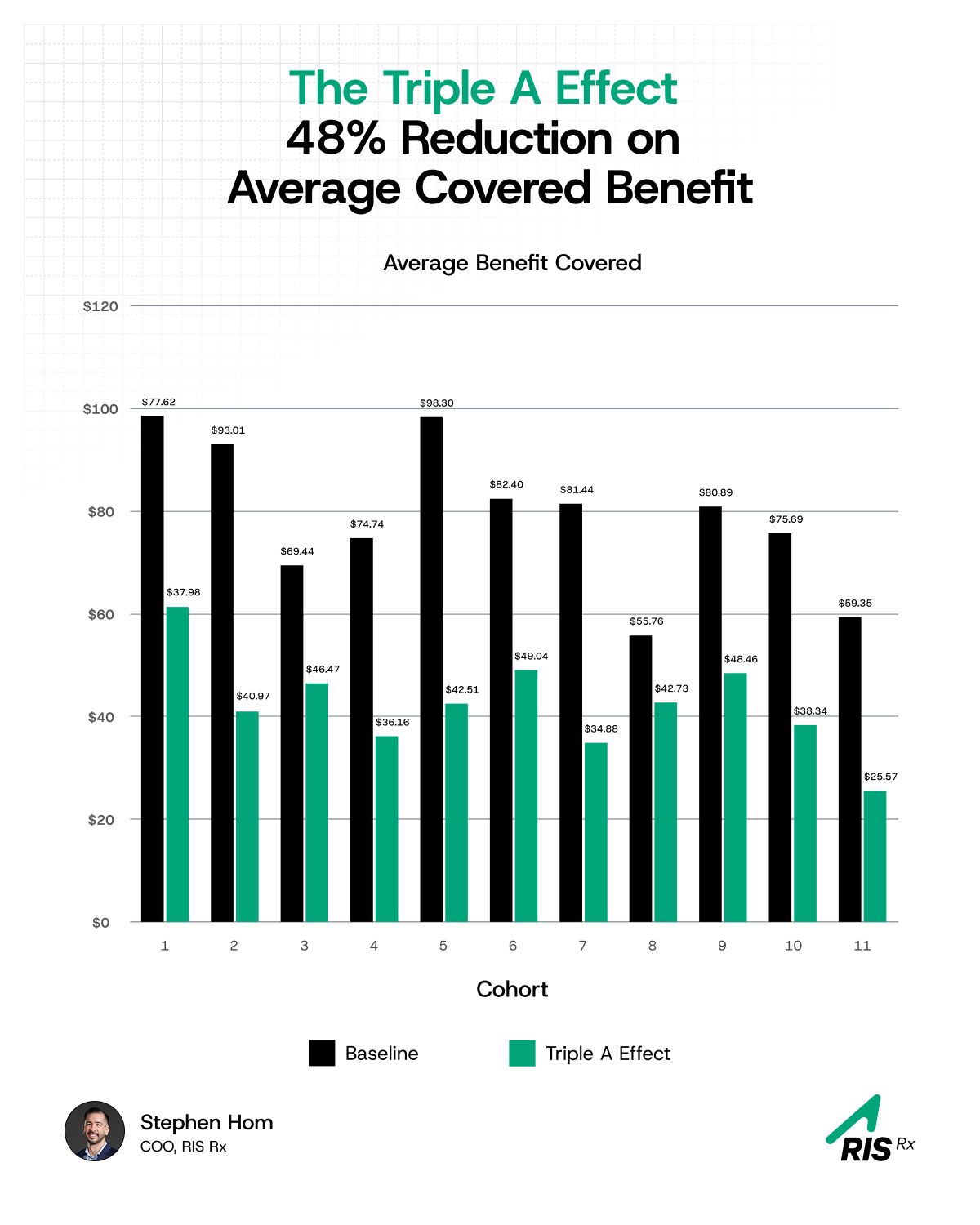
One of our customers decided to stop active monitoring for pharmacy misprocessing. On paper, it made sense. Average covered benefit was down. Claim volume was healthy. Our copay misuse solution, Triple A, seemed to have done its job. So they pressed pause. It’s understandable: it’s hard to invest in a solution when the problem is no longer visible. Six months later, however, they came back. Spend was climbing again, gradually and with no obvious cause or change in patient volume. Just a gradual rise in the average benefit. There’s a simple explanation. Attention changes behavior. That’s why our customer saw their spend climb again. Once they re-engaged with Triple A, it came back down, even as claim volume rose. The Triple A effect isn’t a quick fix: it’s about lasting behavior change to limit leakage and protect patient affordability. In fact, our Triple A program delivered a 48% reduction in covered benefit for a client. Here’s a quick check: → Is your average covered benefit per claim creeping up, without an obvious change in patient volume, coverage or program design? If so, it’s time to look deeper. → https://lnkd.in/dhnz3nJe
- LINKEDIN · IMAGERecorded 3 Oct 2026
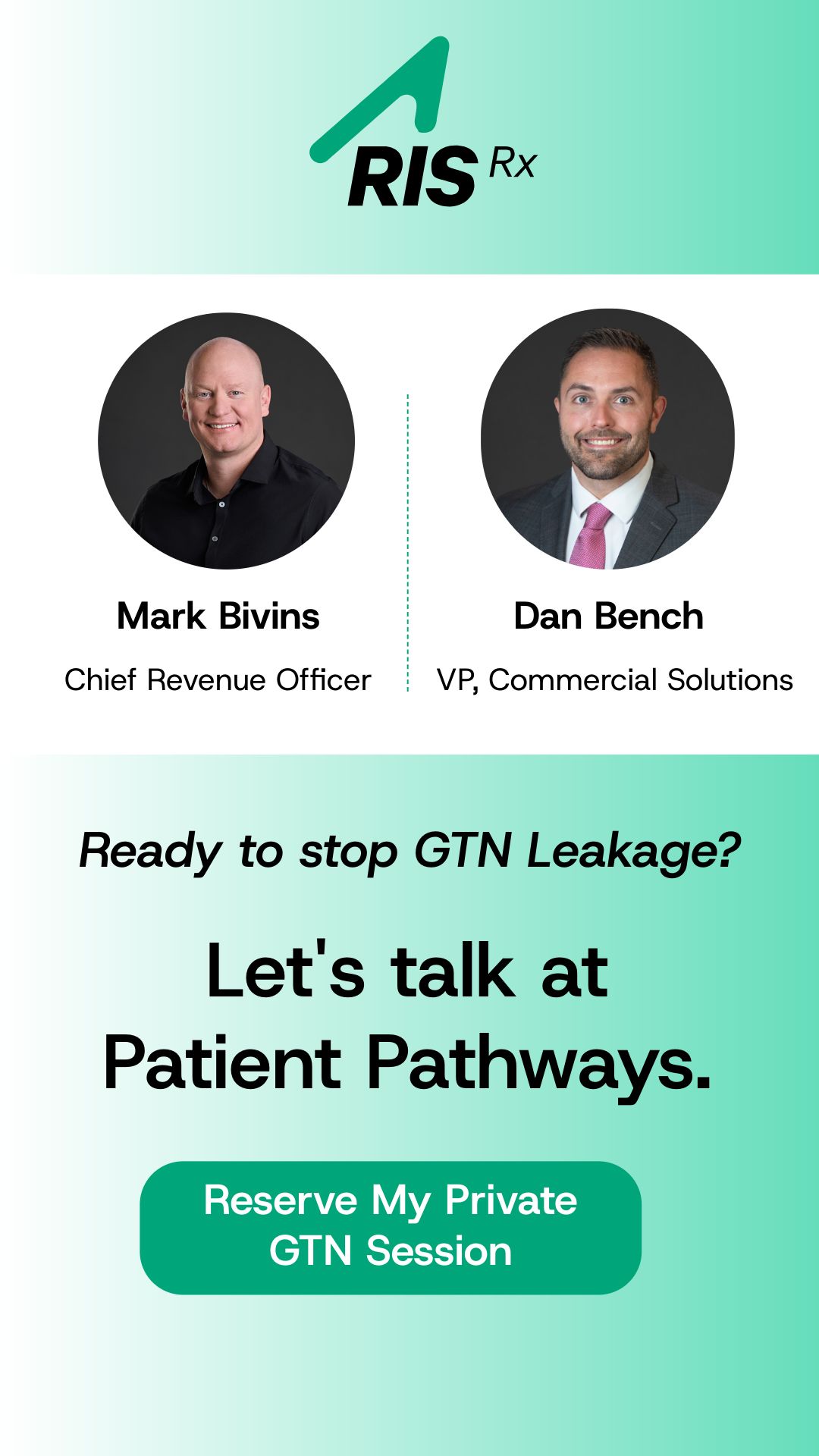
Generic GTN trends won't protect your revenue. Insights specific to your brand will. Each RIS Rx session at Patient Pathways is private and tailored to your company. You'll leave with a clear view of where GTN leakage may be hitting your programs and how to stop it before it does. That's the same approach that protects $1B+ in GTN revenue a year for 20+ manufacturers. Book your private session for Nov 17-19 in Philadelphia and get the most out of Patient Pathways.
- LINKEDIN · IMAGERecorded 3 Oct 2026
Do you know what’s really driving your brand’s GTN leakage? We do, and we can show you. At Patient Pathways (Nov 17-19 in Philadelphia), RIS Rx is meeting one-on-one in a private suite steps from the conference. Our pharmacist-led team will walk through the maximizer, accumulator and AFP exposure trends that matter most, and show where hidden leakage may be affecting your portfolio. Reserve your private GTN session today and get the most out of Patient Pathways.

6 of 84 adsSign up to see every RIS Rx ad, filter by format and date, and get alerts on new ones.
See all 84 adsWatch the companies you care about.
Filter every ad by industry, country, format and network, and get alerts when a company you watch starts running new ads.