Not on air · 2 of 3 networks checked
QED
- qedvault.com
- Software Development
- US
- 6 employees
QED’s ads on LinkedIn, Meta and Google, recorded by adsrunning. Browse the latest here for free. Sign up free to see all 36. Watch QED with Starter to get each new one in your feed.
Watchlist with Starter · $49/mo
| Network | Status | Live ads | Nov 2025LinkedIn activity · 52 weeksNov 2026 | Checked | Next step |
|---|---|---|---|---|---|
| None recorded | 0 | Checked 1 Nov 2026 | See all 36 ads → | ||
| Meta | Not checked | — | |||
| None recorded | 0 | No ads found on the Google Ads Transparency Center | Checked 7 Oct 2026 | Collect them with the API → |
QED has no live LinkedIn ads. We recorded no Google ads on 7 Oct 2026.
Latest ads
- LINKEDIN · CAROUSELSince 9 Sept 2026
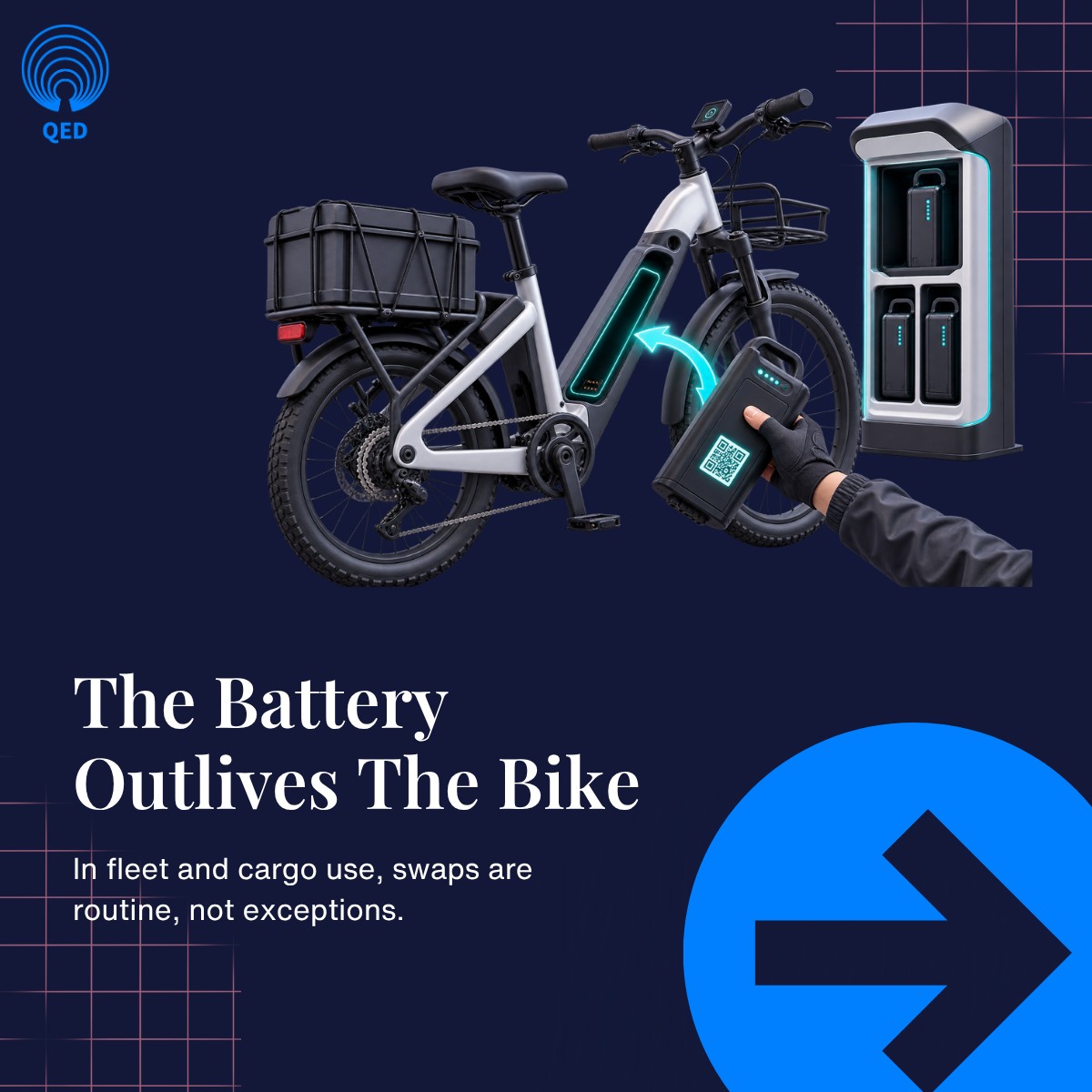
E-bike and cargo bike brands selling into fleet and delivery operations deal with batteries that get swapped, repaired, and replaced far more often than on a personal commuter bike. Every one of those batteries falls inside the same LMT passport requirement as any e-bike, effective 18 February 2027 (Regulation (EU) 2023/1542, Article 77). Fleet and cargo use means the battery outlives any single frame it's mounted to. A passport tied to the bike instead of the battery breaks the moment a pack gets swapped between units, which is a routine event in fleet operation, not an edge case. #BatteryPassport #SupplyChainTrust
- LINKEDIN · CAROUSELSince 9 Sept 2026
Automotive groups that own their own battery cell operation and sell EVs across a dozen brands don't get a simpler passport problem, they get a bigger one. Owning the supply chain internally multiplies the handoff points where data has to transfer cleanly (Regulation (EU) 2023/1542, Article 77). Every brand's passport still has to trace back to the same cell-level data the group's own operation produces. If that internal handoff isn't governed as tightly as an external supplier relationship, the group inherits the same compliance gap it would face from a third party, just harder to see because it's internal. #BatteryPassport #EVSupplyChain
- LINKEDIN · CAROUSELSince 9 Sept 2026
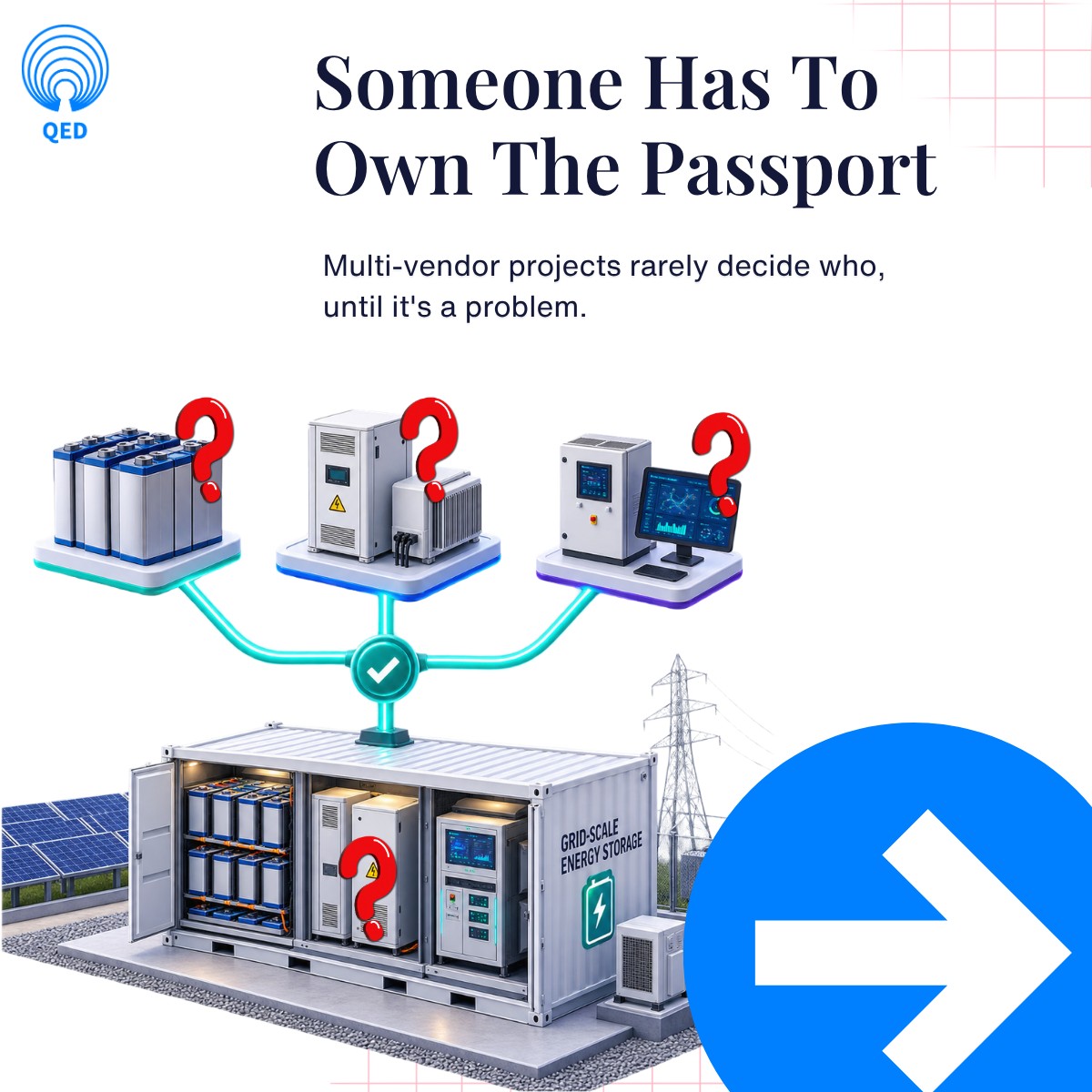
Grid-scale energy storage projects combine cells from one supplier, power electronics from another, and integration work from a third, commissioned as a single system. The battery passport requirement doesn't care how many parties touched the system, it requires one accurate record per battery above 2 kWh from 18 February 2027 (Regulation (EU) 2023/1542, Article 77). On a multi-vendor project, someone has to own that record after commissioning. Most projects haven't formally decided who, which turns a straightforward compliance requirement into a dispute waiting to happen. #BatteryPassport #EnergyStorage
- LINKEDIN · CAROUSELSince 9 Sept 2026
Some battery manufacturers sell both cells to OEM and industrial customers and finished storage systems direct to installers, putting them on both sides of the passport requirement at once. Both product lines fall inside the same February 2027 deadline for batteries above 2 kWh (Regulation (EU) 2023/1542, Article 77). Running two different customer relationships under one compliance deadline means two different data flows have to be production-ready at the same time, not sequenced. #BatteryPassport #DigitalProductPassport
- LINKEDIN · CAROUSELSince 9 Sept 2026
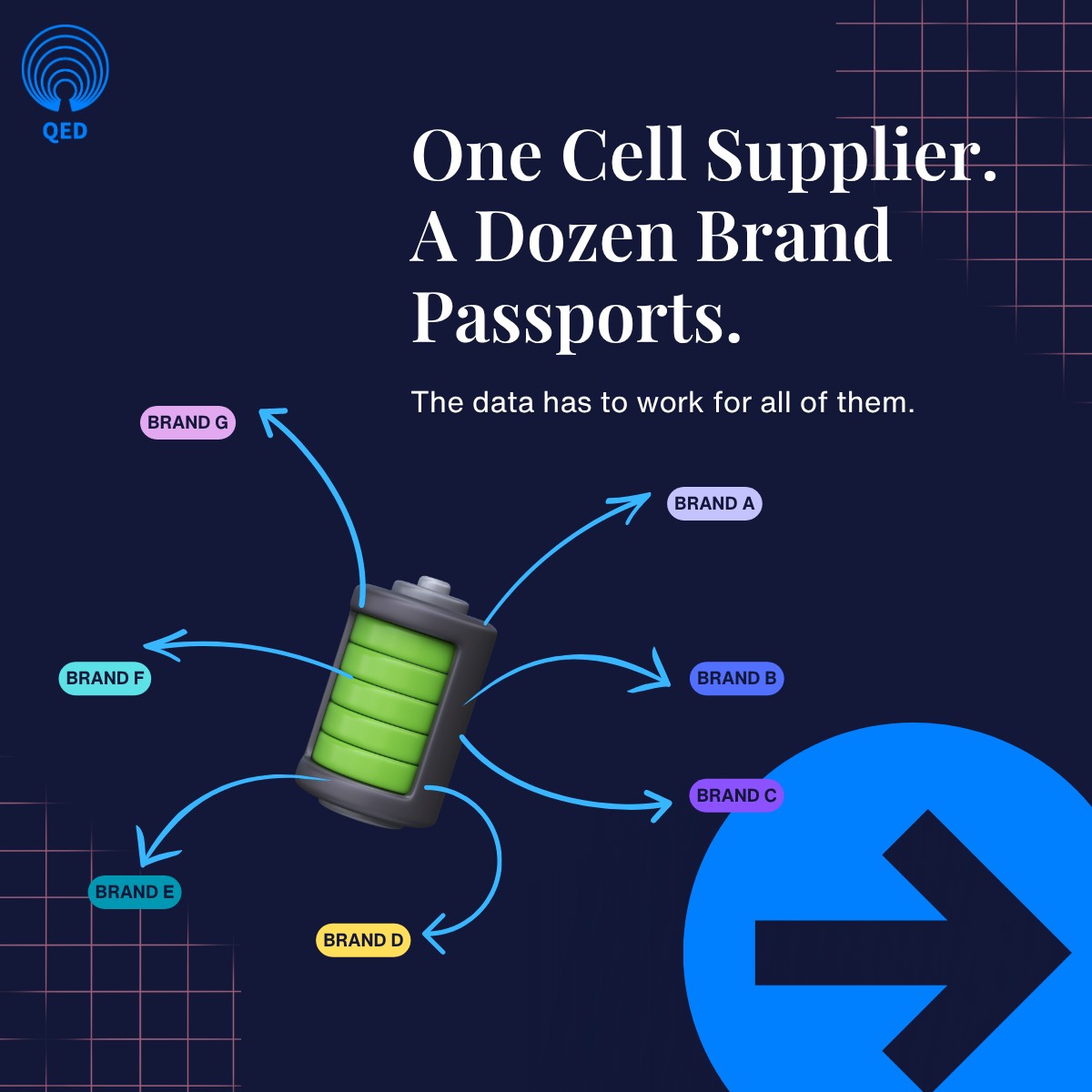
Battery cell producers that supply multiple vehicle brands from one production base sit at the center of a passport problem that isn't theirs alone to solve. Every EV battery above 2 kWh built on those cells needs a digital passport by 18 February 2027, tied to a unique identifier (Regulation (EU) 2023/1542, Article 77). The regulation puts legal responsibility on whoever places the finished battery on the EU market, usually the vehicle brand, not the cell supplier. But that brand can only pass on what the cell producer hands over. A gap in cell-level data becomes a gap in every brand's passport downstream. #BatteryPassport #SupplyChainTrust
- LINKEDIN · IMAGESince 8 Sept 2026
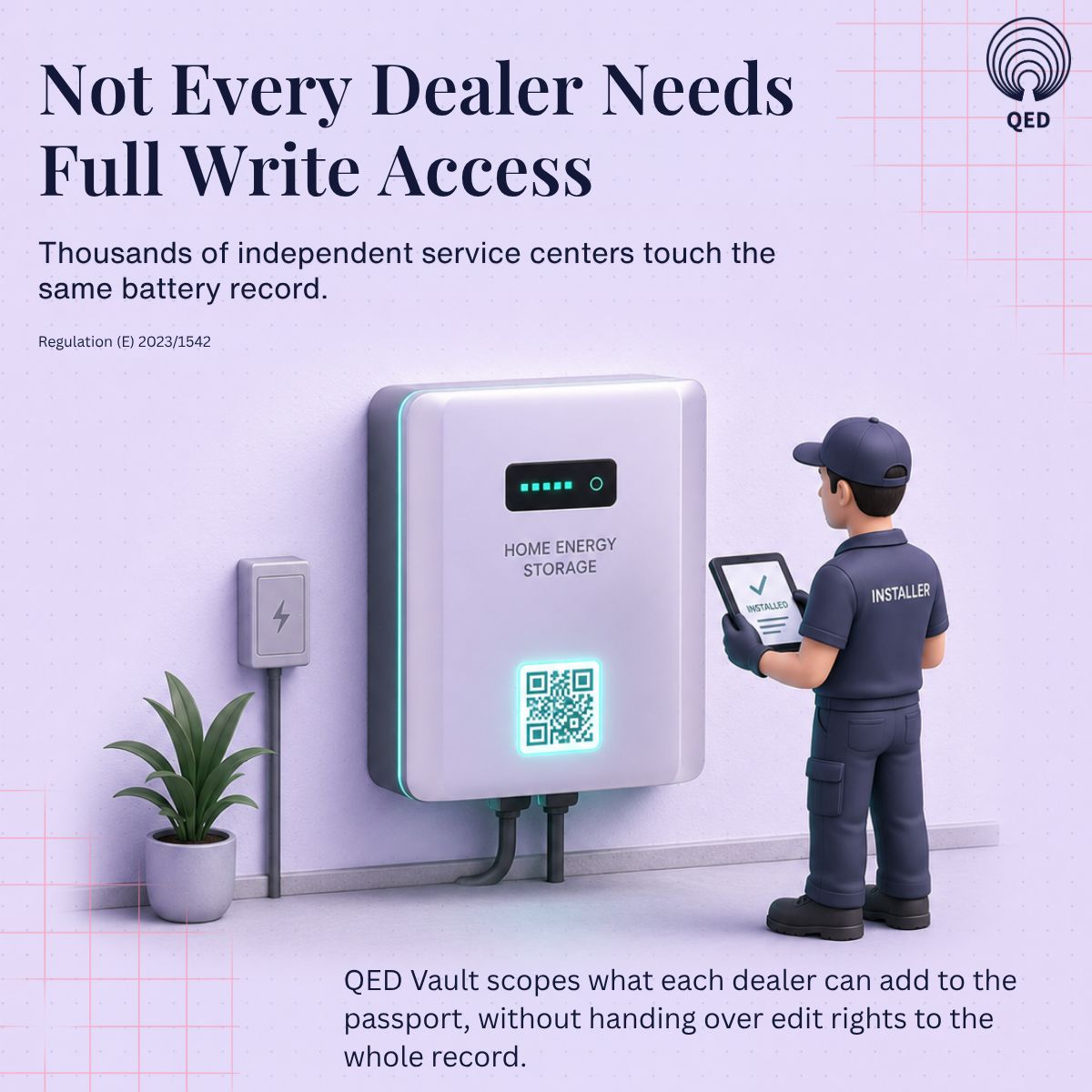
Home battery storage providers sell systems that clear the 2 kWh passport threshold easily, and most of their installed base predates the 18 February 2027 deadline (Regulation (EU) 2023/1542, Article 77). That means a large base of already-installed systems will need a compliant record, not just new units shipping after the deadline. Distributed residential storage creates a different problem than a single factory line: thousands of individual installations, each needing service history and passport data to stay current through installer visits and eventual battery replacement. #BatteryPassport #EnergyStorage


6 of 36 adsSign up to see every QED ad, filter by format and date, and get alerts on new ones.
See all 36 adsWatch the companies you care about.
Filter every ad by industry, country, format and network, and get alerts when a company you watch starts running new ads.