On air · 1 of 3 networks
Project Tempo
- projecttempo.com
- GB
- 16 employees
Project Tempo’s ads on LinkedIn, Meta and Google, recorded by adsrunning. Browse the latest here for free. Sign up free to see all 44. Watch Project Tempo with Starter to get each new one in your feed.
Watchlist with Starter · $49/mo
| Network | Status | Live ads | Nov 2025LinkedIn activity · 52 weeksNov 2026 | Checked | Next step |
|---|---|---|---|---|---|
| Running | 1 | Checked 1 Nov 2026 | See all 44 ads → | ||
| Meta | Not checked | — | |||
| Recently | 4 | Ads on the Google Ads Transparency Center | Checked 7 Oct 2026 | Collect them with the API → |
Project Tempo has 1 live LinkedIn ad. We recorded 4 Google ads on 7 Oct 2026.
Latest ads
- LINKEDIN · VIDEOSince 30 Oct 2026
How do we design better climate policy? Start by being honest about what isn't working. Last month, Luke Shore spoke on the Earth Set podcast about building climate policy that lasts. Project Tempo's research highlights a tension: while a strong majority of voters support climate action, they are sensitive to cost. Britain has made real progress. As the first G7 country to halve its emissions from 1990 levels, it’s shown what’s possible, but it hasn’t got everything right. Some policy experiments have been world-leading; others haven’t delivered. We need to be honest about what works and what doesn't. That means prioritising policies that deliver — and reforming or retiring those that increase costs without reducing emissions. Maintaining public support will depend on that willingness to change course. And on making affordability central to how we design the transition.
- LINKEDIN · VIDEOSince 30 Oct 2026
Europe has some of the most expensive energy in the world. The war in Iran didn't create this problem but it's forced it to the top of the political agenda. Luke Shore recently joined host Amy Rennison on the Earth Set podcast to explain how the cost of living was already the top concern for voters before this war, and how this new energy shock has only made things more urgent. Project Tempo's research shows 68% of Brits support building more wind and 69% support more solar but ask if they'd back renewables even if it doesn't cut their bills, support falls to 17%. The cost of electricity is not only the biggest barrier to electrification, it's the biggest political risk to the energy transition. Listen to the full episode via the link in the comments below ⬇️
- LINKEDIN · VIDEOSince 30 Oct 2026
📊 “Two thirds believe in Climate Change. So why are leaders walking away?” Despite broad support across voting groups for action against climate change, the British right has turned against net zero. Project Tempo data shows that 71% of voters rank the cost of living as one of their top 5 issues, whereas only 22% chose climate change. Last week, Project Tempo’s Managing Director Luke Shore recorded the latest episode of the Earth Set podcast (Episode 3, Series 2) Greenlash: Understanding Climate Change Opposition. Together with Sam Hall from the Conservative Environment Network and Clean Air Task Force’s Alex Carr, the conversation looked at: 📄 Why energy and climate policy is becoming more polarised 🏗️ How affordability is shaping public consent for the transition ✅ What policymakers can do to reduce both prices and emissions Thank you to Earth Set for the opportunity to explore Project Tempo’s latest data, and to Amy Rennison and Fiona Howarth for hosting the discussion.
- LINKEDIN · IMAGESince 22 Oct 2026
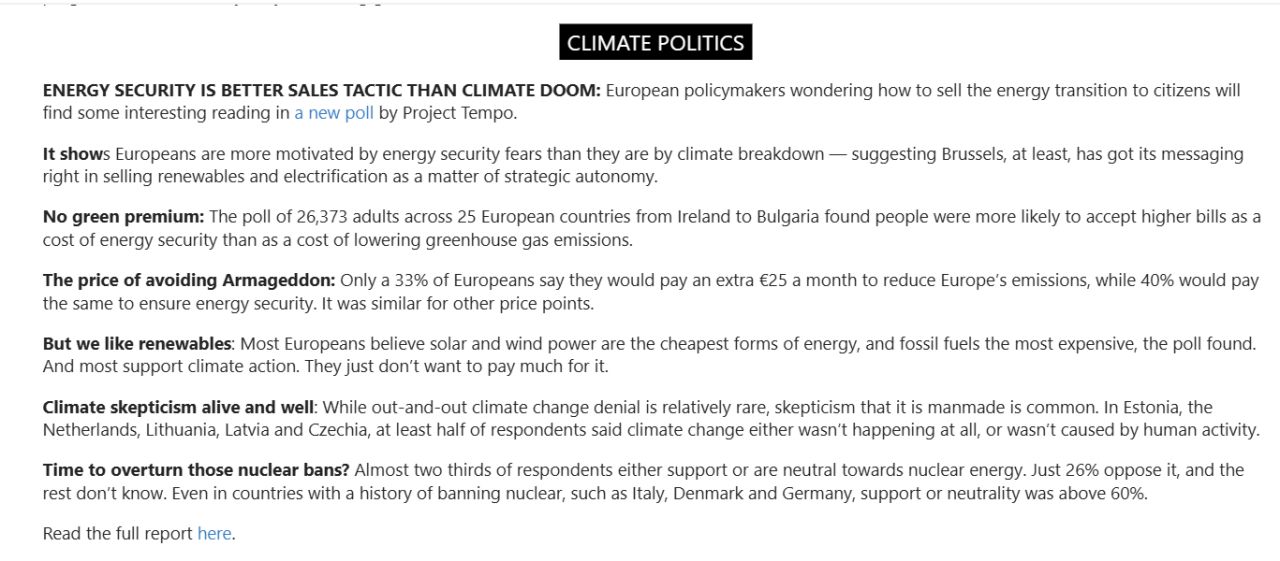
Thanks to POLITICO Europe for covering our EuroPulse findings in Morning Energy & Climate. Their read: energy security sells the transition better than climate warnings. Our data backs that up. At €25 a month, 40% of Europeans would pay to strengthen energy security, against 33% willing to pay to cut carbon emissions. More people would pay a “security premium” than a “green premium” at every price we tested. But framing alone won’t hold public support for the energy transition. Only 27% of Europeans expect the savings from cheaper clean power to reach households. In a time when many are struggling with a cost of living crisis, the transition will be judged on whether citizens' bills actually come down. Read the full report: https://lnkd.in/dBWSGsSv
- LINKEDIN · IMAGESince 22 Oct 2026
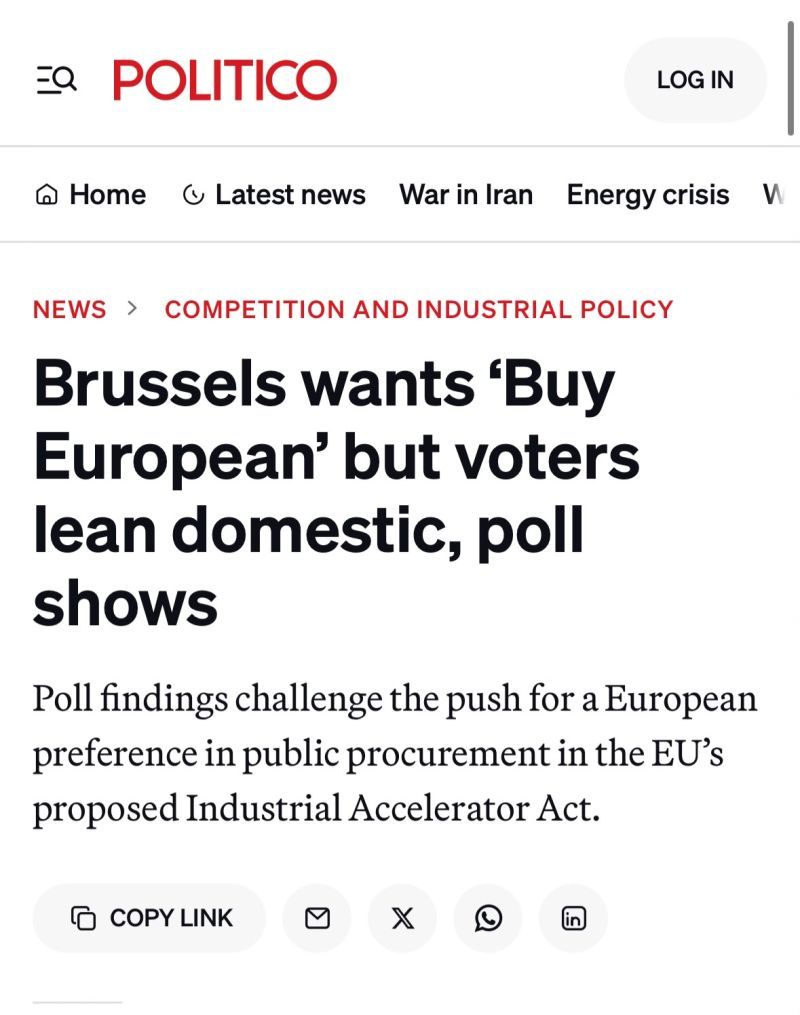
Our Managing Director Luke Shore yesterday was quoted in POLITICO Europe on what voters actually make of "Buy European" policies. The EU is debating the Industrial Accelerator Act (#IAA), meant to rebuild European industry and hold its own against China. Backing home-grown industry sounds like an easy sell. Our #EuroPulse survey of more than 26,000 voters across 25 countries found two catches. First, the instinct is national before it's European. In 23 of 25 countries, people prefer "buy domestic" procurement rules over "buy European" ones. They want the benefit to land closer to home. Second, voters' support is conditional on cost. As Luke Shore told POLITICO: "Faced with a cost-of-living crisis, voters back protectionist policies — but only if they don't raise prices." Support for tariffs on Chinese tech dropped to 35% once people were told prices might rise. The appetite to back European industry is real. It's just national before it's European, and it thins out the moment it could negatively impact household bills. See the full write-up by Aude van den Hove here: https://lnkd.in/e-_RNRMT
- LINKEDIN · IMAGESince 22 Oct 2026
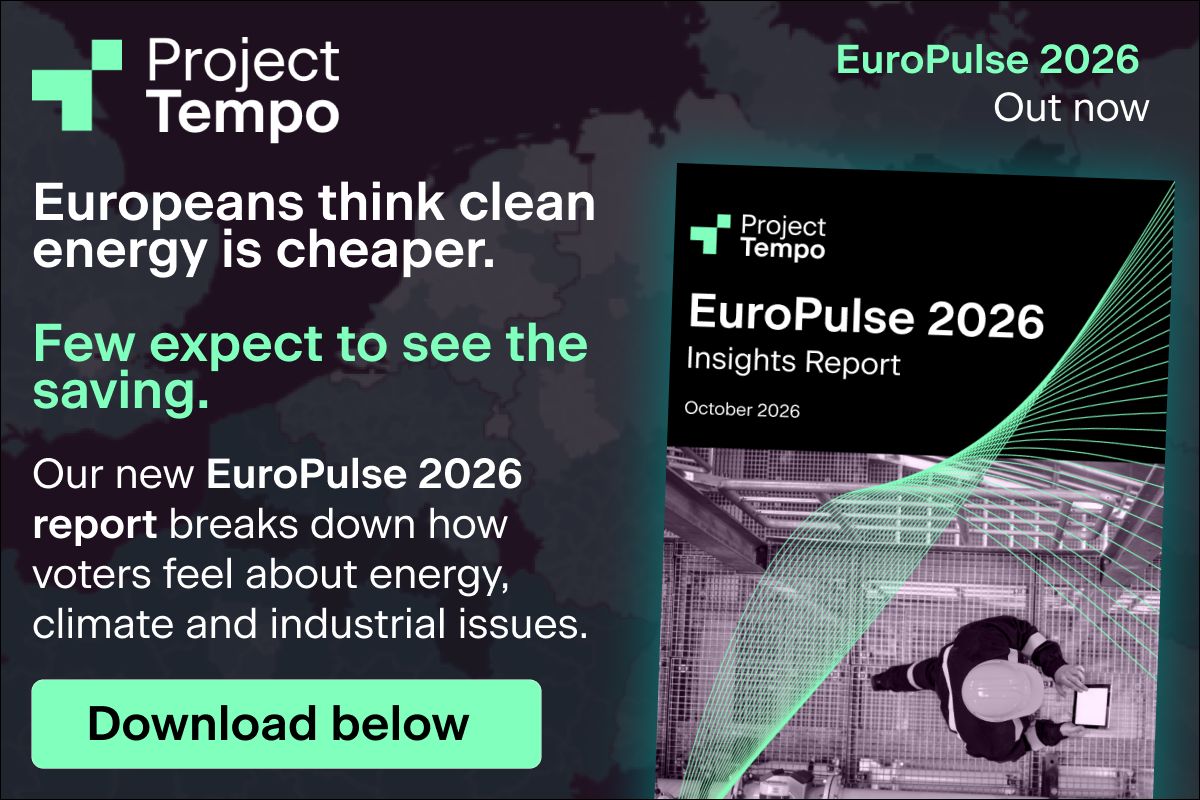
Europeans think clean energy is cheaper. Few expect to see the saving. Just 27% expect the energy transition to reduce costs for households. EuroPulse asked adults in 25 European countries what they want from the energy transition. Read the full report below.
6 of 44 adsSign up to see every Project Tempo ad, filter by format and date, and get alerts on new ones.
See all 44 adsWatch the companies you care about.
Filter every ad by industry, country, format and network, and get alerts when a company you watch starts running new ads.