On air · 1 of 3 networks
Probabl
- probabl.ai
- FR
- 57 employees
Probabl’s ads on LinkedIn, Meta and Google, recorded by adsrunning. Browse the latest here for free. Sign up free to see all 187. Watch Probabl with Starter to get each new one in your feed.
Watchlist with Starter · $49/mo
| Network | Status | Live ads | Nov 2025LinkedIn activity · 52 weeksOct 2026 | Checked | Next step |
|---|---|---|---|---|---|
| Running | 9 | Checked 29 Oct 2026 | See all 187 ads → | ||
| Meta | Not checked | — | |||
| Recently | 61 | Ads on the Google Ads Transparency Center | Checked 7 Oct 2026 | Collect them with the API → |
Probabl has 9 live LinkedIn ads. We recorded 61 Google ads on 7 Oct 2026.
Latest ads
- LINKEDIN · IMAGESince 27 Oct 2026
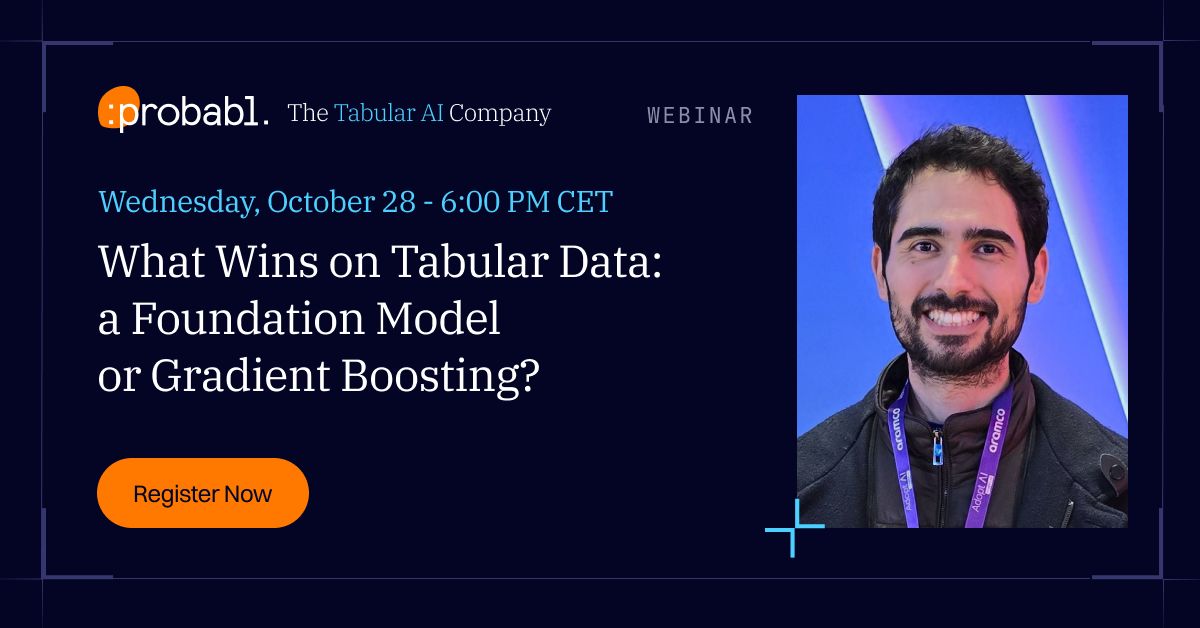
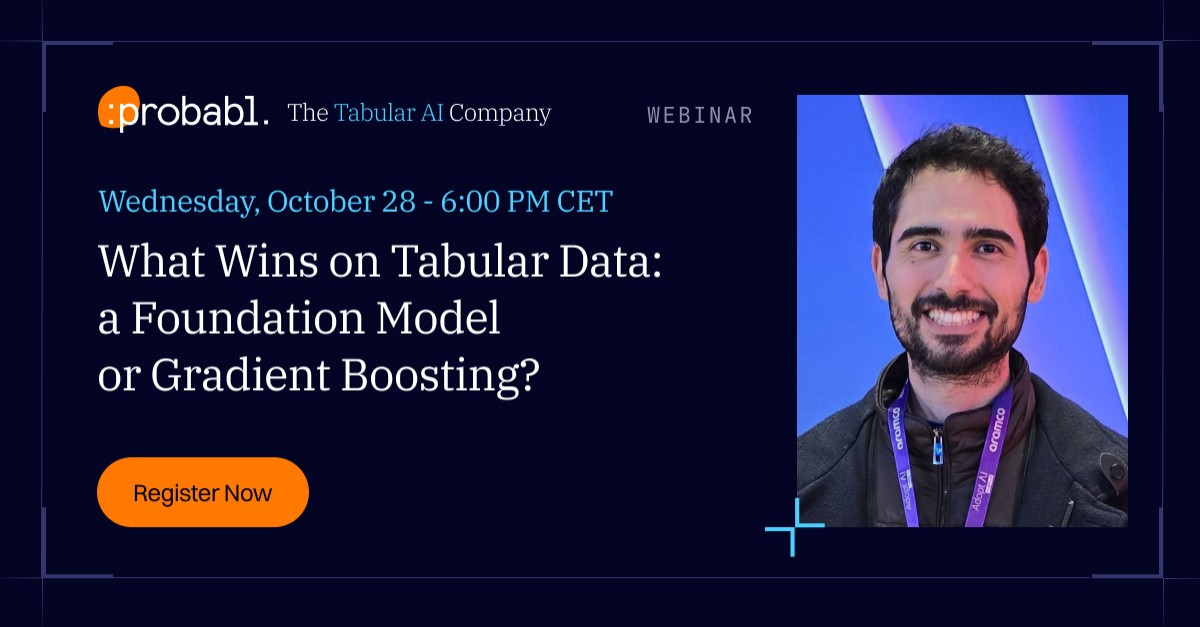
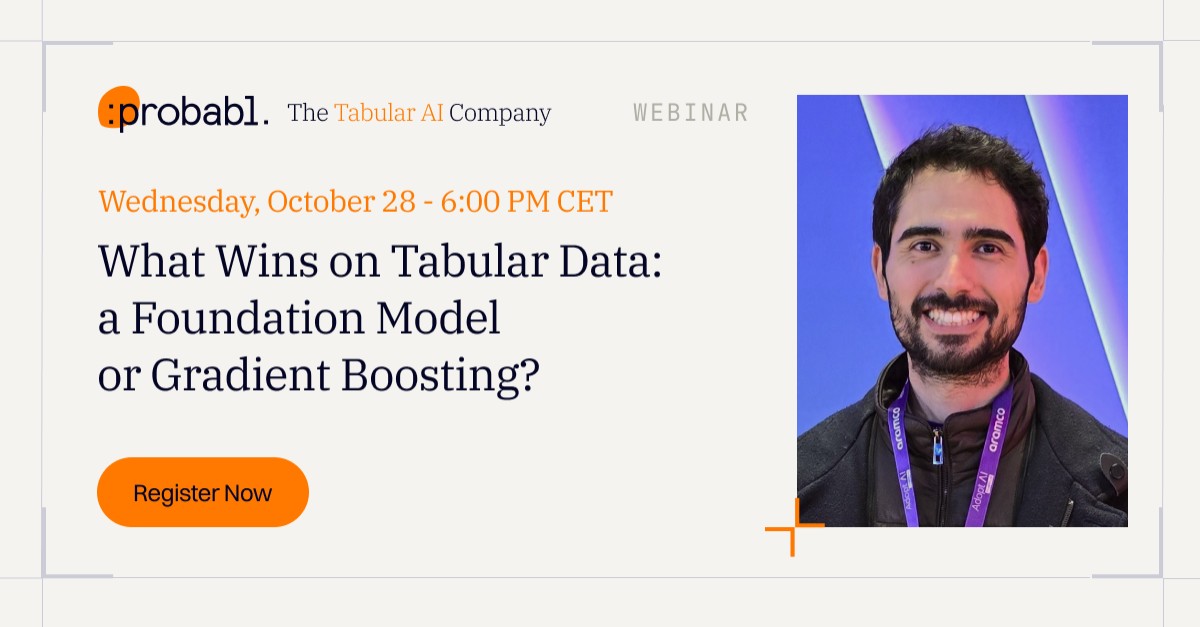
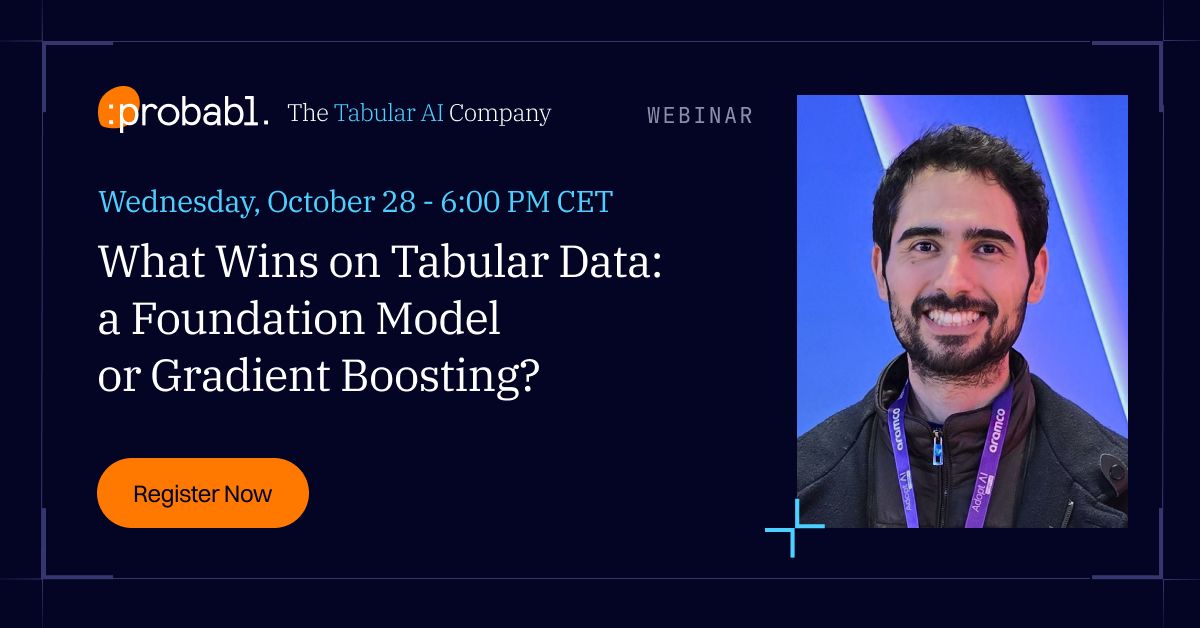
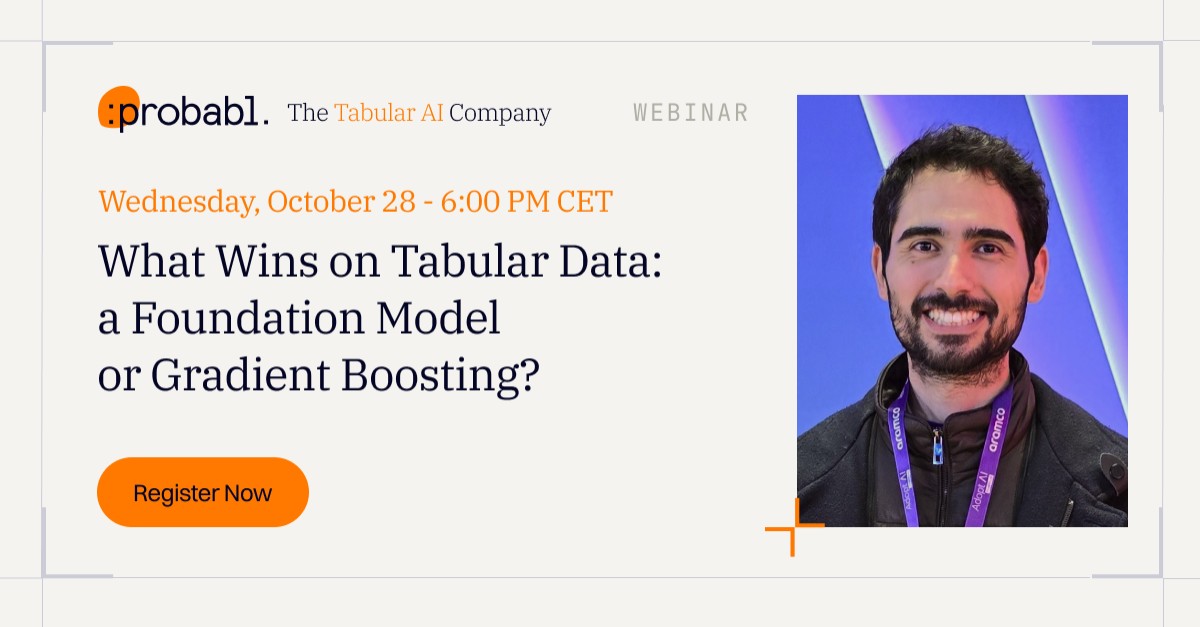
📣 Tomorrow TabICL vs gradient boosting, head to head. When does a tabular foundation model with zero training on your data beat gradient-boosting you’ve tuned for days? David Arturo Amor Quiroz, our co-founder and one of scikit-learn's core developers runs the benchmark live and shows how dataset size, compute budget and whether you act on probabilities or only rank them changes the answer Spoiler alert 👀. It’s not always the same one that wins. 📅 Wed Oct 28, 6:00 PM CET / 1:00 PM EDT Free, 45 min + 15 min live Q&A Register here: https://lnkd.in/eFdpKfch
- LINKEDIN · IMAGESince 24 Oct 2026
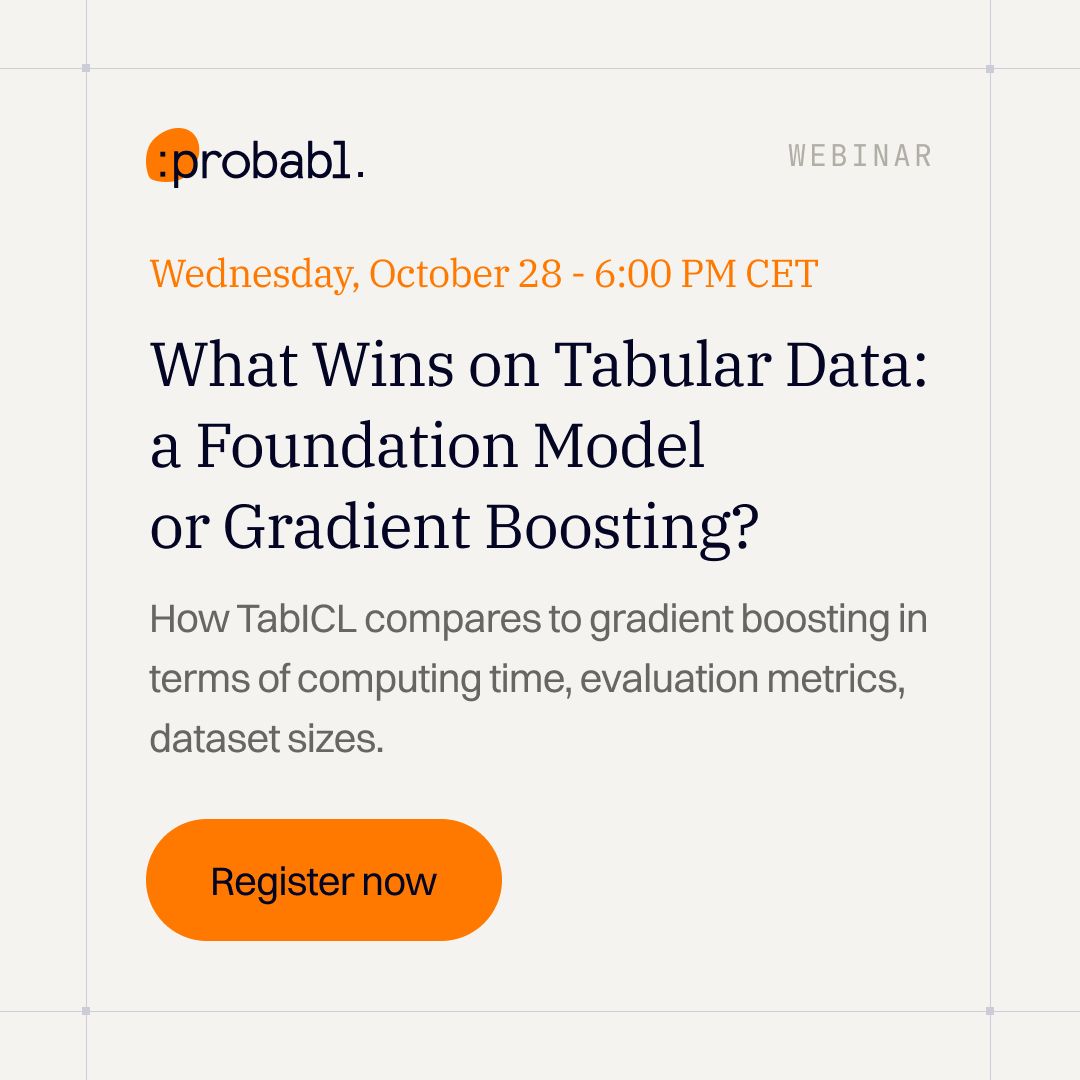
What wins on tabular data: a foundation model or gradient boosting? Gradient boosted trees have been the default for tabular data for a decade, and every new table means fitting a new model from scratch. Tabular foundation models work differently: one model, pretrained once, that generalizes to tables it has never seen. On Wednesday, October 28, Arturo Amor (co-founder at Probabl, scikit-learn core developer) benchmarks TabICL, an open source tabular foundation model with downloadable weights and public pretraining code, against gradient boosting on bike demand and fraud detection. What we'll cover: - Foundations: what makes a model a foundation model, and in-context learning - How TabICL is pretrained on synthetic tables - Live benchmarks: compute time, metrics, dataset size, prediction intervals, calibration You'll leave knowing whether to try TabICL on your own data, and why. 📅 Wednesday, October 28, 6:00 PM CET / 1:00 PM EDT Free, 45 min + 15 min live Q&A
- LINKEDIN · IMAGESince 23 Oct 2026
A model pretrained only on synthetic tables, then asked to predict on your real data. It sounds backwards. It has a neat consequence: it can't have memorized your dataset. Whether it beats gradient boosting depends on how much data you have. Arturo walks through the benchmarks on October 28 if you want the details. Register here: https://lnkd.in/e5Y68Jzm
- LINKEDIN · IMAGESince 22 Oct 2026
When I discovered Tabular Foundation Models, TFMs, I was astonished: how could this actually work?! Those models are fitted once and for all, and can be applied to any dataset. Magic does not exist though: you still have to provide a "training" dataset. One of these TFM is TabICL, the fully open tabular foundation model. No outside service required. Is it better than gradient boosting, and "tailored" learning? It depends, which is exactly why we're benchmarking it in public on bike demand and fraud detection datasets, with David Arturo Amor Quiroz, on October 28. If you choose how your team builds models on tabular data, this is worth the 45 minutes. 🗓️ Wed Oct 28, 6:00 PM CET / 1:00 PM EDT 💰 Free, with live Q&A 👉 Register: https://lnkd.in/e_i5QbcV
- LINKEDIN · IMAGESince 20 Oct 2026
For ten years, the answer to "which model for our tabular data?" has been gradient boosting. Now there is a credible alternative: tabular foundation models, pretrained once and applied to your table without training. The useful question for a team lead isn't "is it hype?" but "where does it pay off for us?" On October 28, David Arturo Amor Quiroz from our team benchmarks TabICL against gradient-boosted trees on two real use cases: bike demand and fraud detection. He covers what drives the answer: dataset size, compute at prediction time, and whether you act on probabilities or only rank by them. If you decide how your team models tabular data, this is worth 45 minutes. Wed Oct 28, 6:00 PM CET / 1:00 PM EDT Free, with live Q&A Register: https://lnkd.in/eFFQ2rty
- LINKEDIN · IMAGESince 19 Oct 2026
For a decade, the default for tabular data has been gradient boosting. Every new table means fitting a new model from scratch and running another hyperparameter search. Tabular foundation models do it differently. One model, pretrained once on millions of synthetic tables, reads your rows at prediction time. Nothing to tune. So what wins? Neither always does, and dataset size changes a lot. On October 28, I'll benchmark TabICL against gradient boosting on bike demand and fraud detection, and show where TFMs are surprisingly good: knowing what they don't know, with prediction intervals and calibrated probabilities. If you're comfortable with scikit-learn, you'll leave knowing whether it's worth trying on your own data. 📅 Wed Oct 28, 6:00 PM CET / 1:00 PM EDT 🎟 Free, 45 min + Q&A 👉 Register: https://lnkd.in/e9EUZBg2
6 of 187 adsSign up to see every Probabl ad, filter by format and date, and get alerts on new ones.
See all 187 adsWatch the companies you care about.
Filter every ad by industry, country, format and network, and get alerts when a company you watch starts running new ads.