On air · 2 of 3 networks
Power Factors
- powerfactors.com
- US
- 612 employees
Power Factors’s ads on LinkedIn, Meta and Google, recorded by adsrunning. Browse the latest here for free. Sign up free to see all 222. Watch Power Factors with Starter to get each new one in your feed.
Watchlist with Starter · $49/mo
| Network | Status | Live ads | Nov 2025LinkedIn activity · 52 weeksOct 2026 | Checked | Next step |
|---|---|---|---|---|---|
| Running | 51 | Checked 29 Oct 2026 | See all 222 ads → | ||
| Meta | Not checked | — | |||
| Running | 4 | Ads on the Google Ads Transparency Center | Checked 30 Oct 2026 | Collect them with the API → |
Power Factors has 51 live LinkedIn ads. We recorded 4 Google ads on 30 Oct 2026.
Latest ads
- LINKEDIN · IMAGESince 21 Oct 2026
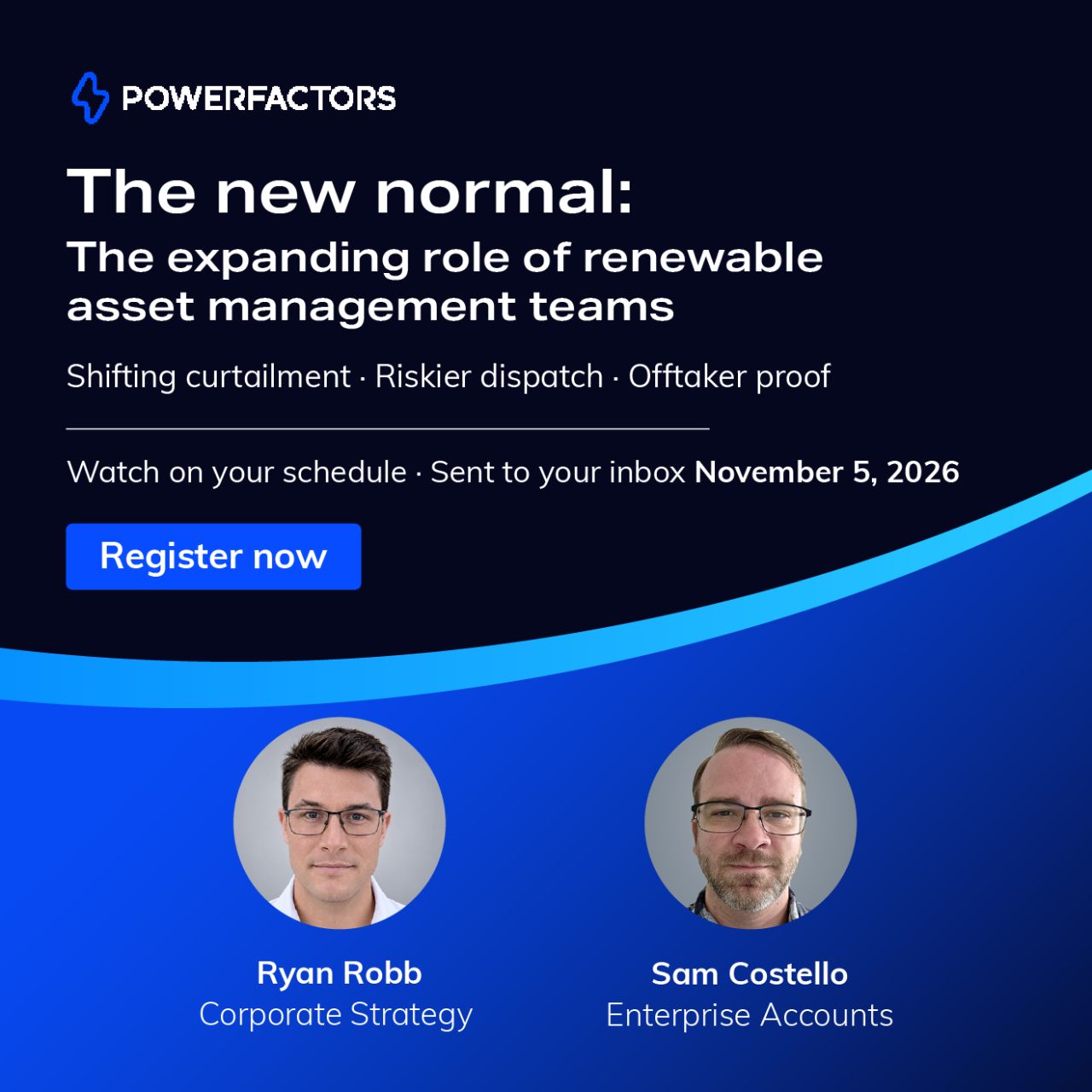
Renewable asset management teams aren't just managing assets anymore. They're increasingly being asked to own commercial and financial outcomes too, from understanding the impact of curtailment to supporting battery revenue optimization and demonstrating performance to offtakers. In 2027, that job gets more complicated. Curtailment patterns are shifting, capacity markets are changing the economics of battery dispatch, and major buyers of renewable energy are raising expectations around proof of delivery. In a new on-demand webinar, The New Normal: The Expanding Role of Renewable Asset Management Teams, Power Factors' Ryan R., Corporate Strategy, and Sam Costello, Enterprise Accounts, break down what these changes mean for asset management teams and how organizations can prepare for what's ahead. They'll cover: ➡️ How data-center growth and renewable expansion are reshaping curtailment in the U.S. and Europe ➡️ How shifting market rules and capacity prices are changing battery dispatch and revenue strategy ➡️ Why offtakers are moving toward hour-by-hour proof of delivery ➡️ Where commercial and financial work is outgrowing team capacity 📅 Early-access recording released November 5, 2026
- LINKEDIN · IMAGESince 21 Oct 2026
The renewable asset manager’s job looks very different from what it did just a few years ago. Technical performance is still fundamental. But today’s teams are also being asked to take on more commercial and financial responsibility, often across larger portfolios without larger teams. If you’re heading to hashtag#REPlus26 in Las Vegas, come talk to us about what this expanding role means for the systems and tools asset management teams rely on. The Power Factors team will be showcasing the Unity Renewable Energy Management Suite and how it brings technical, commercial, and financial insights together to help lean teams reduce manual work and focus their expertise where it matters most. 📅 Schedule time with our team at RE+ to see Unity in action. See you in Las Vegas! 👋
- LINKEDIN · IMAGESince 25 Sept 2026
How do you design a black-start microgrid system when the load you need to restart is unknown? By engineering for the worst case, not the average one. We're proud to share our latest success story, where Power Factors delivers black-start microgrid control for a remote North American community where no two restarts draw the same load. For this project, the utility needed a system that could black-start the local grid from a fully de-energized state and keep it running until utility power returns. Power Factors implemented its 𝗣𝗼𝘄𝗲𝗿 𝗣𝗹𝗮𝗻𝘁 𝗖𝗼𝗻𝘁𝗿𝗼𝗹𝗹𝗲𝗿 (𝗣𝗣𝗖), paired with 𝗨𝗻𝗶𝘁𝘆 𝗦𝗖𝗔𝗗𝗔, to restore roughly 100 homes and essential community services, including its school and health center, all from a single battery-led restart. Our solution provides: 🔷 𝗪𝗼𝗿𝘀𝘁-𝗰𝗮𝘀𝗲 𝗹𝗼𝗮𝗱 𝗺𝗼𝗱𝗲𝗹𝗶𝗻𝗴, sizing the system to the most demanding possible restart, not a typical one 🔷 𝗚𝗿𝗶𝗱-𝗳𝗼𝗿𝗺𝗶𝗻𝗴 𝗯𝗹𝗮𝗰𝗸 𝘀𝘁𝗮𝗿𝘁, re-energizing the community from a fully de-energized grid with no outside support 🔷 𝗗𝘂𝗮𝗹-𝗻𝗼𝗱𝗲 𝗿𝗲𝗱𝘂𝗻𝗱𝗮𝗻𝘁 𝗰𝗼𝗻𝘁𝗿𝗼𝗹𝗹𝗲𝗿𝘀, so no single hardware fault can take down the community's only path back to power 🔷 𝗔𝘂𝘁𝗼𝗺𝗮𝘁𝗶𝗰 𝗿𝗲𝘀𝘆𝗻𝗰𝗵𝗿𝗼𝗻𝗶𝘇𝗮𝘁𝗶𝗼𝗻, reconnecting to the utility grid once power returns, with no manual restart step required It's a strong example of Power Factors' ability to deliver black-start-ready control for any project, from utility-scale plants to hard-to-reach communities. Read the full success story.
- LINKEDIN · IMAGESince 24 Sept 2026
Your leadership team is looking at different numbers from different groups, and you don't know which ones to trust," says Chad Nelson, Senior Director of Digital Technology at Origis Energy. That's the problem Origis reached out to Power Factors to solve. As one of the leading U.S. developers and operators of utility-scale solar and storage, every plant in its roughly 5 GW fleet is held to a demanding bar: 𝟵𝟴% 𝗼𝗳 𝗲𝘅𝗽𝗲𝗰𝘁𝗲𝗱 𝗲𝗻𝗲𝗿𝗴𝘆 or higher. And with a development pipeline north of 20 GW, maintaining that standard will only get harder. Getting there meant moving beyond disconnected point solutions and putting every team, from the control room to the boardroom, on the same trusted numbers. That's what Unity Asset Performance Management does. It pulls SCADA, inverter, and BESS data into a single model, then flags losses, curtailment, and DC-side issues before a plant underperforms its target. We're grateful to the whole Origis team for the partnership and for trusting us with something this important.
- LINKEDIN · IMAGESince 18 Aug 2026
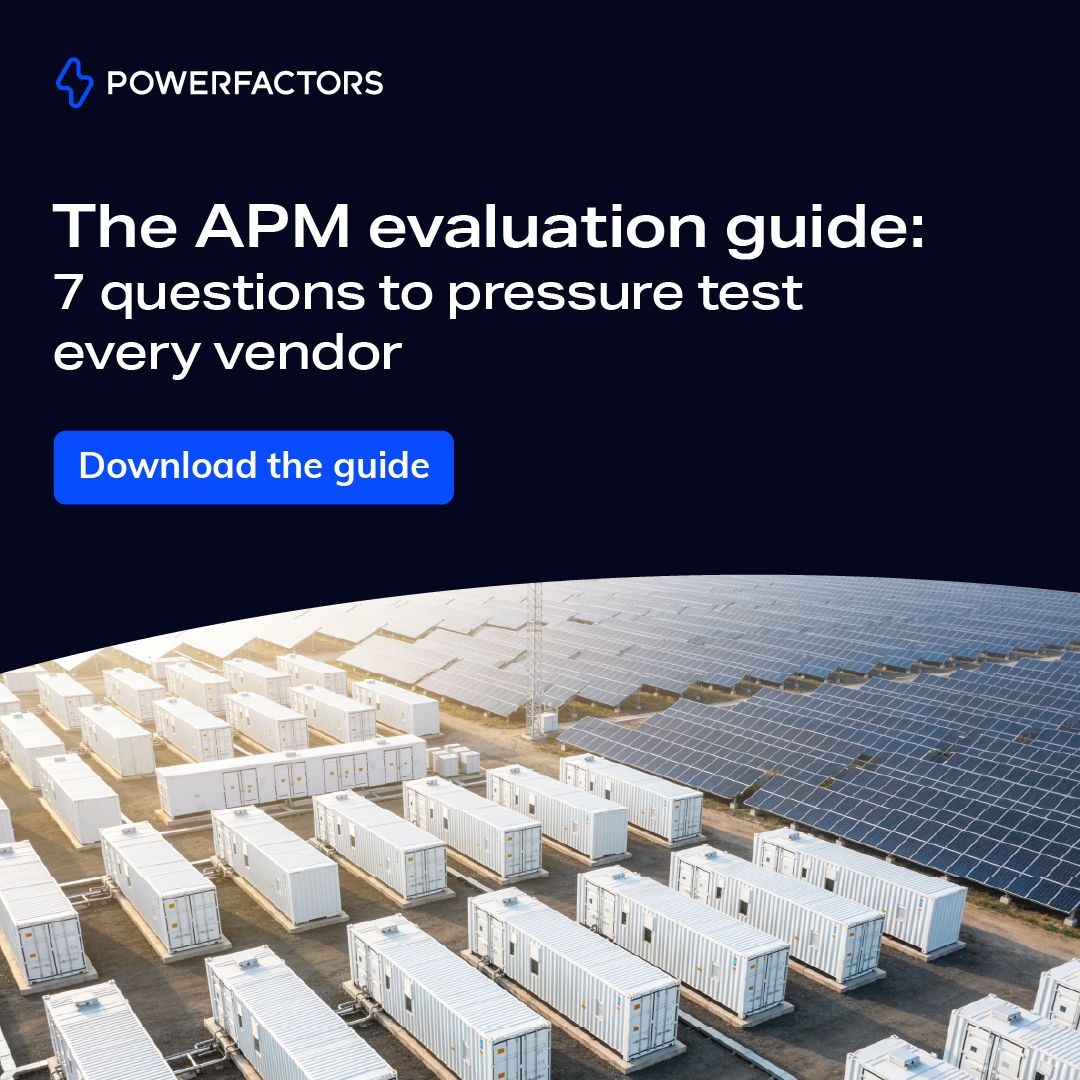
Dashboards and feature lists are easy to demo, but they're rarely what determines whether a renewable energy Asset Performance Management (APM) implementation actually succeeds. Vendor presentations can tell you a lot. They just don't tell you everything. So, before you sit through another demo, know which questions will get you past the sales pitch and into the specifics that matter. Things like: 🔷 If we bring on a new asset type tomorrow, what does integration actually cost us in time and money? 🔷 What alert logic do you have specifically for storage assets, and how is it different from what you use for wind or solar? 🔷 Once the implementation is complete and your account is handed to day-to-day support, what does that actually look like? We put together a guide with the 𝟳 𝗾𝘂𝗲𝘀𝘁𝗶𝗼𝗻𝘀 𝘄𝗼𝗿𝘁𝗵 𝗮𝘀𝗸𝗶𝗻𝗴 𝗲𝘃𝗲𝗿𝘆 𝗔𝗣𝗠 𝘃𝗲𝗻𝗱𝗼𝗿 (including us!) before you commit, plus a printable worksheet to bring into your next demo so you can score vendors against the same criteria. 𝗗𝗼𝘄𝗻𝗹𝗼𝗮𝗱 𝘁𝗵𝗲 𝗴𝘂𝗶𝗱𝗲 𝗮𝗻𝗱 𝘄𝗼𝗿𝗸𝘀𝗵𝗲𝗲𝘁.
- LINKEDIN · IMAGESince 17 Aug 2026
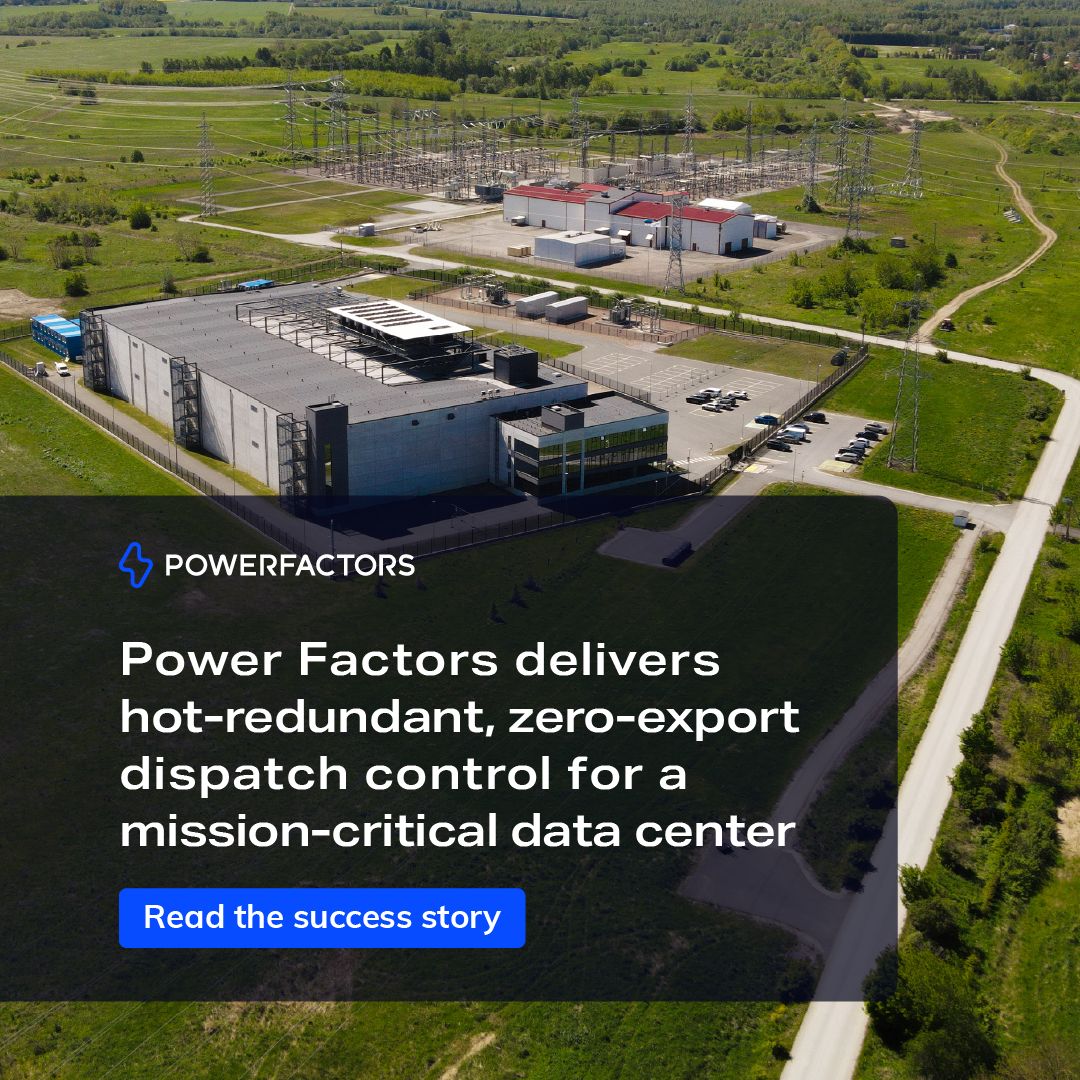
Behind-the-meter microgrids are fairly common nowadays. But building one for a mission-critical facility that can never lose power, with no grid export allowed, is an entirely different challenge. We're proud to share our latest success story from the U.S. Midwest, where Power Factors delivered hot-redundant battery dispatch for a mission-critical data center. To succeed, the operator needed zero room for error, operating under strict no-export rules. Our solution delivered: 🔷 𝗛𝗼𝘁-𝗿𝗲𝗱𝘂𝗻𝗱𝗮𝗻𝘁 𝗿𝗲𝗮𝗹-𝘁𝗶𝗺𝗲 𝗱𝗶𝘀𝗽𝗮𝘁𝗰𝗵 across the site's battery storage system 🔷 𝗭𝗲𝗿𝗼-𝗲𝘅𝗽𝗼𝗿𝘁 𝗰𝗼𝗼𝗿𝗱𝗶𝗻𝗮𝘁𝗶𝗼𝗻 with the site's broader control layer as solar and diesel output shifted 🔷 𝗚𝗿𝗶𝗱-𝗳𝗼𝗿𝗺𝗶𝗻𝗴 𝗯𝗹𝗮𝗰𝗸 𝘀𝘁𝗮𝗿𝘁, re-energizing the site from a fully de-energized state with no support from the grid 🔷 𝗙𝘂𝗹𝗹𝘆 𝗿𝗲𝗱𝘂𝗻𝗱𝗮𝗻𝘁 𝗻𝗲𝘁𝘄𝗼𝗿𝗸 𝗮𝗿𝗰𝗵𝗶𝘁𝗲𝗰𝘁𝘂𝗿𝗲 built to match the facility's uptime requirements This project is a strong example of how Power Factors adapts utility-scale dispatch control to the always-on reliability standards data centers need to power everyday digital commerce. Read the full success story.



6 of 222 adsSign up to see every Power Factors ad, filter by format and date, and get alerts on new ones.
See all 222 adsWatch the companies you care about.
Filter every ad by industry, country, format and network, and get alerts when a company you watch starts running new ads.