On air · 1 of 3 networks
Pleiger Laseroptik
- pleiger-laseroptik.de
- DE
- 4 employees
Pleiger Laseroptik’s ads on LinkedIn, Meta and Google, recorded by adsrunning. Browse the latest here for free. Sign up free to see all 72. Watch Pleiger Laseroptik with Starter to get each new one in your feed.
Watchlist with Starter · $49/mo
| Network | Status | Live ads | Nov 2025LinkedIn activity · 52 weeksOct 2026 | Checked | Next step |
|---|---|---|---|---|---|
| Running | 1 | Checked 31 Oct 2026 | See all 72 ads → | ||
| Meta | Not checked | — | |||
| None recorded | 0 | No ads found on the Google Ads Transparency Center | Checked 19 Oct 2026 | Collect them with the API → |
Pleiger Laseroptik has 1 live LinkedIn ad. We recorded no Google ads on 19 Oct 2026.
Latest ads
- LINKEDIN · IMAGESince 29 Oct 2026
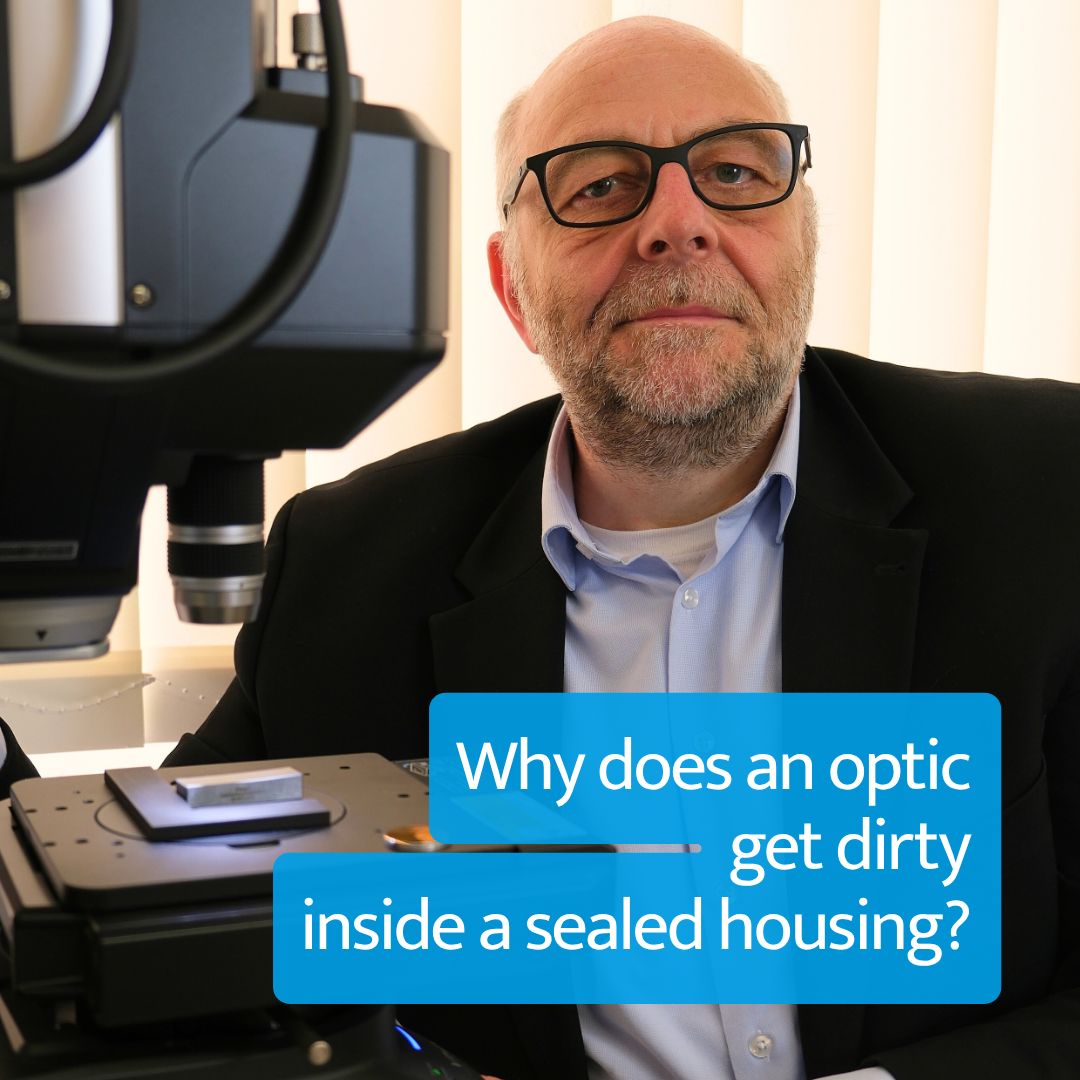
The housing is sealed, assembly took place under cleanroom conditions, and yet the optic shows a haze during inspection, and only where the beam hits it. 🙄 From experience, we can tell you: The dirt usually comes from inside, and it has a part number. Adhesives, potting compounds, seals and even the optics themselves give off substances, even when the laser is switched off. On top of that, there's water vapour from the components. Under laser radiation, these vapours react, and the reaction products settle preferentially where the beam hits the surface. In experiments, even small amounts of organic contamination have lowered the damage threshold of highly reflective mirrors, and deposits just a few nanometres thick have measurably shortened their service life. Staying well below the damage threshold only helps to a limited extent, because the film builds up pulse by pulse. 🤷🏼♀️ That's why the choice of materials inside the housing is part of the optical design. 💡 If you select adhesives and potting compounds by their outgassing values, meaning TML and CVCM, you deal with the problem before it shows up as a film on the mirror.
- LINKEDIN · IMAGESince 20 Oct 2026
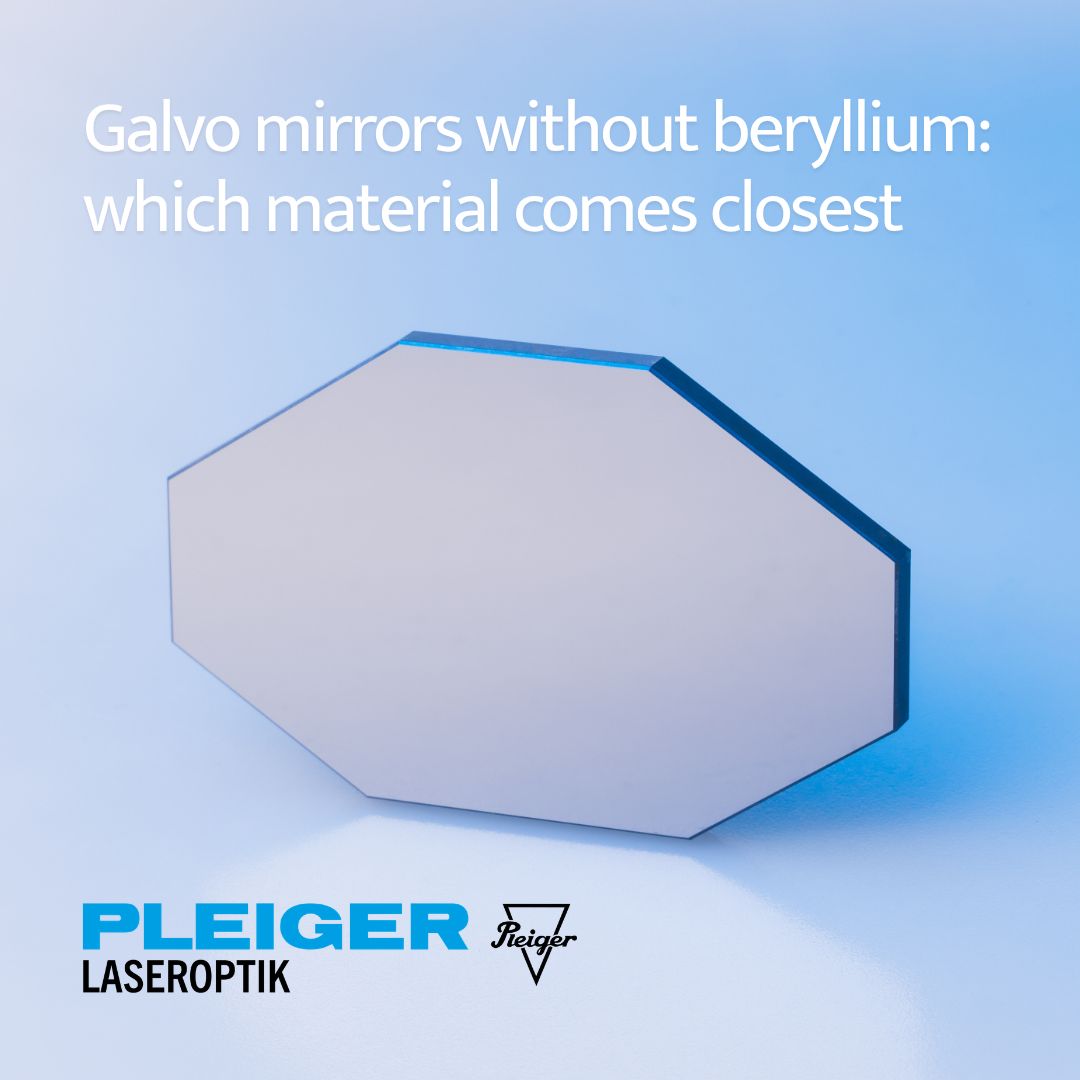
The new scan head needs to get faster, and in the design review someone suggests silicon for the galvo mirrors because of the weight. 🤔 But weight is only part of the equation. ☝️ With every rapid deflection, the mirror bends under its own inertia, and how much it bends depends on the ratio of density to Young's modulus. That's why materials are compared here by specific stiffness, meaning Young's modulus divided by density. 🔸 Beryllium comes in at around 160 GPa·cm³/g, 🔸 silicon carbide at around 133 and 🔸 silicon at around 64. So with the same shape and motion, a silicon mirror bends roughly twice as much as one made of SiC. Beryllium wins this comparison on paper, but in the workshop it's less popular because of the health risks and the cost. That's why the industry has been looking for a replacement for years, and SiC is the obvious candidate. It doesn't come for free, though. 🙂↔️ At 3.16 g/cm³, SiC is denser than silicon at 2.33, so a mirror of the same size ends up heavier, and it takes more effort to grind and polish. Whether the switch pays off therefore depends on what limits your scanner first: the deformation of the mirror or the inertia at the drive.
- LINKEDIN · IMAGESince 14 Oct 2026
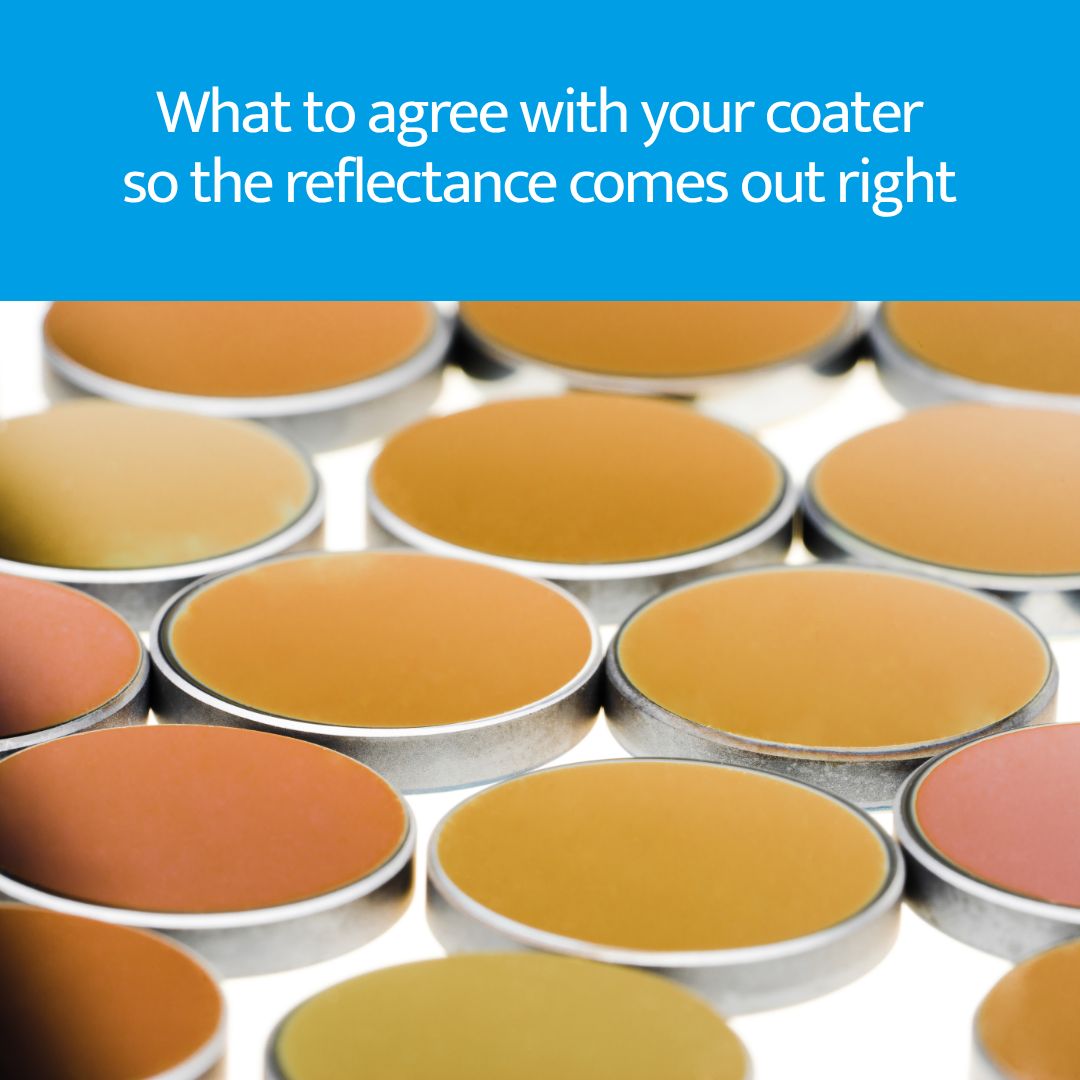
You polished the substrates yourself, the samples are back from the coater, and now your measurement setup shows a few tenths of a per cent less reflectance than the datasheet says. 🤨 Understandable that the complaint gets written faster than the measurement report, since the prototype is waiting. And sometimes it really is the coating. A second look is worth it, though, because a datasheet value like that was measured on one particular surface. 💠 A thin coating takes on the roughness and microstructure of the substrate, and whatever scatters there is missing from the reflectance, however good the coating is. 💠 Then there's the position on the coating dome. An inclined surface sees the evaporation source at a different angle than a flat one, so the coating grows differently there. That's why every reflectance figure should state whether it applies to flat or polygon geometry. 💠 Or your measurement setup uses a different angle of incidence, wavelength or polarisation than the one at the coater. Then both sides are right in the end and still spend an hour on the phone. 💡 If you send the surface specification along and agree on the measurement conditions beforehand, you and the coater end up talking about the same number, and the complaint stays in your drafts folder.
- LINKEDIN · IMAGESince 8 Oct 2026
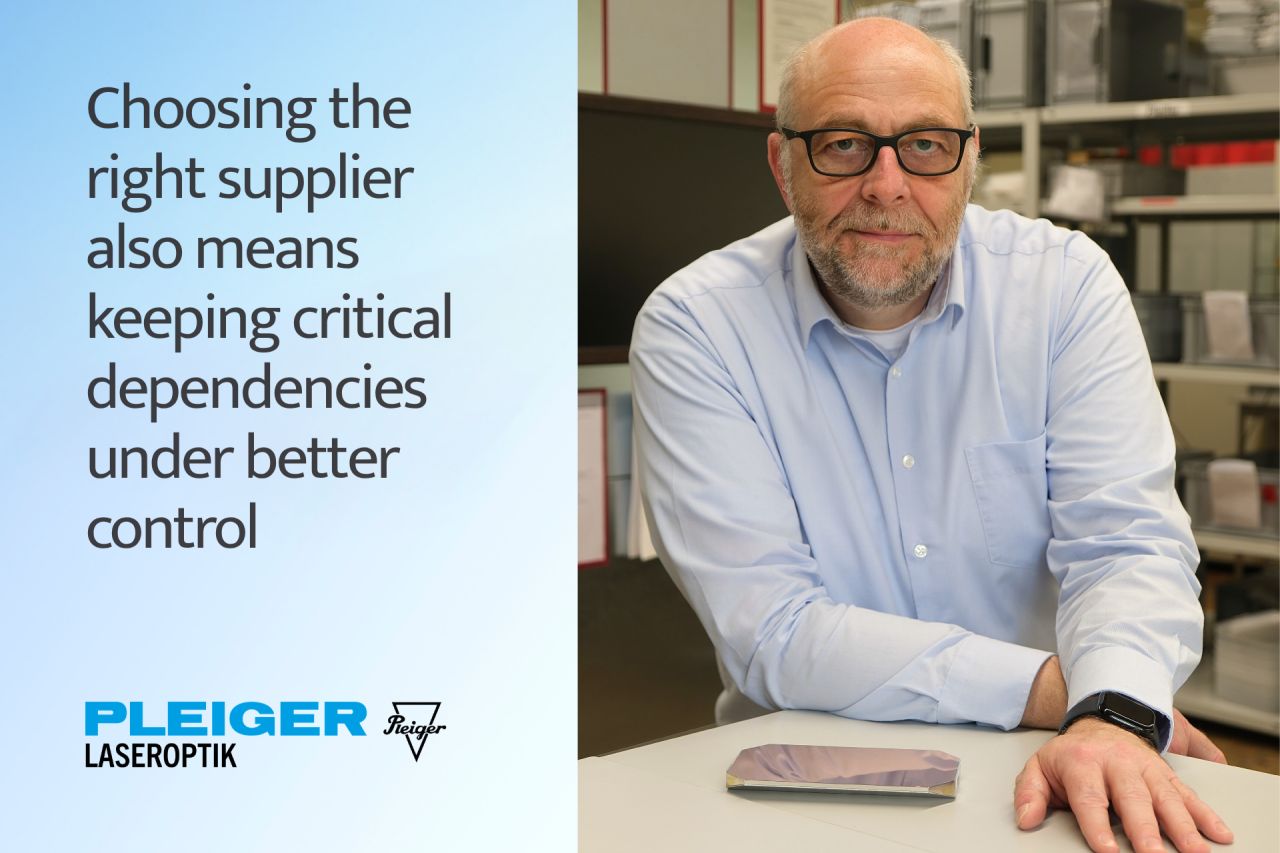
Your supplier has improved their coating process? For you that is a risk. 👀 Anyone who optimises something has changed something. A different substrate source, a readjusted parameter, a new coating unit. For them it is an improvement. What may arrive at your end, though, is a mirror that behaves differently from the last one. The first person to notice at your end is whoever aligns the beam path. They work to values that came from the old mirror. If the new one sits fractionally differently in the beam, or absorbs a little more, the setting no longer holds first time, and they start by looking for the fault in their own work. 💡 A lot of time goes by before anyone thinks to suspect the optic. Which is why process consistency at the supplier matters so much. After more than 25 years, though, we also know that nobody still does everything the way they did back then. ➡️ So the question is less whether something changes at your supplier, and more which change reaches you. Think about your own optics supplier for a moment. Which process change did they last tell you about? And if nothing comes to mind: has anything ever been communicated at all? If your parts have ever suddenly started behaving differently and you never found out why, give us a call. We are happy to talk about things like that, even with no enquiry behind it. 🤝
- LINKEDIN · IMAGESince 6 Oct 2026
80% of EU companies were affected by at least one supply chain disruption between 2021 and 2023, or had to restructure. Almost one in three then started looking for suppliers inside the EU. This is not sentimentality about location, it is commercially relevant: fewer routes, fewer intermediate stages, fewer places where things can jam. Or in one word: resilience. With optics that calculation is worth doing twice over, because changing supplier here rarely happens at short notice. Coating, tolerances and optical characteristics all have to be tested and approved again. We have been manufacturing in Europe for more than 25 years and have outsourced nothing in that time. For our customers that means, in day to day terms: During development they pick up the phone and reach someone who knows the equipment, rather than sending an email across three time zones. Anyone who wants to see a coating in the flesh is standing in our hall after arranging an appointment. And because we have worked in the same building with the same equipment for years, the coating design stays the same too. That saves the qualification which otherwise comes round every time something changes at the supplier. In our niche, optics for CO₂ lasers, there are only a handful of companies in Europe who can do this. Our customers value that, and many of them have stayed with us for years because of it.
- LINKEDIN · IMAGESince 1 Oct 2026
Silver reflects better in the IR than gold. Even so, silver is rarely the one sitting in the instrument. Why? 🧐 Anyone developing in the 2 to 14 µm range knows the table: silver sits a little above gold across the whole range and is the better material, as long as it is fresh. The problem starts after that. ☝️ Silver reacts with sulphur compounds from the air and tarnishes, and a tarnished surface reflects worse. Gold does not do that, though it is soft and takes damage from every touch. So a dielectric protective layer goes on top. That comes at a price, because every additional layer changes how the mirror behaves across the wavelength range and across the angle of incidence. A protective coating that sits well at 4 µm may already sit somewhere else at 12 µm. ➡️ So weigh it up. Silver with protection gives you more reflectance and ties you to a coating design that has to match your band. Protected gold is more forgiving and sits a little lower. What settles it is the environment. An instrument in an air conditioned lab makes different demands from one that hangs on a sorting line for three years or sits outdoors. Which is why, on projects like these, we always ask our customers where the instrument will end up standing. Any questions on this? We are always happy to hear from you! 🤳

6 of 72 adsSign up to see every Pleiger Laseroptik ad, filter by format and date, and get alerts on new ones.
See all 72 adsWatch the companies you care about.
Filter every ad by industry, country, format and network, and get alerts when a company you watch starts running new ads.