Not on air · 2 of 3 networks checked
PI (Physik Instrumente) Group
- physikinstrumente.com
- DE
- 936 employees
PI (Physik Instrumente) Group’s ads on LinkedIn, Meta and Google, recorded by adsrunning. Browse the latest here for free. Sign up free to see all 53. Watch PI (Physik Instrumente) Group with Starter to get each new one in your feed.
Watchlist with Starter · $49/mo
| Network | Status | Live ads | Nov 2025LinkedIn activity · 52 weeksOct 2026 | Checked | Next step |
|---|---|---|---|---|---|
| None recorded | 0 | Checked 29 Oct 2026 | See all 53 ads → | ||
| Meta | Not checked | — | |||
| Recently | 100+ | Ads on the Google Ads Transparency Center | Checked 7 Oct 2026 | Collect them with the API → |
PI (Physik Instrumente) Group has no live LinkedIn ads. We recorded 100+ Google ads on 7 Oct 2026.
Latest ads
- LINKEDIN · IMAGESince 21 Sept 2026
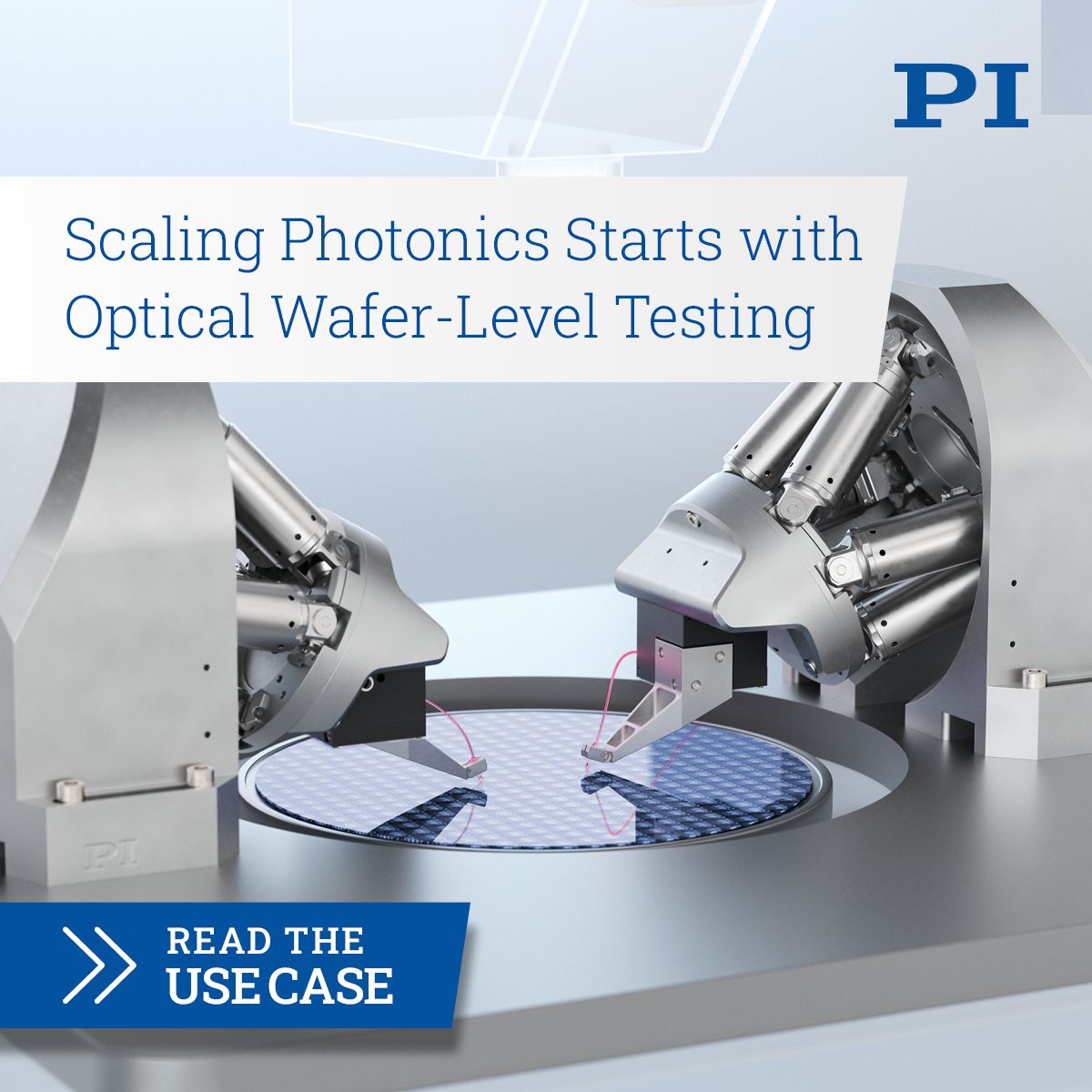
As photonic devices move from lab to production, testing must evolve just as quickly. Optical wafer-level probing helps identify defects earlier, improves yield, accelerates development cycles, and increases production throughput. Scaled optical testing requires high-precision positioning, optical feedback, intelligent alignment algorithms, and motion control working seamlessly together — enabling fast, reliable, and repeatable alignment from R&D to automated production.
- LINKEDIN · VIDEOSince 27 Aug 2026
Bandwidth keeps growing. Data has to travel farther. Energy efficiency is ever more critical. As copper-based interconnects reach their limits, photonic technologies are becoming increasingly important for next-gen data transmission. In our latest podcast, Nikta Jalayer, Global Portfolio Director, Photonics, at PI, shares her perspective on what is driving this shift — and what it means for the future of photonics.
- LINKEDIN · IMAGESince 25 Aug 2026
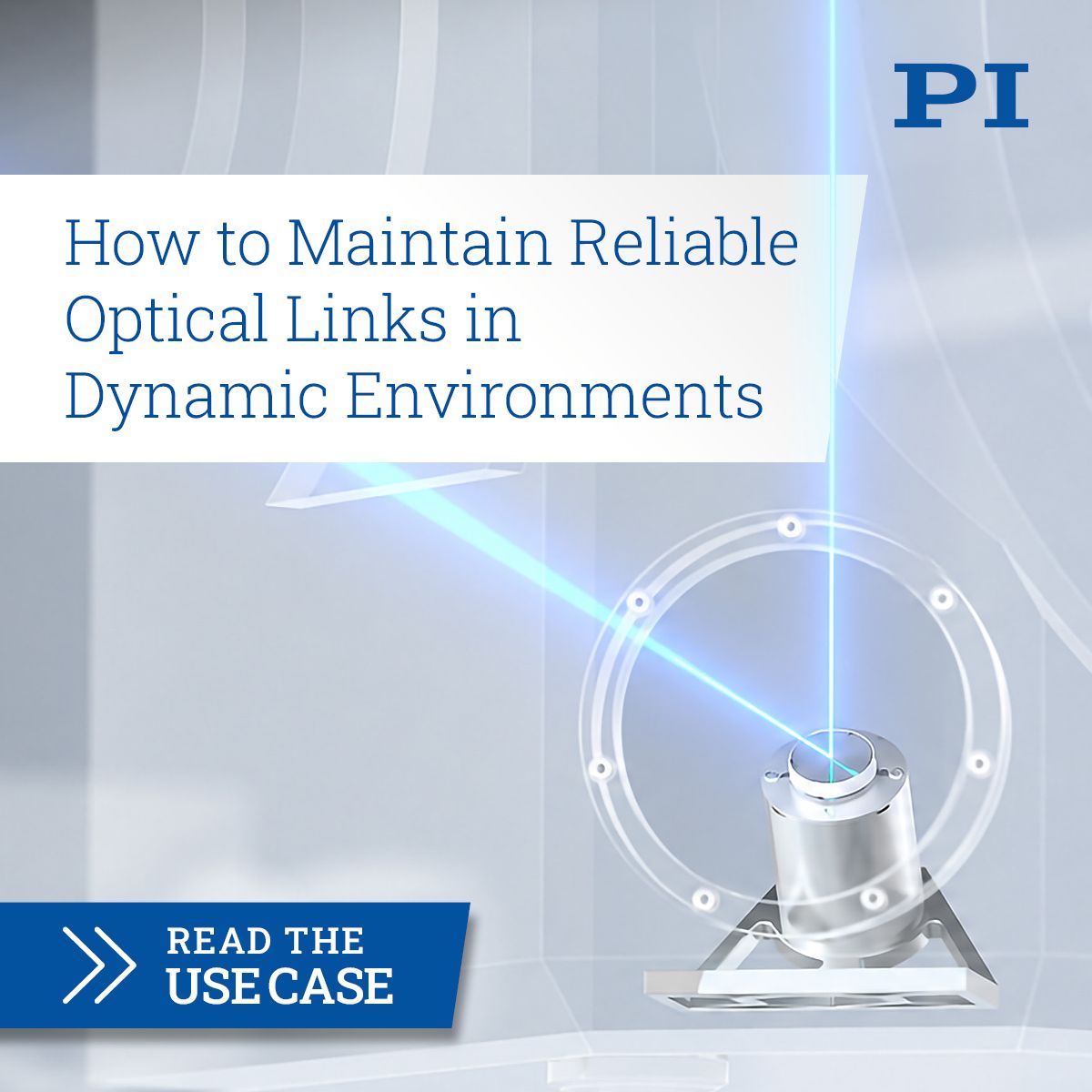
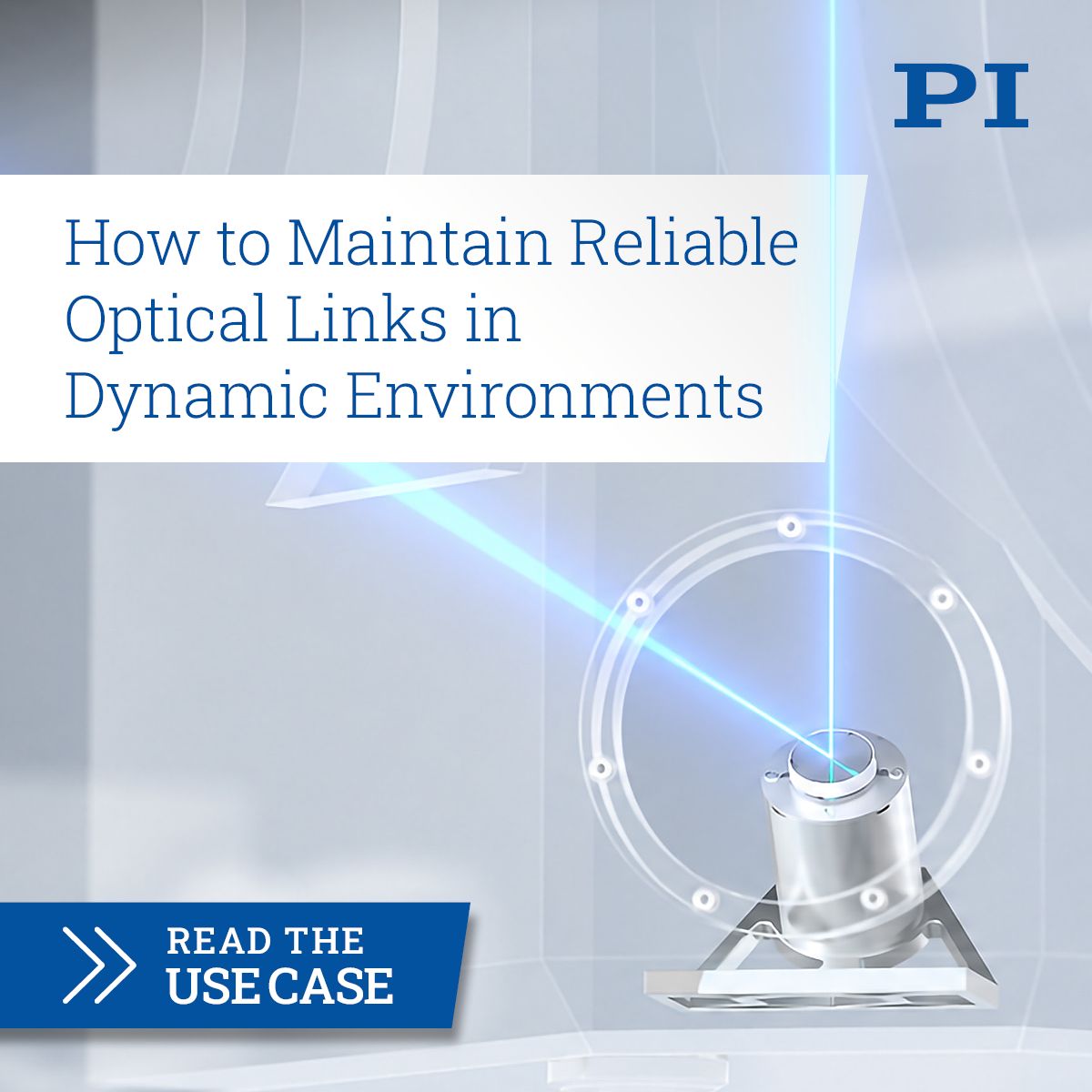
Keeping an optical link stable in LEO is a moving target. Even minor pointing deviations can degrade or disrupt an optical connection. Reliable free-space optical communication (FSOC) therefore requires precise beam control for acquisition, tracking, and disturbance compensation under highly dynamic conditions. See how PI approached these challenges with a space-qualified fast steering mirror designed for dynamic performance and constellation-scale deployment.
- LINKEDIN · IMAGESince 31 Jul 2026
Approaching the Challenge of Reliable Optical Communication in LEO Satellite Constellations A recent development project required a space-qualified fast steering mirror for use in FSOC terminals that would also be suitable for high-volume production. The goal was to ensure reliable optical link stability while complying with stringent requirements regarding mass, mechanical footprint, environmental robustness, and scalability. From the outset, both dynamic performance and manufacturability at constellation scale were treated as equally critical. As with all PI projects, the collaboration started with a comprehensive requirements engineering phase to gain a deep understanding of the specific fit, form, and functional needs. The main challenge of maintaining optical links in dynamic LEO environments requires: 🔹reliable first light acquisition despite dynamic disturbances 🔹stable maintenance of the optical link, and 🔹active correction of platform-induced motion. Curious how we approached the challenge? Check out the entire use case here:
- LINKEDIN · VIDEOSince 13 Jul 2026
Maintaining optical links in LEO is extremely challenging: Satellites move at velocities of several kilometers per second while communicating across distances of hundreds to several thousand kilometers. Reliable laser communication requires systems that react instantly and keep the beam precisely aligned throughout link acquisition and operation. In conversation with our Sales Expert Marc Syguda, Dr. Jochen Gaiser, Marketing Strategy Manager with a Sales background, explores the challenges of free-space optical communication in low earth orbit and the technologies that make optical links reliable. Listen in to find out 🔹what makes applications of FSOC in LEO especially challenging 🔹how satellite-to-satellite communication works 🔹how pointing, acquisition, and tracking works in FSOC 🔹the major challenges we are facing when we are bringing our solutions inside a satellite 🔹 how PI handles tough customer requirements such as those of FSOC applications Watch the podcast episode right here 👇 … or tune in via your favorite streaming platform!
- LINKEDIN · IMAGESince 25 Jun 2026
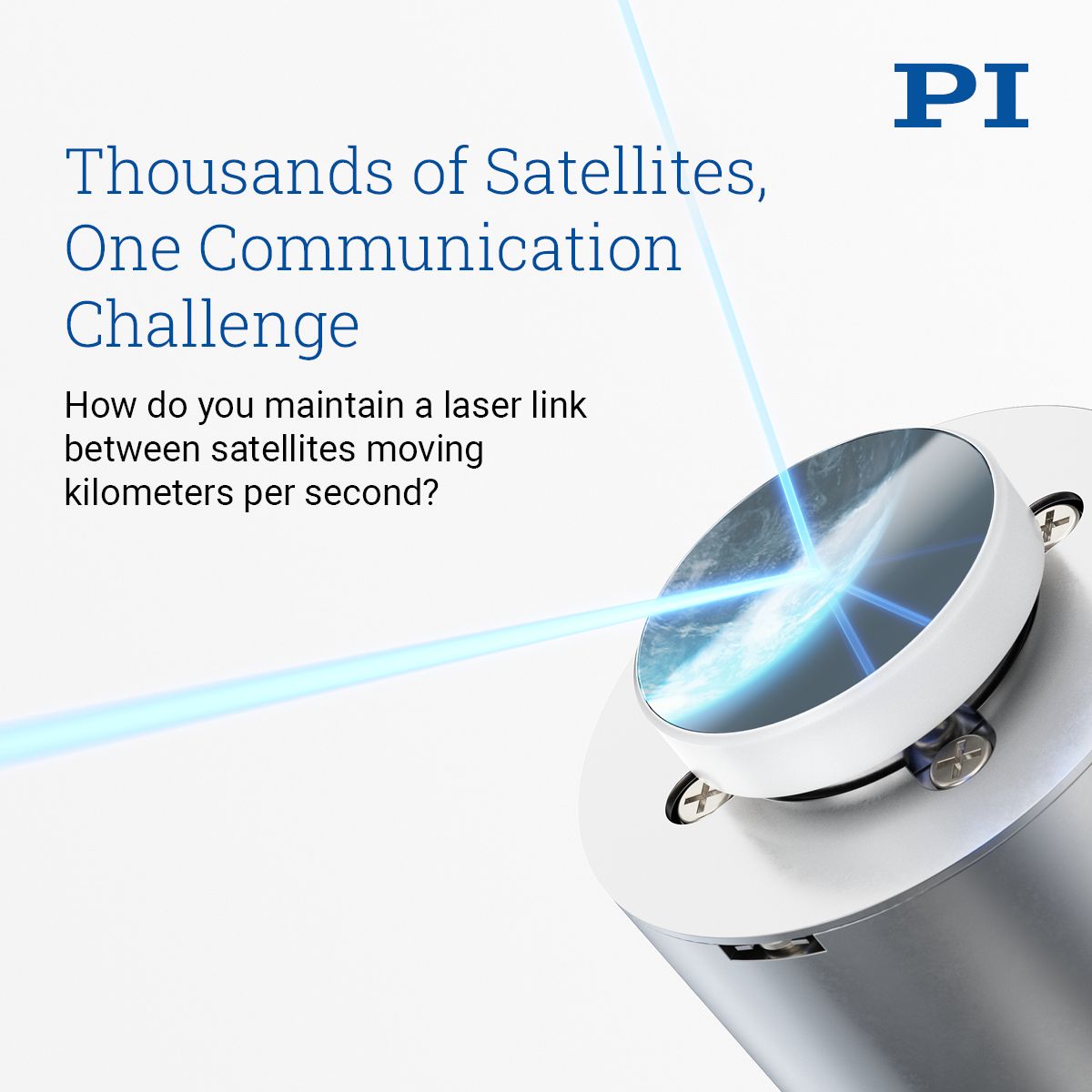
How do you maintain a laser communication link between satellites moving several kilometers per second? As LEO constellations continue to grow, traditional radio frequency communications face increasing challenges around bandwidth, latency, and spectrum availability. Free-space optical communication offers a compelling alternative—but only if the system can maintain precise pointing, acquisition, and tracking throughout the mission. What do you see as the biggest obstacle to scaling optical intersatellite communications? ⬇️ Share your thoughts below. Curious? Read more here
6 of 53 adsSign up to see every PI (Physik Instrumente) Group ad, filter by format and date, and get alerts on new ones.
See all 53 adsWatch the companies you care about.
Filter every ad by industry, country, format and network, and get alerts when a company you watch starts running new ads.