Not on air · 2 of 3 networks checked
Optimal
- optimalworkshop.com
- Software Development
- NZ
- 108 employees
Optimal’s ads on LinkedIn, Meta and Google, recorded by adsrunning. Browse the latest here for free. Sign up free to see all 409. Watch Optimal on any plan to get each new one in your feed.
Watchlist included in every plan
| Network | Status | Live ads | Nov 2025LinkedIn activity · 52 weeksNov 2026 | Checked | Next step |
|---|---|---|---|---|---|
| None recorded | 0 | Checked 3 Nov 2026 | See all 409 ads → | ||
| Meta | Not checked | — | |||
| Recently | 26 | Ads on the Google Ads Transparency Center | Checked 6 Oct 2026 | Collect them with the API → |
Optimal has no live LinkedIn ads. We recorded 26 Google ads on 6 Oct 2026.
Latest ads
- LINKEDIN · VIDEOSince 29 Sept 2026
The fastest way to ship the wrong thing is to skip the research. Skipping research feels like the thing you can afford to cut when things are busy. It isn't. The cost doesn't disappear, it just moves downstream where it's more expensive to fix. When I talk to product and design teams about this, the same three worries come up every time (+ how Optimal actually solves each one): "I'm not a researcher" The worry: Running a valid study feels like something you need a research degree to do properly… so it gets left to a specialist, or skipped. How we solve it: Optimal is built so PMs and designers can run a clean prototype test, interview or survey and trust the answer. Templates instead of a blank page. And every seat's included, so cost never decides who gets to test. "This will slow me down" The worry: A real answer takes longer than the sprint that needs it, so insight lands after the decision's already made. How we solve it: The whole arc of a decision runs in one platform, on one timeline, discovery through validation, so research becomes part of the process, not running in a parallel universe on its own timeline. You're never blocked waiting on participants either, with 20M+ on tap plus your own users. "Isn't this a multi-week study and a report no one reads?" The worry: Research means weeks of synthesis and a report that never gets opened. How we solve it: Optimal Intelligence does the part that usually eats a researcher's week, e.g. synthesising sessions, surfacing themes, and letting anyone on the team chat with the research for an answer while the decision's still open. If your team is shipping fast and want to make sure you're shipping the right thing, let’s talk. Optimal user research platform: https://lnkd.in/giMuyBPG Meet with our team: https://lnkd.in/gpDhQ4Dt
- LINKEDIN · IMAGESince 16 Sept 2026
How to defend every UX decision in 5 mins: (even if you didn’t do the research yourself) Your team has run research. Your team has captured quotes. Your team has already tested prototypes. But the data is just sitting there. And when you need it… “errr, let me circle back to you” MCP fixes this. Instantly recall the work done. Right inside the tools you’re already using. Here’s how ↓ Before you open Figma: → lookup all research that has been done → check what's already been tested → zoom out for patterns + surfaces issues Examples: ↳ "what have we learned about onboarding" ↳ "have we tested this feature before" ↳ "compare findings across last 5 prototype tests" ⋯ In the design review, get the receipt: → give it a specific goal → ask for recommendations, not observations → tell it the format exec summary for leadership → pressure-test with a follow-up Examples: ↳ "i'm defending a simpler nav, find quotes that back it" ↳ "turn these findings into 5 specific design changes" ↳ “give me 3 biggest pain points for the crit” ↳ "are there any conflicting findings" ⋯ Then build the habit: → keep the AI tool open next to Figma → embed the evidence where the work lives → develop team workflows and best practices → shrink the gap between insight and decision Examples: ↳ "draft these usability findings into Notion" ↳ "turn this research into requirements for engineering" ↳ "generate a design brief from what we already know" ⋯ The Optimal team said something that stuck with me… “If a research insight isn't reachable the moment a decision gets made, it may as well not exist” The win is having the right recall, the moment it matters. That's what their MCP does. Works with your AI tool (Claude, ChatGPT, Cursor). Connect your research repo and ask. Explore Optimal’s MCP: https://lnkd.in/gSCKdGVH
- LINKEDIN · IMAGESince 14 Sept 2026
Not all user research platforms are built for speed and rigour. Here’s why leading enterprise teams trust Optimal to keep up with their roadmap.
- LINKEDIN · IMAGESince 14 Sept 2026
The best research tool is the one your whole team actually wants to use.
- LINKEDIN · IMAGESince 14 Sept 2026
One platform for all your research needs. Learn why leading enterprise teams trust Optimal to ensure research keeps up with their roadmap.
- LINKEDIN · IMAGESince 19 Aug 2026
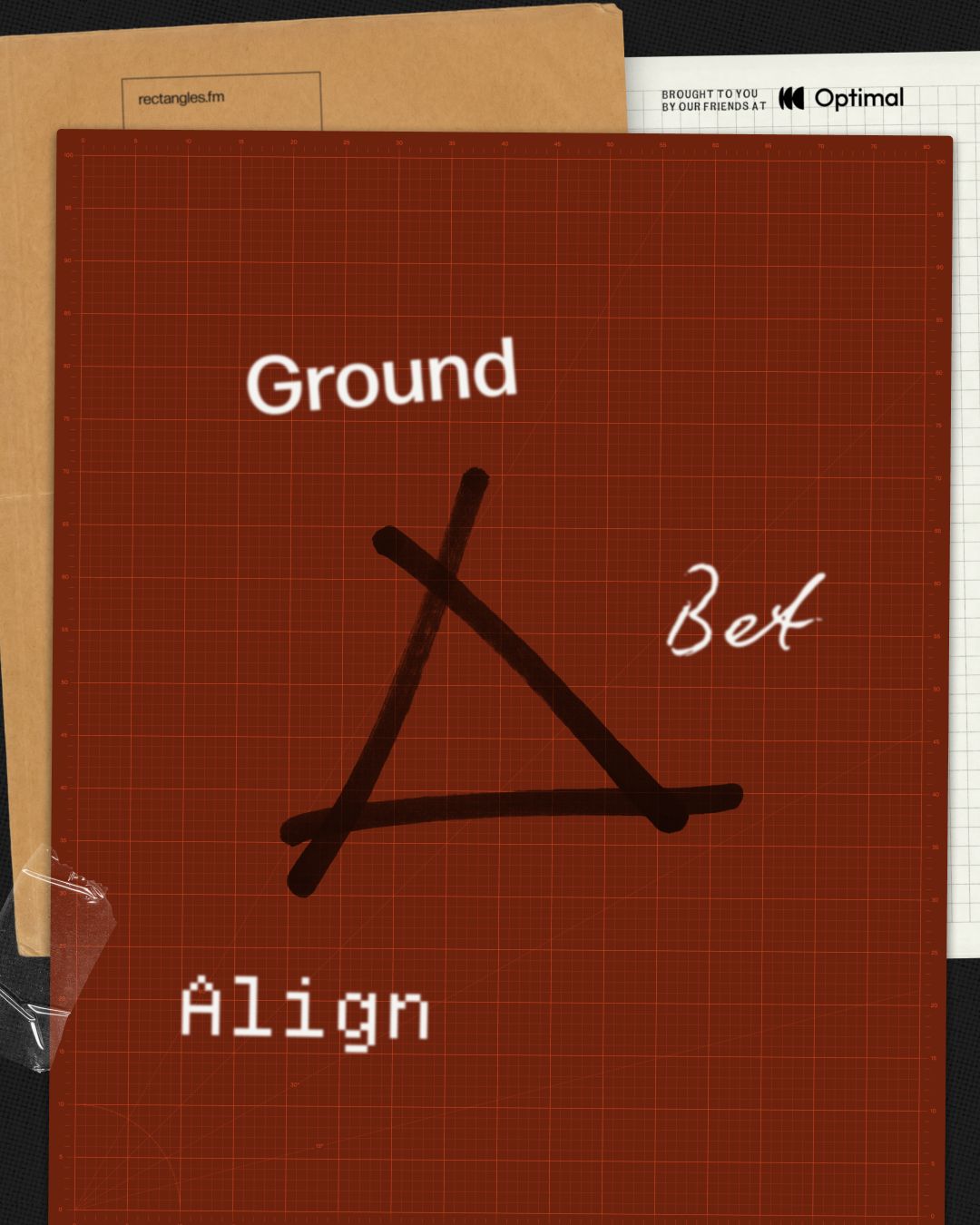
I’ve run the same loop for research for years: Ground → Bet → Align (takes me ~2 weeks) For each phase, I ask one question: 1. What don't I know? 2. What’s my hunch? 3. Do we agree? Here’s what I do for every design project: 1️⃣ Ground → “What don't I know?” Days: 0 to 4 I try to answer: → what do I need to know? → who do I need to talk to? → what can I find out today? Then I go get the context. Internal first. The team's been marinating in this problem, I start there. Customers second. 1:1 interviews, a quick quant survey, a workshop when I need people in a room. Old way: weeks to make sense of the convos New way: Optimal uncovers key themes, summaries, their MCP taps into multiple studies, and I put together hypotheses ↓ 2️⃣ Bet → “What’s my hunch?” Days: 5 to 9 Context gives me a few guesses. I find the smallest thing I can cheap test. One’s that tells me what we could bet on. → usability test for a concept prototype → card sorting to see a users mental grouping → first-click + tree tests to find where people get lost → a live test on a competitor's product, free lessons without building Old way: frankenstein tools + manually recruit people New way: self-serve recruitment with Optimal, launch small tests, and have signal back in days ↓ 3️⃣ Align → Do we agree?” Days: 10 to 14 I present the plan of attack. The meeting doesn't happen unless the decision-maker is in the room. → I name the success → I outline potential hiccups → I callout the tradeoffs All upfront. We align, or we don't continue. Old way: show static quotes + data New way: bring highlight clips to back my plan ↓ Then repeat. That's the full cycle on my research loop. Optimal Intelligence has made this process a lot less painful. Reducing the loop from ~6 weeks to around ~2 weeks. Other cools things I can do: → Use AI chat to sense-check → Perfect your survey questions → Automatically de-identify interview data → Scale testing with an AI Interviewer (soon) Try it here: https://lnkd.in/g9QKV9eh ↓ One more thing. The loop flexes. Length depends on: 1. How complex the problem is 2. How big the scope is 3. How far into the design process we are Say I’m testing a redesigned product, months into the process… That’s fits in phase 2️⃣ Bet or “What’s my hunch?” ☑︎ I have plenty of context ☑︎ I’ve course-corrected on my guesses ☑︎ I worked on better iterations of my prototype So Bet gets 2 extra questions: 1. Does the thing work? 2. So what? The product still goes in front of users, but test go mixed-method. I grab as much signal as I can, then move to 3️⃣ Align or “do we agree?”, which here becomes a design crit, final approval, or the hand-off. More work to do? I run the loop again. 1. Early on, when everything's fuzzy, 1️⃣ Ground 2. Deep in a build, I basically live in 2️⃣ Bet 3. At the finish line, I run towards 3️⃣ Align The 3 questions never change. Just the weight. Ground → Bet → Align #optimalpartner
6 of 409 adsSign up to see every Optimal ad, filter by format and date, and get alerts on new ones.
See all 409 adsWatch the companies you care about.
Filter every ad by industry, country, format and network, and get alerts when a company you watch starts running new ads.