On air · 2 of 3 networks
Neurons
- neuronsinc.com
- DK
- 113 employees
Neurons’s ads on LinkedIn, Meta and Google, recorded by adsrunning. Browse the latest here for free. Sign up free to see all 964. Watch Neurons with Starter to get each new one in your feed.
Watchlist with Starter · $49/mo
| Network | Status | Live ads | Nov 2025LinkedIn activity · 52 weeksOct 2026 | Checked | Next step |
|---|---|---|---|---|---|
| Running | 178 | Checked 29 Oct 2026 | See all 964 ads → | ||
| Meta | Running | 17 | Active ads on the Meta Ad Library, all countries | Checked 30 Oct 2026 | Collect them with the API → |
| Recently | 44 | Ads on the Google Ads Transparency Center | Checked 5 Oct 2026 | Collect them with the API → |
Neurons has 178 live LinkedIn ads. Its Facebook page had 17 active ads on 30 Oct 2026, and we recorded 44 Google ads on 5 Oct 2026.
Latest ads
- LINKEDIN · IMAGESince 26 Oct 2026
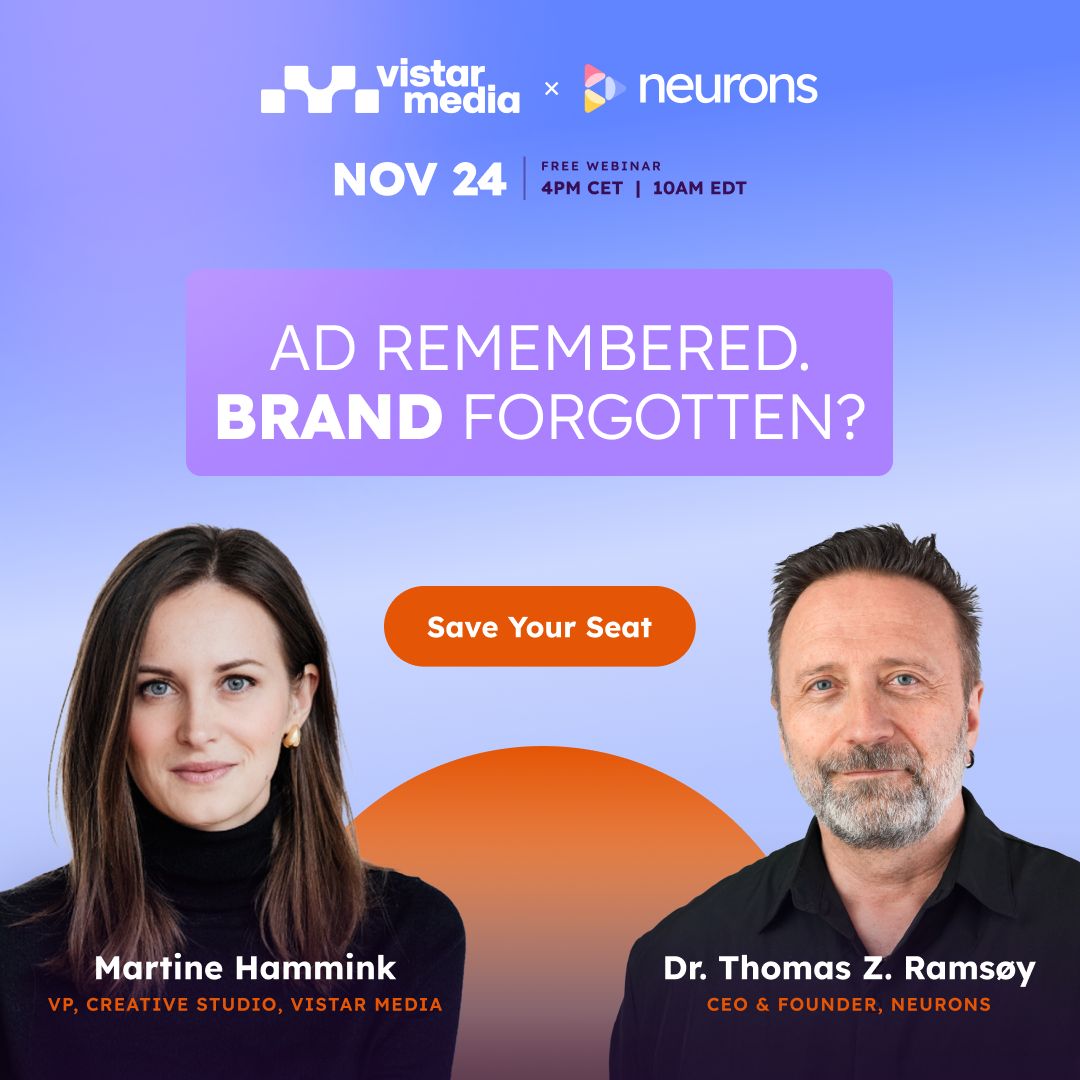
Your DOOH ad got remembered. Your brand didn't. Vistar Media's campaign measurements show a clear pattern: people often remember the ad, but don't always connect it to the brand behind it. On Nov 24, Martine Hammink (VP, Creative Studio, Vistar Media) and Dr. Thomas Z. Ramsøy (CEO & Founder, Neurons) show you how to change that. ✅ The 5 design rules for memorable programmatic DOOH ✅ How distinctiveness, distance and dwell time shape what people remember ✅ How to measure brand impact for your DOOH creative Plus two real cases with measurement data. Free webinar 🗓️ Nov 24 · 4PM CET | 10AM EDT Save your seat 👇
- LINKEDIN · VIDEOSince 26 Oct 2026
Between 80% and 99% of ads generate almost no response. 📉 That's Babak Behrad's number in our webinar, and he's an award-winning creative strategist, so it costs him something to say it. The reflex in every room is identical: sure, but not our agency. 🙄 Statistically, it is somebody's agency. 🎯 This is a large part of why advertising struggles for a seat at the board table. We report on work that mostly didn't land, and we report on it months late. ⏳ The way out is measuring brand impact before launch instead of engagement after it. 📊 Babak and Dr. Thomas Zoëga Ramsøy get into it on demand 👇 https://lnkd.in/eSYpiwN7
- LINKEDIN · IMAGESince 23 Oct 2026
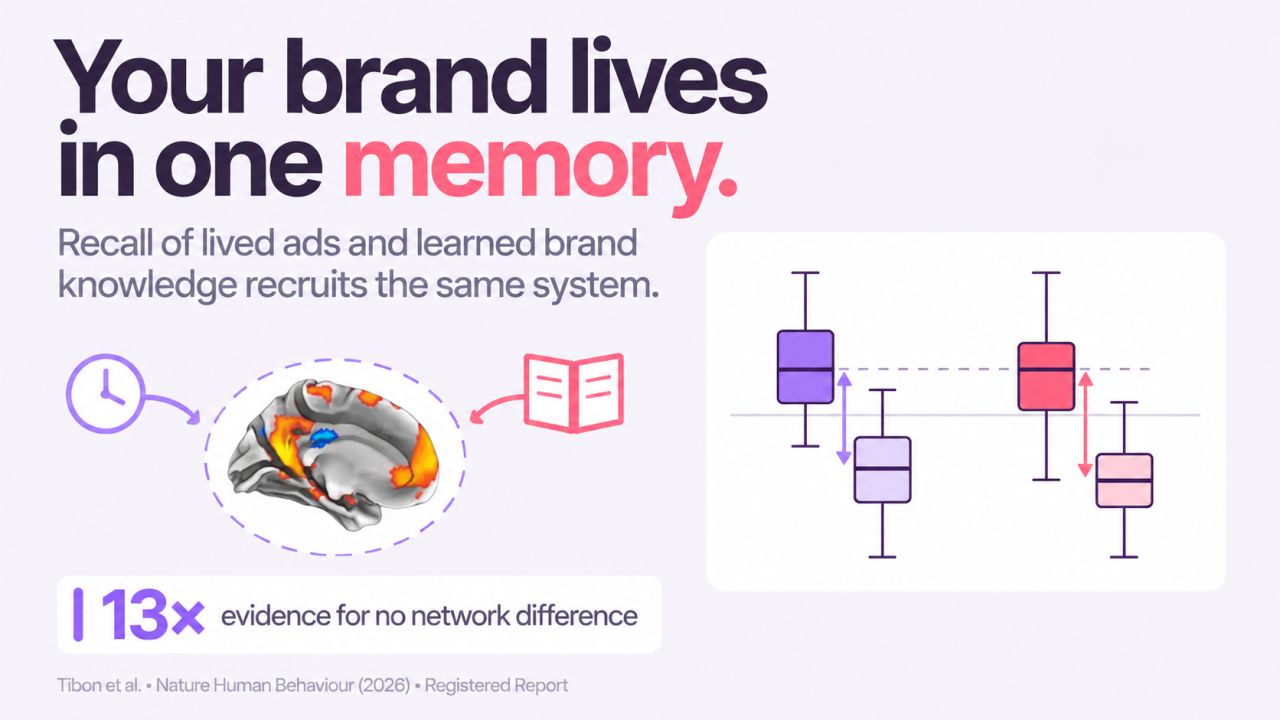
𝗬𝗼𝘂𝗿 𝗯𝗿𝗮𝗶𝗻 𝗿𝗲𝘁𝗿𝗶𝗲𝘃𝗲𝘀 𝗮 𝗯𝗿𝗮𝗻𝗱 𝘁𝗵𝗲 𝘀𝗮𝗺𝗲 𝘄𝗮𝘆, 𝘄𝗵𝗲𝘁𝗵𝗲𝗿 𝘆𝗼𝘂 𝗸𝗻𝗼𝘄 𝗶𝘁 𝗼𝗿 𝗹𝗶𝘃𝗲𝗱 𝗶𝘁 𝘈𝘯 𝘧𝘔𝘙𝘐 𝘱𝘳𝘰𝘷𝘦𝘥 𝘢 𝘩𝘢𝘭𝘧-𝘤𝘦𝘯𝘵𝘶𝘳𝘺-𝘰𝘭𝘥 𝘮𝘦𝘮𝘰𝘳𝘺 𝘥𝘪𝘷𝘪𝘥𝘦 𝘸𝘳𝘰𝘯𝘨 Since Endel Tulving drew the line in 1972, memory science has split remembering in two: • 𝗘𝗽𝗶𝘀𝗼𝗱𝗶𝗰 𝗺𝗲𝗺𝗼𝗿𝘆: the ad you saw on the train last Tuesday. • 𝗦𝗲𝗺𝗮𝗻𝘁𝗶𝗰 𝗺𝗲𝗺𝗼𝗿𝘆: simply knowing which logo belongs to which brand. Marketing built its measurement on the same split. Brand knowledge in one tracker, ad recall in another, often run by different agencies. A new study just put that line to its toughest test yet, using the exact stimuli we work with every day. Roni Tibon University of Nottingham and Richard Henson MRC Cognition and Brain Sciences Unit, Cambridge) scanned 36 people recalling pairings between logos and brand names: • Semantic: the real pairing, learned over a lifetime of exposure • Episodic: the same logo paired with a different brand, learned in the lab through a story (“Yesterday I searched for NASA on Google...”) This was the same cue, same response format. Only the source of the memory changed. The result was published (https://lnkd.in/ed38Zijk) and showed: • Recall success looked alike in “episodic” and “semantic” brain networks, with the evidence favouring no difference about 13 times over • Brain activity patterns told the same story, at about 23 times over • Even the anterior temporal lobe, the textbook semantic hub, behaved the same in both tasks • Only 2 of 120 exploratory comparisons survived correction And this was a Registered Report. Hypotheses, sample plan and stopping rules were locked in before a single scan. The team predicted a difference. The brain declined. Through my work at Neurons, I constantly see campaign memories and brand associations treated as separate assets. At least at the moment of recall, the brain appears to pull both through one system. Last week’s ad and everything people “know” about your brand meet in the same place, and they shape each other there. Worth keeping in mind: this covers retrieval only, in young adults, with fMRI’s slow timing. Encoding may still differ. Your brand lives in one memory. Measure it that way. #Neuroscience #Memory #Neuromarketing #BrandBuilding #ConsumerNeuroscience
- LINKEDIN · IMAGESince 23 Oct 2026
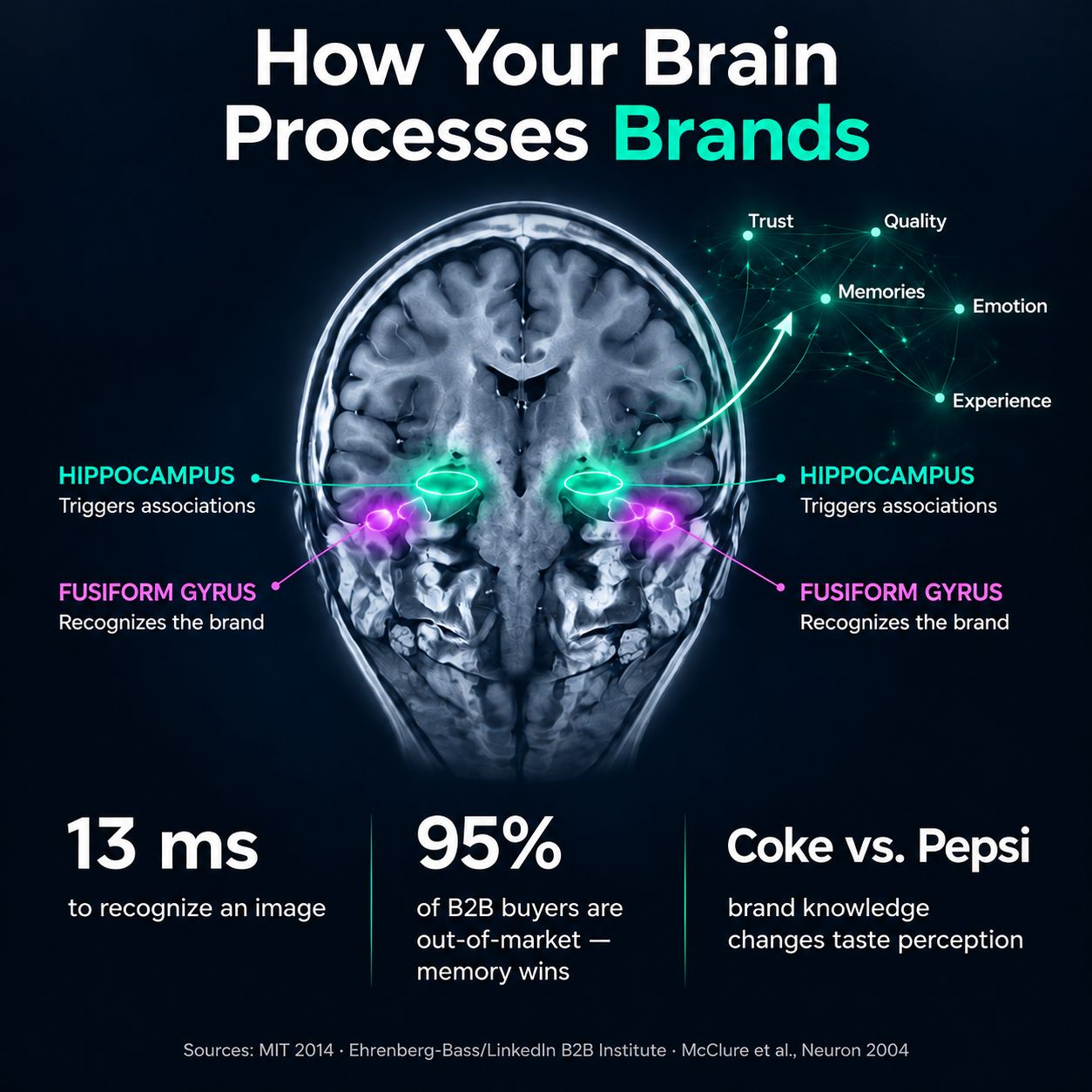
𝗔 𝗯𝗿𝗮𝗻𝗱 𝗵𝗮𝘀 𝗺𝗮𝗻𝘆 𝗹𝗶𝘃𝗲𝘀 𝗶𝗻 𝘁𝗵𝗲 𝗯𝗿𝗮𝗶𝗻 𝘞𝘪𝘵𝘩𝘪𝘯 𝘢 𝘴𝘮𝘢𝘭𝘭 𝘳𝘦𝘨𝘪𝘰𝘯, 𝘵𝘩𝘦 𝘣𝘳𝘢𝘯𝘥 𝘥𝘰𝘦𝘴 𝘵𝘸𝘰 𝘵𝘩𝘪𝘯𝘨𝘴 When you see a brand, a whole cascade of processes kicks off. But for brand memory, two things matter most, and both happen in a small part of the brain, the inner and lower temporal lobe: 1. 𝗕𝗿𝗮𝗻𝗱 𝗿𝗲𝗰𝗼𝗴𝗻𝗶𝘁𝗶𝗼𝗻 works much like recognizing a face. It relies heavily on the fusiform gyrus, at the very bottom of the temporal lobe. It's fast: the brain can identify an image in as little as 13 milliseconds. 2. 𝗕𝗿𝗮𝗻𝗱 𝗮𝘀𝘀𝗼𝗰𝗶𝗮𝘁𝗶𝗼𝗻𝘀 are where brands come alive. The hippocampus, just above the fusiform gyrus, links the brand to memories, emotions and experiences, and one association activates the next. This can even change what we taste: in a classic study, people preferred Coke and Pepsi equally in blind tests. Once they knew they were drinking Coke, their preference shifted, and their hippocampus lit up. 𝗪𝗵𝘆 𝗱𝗼𝗲𝘀 𝗶𝘁 𝗺𝗮𝘁𝘁𝗲𝗿? Being recognized gets your brand noticed. Being linked to the right associations gets it chosen. And since about 95% of buyers aren't in the market at any given moment, the brand they remember when they are ready wins. #neuromarketing #branding #brandingthebrain
- LINKEDIN · VIDEOSince 20 Oct 2026
One of our great CSMs did a "blind taste" test on camera and well.... ....Clearly not a big enough fan 😁 The useful part comes after.Dr. Thomas Z. Ramsøy explains that a known brand sends an expectation signal to your sensory areas before you taste anything - so the experience genuinely improves.. A good chunk of it happens before your product does anything at all. The rest is whether you deliver on what the brand already promised. Our eBook on building a memorable brand is here 👇https://lnkd.in/eci5jhVD
- LINKEDIN · VIDEOSince 19 Oct 2026
𝗬𝗼𝘂𝗿 𝗯𝗿𝗮𝗶𝗻 𝗮𝗻𝘀𝘄𝗲𝗿𝘀 𝗶𝗻𝗳𝗼𝗿𝗺𝗮𝘁𝗶𝗼𝗻 𝗼𝘃𝗲𝗿𝗹𝗼𝗮𝗱 𝗯𝘆 𝗹𝗼𝗼𝗸𝗶𝗻𝗴 𝗮𝘁 𝗹𝗲𝘀𝘀 -- 𝗮𝗹𝘀𝗼 𝗼𝘂𝘁𝘀𝗶𝗱𝗲 𝘞𝘩𝘺 𝘵𝘩𝘦 𝘤𝘰𝘮𝘮𝘶𝘵𝘦𝘳 𝘴𝘵𝘢𝘳𝘦 𝘪𝘴 𝘴𝘮𝘢𝘳𝘵𝘦𝘳 𝘵𝘩𝘢𝘯 𝘪𝘵 𝘭𝘰𝘰𝘬𝘴 You know the look. Someone walking through a busy shopping street, eyes fixed somewhere in the middle distance, hundreds of signs going past and none of them landing. 𝘛𝘩𝘦 𝘵𝘩𝘰𝘶𝘴𝘢𝘯𝘥-𝘺𝘢𝘳𝘥 𝘴𝘵𝘢𝘳𝘦. I have spent most of my career studying attention, and I still find this one of the brain's best tricks. When there is more coming in than it can handle, the visual system narrows. Tatler showed it with eye tracking back in 2007: 𝙬𝙝𝙖𝙩𝙚𝙫𝙚𝙧 𝙞𝙨 𝙞𝙣 𝙩𝙝𝙚 𝙨𝙘𝙚𝙣𝙚, 𝙩𝙝𝙚 𝙚𝙮𝙚𝙨 𝙠𝙚𝙚𝙥 𝙨𝙣𝙖𝙥𝙥𝙞𝙣𝙜 𝙗𝙖𝙘𝙠 𝙩𝙤 𝙩𝙝𝙚 𝙘𝙚𝙣𝙩𝙚𝙧, and most of all in the first moments after something new appears. Whitney and Levi call the other half of it 𝙘𝙧𝙤𝙬𝙙𝙞𝙣𝙜. Pack enough things together and the ones off-center stop being objects and become texture. I'm going to Japan soon, and wanted to embrace myself for information overload. So I ran two minutes of a packed night-time Tokyo street through the Neurons attention AI to watch it happen. Hundreds of signs in shot. The attention peak never once went into the top third of the frame, where the signs are. About 84% of it stayed at eye level, on the faces coming towards the camera and the path ahead. Here is the part I like: 𝗲𝘃𝗲𝗿𝘆 𝘀𝗶𝗴𝗻 𝗼𝗻 𝘁𝗵𝗮𝘁 𝘀𝘁𝗿𝗲𝗲𝘁 𝗶𝘀 𝗯𝘂𝗶𝗹𝘁 𝘁𝗼 𝘄𝗶𝗻. Bigger, brighter, more animation. And that arms race is exactly what creates the stare. Each sign adds load, load narrows the gaze, and the narrow gaze punishes all of them at once. 𝙒𝙝𝙖𝙩 𝙜𝙤𝙩 𝙩𝙝𝙧𝙤𝙪𝙜𝙝? A face, and whatever sat in the walking line. A few things I take from this when we test outdoor creative before it goes up: • Design for the glance you actually get, at eye level and in the path • One thing. The brain will take one thing. Clutter gets charged to the brand • A face, a known shape, a single clear word gets past the stare. A paragraph never does When everything demands attention, the brain protects itself by choosing almost nothing. Make sure you are that one thing. #neuromarketing #attention #OOH #advertising #CogntiveOverload #neuroscience Sources: Tatler (2007), Journal of Vision, https://lnkd.in/e2st2av6 Whitney & Levi (2011), Trends in Cognitive Sciences, https://lnkd.in/eMBkfVxD.
6 of 964 adsSign up to see every Neurons ad, filter by format and date, and get alerts on new ones.
See all 964 adsWatch the companies you care about.
Filter every ad by industry, country, format and network, and get alerts when a company you watch starts running new ads.