On air · 1 of 3 networks
Neogrid
- neogrid.com
- BR
- 918 employees
Neogrid’s ads on LinkedIn, Meta and Google, recorded by adsrunning. Browse the latest here for free. Sign up free to see all 76. Watch Neogrid with Starter to get each new one in your feed.
Watchlist with Starter · $49/mo
| Network | Status | Live ads | Nov 2025LinkedIn activity · 52 weeksOct 2026 | Checked | Next step |
|---|---|---|---|---|---|
| Running | 45 | Checked 29 Oct 2026 | See all 76 ads → | ||
| Meta | Not checked | — | |||
| Recently | 7 | Ads on the Google Ads Transparency Center | Checked 5 Oct 2026 | Collect them with the API → |
Neogrid has 45 live LinkedIn ads. We recorded 7 Google ads on 5 Oct 2026.
Latest ads
- LINKEDIN · IMAGESince 15 Oct 2026
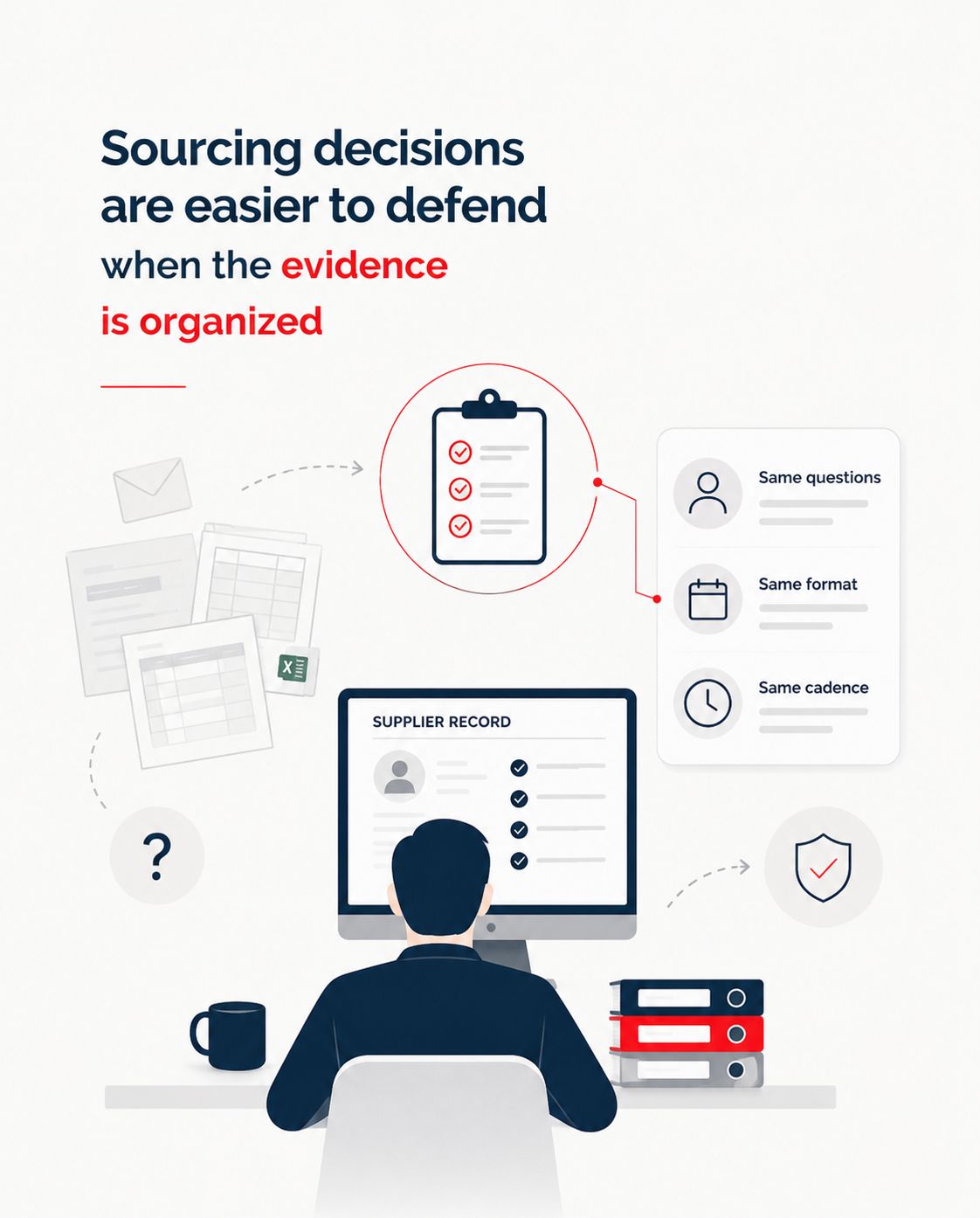
Ask a sourcing team why they chose a supplier, and see how long it takes to get an answer. CSDDD requires large companies to identify and address human rights and environmental impacts across their operations, subsidiaries, and chains of activities. It also requires them to document what they did. That requirement becomes part of the sourcing routine when every supplier record answers the same questions, in the same format, on the same cadence, regardless of who owns the relationship. Few sourcing teams work that way today. Some categories sit in a shared system. Others live in email threads and personal spreadsheets, comparable in theory, but difficult to compare in practice. The gap shows up when someone outside the team asks why this supplier was chosen over the other three. Searching three inboxes and two spreadsheets for the answer means the diligence may have happened, but the evidence takes too long to find. A sourcing decision is easier to defend when the evidence is organized before anyone asks for it.
- LINKEDIN · IMAGESince 2 Oct 2026
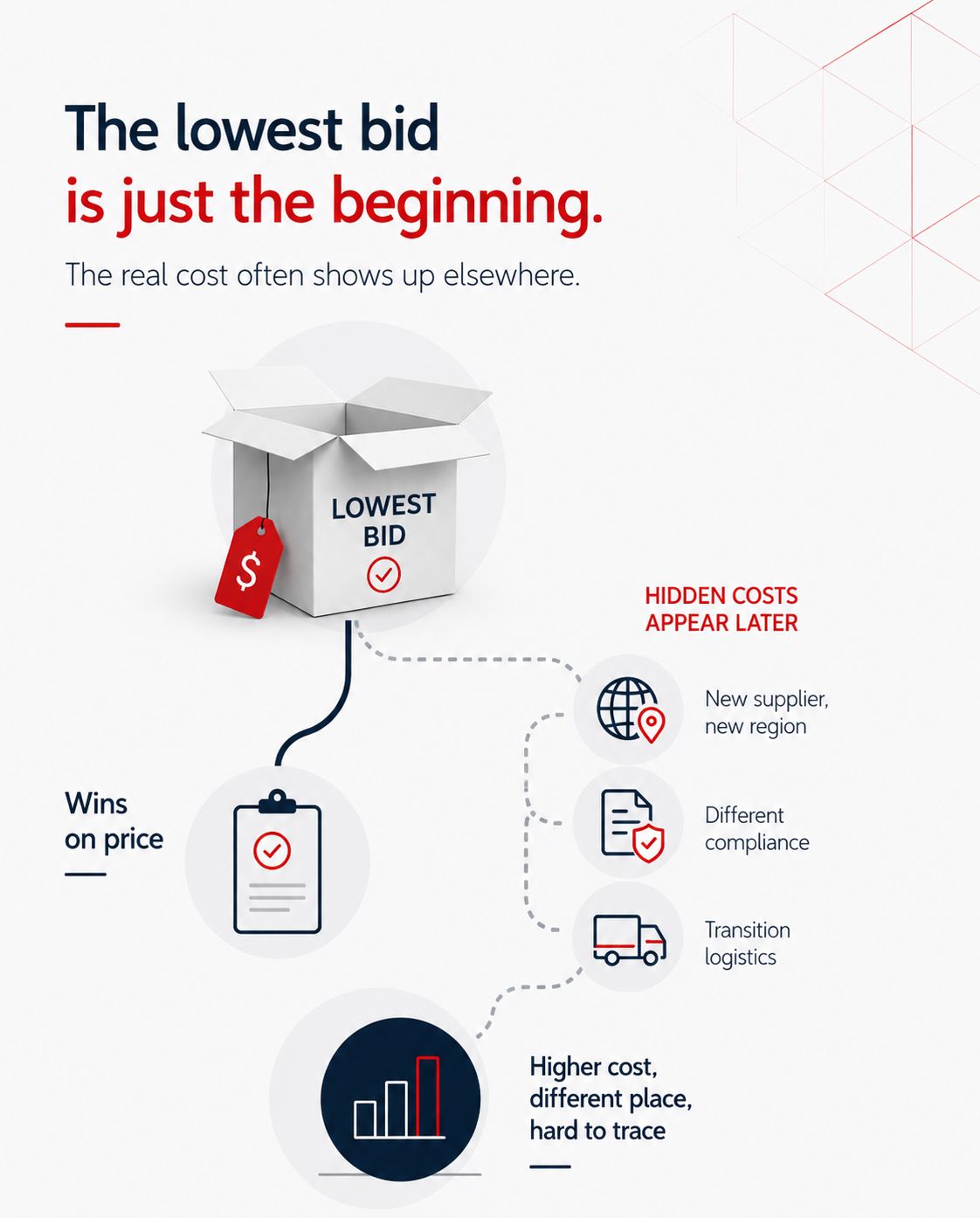
When a supplier decision from last year turned out to be more expensive than it looked, where did the extra cost actually show up? A supplier wins on price. Six months later, the real cost shows up somewhere else. Procurement conferences this year keep pointing to the same trap: regionalization strategies, adopted to diversify supply and reduce risk, can add costs through supplier transitions, compliance, and logistics that were never part of the original sourcing decision. Onboarding a new supplier in a new region. Adjusting to different compliance requirements. Absorbing transition logistics. These costs land in a different budget line, sometimes even a different fiscal year, far from the decision that created them. The sourcing record stays clean. The operating cost lands somewhere else, and nobody traces it back to the negotiation that created it. The lowest bid is the cost that was easiest to compare at the time. The full cost of the supplier is something else.
- LINKEDIN · IMAGESince 18 Sept 2026
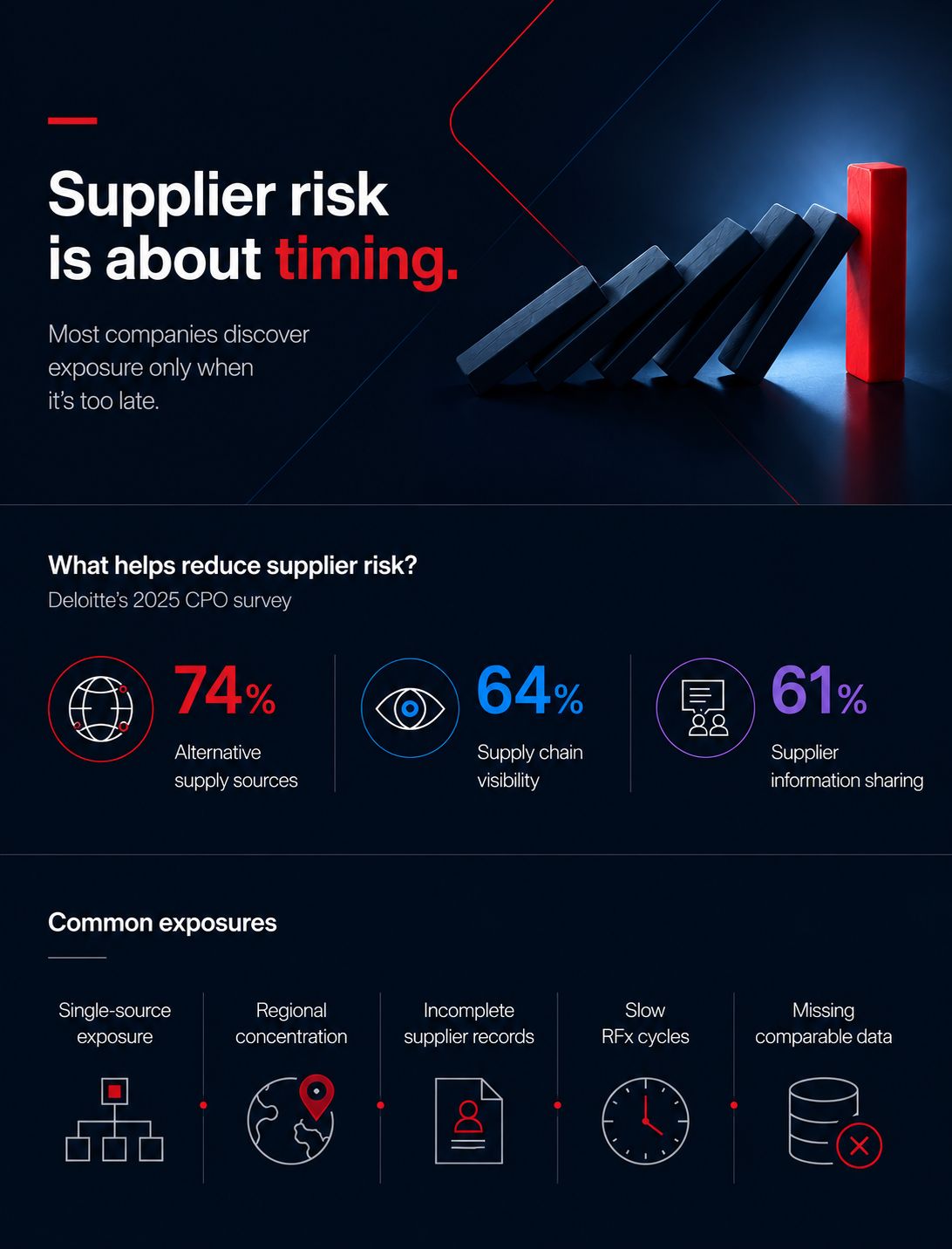
A supplier fails. That's when procurement finds out how exposed it really was. By then, it's too late to ask the right questions. Deloitte's 2025 CPO survey asked leaders what actually helps reduce supplier risk. Alternative supply sources came first at 74%, followed by supply chain visibility at 64% and supplier information sharing at 61%. https://lnkd.in/eXg8sJXB by Jennifer Brown and Ryan Flynn All three point to the same habit: dealing with risk before something goes wrong, rather than scrambling afterward. Single-source exposure. Regional concentration. Incomplete supplier records. Slow RFx cycles. The common thread is simple: not having comparable supplier data before negotiations start. Evaluating a supplier with the right context before an issue comes up matters more than simply chasing the lowest price. How much of your supplier base could you replace within a week, using the data you have today?
- LINKEDIN · IMAGESince 16 Sept 2026
A strategic procurement decision must satisfy the CFO and the auditors at the same time. That requires more structure than aggressive negotiation alone. A fail-proof sourcing event depends on standardisation. Done properly, it supports financial targets and ESG reporting at the same time. The first step is structuring demand through a template library so every supplier answers the same questions. The second is creating fair competition through comparative maps. This process depends on an approval workflow and a complete audit trail. The reason for selecting a supplier should be available in a single click. Aberdeen Group benchmarks indicate around 14.3% cost reduction when this structure is applied. This same approach helped a British grocery retailer restructure its supplier base and remove a billion units of plastic. Learn more about our framework here: https://lnkd.in/ed3tZYGR Consistent financial savings depend on processes that leave a clear, immediate trail.
- LINKEDIN · IMAGESince 16 Sept 2026
A German grocery group acquired 550 stores from a French discounter and had eight weeks to renegotiate supplier terms before year-end, while the French operation continued growing 50%. 1,000 SKUs. More than 400 suppliers. Eight weeks. There was no time to manage each conversation separately. In deals like this, systems integration usually gets the most attention. The buying team's challenge was having visibility across hundreds of negotiations at the same time, knowing where each one stood without losing track. What made it possible was having quotes, supplier communication, and contract terms managed in one place, giving the team a real-time view of every negotiation instead of scattered emails and spreadsheets. Running hundreds of negotiations in parallel requires the right infrastructure behind the process. More on how that worked in the case below. #Procurement #StrategicSourcing #SupplierManagement #Retail #SupplyChain #Negotiation #DigitalTransformation #SourceToContract #ProcurementTransformation #RetailOperations
- LINKEDIN · IMAGESince 16 Sept 2026
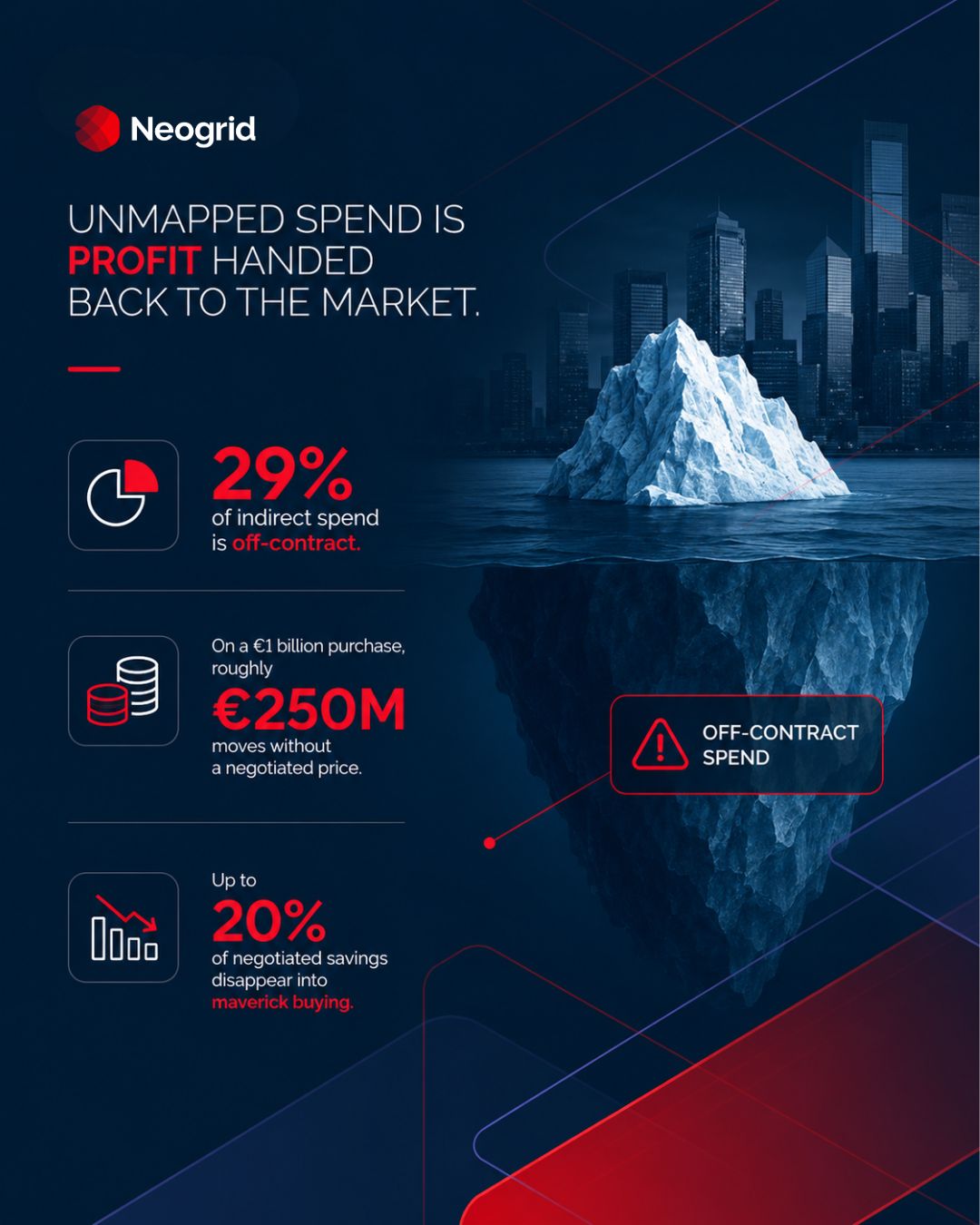
The Hackett Group estimates that 29% of indirect spend is off-contract. This leakage often goes unnoticed until the annual financial review. On a €1 billion purchase, roughly €250 million moves without a negotiated price. Up to 20% of negotiated savings disappear into maverick buying. This loss sits inside sourcing processes still dependent on spreadsheets. Without a unified comparative map, off-contract buying becomes a direct consequence of fragmented tracking. In a focused 45-minute sourcing diagnostic, we map exactly where your procurement loses value. We analyse non-auditable awards and incorrect categories through a structured working conversation, with no generic slides. We have limited European slots this cycle. Book your diagnostic here: https://lnkd.in/ebfGGR7w Unmapped spend is simply profit handed back to the market.

6 of 76 adsSign up to see every Neogrid ad, filter by format and date, and get alerts on new ones.
See all 76 adsWatch the companies you care about.
Filter every ad by industry, country, format and network, and get alerts when a company you watch starts running new ads.