Not on air · 3 of 3 networks checked
MAN Digital: HubSpot & RevOps Agency
- man.digital
- Technology, Information and Internet
- PL
- 16 employees
MAN Digital: HubSpot & RevOps Agency’s ads on LinkedIn, Meta and Google, recorded by adsrunning. Browse the latest here for free. Sign up free to see all 104. Watch MAN Digital: HubSpot & RevOps Agency with Starter to get each new one in your feed.
Watchlist with Starter · $49/mo
| Network | Status | Live ads | Nov 2025LinkedIn activity · 52 weeksNov 2026 | Checked | Next step |
|---|---|---|---|---|---|
| None recorded | 0 | Checked 31 Oct 2026 | See all 104 ads → | ||
| Meta | None recorded | 0 | No active ads recorded on the Meta Ad Library | Checked 23 Oct 2026 | Collect them with the API → |
| Recently | 11 | Ads on the Google Ads Transparency Center | Checked 4 Oct 2026 | Collect them with the API → |
MAN Digital: HubSpot & RevOps Agency has no live LinkedIn ads. Its Facebook page had no active ads on 23 Oct 2026, and we recorded 11 Google ads on 4 Oct 2026.
Latest ads
- LINKEDIN · IMAGESince 26 Oct 2026
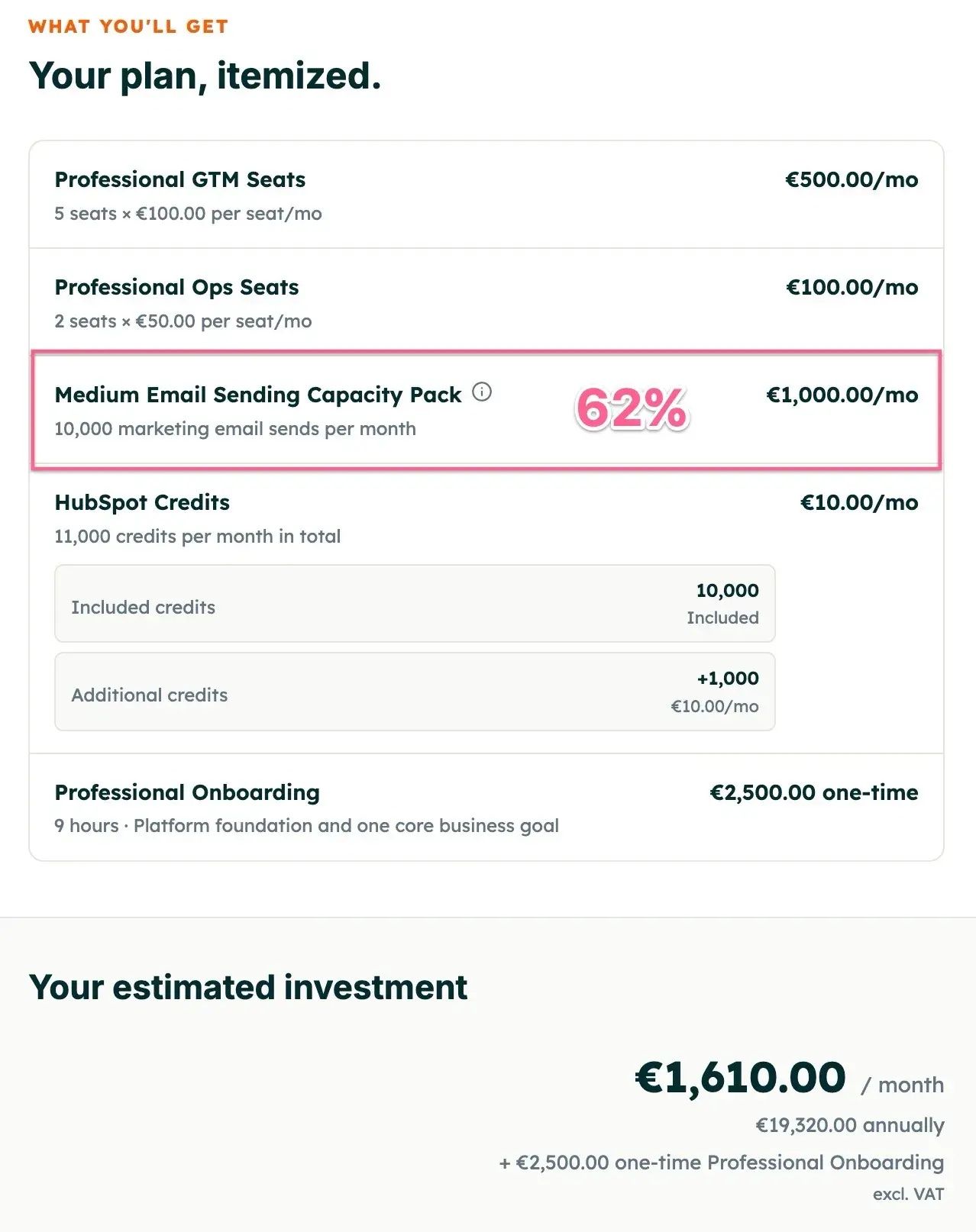
Software pricing is changing. Same deal with HubSpot pricing. Now you decide if it’s good or bad. What I love about HubSpot is its transparency. Compared with Grok, Muse, Lovable, and even ElevenLabs, HubSpot is far more transparent because I know exactly what I’m paying for. I receive a detailed breakdown, which lets me control costs better. Elena Verna Head of growth at Lovable points out that many companies can get through it because their products are that good. For now. I love the product HubSpot built, and my whole company is all-in on HubSpot. Now regarding the price change. It’s understandable: 𝑦𝑜𝑢 𝑐𝑟𝑒𝑎𝑡𝑒 𝑎 𝑔𝑟𝑒𝑎𝑡 𝑝𝑟𝑜𝑑𝑢𝑐𝑡 𝑡ℎ𝑎𝑡 𝑝𝑒𝑜𝑝𝑙𝑒 𝑙𝑜𝑣𝑒, 𝑎𝑑𝑑 𝑎 𝑙𝑜𝑤-𝑒𝑛𝑡𝑟𝑦-𝑝𝑜𝑖𝑛𝑡 𝑠𝑢𝑏𝑠𝑐𝑟𝑖𝑝𝑡𝑖𝑜𝑛, 𝑎𝑛𝑑 𝑡ℎ𝑒𝑛 𝑙𝑎𝑦𝑒𝑟 𝑐𝑟𝑒𝑑𝑖𝑡 𝑢𝑠𝑎𝑔𝑒 𝑜𝑛 𝑡𝑜𝑝. But if I zoom in and check only the email-sending capacity, it doesn’t make sense. In this Limited Release calculator: €1,000 for 10,000 emails per month. That’s 𝟔𝟐% of the €1,610 monthly bill. It doesn’t help me create the emails; it just sends them. That’s a transaction. My logic is this: if it’s a transaction and a commodity, it should fall under my seat pricing with a small add-on if I use it more. Charge me for AI credits only for AI-type work, so I can get more value from both. - Buying signals - A data agent - Creating context - Cleaning up my data - Self-updating my data - Sending out nurture or prospecting agents - Custom Agents Those are added-value services with AI credits that can sit on top of a subscription. Email isn’t one of them; it’s a commodity: you simply send out some email. Resend: $80/month for 10,000 contacts, unlimited broadcast sending. Contacts ≠ sends. Don’t get me wrong: I love the fact that we have this new pricing that lowers teh friction. Not the complexity ( but this is what we see with all products these days). That’s why you need a partner or very smart internal people who can guide you through this. There are a bunch of nuances. Your bill can really go up as you use it more. Feedback for the pricing team: revisit this. The pricing is disproportionate when other solutions are available. If not the future, we will try to send emails via alternatives such as Resend
- LINKEDIN · IMAGESince 7 Oct 2026
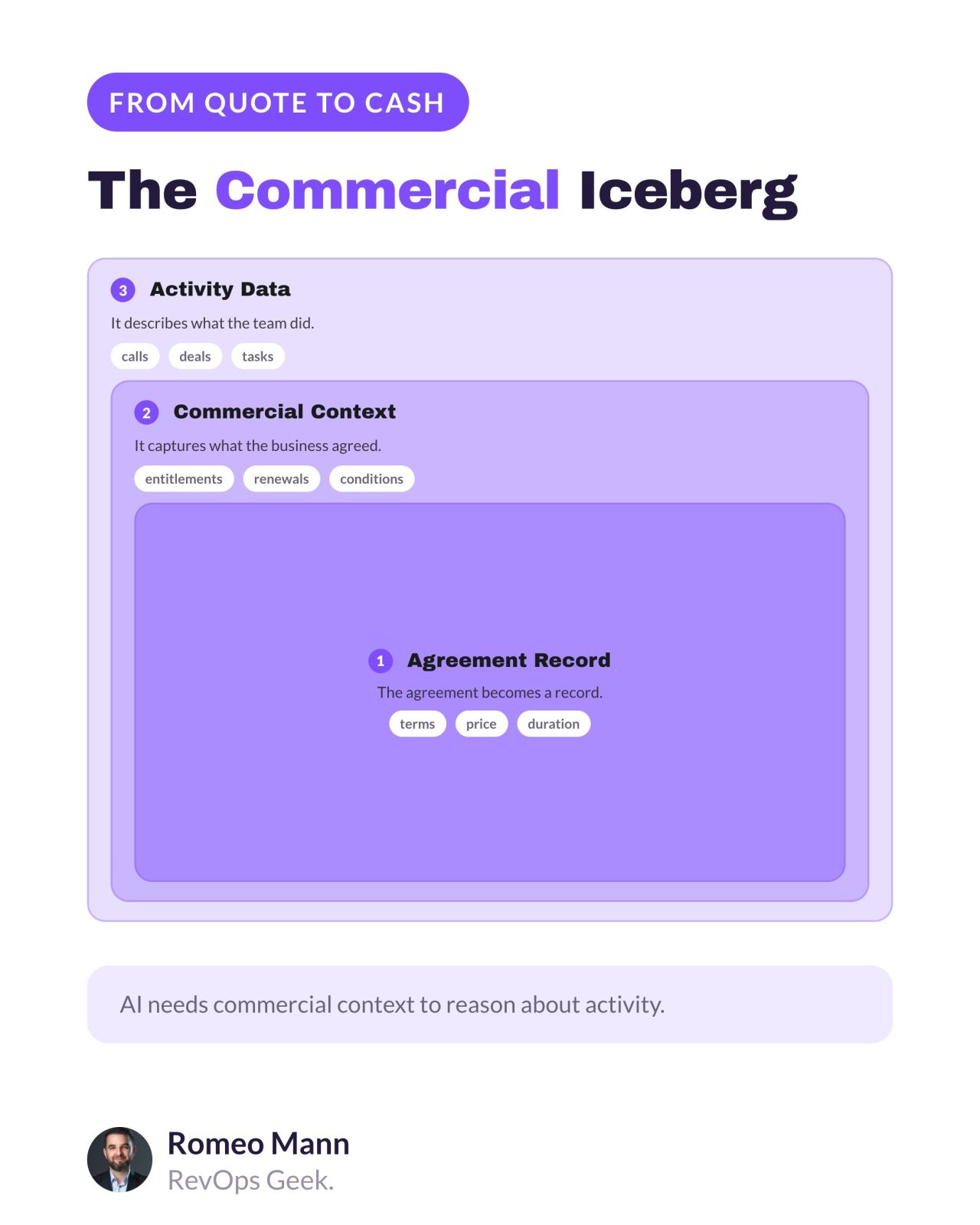
There is a question that separates a CRM from a revenue system. 𝐻𝑜𝑤 𝑚𝑢𝑐ℎ 𝑑𝑖𝑑 𝑤𝑒 𝑠𝑒𝑙𝑙 𝑙𝑎𝑠𝑡 𝑞𝑢𝑎𝑟𝑡𝑒𝑟? 𝑊ℎ𝑎𝑡 𝑑𝑜𝑒𝑠 𝑖𝑡 𝑐𝑜𝑚𝑚𝑖𝑡 𝑢𝑠 𝑡𝑜 𝑡ℎ𝑖𝑠 𝑞𝑢𝑎𝑟𝑡𝑒𝑟? A CRM full of activity answers neither. It can tell you how many calls happened, how many deals moved, how many tasks closed, and how busy everyone was. Busy is measurable. Committed is not, unless the commercial layer exists. That is the difference between activity data and commercial context. Activity data describes what the team did. Commercial context describes what the business agreed to: terms, price, duration, entitlements, renewal conditions. Most teams buy AI to interpret the first one and discover the second one is missing. So the agent has nothing to reason about except the busy-ness. Pipeline hygiene reports will not close the gap. Another dashboard on top of the same fields will not close it either. The gap closes when the agreement itself becomes a record the system can read. Then activity data becomes useful, because there is something commercial to attach it to. I am running a session on exactly this on Tuesday, 20 October at 15:00 CEST (14:00 BST), as part of a webinar series. 𝐓𝐡𝐞 𝐭𝐨𝐩𝐢𝐜: From Quote to Cash. How products, quotes, approvals, contracts, invoices, payments, and collections connect into one record in HubSpot, and where the handoff between sales and finance usually breaks. Register here: https://lnkd.in/dkt2KVFd
- LINKEDIN · IMAGESince 1 Oct 2026
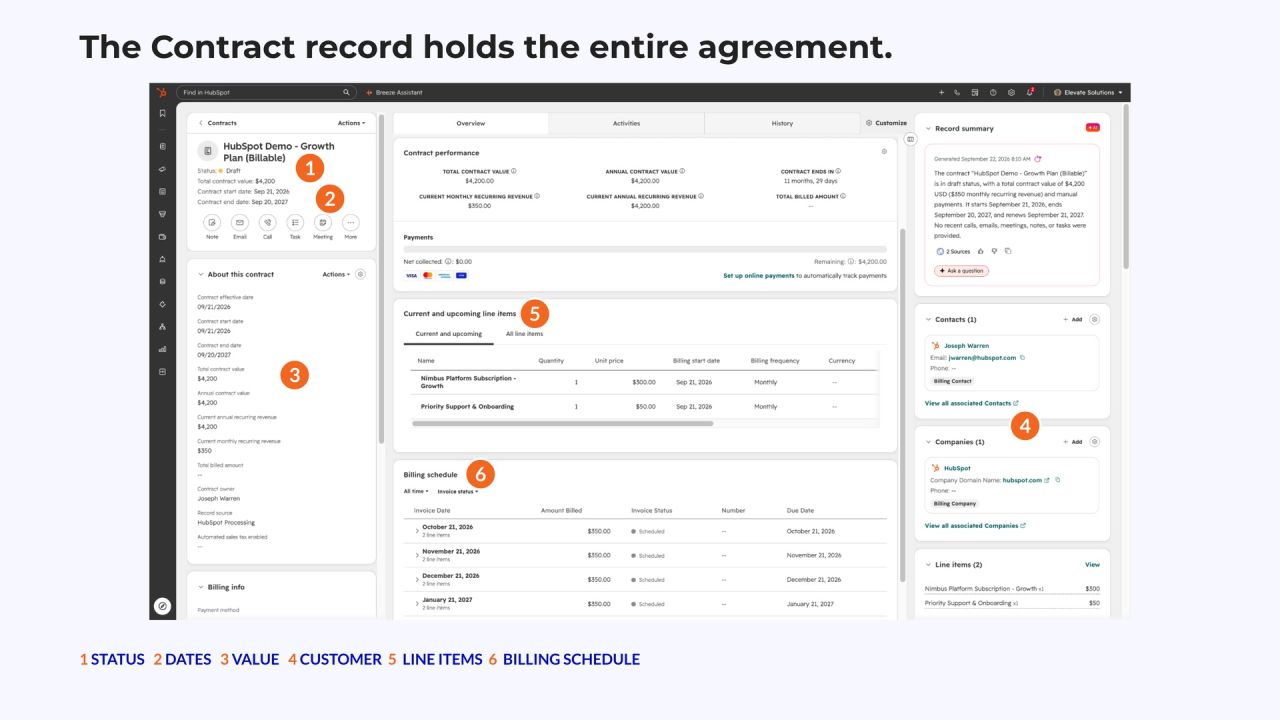
Revenue reporting starts in the contract. A deal gets closed in the CRM, and everything downstream inherits whatever that record decided. - What product was actually sold. - What the term really is. - What was discounted. - When it renews. - What the customer is entitled to next quarter. If those answers live in a PDF, in a shared drive, or in the head of the rep who left, the reporting layer will be confident and wrong. That is the part no dashboard upgrade fixes. This is why we keep recommending the same starting point. Five contracts. Not fifty. Not a full migration. Five representative ones, chosen to break the model on purpose: - Different products. - Different terms. - Different currencies. - Different renewal conditions. - At least one with an amendment or a mid-term change. Then map them properly, once. What the record should carry, at minimum: The commercial shape of the deal: products, quantities, price, discount, effective dates. The term: start, end, renewal logic, notice period. The change history: amendments, upsells, co-terms, cancellations. The relationship to the rest of the stack: quote, order, invoice, subscription. Five contracts answer the real question faster than a company-wide questionnaire. Does the model survive contact with how your business actually sells. If it does, you scale it. If it does not, you fixed it at the cheapest possible moment. The first Revenue Context session ran on 22 September with HubSpot's Revenue Hub team, on exactly this. The next one is 20 October. One registration covers the remaining sessions.
- LINKEDIN · IMAGESince 1 Oct 2026
The forecast review is the most expensive meeting in most revenue teams. The number in the spreadsheet and the evidence in the contracts almost never match, and everyone in the room knows it. So the meeting turns into archaeology. Someone opens a PDF. Someone checks the CRM. Someone remembers a discount that was agreed on a call. Someone says the renewal date is probably right. By the end, the team agreed on a number. Nobody agreed on what it is based on. Decide, once, that the commercial source of truth is the contract record, and that the forecast has to reconcile to it. Then the meeting changes character. The number already reconciles to the contract record. The meeting is about what changed and what needs a decision today. Forecast reviews only get shorter when the forecast reconciles to the contract record.
- LINKEDIN · IMAGESince 24 Sept 2026
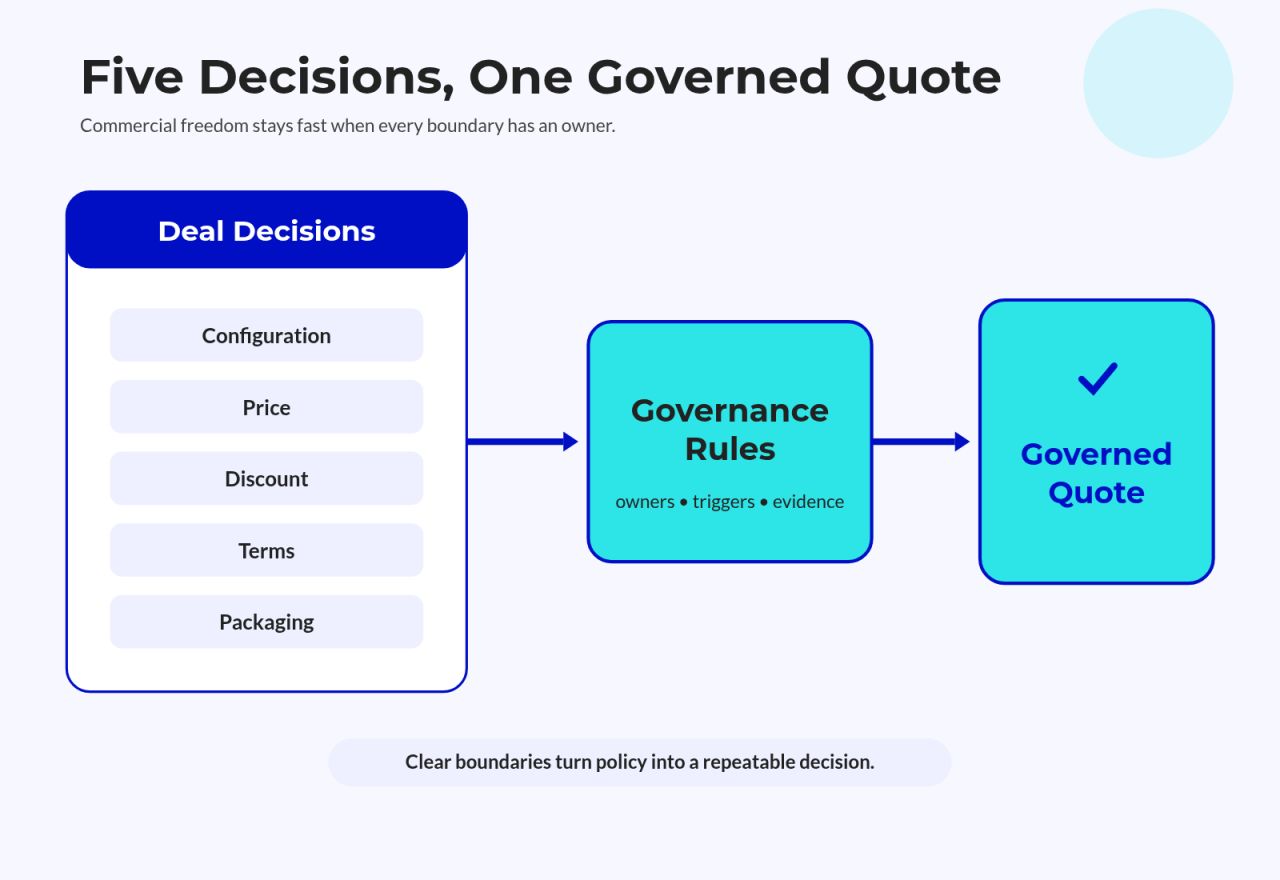
When a quote needs approval, most teams ask who can click “𝐚𝐩𝐩𝐫𝐨𝐯𝐞.” I care more about what they are approving. A quote carries several decisions: - Configuration. - Price. - Discount. - Terms. - Packaging exceptions. Those decisions do not always have the same owner or risk. Yet many companies send the whole quote to a sales director. 😂 One person now has to judge product feasibility, margin, legal language, delivery risk, and account strategy. That sends every decision into one queue. Good quote control separates the decisions. Product decides whether the offer can be delivered. Commercial operations owns the base pricing logic. Sales owns the buyer trade-off, while Finance owns margin and payment risk, and Legal owns non-standard terms. Then the workflow uses the right response: - Block an impossible configuration. - Calculate a deterministic price. - Route a commercial trade-off. - Record a genuine exception. An approver should see the exact rule that fired, the affected values, and the evidence needed to decide. They should not rebuild the quote to understand the request. The goal is clear commercial freedom inside boundaries people understand. One quote, with five decisions and named owners.
- LINKEDIN · IMAGESince 24 Sept 2026
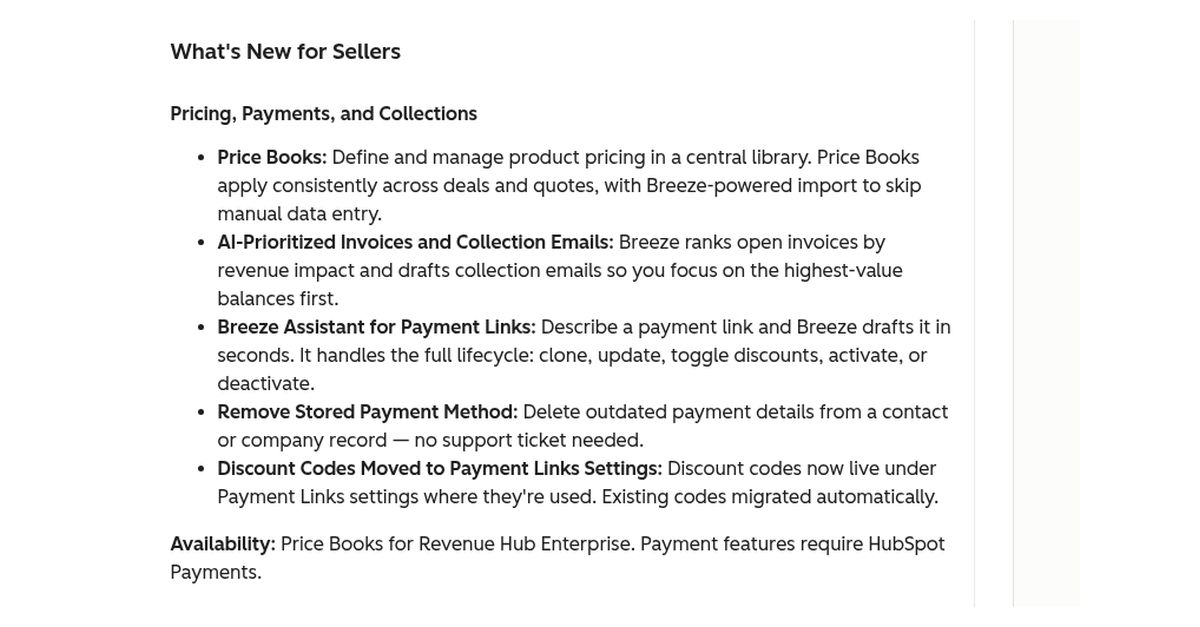
HubSpot can now rank open invoices by revenue impact and draft collection emails. Useful, but “𝐥𝐚𝐫𝐠𝐞𝐬𝐭 𝐛𝐚𝐥𝐚𝐧𝐜𝐞 𝐟𝐢𝐫𝐬𝐭” is not a collections strategy. A large late invoice from a strategic customer may need a phone call. It may also need the account owner and finance involved. A smaller invoice disputed for the third time may expose a broken sales handoff. The AI can sort the queue and draft the email. But it cannot explain why the invoice is late. It cannot decide who owns the relationship or which action protects both cash and the customer. Before automating collections, I would define the signals: - amount and days overdue - dispute reason - account tier - owner - promised payment date - escalation path Then AI can support the workflow. It can surface the right invoice, give the collector context, draft the next step, and record what happened in HubSpot. Otherwise, automation sends a faster email into a broken revenue handoff. Collections depends on ownership and context around the customer relationship.

6 of 104 adsSign up to see every MAN Digital: HubSpot & RevOps Agency ad, filter by format and date, and get alerts on new ones.
See all 104 adsWatch the companies you care about.
Filter every ad by industry, country, format and network, and get alerts when a company you watch starts running new ads.