On air · 2 of 3 networks
Magnet Forensics
- magnetforensics.com
- US
- 940 employees
Magnet Forensics’s ads on LinkedIn, Meta and Google, recorded by adsrunning. Browse the latest here for free. Sign up free to see all 876. Watch Magnet Forensics with Starter to get each new one in your feed.
Watchlist with Starter · $49/mo
| Network | Status | Live ads | Nov 2025LinkedIn activity · 52 weeksOct 2026 | Checked | Next step |
|---|---|---|---|---|---|
| Running | 348 | Checked 29 Oct 2026 | See all 876 ads → | ||
| Meta | Running | 41 | Active ads on the Meta Ad Library, all countries | Checked 28 Oct 2026 | Collect them with the API → |
| Recently | 200+ | Ads on the Google Ads Transparency Center | Checked 3 Oct 2026 | Collect them with the API → |
Magnet Forensics has 348 live LinkedIn ads. Its Facebook page had 41 active ads on 28 Oct 2026, and we recorded 200+ Google ads on 3 Oct 2026.
Latest ads
- LINKEDIN · IMAGESince 20 Oct 2026
The attorney and the examiner each understand a different part of the case. Trial is a bad place to find that out. No surprises on the stand is a practical reference for preparing witnesses and presenting digital evidence: authentication, user attribution, courtroom exhibits, direct examination, and preparing for cross. It helps attorneys and examiners connect what the data establishes with the testimony needed to explain it. Keep it handy for your next witness prep meeting or trial. Download: https://lnkd.in/guVXHi8T
- LINKEDIN · IMAGESince 17 Oct 2026
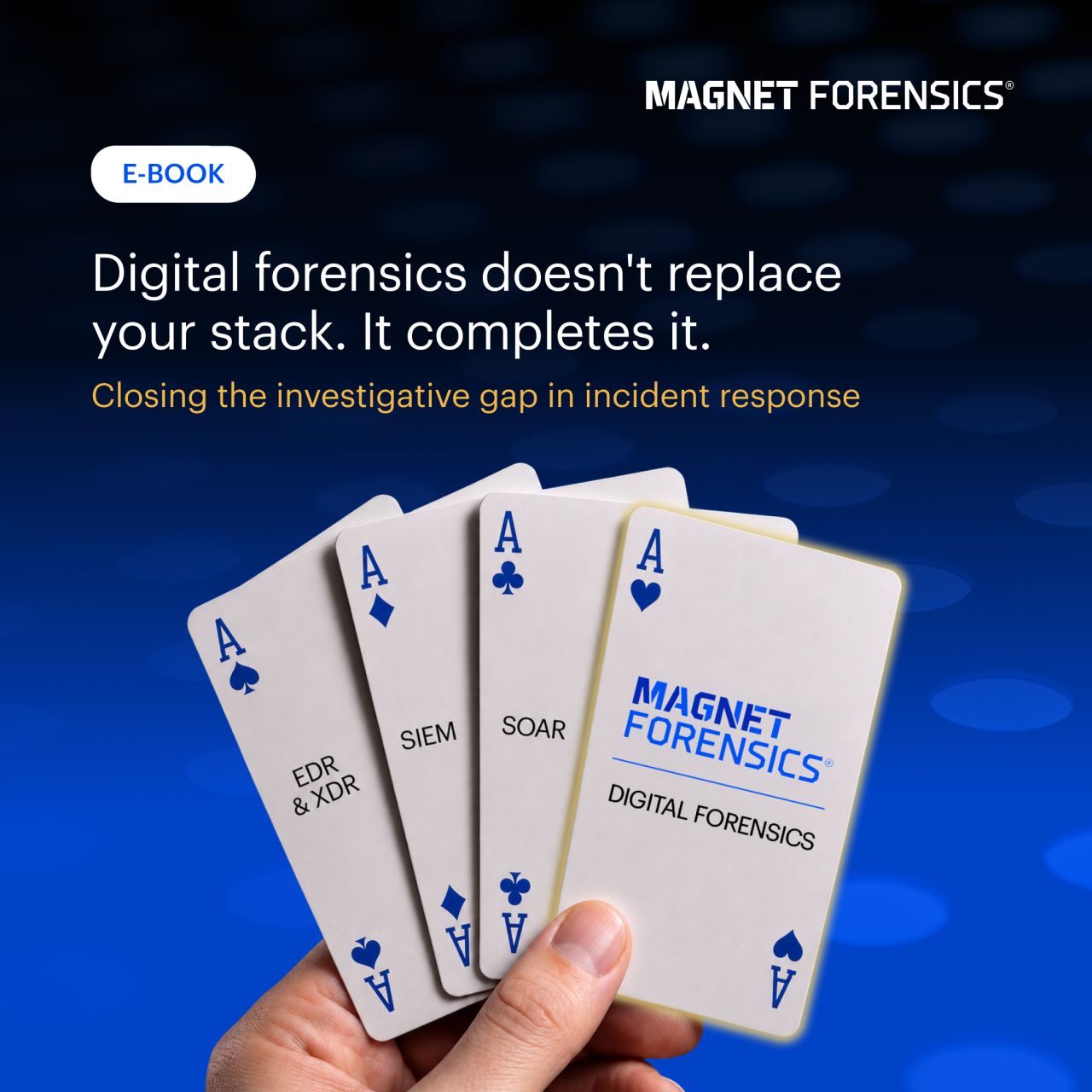
Incident response can no longer stop at containment. Today’s organizations need defensible answers, not assumptions. An alert tells you something happened. But after containment, the harder questions begin: How did the attacker get in? How far did they move? What data was accessed? Was anything exfiltrated? Can we prove our findings to legal, audit, regulators, insurers, or oversight teams? That is where digital forensics closes the investigative gap. EDR, XDR, SIEM, and SOAR are essential for detecting, correlating, and responding to incidents. Digital forensics completes that stack by preserving evidence, reconstructing attacker activity, identifying root cause, validating remediation, and helping teams prove what happened. The result is a stronger incident response program that can move from “we contained it” to “we know what happened, how it happened, and how to keep it from happening again.” Download the eBook to see how digital forensics adds the investigative layer modern IR teams need. https://lnkd.in/eT2an_g4
- LINKEDIN · IMAGESince 16 Oct 2026
There’s a gap between knowing something happened and truly understanding it. The details are the bridge to that gap. This week, my oldest daughter called me during her lunch break from her summer internship. She didn’t call because she needed money, advice, or a problem solved. She called because she had a story to tell. As she walked me through every detail, I realized the call wasn’t really about the event itself. It was about everything surrounding it. If she had simply said, “Mom, this happened,” I would have understood the event, but I wouldn’t have understood the full story. I wouldn’t have known the context, the sequence of events, the emotions, or why it mattered enough for her to want to call and share it with me in that very moment. The details turned information into understanding. The same is true in DFIR. As an industry, we’ve become incredibly effective at detecting, containing, and responding to alerts. We have a growing set of tools that surface events, correlate activity, identify patterns, and automate actions faster than ever before. But an alert only tells us that something happened. It rarely tells us the story. - What actually happened? - How did it happen? - What was the impact? - Was it fully remediated? - And can we confidently defend our conclusions if asked to do so? That is the gap digital forensics fills. It helps us reconstruct events, establish root cause, validate impact, and tell the complete story with confidence. Effective incident response requires more than knowing that something happened. It requires closing the investigative gap so we can fully understand, prove, and defend what happened. That’s exactly what the latest e-book from Magnet Forensics explores. https://lnkd.in/gidyG9eV
- LINKEDIN · IMAGESince 16 Oct 2026
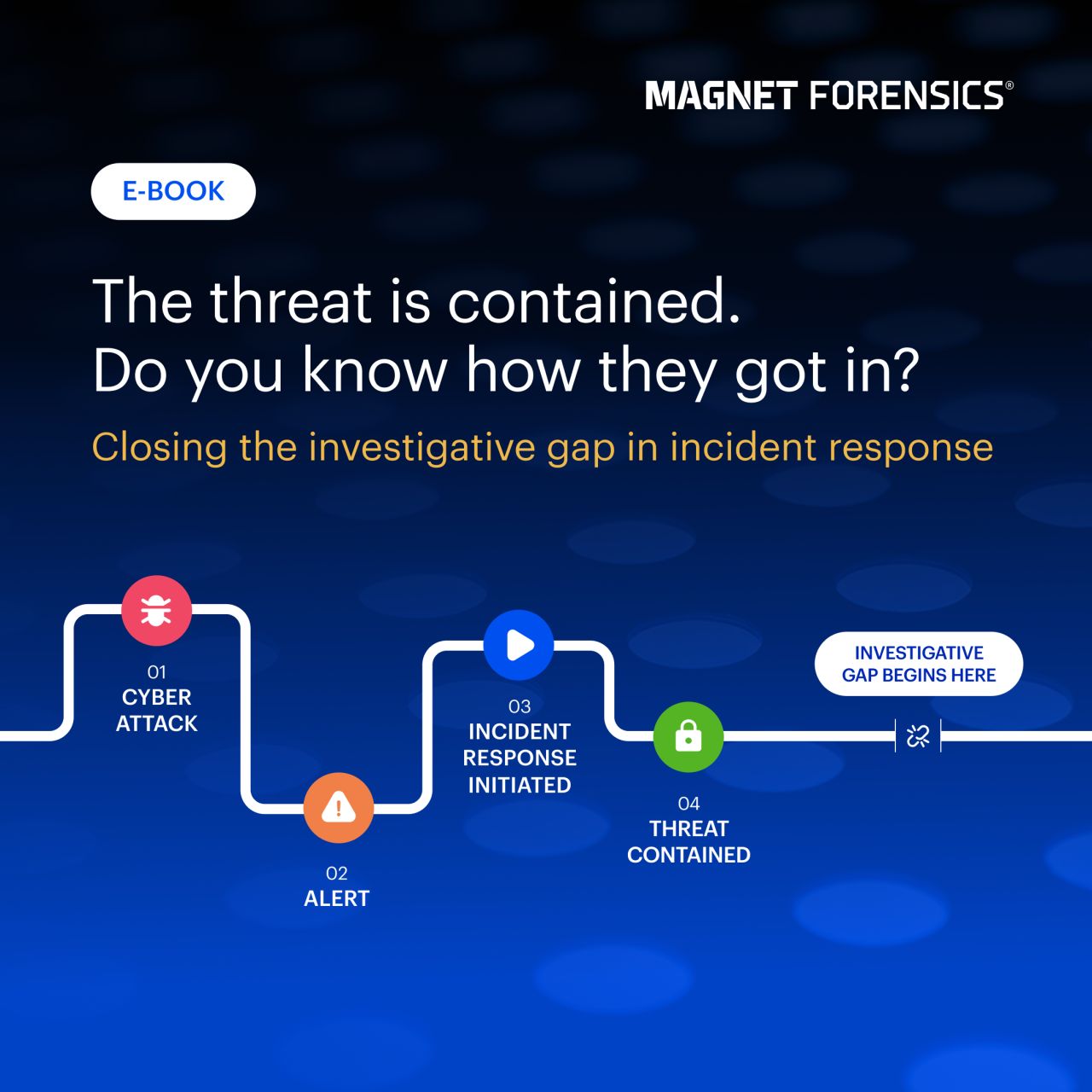
Your EDR caught it. Your SIEM correlated it. Your SOAR ran the playbook. Ticket closed. Then your CISO asks how they got in. That's the investigative gap, and this eBook breaks down how to close it.
- LINKEDIN · IMAGESince 16 Oct 2026
The alert fires. The playbook runs. The threat is contained. Then oversight asks how they got in, how long they were inside, and whether you can prove it. Your detection stack can't answer those questions. This eBook covers what can.
- LINKEDIN · IMAGESince 16 Oct 2026
EDR detects. SIEM correlates. SOAR responds. Three strong layers doing exactly what they were built to do. But none of them can tell you how the attacker got in, how far they spread, or whether they're actually gone. That's what the fourth layer is for.

6 of 876 adsSign up to see every Magnet Forensics ad, filter by format and date, and get alerts on new ones.
See all 876 adsWatch the companies you care about.
Filter every ad by industry, country, format and network, and get alerts when a company you watch starts running new ads.