Not on air · 2 of 3 networks checked
Letter AI
- letter.ai
- Technology, Information and Internet
- US
- 68 employees
Letter AI’s ads on LinkedIn, Meta and Google, recorded by adsrunning. Browse the latest here for free. Sign up free to see all 83. Watch Letter AI with Starter to get each new one in your feed.
Watchlist with Starter · $49/mo
| Network | Status | Live ads | Nov 2025LinkedIn activity · 52 weeksNov 2026 | Checked | Next step |
|---|---|---|---|---|---|
| None recorded | 0 | Checked 1 Nov 2026 | See all 83 ads → | ||
| Meta | Not checked | — | |||
| Recently | 9 | Ads on the Google Ads Transparency Center | Checked 16 Oct 2026 | Collect them with the API → |
Letter AI has no live LinkedIn ads. We recorded 9 Google ads on 16 Oct 2026.
Latest ads
- LINKEDIN · VIDEORecorded 3 Oct 2026
We’re excited to announce that Letter AI has raised $10.6M in Series A funding, led by Stage 2 Capital, with participation from Lightbank, Y Combinator, Formus Capital, Northwestern Mutual Future Ventures, Mangusta Capital, and others. As part of the raise, Mark Roberge - Managing Director at Stage 2 and founding CRO at HubSpot - will be joining the Letter AI board. To keep up with the speed at which Letter is growing, our team has quadrupled, but our mission has remained the same: to transform enablement from a traditionally passive exercise into one that’s proactive, personalized, and high velocity, all within a unified, AI-native platform. In the past year, our customer base has grown 15x, with incredible organizations like Lenovo, Adobe, Novo Nordisk, Plaid, Zip, Kong Inc., and SolarWinds embracing what we’re building. Global enablement teams have leaned into departing legacy systems in favor of an AI-native, unified approach. Every new feature, every workflow, and every product decision is inspired by the enablement leaders and revenue teams we serve. Your feedback shapes our roadmap, and your success defines ours. Join us in shaping the future of revenue enablement; it’s never looked brighter. Read more here ➡️ https://lnkd.in/gnfksi2j
- LINKEDIN · IMAGERecorded 30 Oct 2026
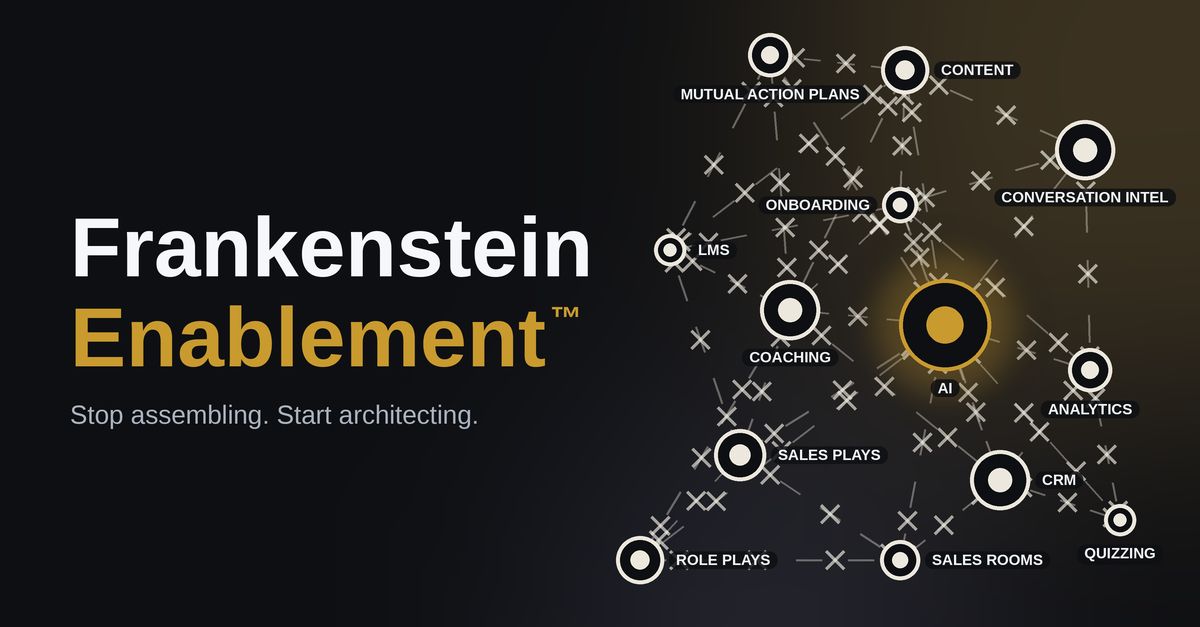
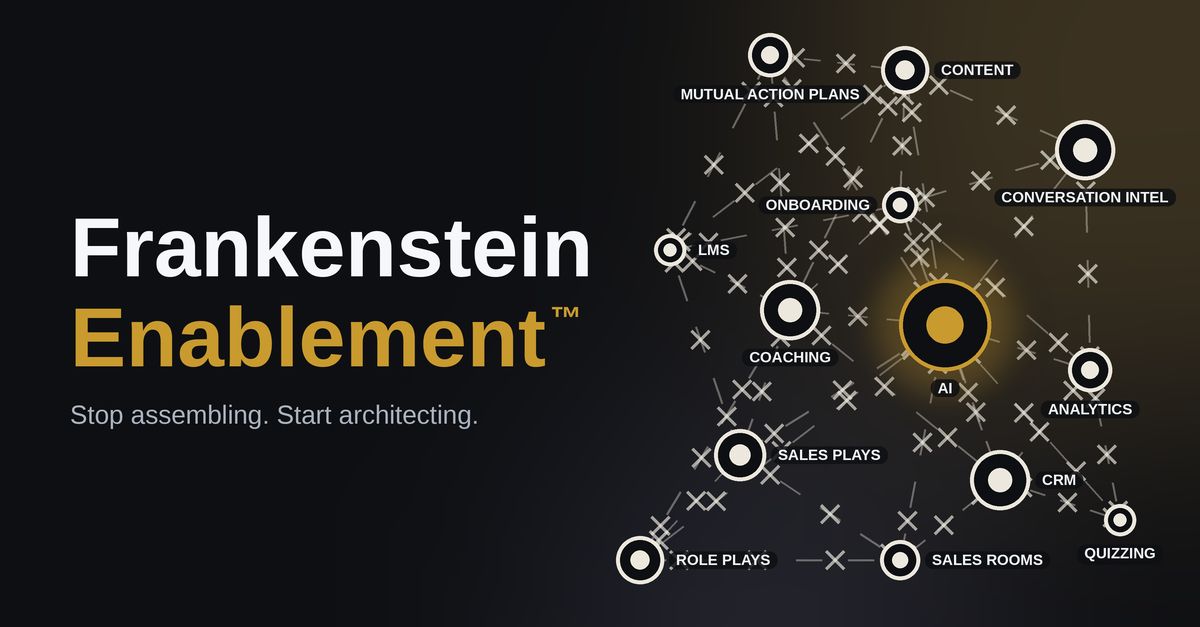
I once watched a rep lose a deal on an objection we had the perfect response to. The insight existed. So did the updated messaging, the playbook, and the coaching. The problem? They all lived in different places. And when a rep is in the middle of a deal, they don’t have time to piece together intelligence across six tools. They need to know what’s happening, what matters, and what to do next. That’s the bigger problem with Frankenstein Enablement™. We’ve built stacks full of valuable content, coaching, conversation intelligence, buyer signals, and AI. But when those systems don’t share what they know, two things happen: 1. The organization can’t turn all that intelligence into action fast enough. 2. And reps are left navigating a maze of tools to find what they need. The numbers make the disconnect even clearer. Research from Forrester suggests around 80% of sales content goes unused by the field. And research consistently shows that 65–70% of purchased platform capability goes permanently unused. That’s a lot of investment sitting in the stack without changing what a rep does next. And adding AI to every tool doesn’t solve it. You just end up with more disconnected assistants, each working from a different slice of context. The answer isn’t more tools or more training. It’s a connected experience where content, coaching, deal intelligence, and AI work together — so reps don’t have to figure out where to go or connect the dots themselves. When organizations move from fragmented to unified platforms, one benchmarking study found activation jumped from 52% to 88%. That’s the opportunity: turn more of what your organization already knows into action. So reps can understand what’s happening across their deals, get the right guidance in the moment, close deals faster, and effectively manage more opportunities at once. At the Sales Enablement Collective Summit in Chicago on Nov 18, Ali Akhtar and I are unpacking what it looks like to move from Frankenstein Enablement™ to a connected system built around how reps actually work. A simple test for your stack: When a new signal shows up in one system, how many steps does it take before it changes what a rep does next? Letter AI
- LINKEDIN · IMAGERecorded 30 Oct 2026
I approved an internal build once. I was proud of it. I was also, it turned out, eighteen months behind the moment it shipped. Here's how it went. We identified a gap. We had strong engineers. A vendor had just raised their prices. The pitch in the room was compelling: "We know our workflows better than any vendor does. Let's own this." I have been in this meeting and I nodded with approval in this meeting. I have written the PRD for this meeting and fourteen months later, version 1.0 shipped (imagine the slack with confetti). Then engineering moved to the next priority, because internal enablement tooling wasn't on any revenue dashboard. By the time the tool was stable, two of the integrations it depended on had updated their APIs. We had a 23-item feature backlog and no sprint capacity. Then someone asked when we were adding AI. Silence. We were frozen but the world was not. That's Fracture #3: Frozen Innovation. Here's the math I didn't run before saying yes: maintaining a custom enablement tool (not improving it, just keeping it running) typically costs $100- $200K a year in engineering time. That's not investment in the product. It's the tax on the decision to build. → Average internal build cycle to production: 12–18 months. → Average AI release cycle at dedicated vendors: 60–90 days. The gap between those two numbers is your competitive disadvantage, and it compounds every quarter you're in maintenance mode. The organizations winning right now didn't bet on building the plane while flying it. They asked a sharper question: what do we actually need to own, and what should we architect with partners who do this full-time? At the Sales Enablement Collective Summit in Chicago on Nov 18, Ali Akhtar and I will walk through how that decision gets made, including what the build-vs-architect conversation looks like with a CFO in the room. If you've led or inherited an internal build: what was the first sign that we own this had become a liability? I'm asking genuinely — this is one of the most common conversations I have and I want to understand how it unfolds in different orgs.
- LINKEDIN · IMAGERecorded 24 Oct 2026
One-sentence horror story: “Did any of this help us win deals?” I hear some version of this story on almost every call with an enablement leader They walk into a QBR with their best dashboard yet - logins and content views up, course completions at an all-time high The CRO looks at it for about ten seconds and asks if any of it actually helped win deals And the enablement team freezes, eyes wide (much like me on Halloween ‘08 💀) Of course it did - reps are ramping faster, the new pitch is showing up on calls, deals are moving... They just can’t prove how enablement got them there The real horror story? When a quarter or two later the budget gets cut, and they’re doing twice the work with half the team Most of the enablement leaders I talk to aren’t looking for more content or another course - they want metrics they can put in front of their CRO that directly tie enablement to closed-won revenue If this horror story sounds less like a campfire tale and more like your Q3, let's chat. I’ve since grown out of being a creepy child and into a perfectly normal AE who talks about enablement metrics for fun 🎃
- LINKEDIN · IMAGERecorded 24 Oct 2026
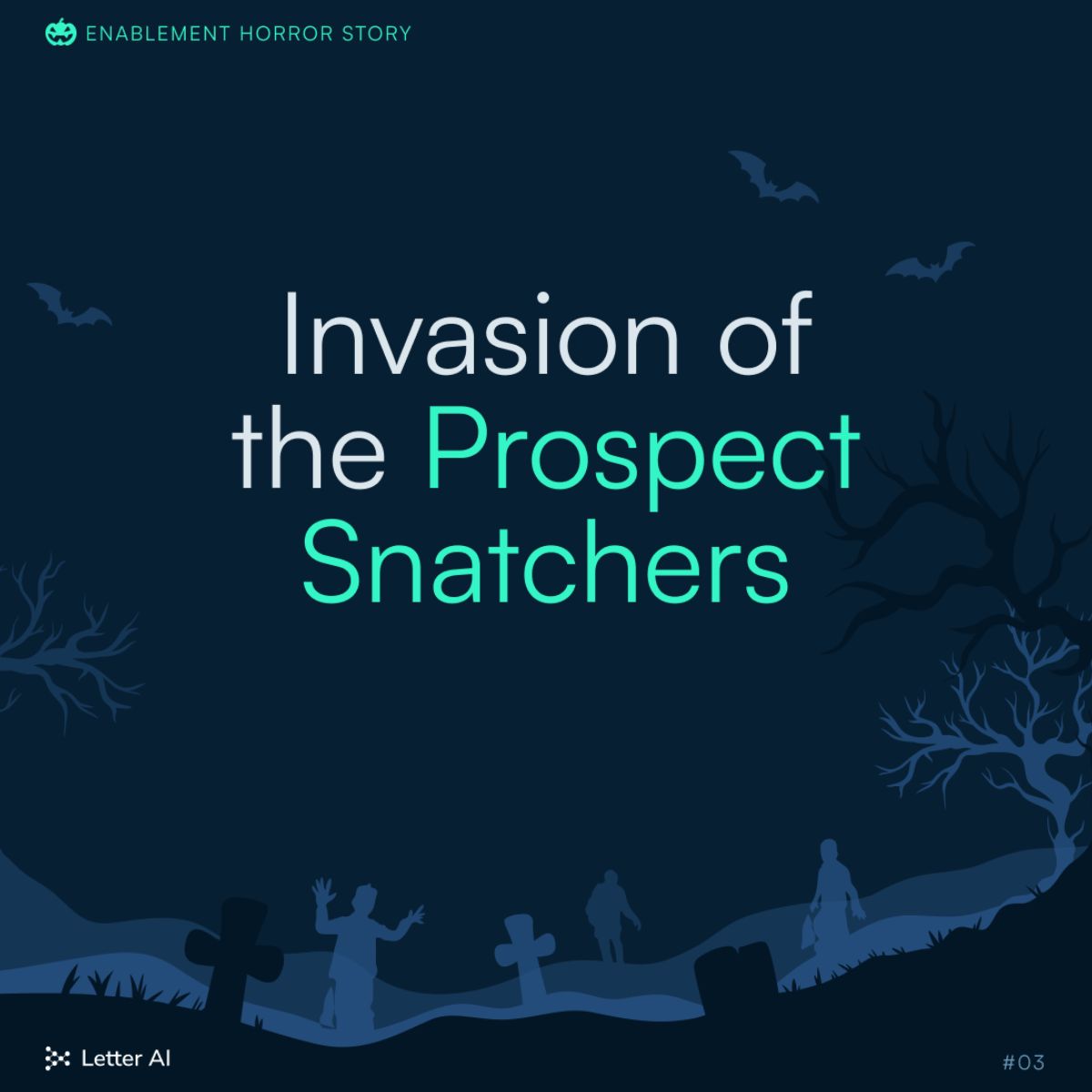
Tis the season for Enablement Horror Stories... 👻 A rep had a deal that looked perfect. Strong champion. Good engagement. Forecasted to close this quarter. Then the champion went quiet. One week. Two weeks. Turns out she’d left the company. The only signal was an auto reply buried in an email thread nobody read. By the time the rep found out, the new stakeholder had no context, no urgency, and a competitor in the room. The deal didn’t die because of bad selling. It died because nobody saw it happening. The signals are almost always there. The problem is they’re scattered across six tools and nobody’s watching. Letter AI watches and proactively notifies you- no more signals falling through the cracks. Ever had a champion disappear on you mid-deal?
- LINKEDIN · IMAGERecorded 20 Oct 2026
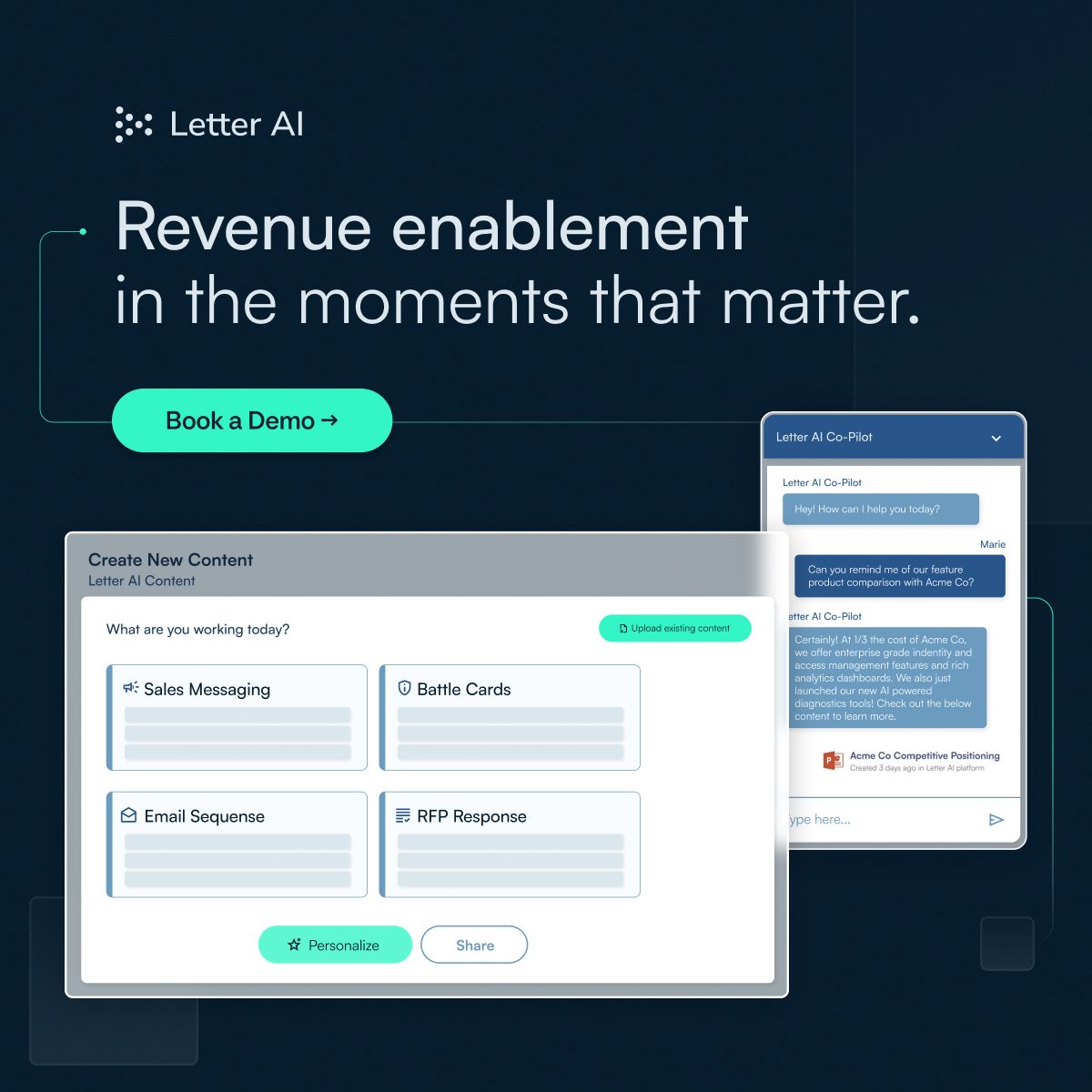
Close faster with AI Sales Rooms and end-to-end RFP automation. Letter AI connects content, coaching and buyer engagement in one AI-native platform. See what it can do in a demo.

6 of 83 adsSign up to see every Letter AI ad, filter by format and date, and get alerts on new ones.
See all 83 adsWatch the companies you care about.
Filter every ad by industry, country, format and network, and get alerts when a company you watch starts running new ads.