On air · 1 of 3 networks
KX
- kx.com
- US
- 496 employees
KX’s ads on LinkedIn, Meta and Google, recorded by adsrunning. Browse the latest here for free. Sign up free to see all 162. Watch KX with Starter to get each new one in your feed.
Watchlist with Starter · $49/mo
| Network | Status | Live ads | Nov 2025LinkedIn activity · 52 weeksOct 2026 | Checked | Next step |
|---|---|---|---|---|---|
| Running | 27 | Checked 29 Oct 2026 | See all 162 ads → | ||
| Meta | None recorded | 0 | No active ads recorded on the Meta Ad Library | Checked 22 Oct 2026 | Collect them with the API → |
| Recently | 24 | Ads on the Google Ads Transparency Center | Checked 2 Oct 2026 | Collect them with the API → |
KX has 27 live LinkedIn ads. Its Facebook page had no active ads on 22 Oct 2026, and we recorded 24 Google ads on 2 Oct 2026.
Latest ads
- LINKEDIN · IMAGESince 23 Oct 2026
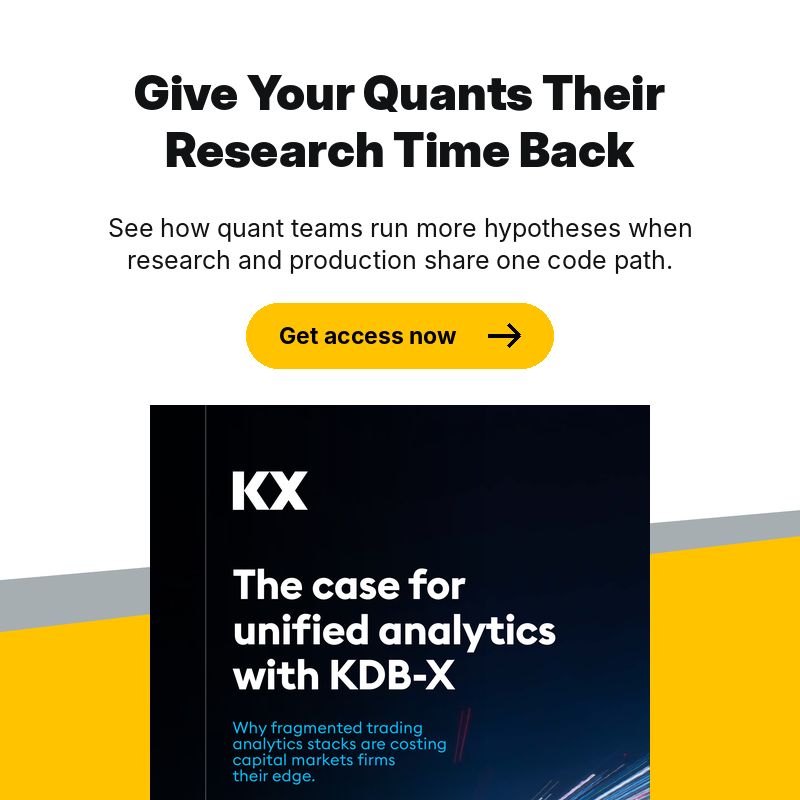
The return on your research spend isn't set by how many signals your quants find. It's set by how many reach the book. In most firms, research runs in one environment and production in another. Every validated strategy pays to cross that gap: join conditions rewritten, replay logic reconciled, backtest assumptions that don't hold in live. The strategies that make it through aren't always the strongest. They're the ones that survived the handoff. That's paid-for research that never earns. KDB-X puts research and production in one environment. Streaming, historical, time-series, and vector workloads run on the same data and the same code path, so a validated strategy carries from backtest to live without a rewrite. Backtesting runs up to 100x faster, so your team tests more hypotheses and moves more of them into production, from the headcount you already fund. Eight of the top 10 global investment banks already run production infrastructure on KX. Download The Case for Unified Analytics with KDB-X to see where your research-to-production cycle is losing time.
- LINKEDIN · IMAGESince 15 Sept 2026
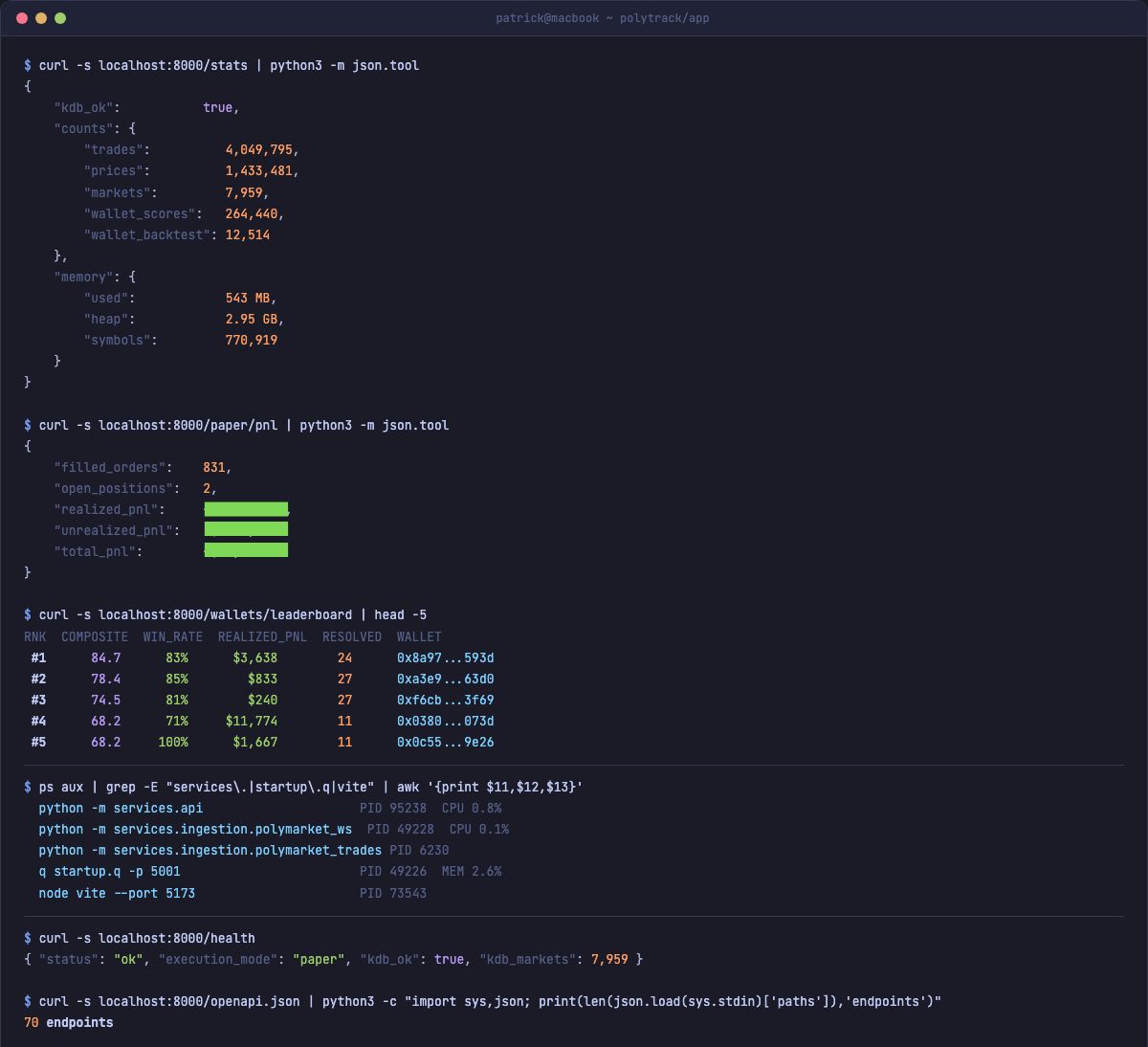
I posted a month ago about building a live kdb-x analytics plant in a day. Cool experiment. Good engagement. I figured I'd move on. I did not. Around week three, I looked up and realized I'd accidentally built the kind of system that, at every fund I've ever sold into, would normally require a team of engineers, quants, and a budget conversation. Here's what's running on my Mac today - not a prototype, the (paper) production system I use today: - A live tickerplant ingesting trades from three parallel feeds, deduplicating them, and landing them in KDB-X with sub-second latency - A marks cache that responds in 2 milliseconds. Before moving the logic into q, the same request took 37 seconds - A scoring engine that has evaluated more than 264,000 wallets across about 8,000 markets, ranking them daily using a five-factor model - Daily PnL, performance attribution, and analytics One person. One Mac. Zero enterprise licenses. Thirty-four days running. Every time I thought I'd found the bottleneck, the answer was the same: write a better q function. The engine never blinked. I described what I wanted. AI translated it into q. KDB-X executed it. I validated the results. Then I repeated the process. KDB-X Community Edition removed the cost barrier. AI removed the syntax barrier. Bottom line: the people with the best questions now get the best infrastructure. Go build something. (I asked Claude for a screenshot of system stats...see photo attached)
- LINKEDIN · IMAGESince 23 Jul 2026
Teams process hundreds of billions of records a day and still wait on simple questions. The root cause is disconnected infrastructure: research and production on separate systems, and the AI work stalled on top. This on-demand session gets practical about the fix: how fragmented systems introduce latency and operational risk, what changes when streaming, historical, and AI workloads run on one platform, where GPU acceleration fits for compute-heavy jobs, and how firms run real-time, AI-driven workflows across trading, risk, and operations. Watch on demand to answer the questions your stack keeps raising.
- LINKEDIN · IMAGESince 23 Jul 2026
Capital markets infrastructure is under pressure. Data volumes keep scaling, architectures are harder to maintain, and AI is moving into production, where latency, consistency, and trust decide outcomes. This on-demand session covers why traditional architectures struggle with real-time and AI workloads at scale, what changes when streaming, historical, and AI run on one platform, and where GPU acceleration fits in moving AI from experimentation to production. The throughline: most firms see the gap between research, production, and AI, but few address the root cause, disconnected infrastructure. Watch the full session on demand.
- LINKEDIN · IMAGESince 20 Jul 2026
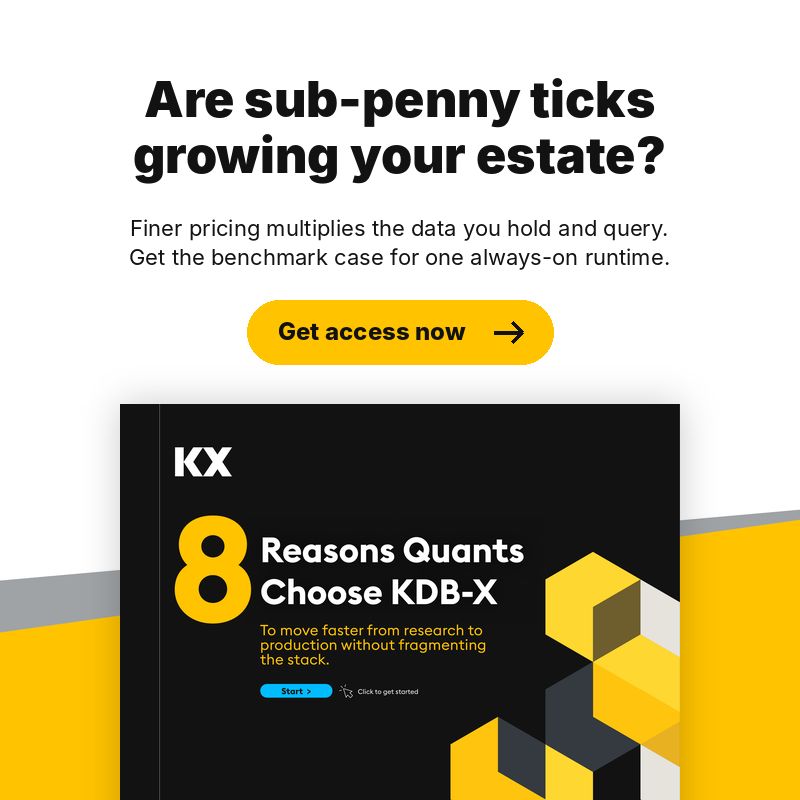
Every boundary in a quant stack has a price: rewrite work, duplicated data, slower research, and engineers maintaining glue instead of shipping strategies. This ebook gives you the evidence to judge whether consolidation pays. Inside: full TSBS results against QuestDB, ClickHouse, TimescaleDB, and InfluxDB, the resource footprint behind them, a before-and-after view of the stack, and where to run a first test on your own workloads. Download the free eBook and judge the case on your own numbers.
- LINKEDIN · IMAGESince 20 Jul 2026
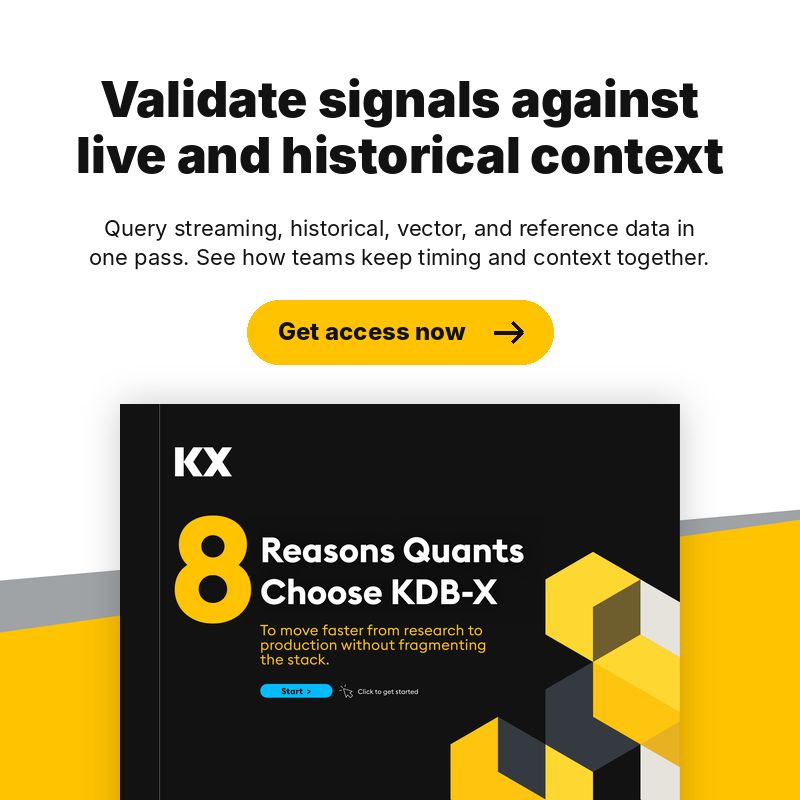
You shouldn't have to rebuild a strategy to ship it. This ebook shows what changes when research, replay, validation, and production share one path. Prototype in Python against production data. Validate signals with live and historical context in one pass. Query Parquet in place. Move backtests past CPU limits with GPU offload. Each reason links to a technical deep dive, so you can go from claim to detail in one step. Download the free eBook and start with the workload that hurts most.
6 of 162 adsSign up to see every KX ad, filter by format and date, and get alerts on new ones.
See all 162 adsWatch the companies you care about.
Filter every ad by industry, country, format and network, and get alerts when a company you watch starts running new ads.