Not on air · 2 of 3 networks checked
heliqx
- heliqx.com
- DE
- 5 employees
heliqx’s ads on LinkedIn, Meta and Google, recorded by adsrunning. Browse the latest here for free. Sign up free to see all 20. Watch heliqx with Starter to get each new one in your feed.
Watchlist with Starter · $49/mo
| Network | Status | Live ads | Nov 2025LinkedIn activity · 52 weeksNov 2026 | Checked | Next step |
|---|---|---|---|---|---|
| None recorded | 0 | Checked 31 Oct 2026 | See all 20 ads → | ||
| Meta | Not checked | — | |||
| None recorded | 0 | No ads found on the Google Ads Transparency Center | Checked 31 Oct 2026 | Collect them with the API → |
heliqx has no live LinkedIn ads. We recorded no Google ads on 31 Oct 2026.
Latest ads
- LINKEDIN · IMAGESince 27 Oct 2026
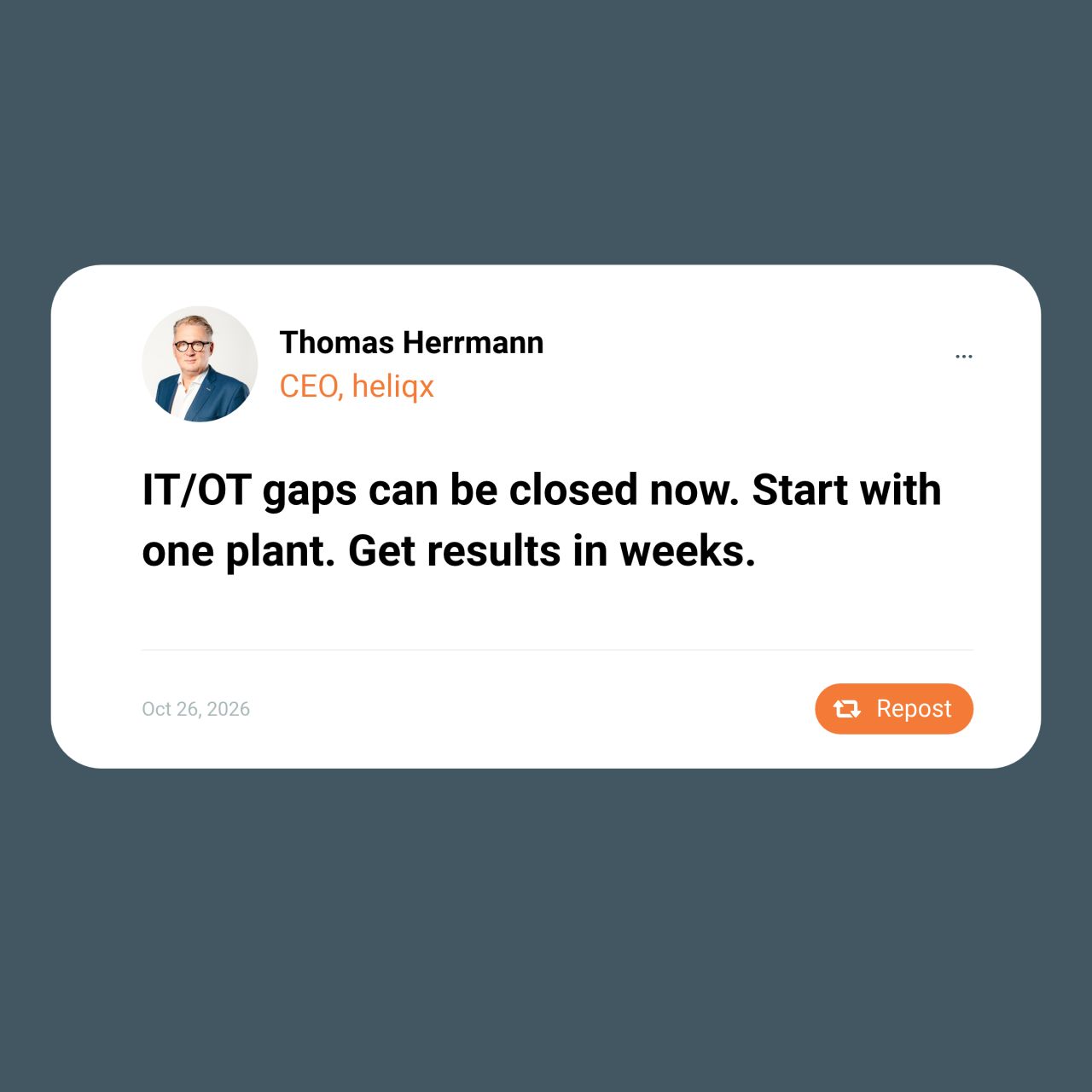
Why do we still accept that so many known IT/OT gaps stay open? Because for years, accepting them was the practical choice. Fixing them meant time, people and production downtime that most teams didn’t have. The list is familiar: · Flat OT networks · Default passwords · Legacy systems waiting for an agreed production window to be patched · Remote access without MFA · Little or no OT network monitoring. But accepting them individually can hide their combined impact. Unsecured remote access can provide a way in. A flat network can allow an incident to spread. Limited monitoring can leave it undetected until production is affected. The risk: idle production lines, missed deliveries and an expensive recovery. Carrying the same risks forward year after year becomes harder to justify. Yet the constraints that kept them open haven’t disappeared. One CTO of a mid-sized manufacturer described exactly this dilemma. He knew action was needed, but tackling the gaps across several plants felt like an undertaking his already stretched IT team couldn’t absorb. What made it practical was starting with one plant, using our approach and software alongside his existing systems and tools. With his IT team, we agreed the target state and prioritised the gaps. Then we got hands-on: fixing network issues, connecting equipment and putting security controls in place, in phases with clear owners and agreed production windows. Over four weeks, network monitoring was put in place, remote access was secured and network segmentation was implemented at the pilot plant. There was still more to do. But the team had a clear plan for the next phase, and he is now taking the same approach across his other plants. Keeping production running shapes every decision in a plant. Closing these gaps has to fit around that, not compete with it. That is why we start with one plant, and why results can come in weeks. If this sounds familiar, I’m happy to talk. https://heliqx.com
- LINKEDIN · IMAGESince 26 Oct 2026
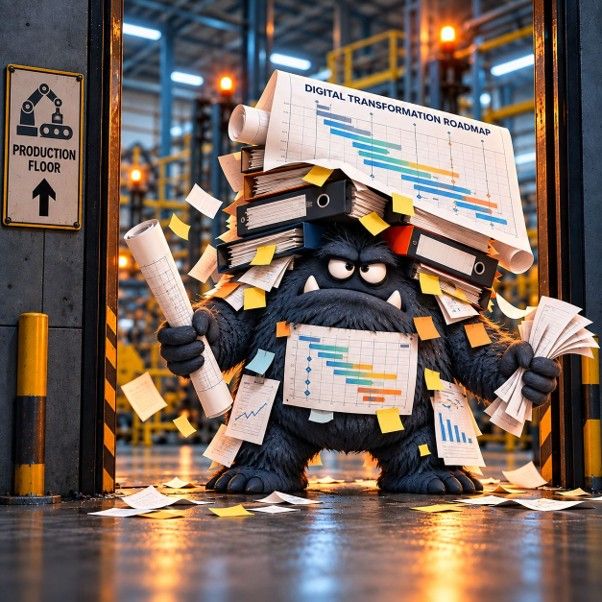
Does your IT/OT transformation feel like a monster you can't afford to tackle? For one CTO at a mid-sized manufacturing company, it did. He knew the IT/OT gap needed attention. But closing it across multiple plants felt like an enormous project - years of disruption, production downtime, and a huge demand on an already stretched IT team. So we started with one pilot plant. The gaps we found weren't unusual: • Flat networks because there isn't enough time or headcount to separate them • Default passwords that have been waiting for “next quarter” • Legacy systems left unpatched because downtime hasn't been agreed - and how do you patch Windows 95 anyway? • Remote access without MFA • Little or no network monitoring • No clear incident response plan. None of these problems are exotic. But together, they give a small problem room to spread and escalate - and one incident can quickly stop production. To understand where to start, we asked: do you know what exactly is connected to each production line today? From there, we defined the target state, assessed what was connected and exposed, and identified the highest-risk gaps. Then we tackled them in phases. IT and OT agreed on what needed to change, why it mattered, who owned each phase, and when any required downtime could happen. We worked alongside the existing IT team, so they could keep up with their other responsibilities. 4 weeks later, we had closed the pilot plant's three highest-risk gaps: • Established visibility and monitoring of all network communication on the shop floor • Secured compliant remote access into every production cell • Implemented network micro-segmentation and additional security controls. There was still work to do, but the team had addressed the most urgent gaps and had a clear plan for the next phase. The same approach is now being rolled out across his other plants, with priorities and implementation adapted to each site's equipment and production constraints. Starting with one plant gave the team a practical way forward. The monster was easier to deal with than he feared. If your IT/OT transformation feels bigger than your team can handle, let's talk about where to start. https://heliqx.com
- LINKEDIN · IMAGESince 22 Oct 2026
We're hiring a Solution Architect (OT Integration & Operations) at heliqx. Join early, with equity, and help shape what we build next. View the role and apply:
- LINKEDIN · IMAGESince 13 Oct 2026
We're hiring a Solution Architect for OT Integration and Operations at heliqx. We help manufacturers close the IT/OT gap in some of their most critical environments. We're looking for someone who wants to join early, with equity, take ownership and help shape what we build next. If that sounds like you, let's talk. And if you know someone who might be a great fit, I'd appreciate you sharing this with them. https://lnkd.in/dtYsha9K
- LINKEDIN · IMAGESince 9 Oct 2026
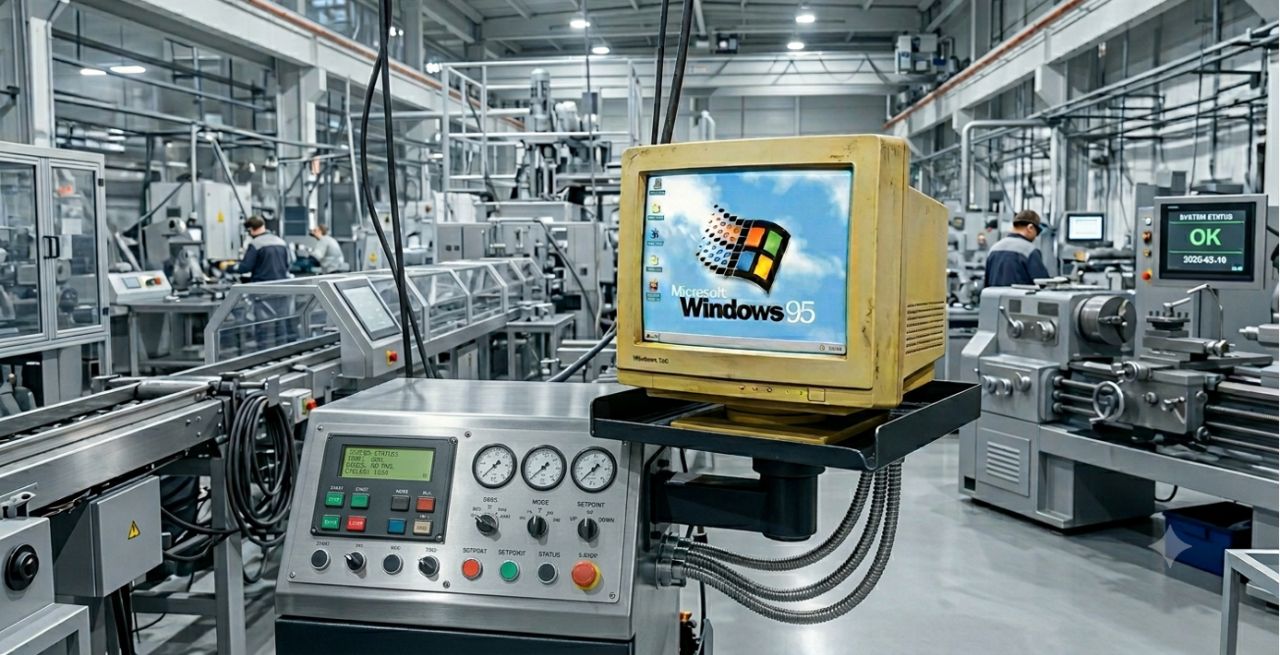
This is the IT/OT gap. This terminal is running Windows 95. It was last supported by Microsoft in 2001. The production line behind it is running today - because it still does the job. And it’s expensive to replace. However, IT has no visibility and no control of it. It cannot be patched, monitored or secured. And the line cannot stop while you figure out what to do about it. After more than twenty years running global managed services across manufacturing and industrial sites, I've seen this so many times. The consequences for manufacturers are real, whether in terms of security exposure, compliance risk, or operational continuity. We all know the gap exists. The problem is most solutions stop at the software. But someone still has to implement it, manage it, and keep it working when things change. And that bit rarely gets solved. When customer after customer came to me with the same problem, we decided to build the missing solution. The expertise, platform, and operational support to close the gap end to end and keep it closed. That's heliqx. Navigating similar challenges in your organisation? Let’s discuss what actually works on the shopfloor. https://heliqx.com
- LINKEDIN · IMAGESince 9 Oct 2026
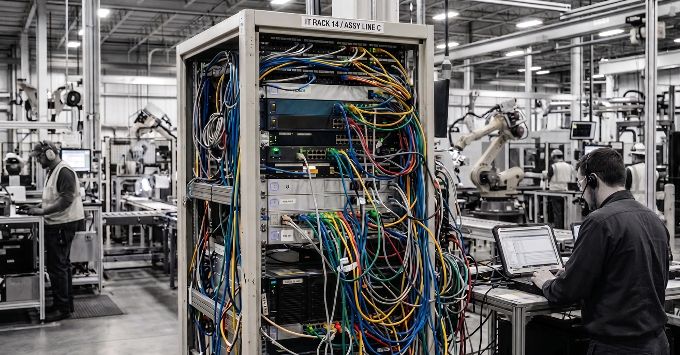
This is the IT/OT gap. On the production floor, keeping the line running always comes first. So connections get made. Devices get added. Workarounds become permanent. The immediate fix is visible. Its wider impact on security, compliance and operational continuity often isn't. Any one of those connections could link directly to systems controlling critical processes. When something goes wrong, the line cannot simply stop while teams work out what happened. After 20+ years running global managed services across manufacturing and industrial sites, I've seen this pattern repeatedly. The consequences are real - from security exposure and compliance risk to disruptions to operational continuity. The problem isn't a lack of expertise or commitment. It's that IT and OT teams often haven't been given the shared visibility, tools and operating model to manage these environments as one. After hearing the same challenge from customer after customer, we decided to build what was missing: The expertise, platform and operational support to close the IT/OT gap end-to-end - and keep it closed. That's heliqx. Navigating similar challenges in your organization? Let’s discuss what actually works on the shopfloor. https://heliqx.com


6 of 20 adsSign up to see every heliqx ad, filter by format and date, and get alerts on new ones.
See all 20 adsWatch the companies you care about.
Filter every ad by industry, country, format and network, and get alerts when a company you watch starts running new ads.