On air · 2 of 3 networks
FLOLIVE®
- flolive.net
- Telecommunications
- GB
- 178 employees
FLOLIVE®’s ads on LinkedIn, Meta and Google, recorded by adsrunning. Browse the latest here for free. Sign up free to see all 432. Watch FLOLIVE® on any plan to get each new one in your feed.
Watchlist included in every plan
| Network | Status | Live ads | Nov 2025LinkedIn activity · 52 weeksNov 2026 | Checked | Next step |
|---|---|---|---|---|---|
| Running | 2 | Checked 4 Nov 2026 | See all 432 ads → | ||
| Meta | None recorded | 0 | No active ads recorded on the Meta Ad Library | Checked 20 Oct 2026 | Collect them with the API → |
| Running | 73 | Ads on the Google Ads Transparency Center | Checked 29 Oct 2026 | Collect them with the API → |
FLOLIVE® has 2 live LinkedIn ads. Its Facebook page had no active ads on 20 Oct 2026, and we recorded 73 Google ads on 29 Oct 2026.
Latest ads
- LINKEDIN · IMAGESince 2 Nov 2026
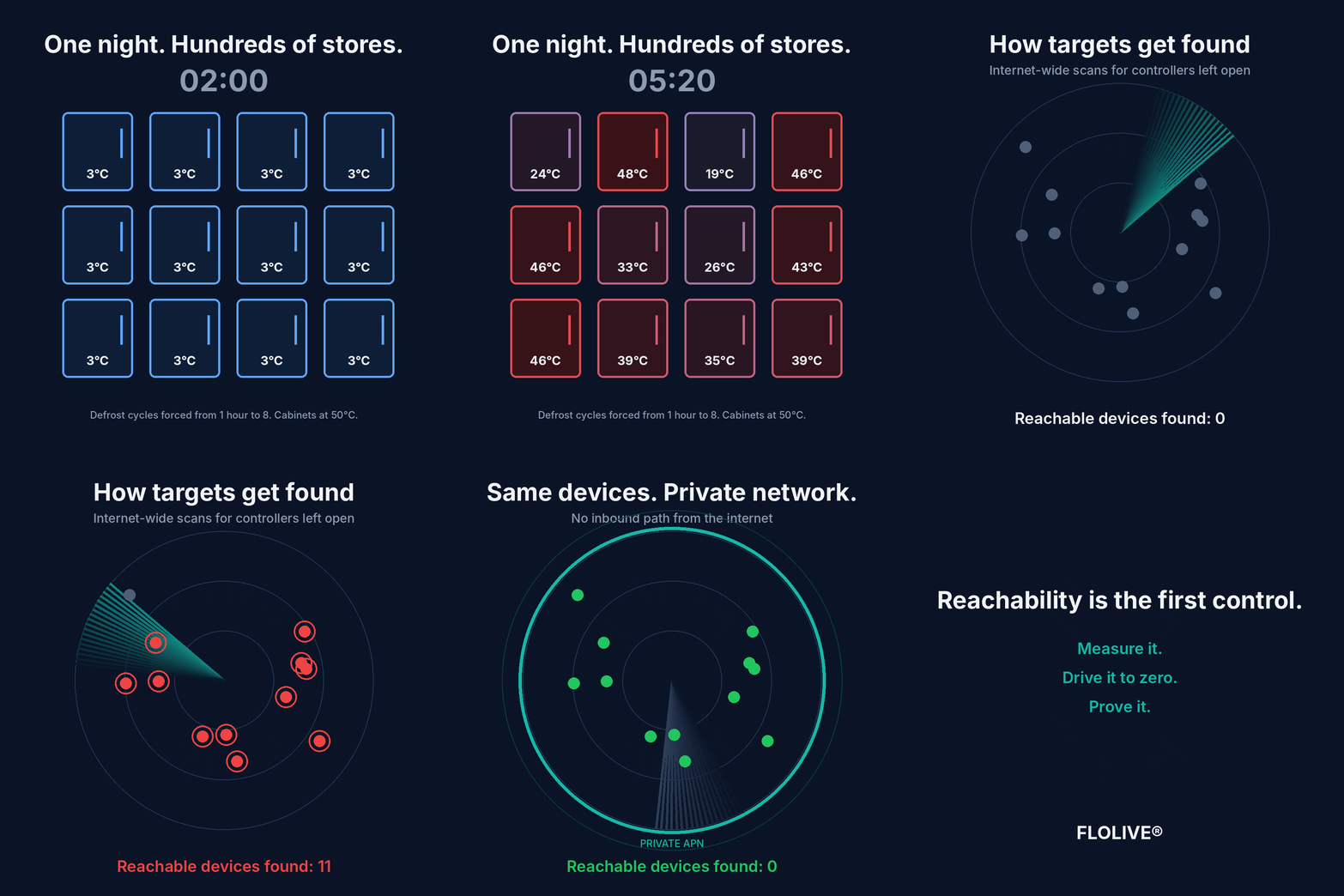
Overnight, freezers in hundreds of French supermarkets were heated to 50°C. Nobody set foot in a store. How many of your connected devices can a stranger on the internet reach right now? That was the way in here. The refrigeration controllers were left open to the internet so maintenance firms could log in remotely. Some ran old firmware. The attackers stretched the defrost cycle from one hour to eight, apparently to stay ahead of the alarms. By morning the stock was in the bin. One retailer put the damage at tens of millions of euros in a single day. I work on security for cellular IoT at FLOLIVE®, and two lessons stand out for me. First, patching matters, but the cheapest control is reachability. A device on a private network with no inbound path from the internet never shows up in the scans attackers use to build their target lists. You can measure that number, drive it to zero, and prove it. Second, this ran in one night while the stores were empty. An alert at 2am that nobody acts on does not save a freezer. Detection has to come with an automatic response. Food retail is now critical infrastructure in every practical sense. Its connected devices should be treated that way. #IoTSecurity #CyberResilienceAct
- LINKEDIN · IMAGESince 2 Nov 2026
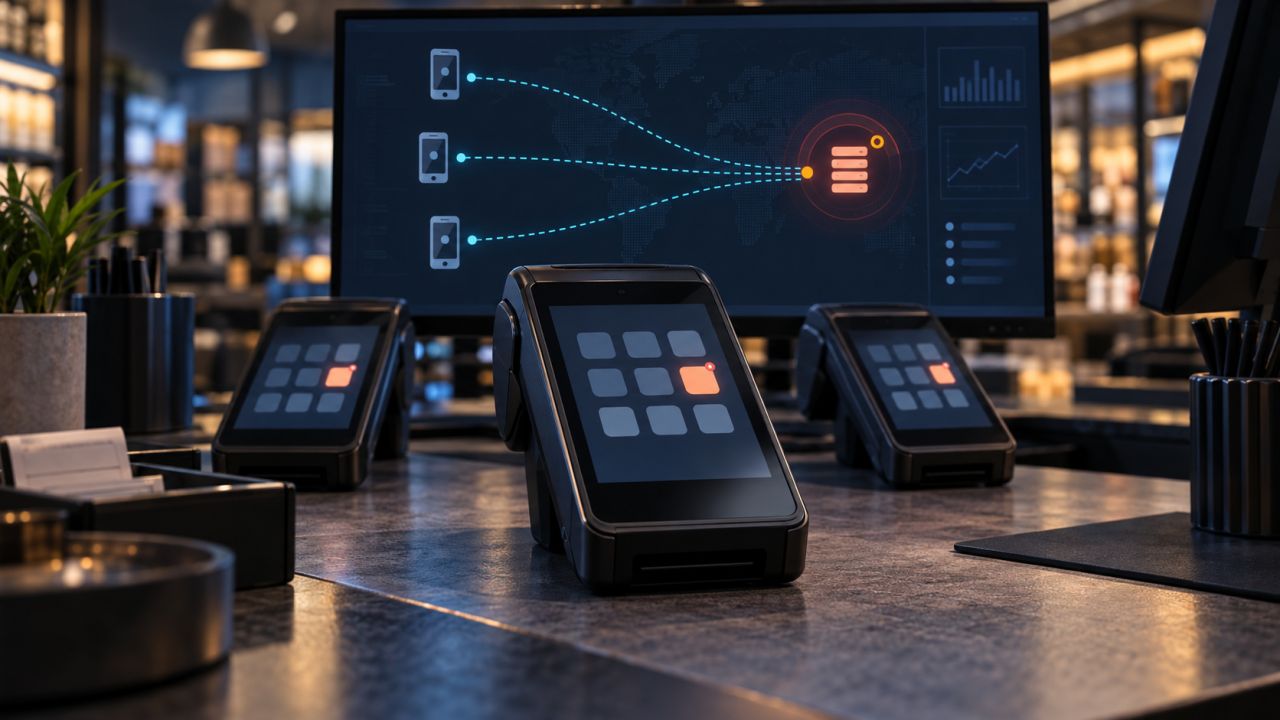
The backdoor was already there when the POS terminals left the factory. Our security monitoring at FLOLIVE® flagged 271 Android POS terminals connecting to the same known malicious server. Over one week, they generated 1,508 alerts. Looking at the traffic, we traced the connections to a factory-installed “cloud font” app matching the LovelyFonts malware family. We found no evidence of an attack in progress during the period we analyzed. But the terminals were regularly calling home, uploading an encrypted record and checking for updates. The server’s silence gave us no reason to consider them safe. For anyone responsible for a connected device fleet, that distinction matters. Software shipped with the device deserves scrutiny alongside anything installed later. Network visibility gave us evidence to investigate the behavior and a way to contain the exposure while the devices could be remediated. In my latest blog, I walk through what we found, what the traffic could tell us, and what fleet operators should check. Read the full investigation: https://lnkd.in/dZYkUmN8
- LINKEDIN · IMAGESince 21 Oct 2026
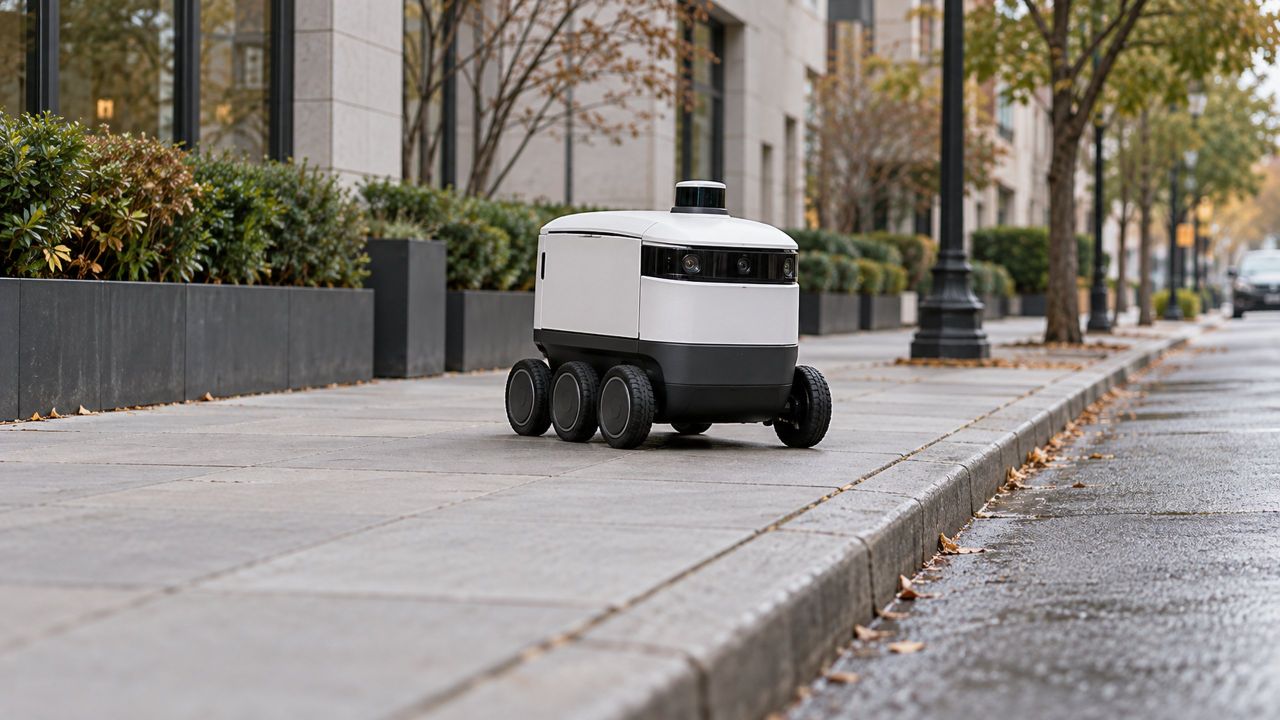
A delivery robot stops in the middle of a pavement. It has lost its connection, and with it the remote operator, the live video and the cloud service telling it where to go next. I talk to a lot of robotics companies. Connectivity tends to come up late, after the hardware, after the software, sometimes after the first customer. For a robot working hours away from the nearest technician, the connection is part of the machine. When it drops, the robot stops being useful. The questions worth asking early: - Which networks can each robot use in each country, and what happens when one fails? - Are your usage terms written for a machine that runs day and night? - Can you see what every robot uses, and lock each SIM to its robot? - When your data or AI model has to stay in-country, can the traffic stay there too? At FLOLIVE®, these are the questions we start with, one market at a time. If your robots are heading somewhere new next year, I’m happy to go through them with you.
- LINKEDIN · IMAGESince 20 Oct 2026
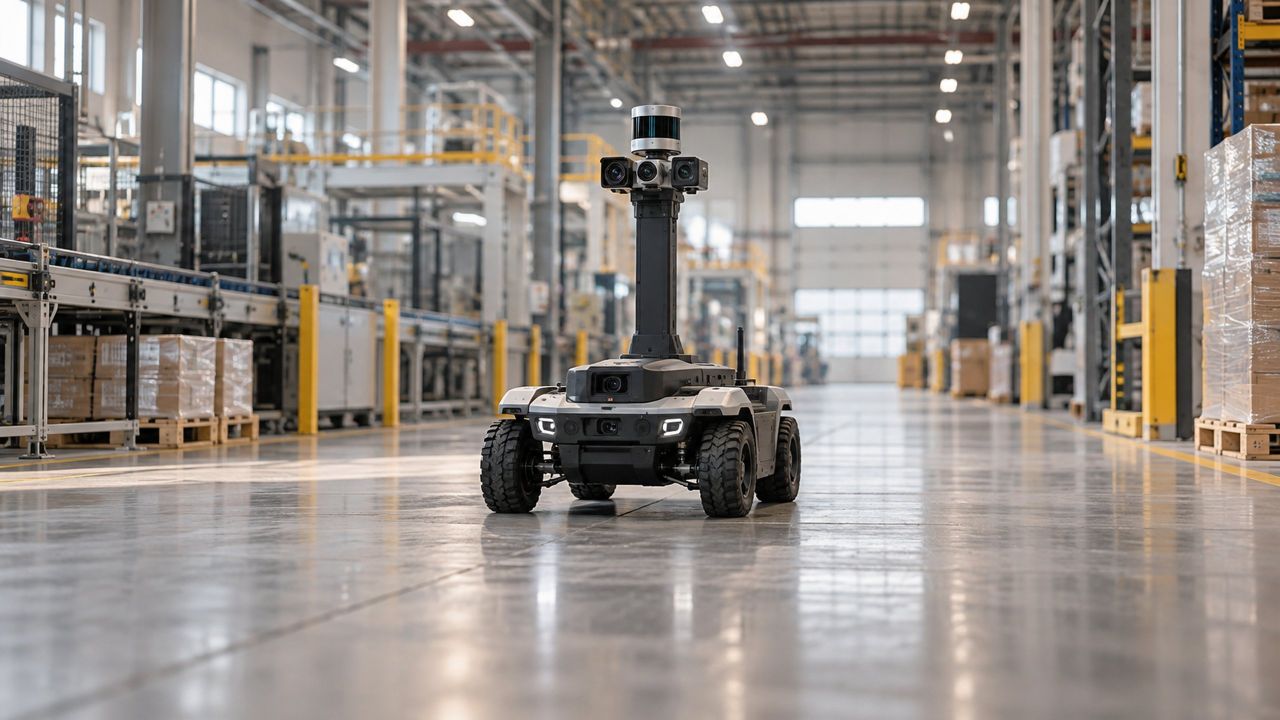
Zurich, 13 November. Swiss Robotics Day. Plenty of the robots in that room will be built in Switzerland and shipped across Europe. That’s where connectivity gets awkward. EU roaming rules stop at the Swiss border. Many EU “unlimited” SIM plans leave Switzerland out entirely, and a Swiss SIM working full-time in Germany or France lives on roaming terms that were never written for a machine. Then add the data. Video and sensor streams going up, models and updates coming down, around the clock. A fleet like that needs one SIM, fitted at the factory, that connects in every country it works in, on a plan built for machines that never switch off. I’ll be at Swiss Robotics Day for FLOLIVE®. If you ship robots out of Switzerland, I’d like to hear how you’re handling it. Let’s find 20 minutes in Zurich. #SRD26 Swiss Robotics Association
- LINKEDIN · IMAGESince 14 Oct 2026
A cellular backup connection can have a strong signal and still take a long route to the application. The radio connection is only the first part of that journey. With home-routed roaming, traffic travels through the SIM provider’s home network. If the device and application are in another country, that can introduce an unnecessary detour. Packet gateways, or PGWs, are where a 4G mobile data session connects to the internet or a private network. Their location matters. Local PGWs allow traffic to break out closer to the deployment. FLOLIVE® uses this approach to provide control over where traffic exits the mobile network. For fixed-mobile convergence, that makes gateway placement part of the backup design, alongside cellular coverage. When testing the backup connection, check the route to the application as well as the signal strength.
- LINKEDIN · IMAGESince 8 Oct 2026
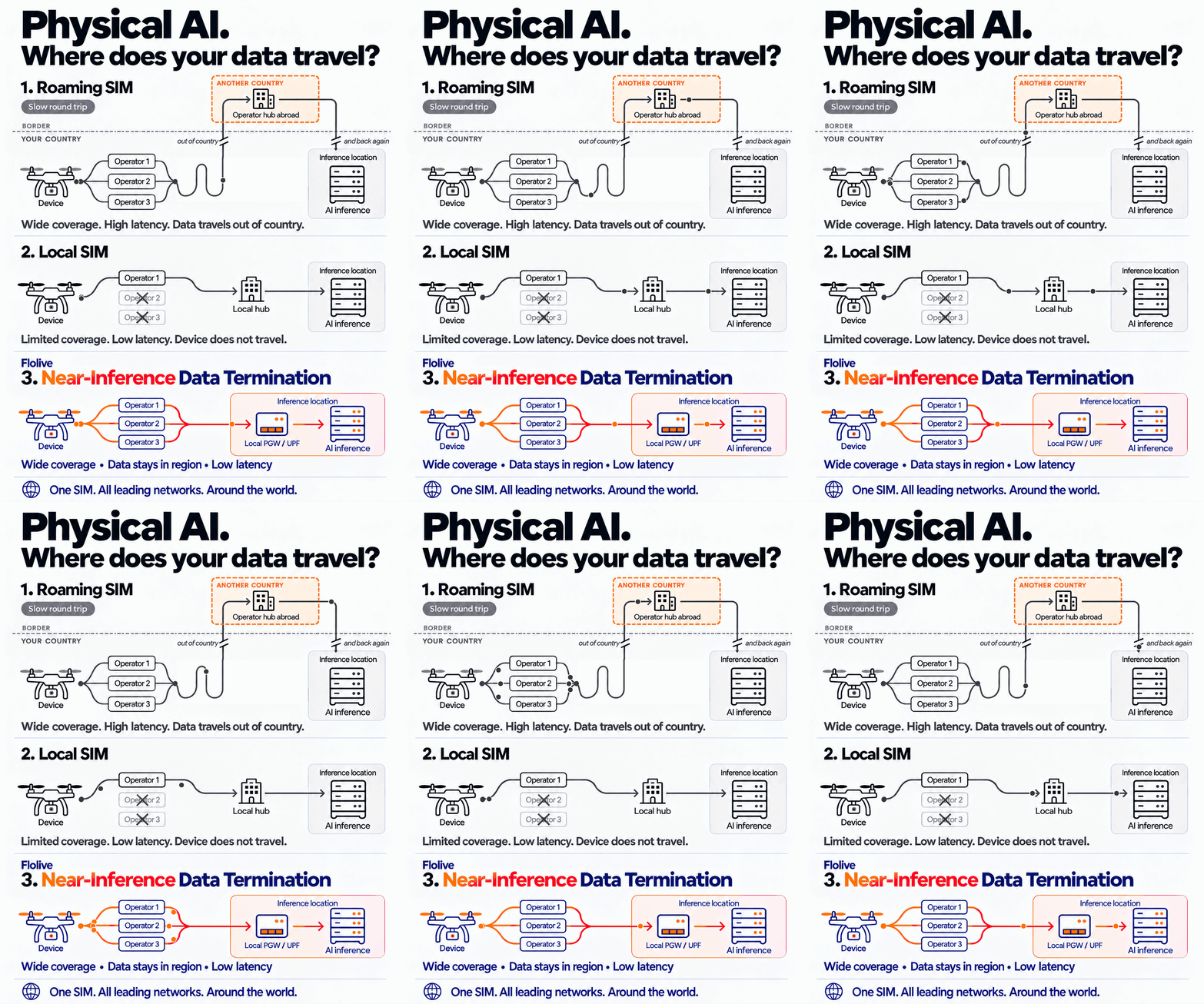
Enterprises are investing heavily in AI infrastructure and choosing carefully where inference runs, based on cost, performance, security and sovereignty. For business data like CRM, ERP, support tickets or financial transactions, this is a solvable problem. Industry leaders such as NVIDIA, Cohere and VAST Data are already making sure that data is handled securely and privately. The enterprise controls the path from application to model and decides where the model sits. With these vendors, it can make sure data is transferred and processed securely at the inference location, in line with data compliance regulations. Physical AI is different in two ways: the AI models control or affect how devices behave, and those devices connect mostly over cellular. Robots, heavy machinery, drones, autonomous vehicles, and traffic and surveillance cameras now use AI to make decisions in the field. Whether inference runs on the device, at the near-edge, in a neo-cloud or in the cloud, enterprises must keep latency low, keep data secure and, more and more often, meet regulations on data sovereignty, model location and privacy. Here's what many miss: the cellular network can quietly break all of it. In practice, enterprises are left with two inadequate options: 1. A roaming profile in-country. You can design your AI topology to keep data and inference in-country. A roaming SIM gives you wide coverage across multiple local carriers, but your data will likely travel to the operator's hub abroad and back. That adds latency, which can affect how the device operates. It can also break data compliance rules, including rules on where models are located. 2. A local SIM. Local operator SIMs (or SGP.32 profiles) keep data local and usually offer lower latency to the inference location or application server. But a single operator rarely covers its whole country. And once you cross a border, that same profile becomes a roaming profile. So enterprises end up choosing between coverage on one side and sovereignty and latency on the other. They shouldn't have to compromise on either. At FLOLIVE®, we keep data local by placing the network hub (Packet Gateway/UPF) in-country. In many cases, it pays to go further and place it right at your inference location, anywhere in the world, whether that's near-edge, neo-cloud or cloud. We back this with full coverage from all leading mobile operators in every country. Devices can connect through any operator's network, and their data still terminates at the same local hub, right next to your inference. Wide coverage. Data stays in region. Low latency. One SIM and one management platform in every country where you run Physical AI. We call it Near-Inference Data Termination.

6 of 432 adsSign up to see every FLOLIVE® ad, filter by format and date, and get alerts on new ones.
See all 432 adsWatch the companies you care about.
Filter every ad by industry, country, format and network, and get alerts when a company you watch starts running new ads.