Not on air · 2 of 3 networks checked
Enzyscreen B.V.
- enzyscreen.com
- Biotechnology Research
- NL
- 4 employees
Enzyscreen B.V.’s ads on LinkedIn, Meta and Google, recorded by adsrunning. Browse the latest here for free. Sign up free to see all 21. Watch Enzyscreen B.V. with Starter to get each new one in your feed.
Watchlist with Starter · $49/mo
| Network | Status | Live ads | Checked | Next step | |
|---|---|---|---|---|---|
| None recorded | 0 | Checked 31 Oct 2026 | See all 21 ads → | ||
| Meta | Not checked | — | |||
| Recently | 2 | Ads on the Google Ads Transparency Center | Checked 17 Oct 2026 | Collect them with the API → |
Enzyscreen B.V. has no live LinkedIn ads. We recorded 2 Google ads on 17 Oct 2026.
Latest ads
- LINKEDIN · IMAGESince 29 Oct 2025
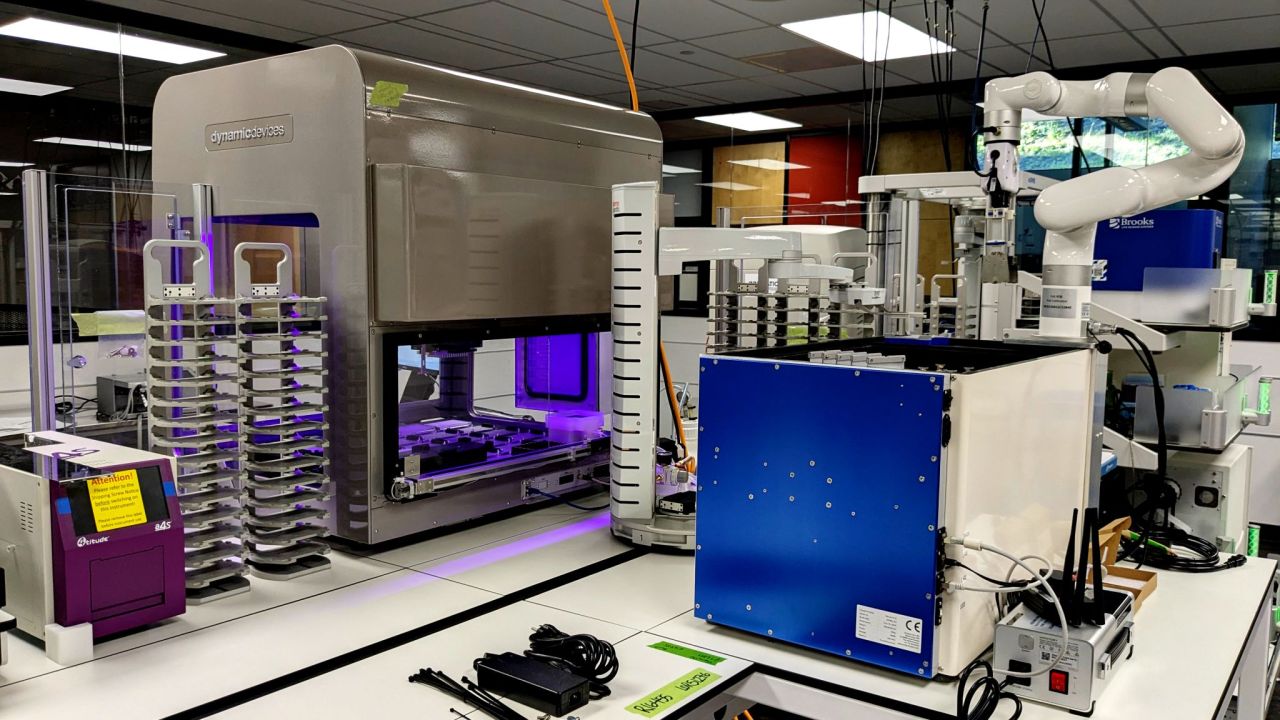
We are excited to see the Robotic Growth Profiler 960 being integrated into a fully automated microbial phenotyping platform. At the Concordia Genome Foundry, shown here is the Growth Profiler 960 integrated with a liquid handler, fluorescence reader, and plate hotel to create a powerful, end-to-end microbial phenotyping workstation. This setup enables automated inoculation, feeding, passaging, fluorescence measurements, and sampling for downstream analysis — all while delivering live growth data from 960 wells. It's exciting to see how different technologies have advanced so much the past 2-5 years that a fully automated shaken cultivation platform will become the standard very quickly Huge congratulations to the Concordia team for this project 🥳 Also want to move towards full automation for your shaken cultivations? Please send me a direct message to hear about how relatively affordable/easy it can be! Credits for the photo to Concordia Genome Foundry
- LINKEDIN · IMAGESince 29 Oct 2025
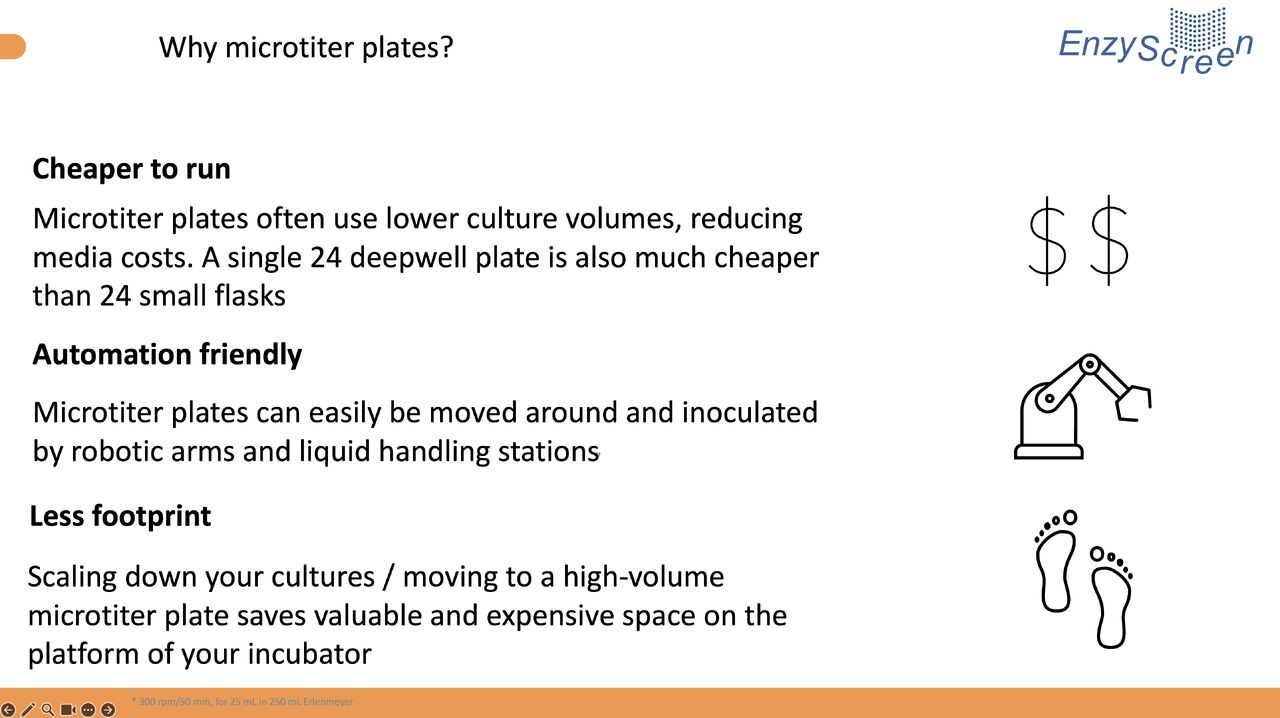
𝐖𝐡𝐲 𝐞𝐯𝐞𝐫𝐲 𝐥𝐚𝐛 𝐬𝐡𝐨𝐮𝐥𝐝 𝐬𝐰𝐢𝐭𝐜𝐡 𝐟𝐫𝐨𝐦 𝐬𝐦𝐚𝐥𝐥 𝐟𝐥𝐚𝐬𝐤𝐬 𝐭𝐨 𝐦𝐢𝐜𝐫𝐨𝐭𝐢𝐭𝐞𝐫 𝐩𝐥𝐚𝐭𝐞𝐬 𝐟𝐨𝐫 𝐬𝐡𝐚𝐤𝐞𝐧 𝐬𝐮𝐬𝐩𝐞𝐧𝐝𝐞𝐝 𝐜𝐮𝐥𝐭𝐢𝐯𝐚𝐭𝐢𝐨𝐧𝐬 When scaling up/down experiments, efficiency matters. Microtiter plates offer several advantages over traditional small flasks: ✅ Cheaper to run: Lower culture volumes reduce media costs, and a single 24-deepwell plate is far more cost-effective than 24 separate flasks. ✅ Automation friendly: plates can be handled by robotic arms and liquid handling stations, enabling high-throughput workflows with minimal manual labor. ✅ Less footprint: more experiments in less incubator space. A high-volume microtiter plate (6 or 2 deepwell) can even allow for more efficient high working volume cultivations. ✅ Standardized format: SBS/SLAS plate dimensions make them compatible with a wide range of lab instruments, from shakers to plate readers. ✅ High data density: collect optical density, fluorescence, or luminescence directly in the same plate without extra transfers. In short: microtiter plates bring cost savings, scalability, and automation-readiness to shaken cultivation. Even though it takes time, energy and the right hardware, you are able to get the same high quality, reproducible data in a microtiter plate as in a shake flask.
- LINKEDIN · IMAGESince 29 Oct 2025
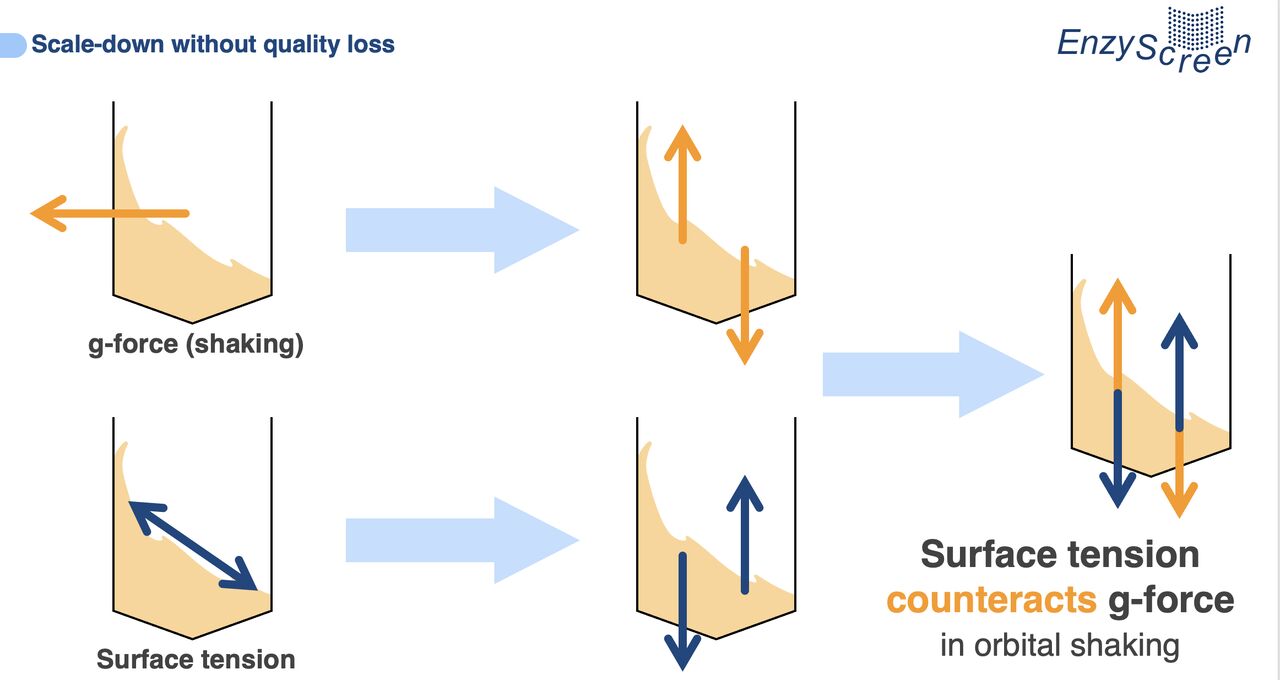
🌊 𝐌𝐢𝐱𝐢𝐧𝐠 𝐢𝐧 𝐦𝐢𝐜𝐫𝐨𝐭𝐢𝐭𝐞𝐫 𝐩𝐥𝐚𝐭𝐞𝐬: 𝐭𝐡𝐞 𝐛𝐚𝐭𝐭𝐥𝐞 𝐛𝐞𝐭𝐰𝐞𝐞𝐧 𝐆-𝐟𝐨𝐫𝐜𝐞𝐬 𝐚𝐧𝐝 𝐬𝐮𝐫𝐟𝐚𝐜𝐞 𝐭𝐞𝐧𝐬𝐢𝐨𝐧. When shaking cultures, the centrifugal (G) forces generated by your incubator shaker drive mixing, improving oxygen transfer while ensuring nutrient distribution and suspension of cells. Surface tension works in the opposite direction, resisting fluid movement and damping mixing, especially in small wells. 👉 The total effective agitation force can be thought of as: Effective Mixing Force = G-force – Surface Tension Surface tension increases dramatically as well diameter decreases. In narrow wells, the surface tension forces of the liquid can dominate. 📌 For example, at a 4 mm well diameter — typical for a 384-well microtiter plate — G-forces up to 3 are almost entirely neutralised by surface tension. In practice, this means that even if your shaker is spinning at the maximum setting, the culture might not be mixing at all. This has direct implications for: 🧪 scale-up: mixing may vary between plate formats. 📊 Data reproducibility: differences in effective agitation can affect growth rates and assay results. 🌡️ Bioprocess design: choosing the right microtiter plate format matters Understanding this interplay between G-force, surface tension, and well diameter is crucial for designing reliable microtiter-based experiments.
- LINKEDIN · IMAGESince 25 Sept 2025
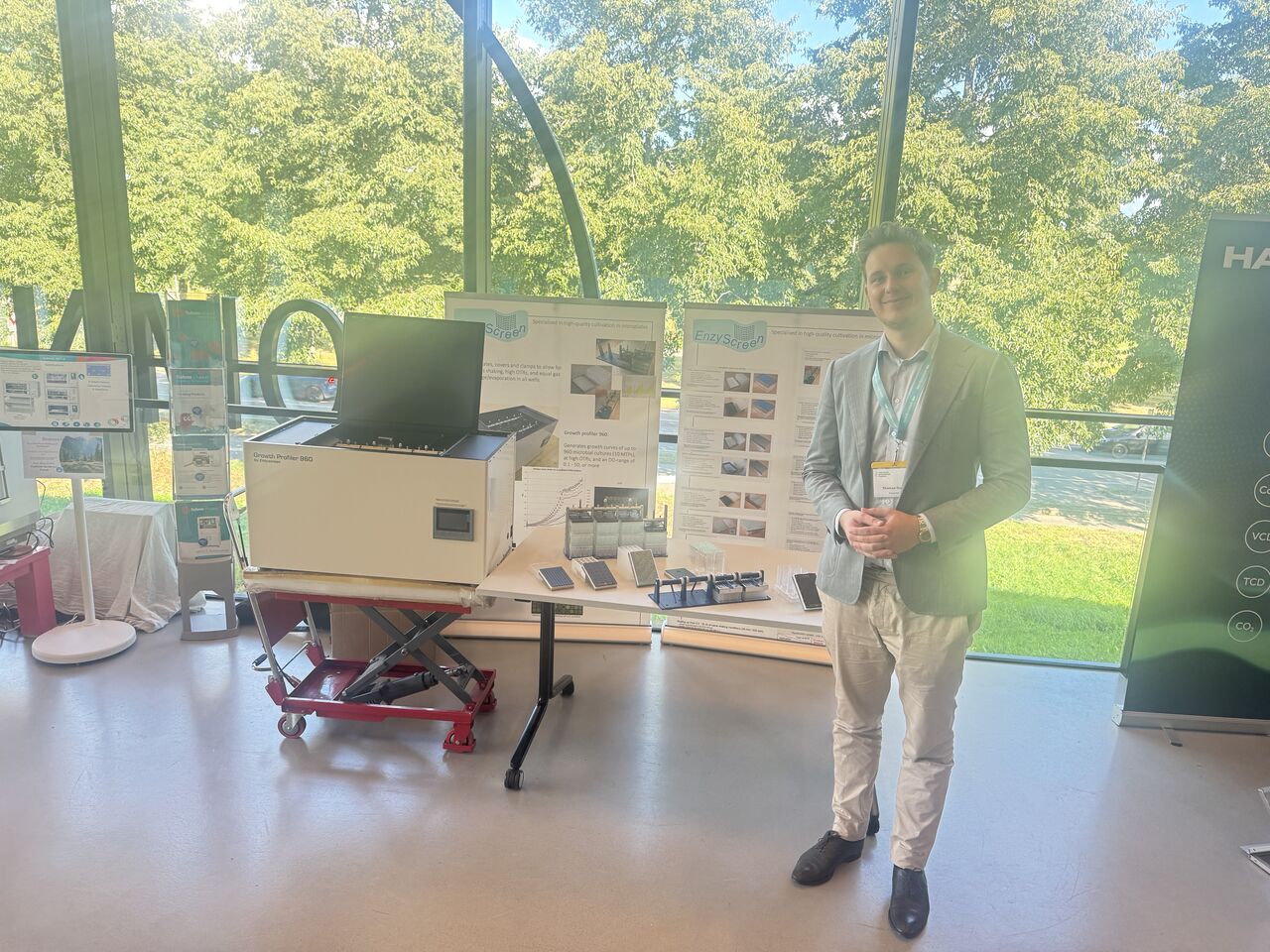
Greetings from a sunny Wageningen. Showcasing our microtiter plate technologies at Nederlandse Biotechnologie Vereniging annual meeting today!
- LINKEDIN · IMAGESince 25 Sept 2025
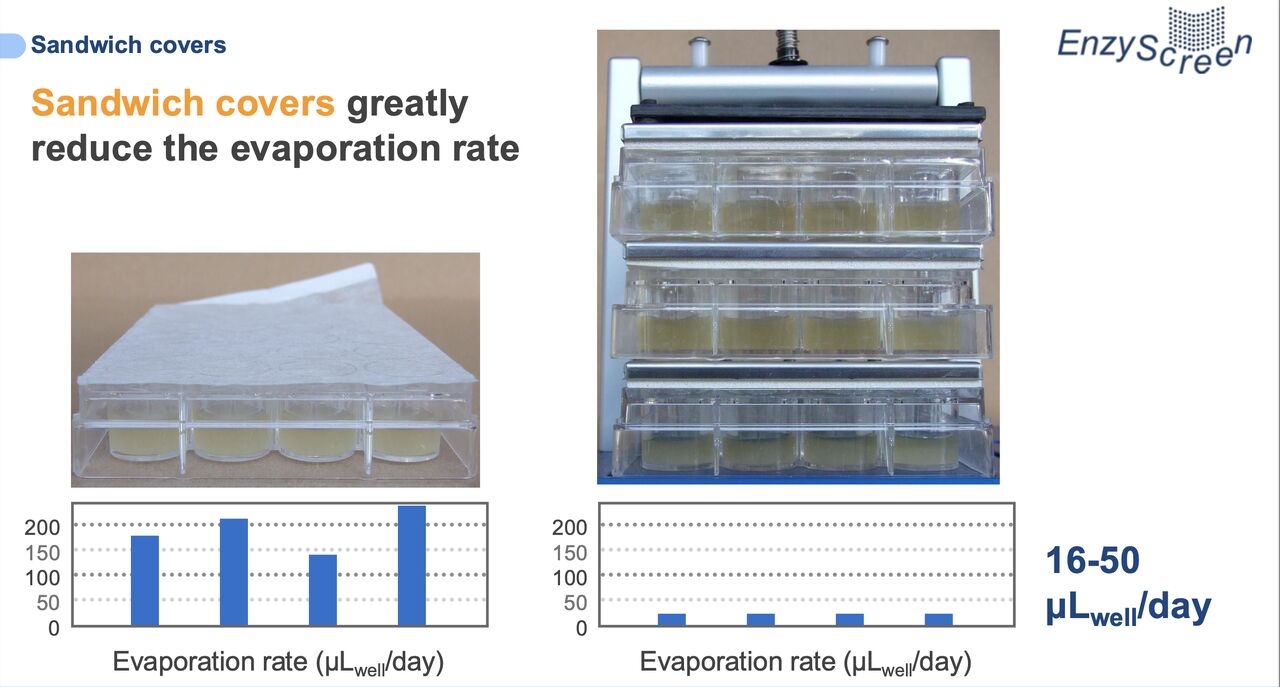
𝐈 𝐬𝐭𝐢𝐥𝐥 𝐡𝐞𝐚𝐫 𝐟𝐞𝐫𝐦𝐞𝐧𝐭𝐚𝐭𝐢𝐨𝐧 𝐜𝐨𝐥𝐥𝐞𝐚𝐠𝐮𝐞𝐬 𝐬𝐚𝐲 𝐭𝐡𝐞𝐲 𝐚𝐯𝐨𝐢𝐝 𝐮𝐬𝐢𝐧𝐠 𝐭𝐡𝐞 𝐨𝐮𝐭𝐞𝐫 𝐰𝐞𝐥𝐥𝐬 𝐨𝐟 96-𝐰𝐞𝐥𝐥 𝐩𝐥𝐚𝐭𝐞𝐬 𝐛𝐞𝐜𝐚𝐮𝐬𝐞 𝐨𝐟 𝐞𝐝𝐠𝐢𝐧𝐠 𝐞𝐟𝐟𝐞𝐜𝐭𝐬 That means they’re voluntarily reducing their throughput by up to 37% (!), essentially turning a 96-well plate into a 60-well one. Edging effects are real: evaporation and differences in oxygen transfer at the periphery can distort growth curves and bias results. But it’s worth remembering that these challenges are not inherent to the microplate: they’re a consequence of the microenvironment around the plate. Securely controlling the exchange of this headspace air is one way to get rid off this issue. Our sandwich covers are designed to minimize edge effects by ensuring uniform gas exchange and reducing evaporation gradients across the entire plate. The result: you can confidently use all 96 wells, improving reproducibility and maximizing data output. In high-throughput microbiology, leaving a third of your capacity unused isn’t a small compromise - it’s a major limitation. With the right plate handling strategy, you don’t have to. Below a comparison between an adhesive seal and the Enzyscreen cover/clamp system. For true well to well and plate to plate consistency, it is important to consider all parameters of your shaken cultivation.
- LINKEDIN · IMAGESince 25 Sept 2025
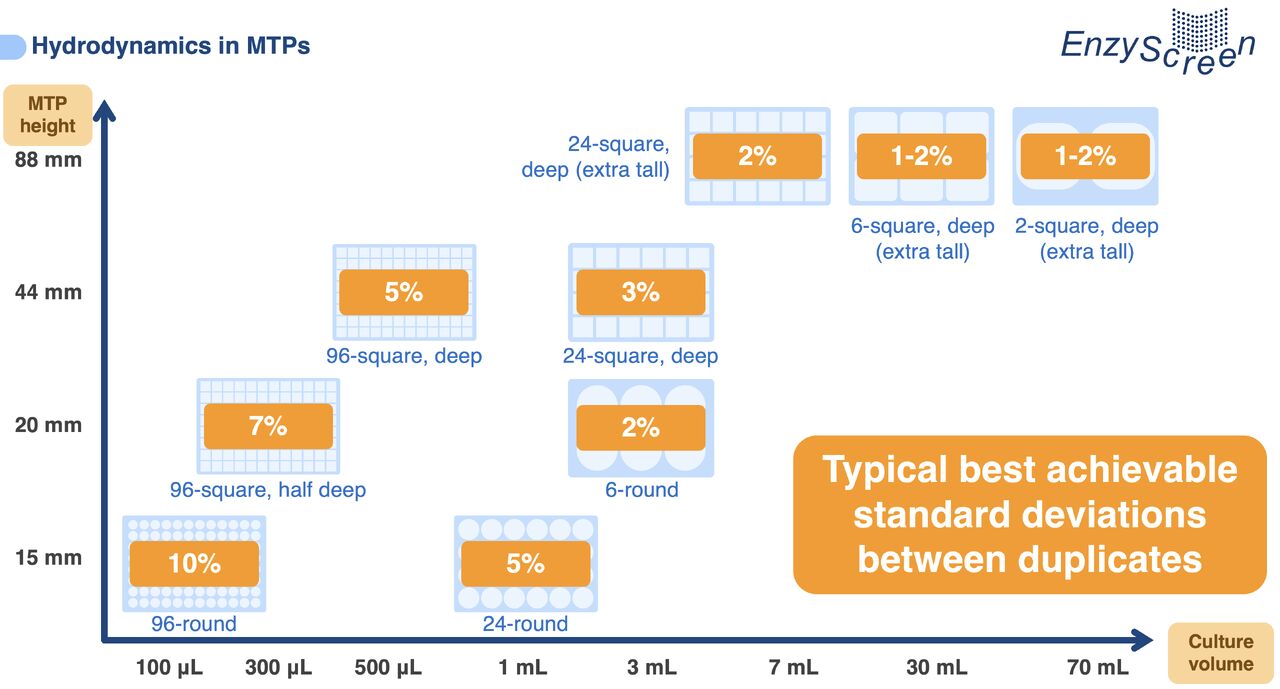
𝐓𝐲𝐩𝐢𝐜𝐚𝐥 𝐚𝐜𝐡𝐢𝐞𝐯𝐚𝐛𝐥𝐞 𝐬𝐭𝐚𝐧𝐝𝐚𝐫𝐝 𝐝𝐞𝐯𝐢𝐚𝐭𝐢𝐨𝐧𝐬 𝐢𝐧 𝐦𝐢𝐜𝐫𝐨𝐭𝐢𝐭𝐞𝐫 𝐩𝐥𝐚𝐭𝐞𝐬: 𝐜𝐡𝐨𝐨𝐬𝐢𝐧𝐠 𝐭𝐡𝐞 𝐫𝐢𝐠𝐡𝐭 𝐟𝐨𝐫𝐦𝐚𝐭 𝐟𝐨𝐫 𝐲𝐨𝐮𝐫 𝐬𝐜𝐫𝐞𝐞𝐧𝐢𝐧𝐠 When setting up a screening experiment, the choice of microtiter plate format isn’t just about throughput: it directly impacts the statistical confidence you can achieve. Higher volume formats (2 , 6 , 24-well) typically show less well-to-well variation than relatively low volume 96 well plates. As plate density increases, the working volume decreases, evaporation effects grow, and mixing becomes more variable due to surface tension. The result? Larger standard deviations between duplicates even in fully optimised screenings This matters most if you’re looking for subtle differences in growth or product titer. If your expected effect size is only a few percent, 96-well plates often are unable to select the best candidate. 👉From our own data, we see a trend the past 5 years where more people are actually going back from 96 well to 24 well plates, whilst the opposite trend was going on the 15 years prior to that. 👉 If your biology requires sensitivity in the low single digits, try and resist overcommitting to throughput at the expense of accuracy. Sometimes fewer wells, with higher precision, will get you to the right answer faster. The data in the slide below is derived from our own experiments and data sharing with our partners. The data is based on optimised screening where the vessel was shaken at the correct speed with the right volume, using Enzyscreen sandwich cover technology.
6 of 21 adsSign up to see every Enzyscreen B.V. ad, filter by format and date, and get alerts on new ones.
See all 21 adsWatch the companies you care about.
Filter every ad by industry, country, format and network, and get alerts when a company you watch starts running new ads.