On air · 2 of 3 networks
DX
- getdx.com
- US
- 583 employees
DX’s ads on LinkedIn, Meta and Google, recorded by adsrunning. Browse the latest here for free. Sign up free to see all 91. Watch DX with Starter to get each new one in your feed.
Watchlist with Starter · $49/mo
| Network | Status | Live ads | Nov 2025LinkedIn activity · 52 weeksOct 2026 | Checked | Next step |
|---|---|---|---|---|---|
| Running | 2 | Checked 28 Oct 2026 | See all 91 ads → | ||
| Meta | Not checked | — | |||
| Running | 49 | Ads on the Google Ads Transparency Center | Checked 27 Oct 2026 | Collect them with the API → |
DX has 2 live LinkedIn ads. We recorded 49 Google ads on 27 Oct 2026.
Latest ads
- LINKEDIN · IMAGESince 17 Jun 2026
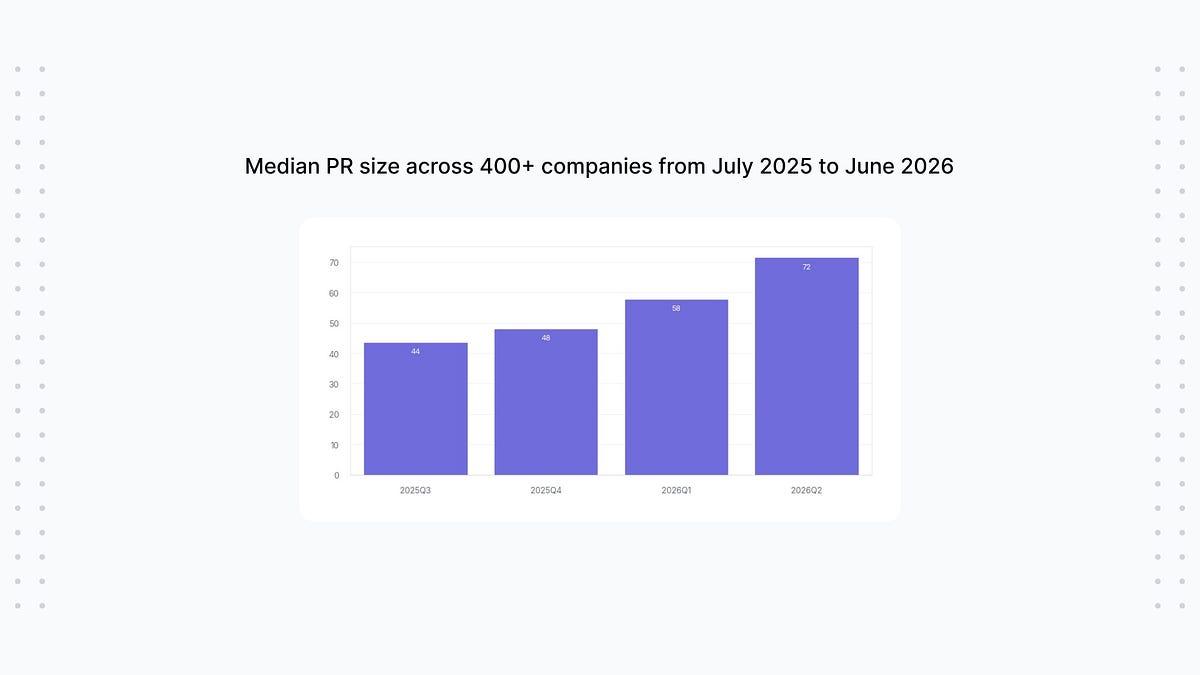
Two findings from this morning's Engineering Enablement newsletter. Taken together, they tell a worrying story. Finding 1: The percentage of AI-authored code has nearly doubled in a quarter. Finding 2: Median PR size has also nearly doubled in the same window. We're getting more check-ins and they're each twice the size. We've heard many CEOs touting the share of code coming from AI as a win. That signaling drove urgency to achieve Finding 1, but as an industry, we did it without keeping an eye on Finding 2 (and that complicates the story tremendously). Solving a problem with the least amount of code possible used to be a signature trait of a senior software engineer. AI doesn't share that instinct. It generates more code, more verbosely, by default. And the data is now suggesting we're shipping the consequences of that at scale: more lines per PR, more cognitive load per review, more code to maintain that is difficult to fully understands. I worry that will have both short-term and long-term quality implications that will be mounting debt engineering teams have to worry about. I don’t want to sound anti-AI. AI is doing exactly what we asked it to do — produce more code, faster. The harder question is whether we asked it for the right thing. The activity metrics (PRs, time savings, AI usage) are going up. But unless we triangulate that with quality metrics and developer sentiment (e.g. the pain of review load), we're flying with half the instruments. Volume metrics tell you speed. Quality and developer sentiment tell you direction. Leaders need both. Kudos to Justin Reock for the thought-provoking piece, and to Gratiana Fu for the underlying research. Read the newsletter here: https://lnkd.in/gEBMJ_xA
- LINKEDIN · IMAGESince 10 Jun 2026
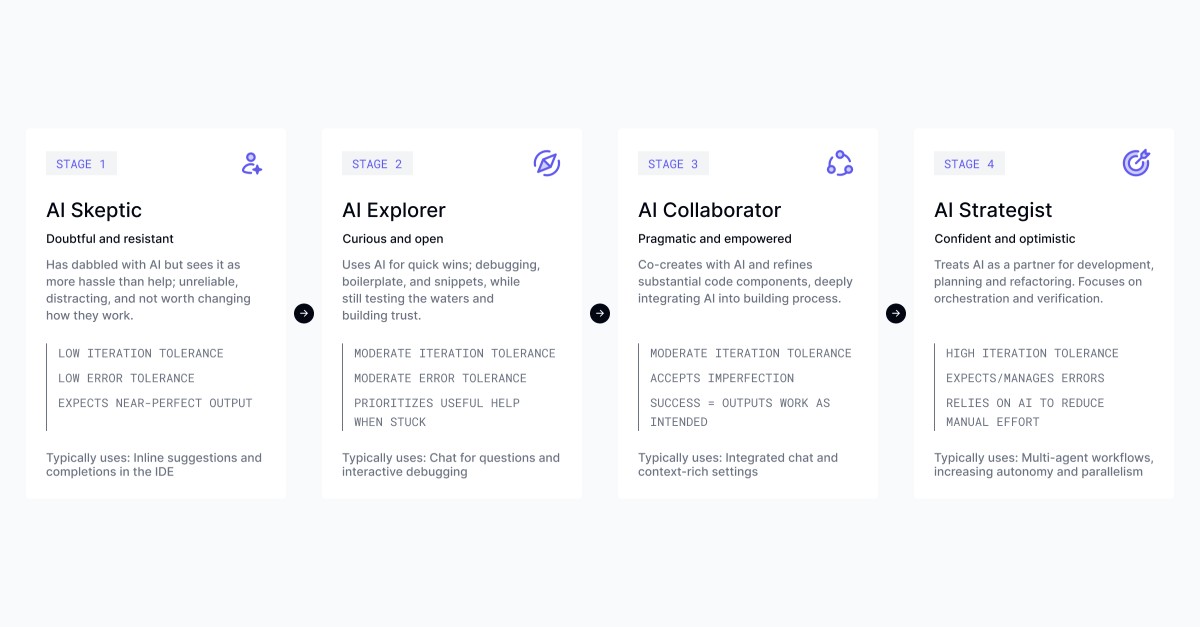
The four-stage journey of developing fluency with AI – In a new study published in ACM Queue, Brian Houck, Rudrajit Choudhuri, Eirini Kalliamvakou, and Tom Zimmermann identify a four-stage journey developers move through as they build AI fluency: The Skeptic, The Explorer, The Collaborator, and The Strategist. 1. Many developers start with resistance. This is “the Skeptic” stage, characterized by low tolerance for errors. 2. In "the Explorer" stage, AI decodes errors and handles mundane tasks, chipping away at skepticism and shifting their mindset. 3. As developers integrate AI into their workflow earlier, they enter “the Collaborator” stage and begin treating iteration as part of the workflow rather than a recovery mechanism when AI output fails. 4. “The Strategist” orchestrates agents in parallel, front-loads context, and verifies outputs. They've moved from being code producers to architects of intent. This model can be distributed internally to help developers understand where they are and where leaders want them to be. Read Brian’s full summary of The AI-Native Developer paper here: https://lnkd.in/grQrAb2Z
- LINKEDIN · IMAGESince 10 Jun 2026
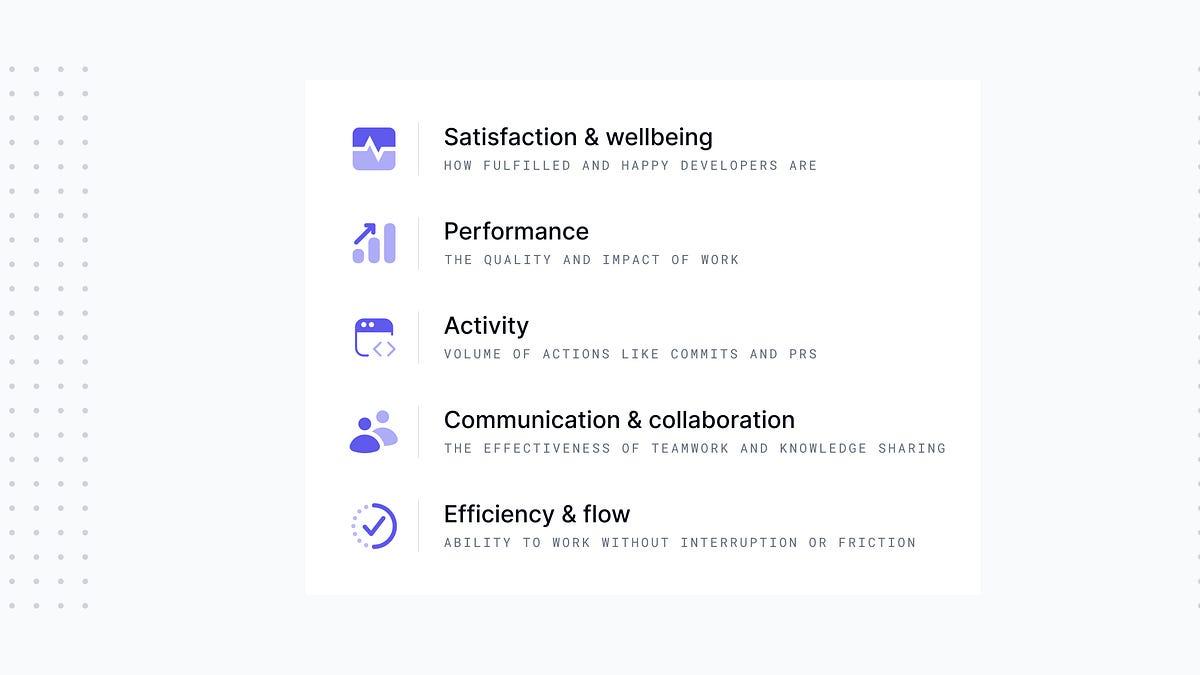
Five years after publishing the SPACE framework, all six of the authors were finally in the same room together. Last month at the Developer Experience Research Forum at UC Irvine, I was joined by Nicole Forsgren, Margaret-Anne Storey, Chandra Maddila, Tom Zimmermann and Dr. Jenna Butler as we reflected on what has changed since 2021 (and what hasn't). Some of the topics we discussed: — Why Activity metrics are simultaneously more controversial and more important in the age of AI — Why Communication & Collaboration may now be the most under-measured dimension of SPACE — Whether we'd add anything to the framework if we were writing it today — How AI is changing the conversation around productivity measurement It was one of the most enjoyable panels I've ever been part of, and I tried to capture the highlights in this week's issue of Engineering Enablement. I'd love to hear what you would add to SPACE if you were designing it today. https://lnkd.in/guGD7bfR
- LINKEDIN · IMAGESince 10 Jun 2026
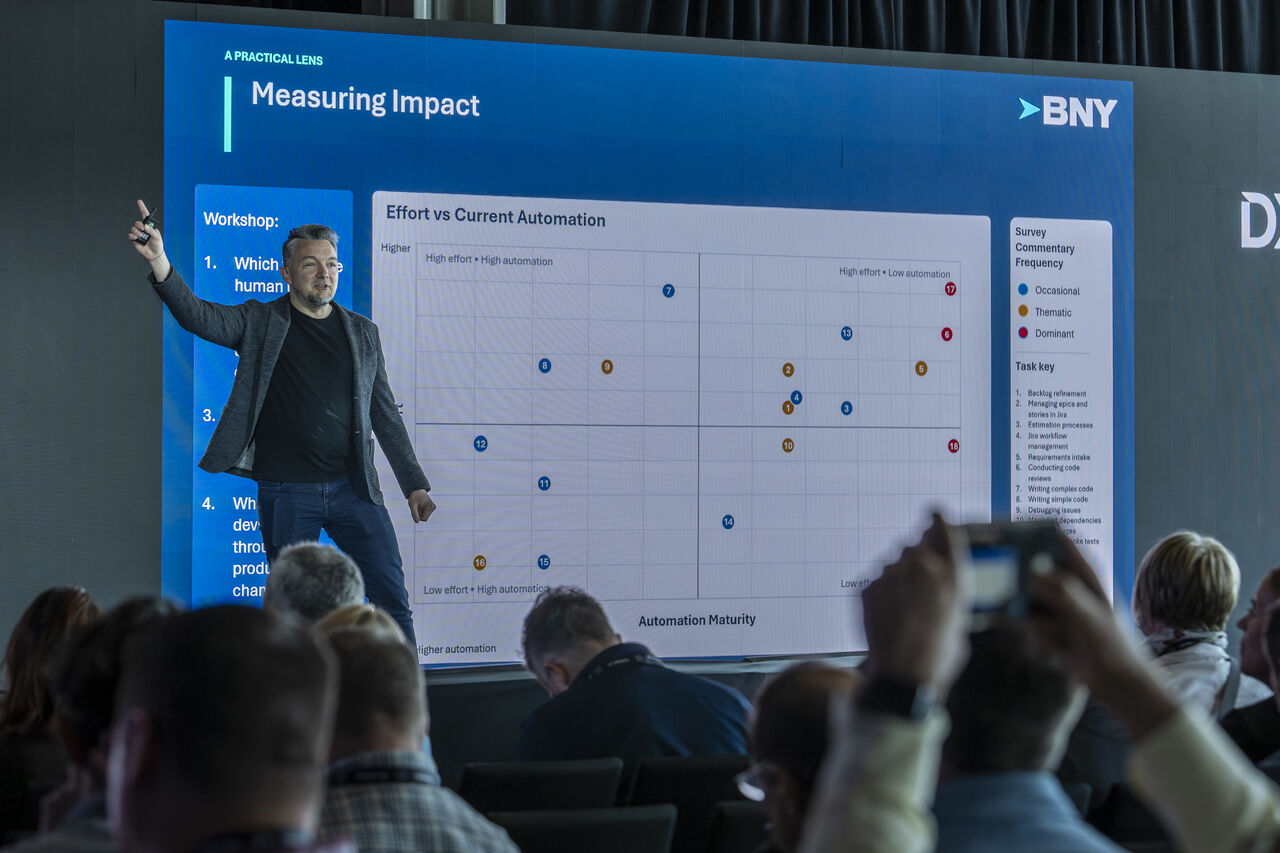
As of today, you can listen to the first 4 sessions from DX Annual on the Engineering Enablement podcast. We’ll release more sessions each week. Featured this week: 1. The current impact of AI on engineering velocity: What 400 companies are seeing, from Abi Noda and Brian Houck 2. Designing the AI-native engineering organization, from Nancy Wang, Tim Bozarth, and Taroon Mandhana 3. Beyond AI tools: Evolving software engineering organizations for the agentic era, from Jennifer St Pierre 4. Mapping the new SDLC at BNY from Jason Valentino Listen here: https://getdx.com/podcast/
- LINKEDIN · IMAGESince 10 Jun 2026
“The experience, the polish, the ease of use—it was clear this wasn’t just an executive tool. We could hand it to everybody and they’d get value out of it right away.” – Jakub Oleksy, SVP of Engineering at GitHub Read more on why GitHub selected DX to measure and improve developer experience: https://lnkd.in/gVXK5zPZ
- LINKEDIN · IMAGESince 10 Jun 2026
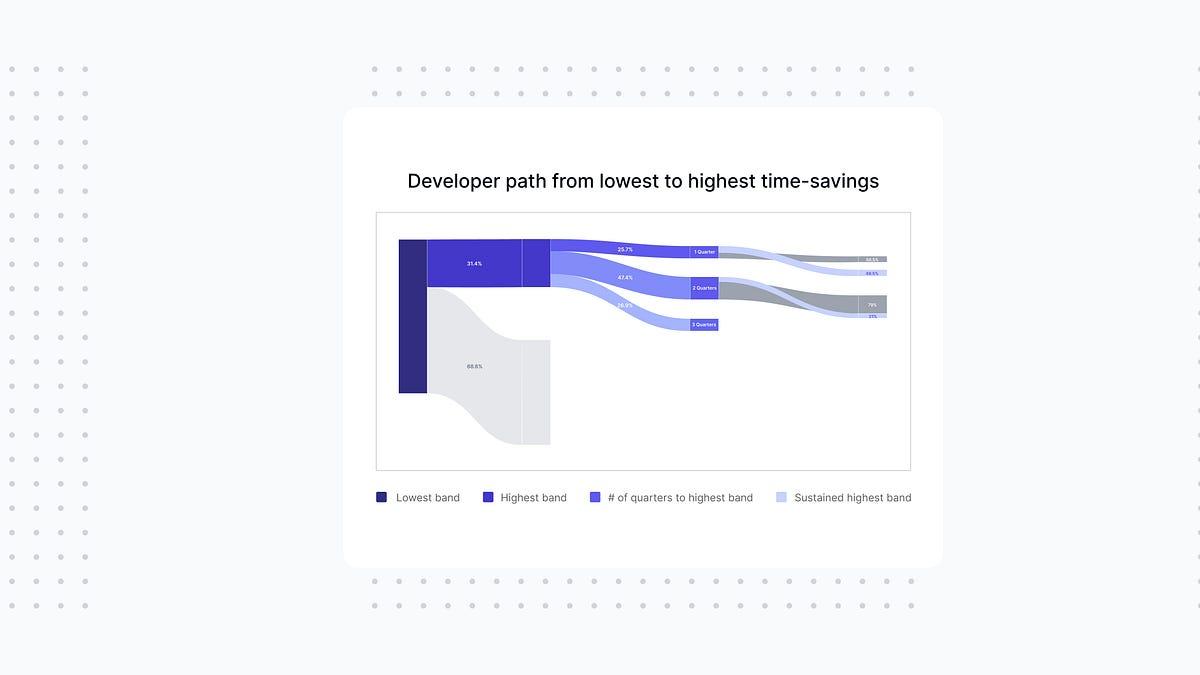
Good science often raises more questions than answers. In the latest issue of Engineering Enablement, Gratiana Fu and I explored an interesting pattern in developer AI usage data across 500+ companies over the last year: developers often report rapid increases in time savings from AI coding assistants… but those peak gains frequently fade over time. One of the most interesting parts of the analysis wasn’t the plateau itself but trying to reason about why it might happen. A few possible explanations we discussed: — Bottlenecks shifting from individual coding work to coordination, review, validation, and prioritization — Early “easy win” tasks being automated first, creating a ceiling on future gains — A “new normal” effect, where initial gains become psychologically normalized over time We don't offer any settled conclusions and are far from having all the answers. If anything, I think the analysis highlights how much I still don’t understand about how AI changes engineering systems over time. Where does the saved time actually go? Which bottlenecks absorb the gains? Which workflows sustain durable improvements? And which metrics are we still failing to capture? I would genuinely love to hear how others are seeing this play out in practice. Link to newsletter here: https://lnkd.in/dB63NM2u (Also: huge credit to Grace, who did all the heavy lifting on this analysis.)

6 of 91 adsSign up to see every DX ad, filter by format and date, and get alerts on new ones.
See all 91 adsWatch the companies you care about.
Filter every ad by industry, country, format and network, and get alerts when a company you watch starts running new ads.