On air · 1 of 3 networks
daydream
- withdaydream.com
- US
- 22 employees
daydream’s ads on LinkedIn, Meta and Google, recorded by adsrunning. Browse the latest here for free. Sign up free to see all 164. Watch daydream with Starter to get each new one in your feed.
Watchlist with Starter · $49/mo
| Network | Status | Live ads | Nov 2025LinkedIn activity · 52 weeksNov 2026 | Checked | Next step |
|---|---|---|---|---|---|
| Running | 164 | Checked 30 Oct 2026 | See all 164 ads → | ||
| Meta | Not checked | — | |||
| Recently | 3 | Ads on the Google Ads Transparency Center | Checked 15 Oct 2026 | Collect them with the API → |
daydream has 164 live LinkedIn ads. We recorded 3 Google ads on 15 Oct 2026.
Latest ads
- LINKEDIN · IMAGERecorded 28 Oct 2026
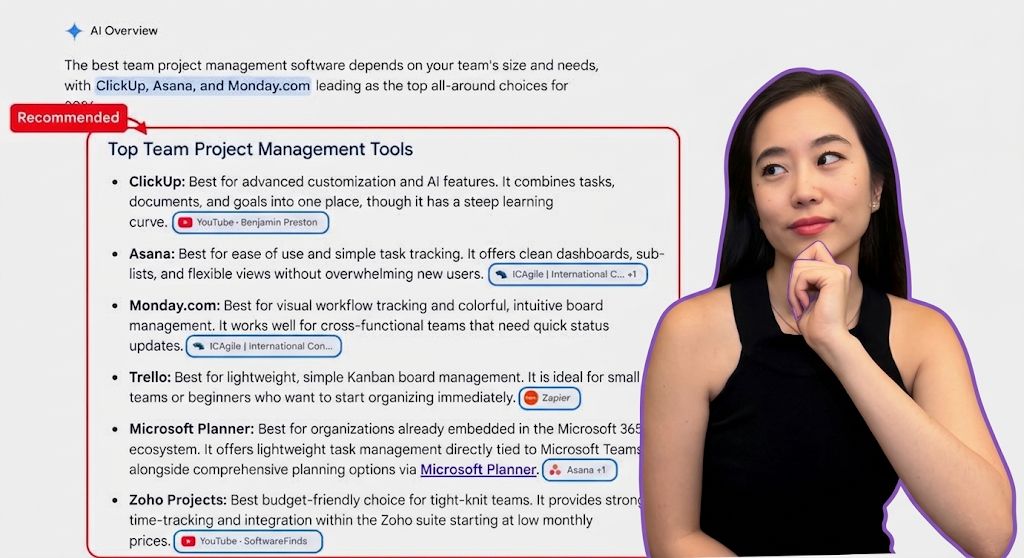
I was in SF last week, and it’s hard not to notice all the AI company billboards. Nobody drives past a billboard at 70 mph, pulls over, and signs a 6-figure contract. You buy out-of-home for share of voice. When someone enters a buying cycle months later, you want your brand to be the default in their head. AI search visibility works a lot like that. When a model answers a buyer’s prompt, it synthesizes the answer right there. Buyers rarely click out. A lot of this is zero-click. That doesn’t mean you stop tracking clicks and pipeline. Understanding attribution, wherever you can get it, is still part of being a good marketer. It means you borrow from the people who’ve been measuring billboards for decades. Out-of-home has precedent: impressions, reach, cost per thousand views, brand and search lift in the markets where the board went up. You can do the same with AI search. Google Search Console already counts AI Overview appearances in your impressions. Treat that like billboard viewership. Put your spend against it and you have a rough cost per viewer to weigh into ROI. Then layer in share of recommendation across prompts, branded search lift, and what buyers say on sales calls about how they found you. It’s mixed-model attribution. It gets messy. And it’s going to keep getting harder. That’s not a reason to ignore the channels where pipeline is easy to attribute. It’s a reason to make them work together. Take a mental model that works somewhere else and apply it here. Just keep checking that your KPIs match the kind of marketing you’re actually doing.
- LINKEDIN · IMAGERecorded 3 Oct 2026
Your content is probably helping your competitor win. Most teams overindex on AI citations. But being cited and being recommended are two completely different things. Think about a student writing a research paper. They already decided on their conclusion, then scrambled to find sources just to show their work. AI search models work the same way. First, the model finds consensus by reading available pages and landing on an average answer. Second, it decides who is safe to name. The model has to make a trust call, so it defaults to established consensus and authority. I watched this happen with a client who launched a newer site. They wanted fast visibility, so they published comparison pages and listicles. The model pulled their pricing tables and feature breakdowns to build its summary. Then it recommended their largest competitor. Their research made the competitor's case for them. That’s why I am skeptical of the entire class of AI visibility trackers. Watching your citation count tick up in a visibility dashboard feels like progress, but the model is just using your page to justify a conclusion it has already reached. I tell teams to look at citation rank in context of share of voice. Out of 100s of non-deterministic prompts for your category, how often are you recommended in the answer?
- LINKEDIN · IMAGERecorded 3 Oct 2026
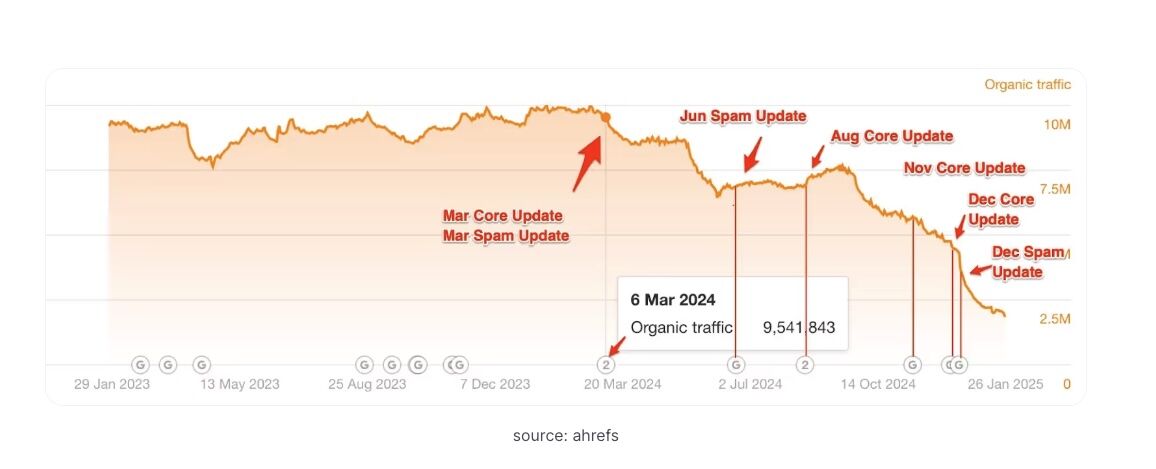
Whenever a case study pops up claiming AI content stopped working, the default assumption is that Google caught them using AI. What actually happened in most of those drops is reassessment. Google evaluated the pages and realized they were targeting terms with sporadic popularity and no consistent search volume. When you spin up programmatic pages without understanding topic authority, you end up with hundreds of isolated one-off URLs. When search queries spike briefly, Google defaults to risk reduction: surfacing an entrenched, trusted domain over an unvetted site built on one-off pages. The moment search intent shifts, those pages collapse because there is no cohesive theme holding them together. At daydream, we build organic architecture around semantic theming: - Mapping explicit primary and supporting keywords to individual pages. - Running cannibalization audits so URLs don't compete against each other. - Running a light update loop: checking top-10 URLs to see which terms fell out of semantic relation, removing them, and swapping in new ones. Even in the HubSpot teardowns where people point out traffic loss on mature sites, a lot of it comes down to natural degradation without an ongoing update loop as intent evolves. Durable programmatic engines work because they maintain cohesive semantic themes and adapt as search intent shifts.
- LINKEDIN · IMAGERecorded 3 Oct 2026
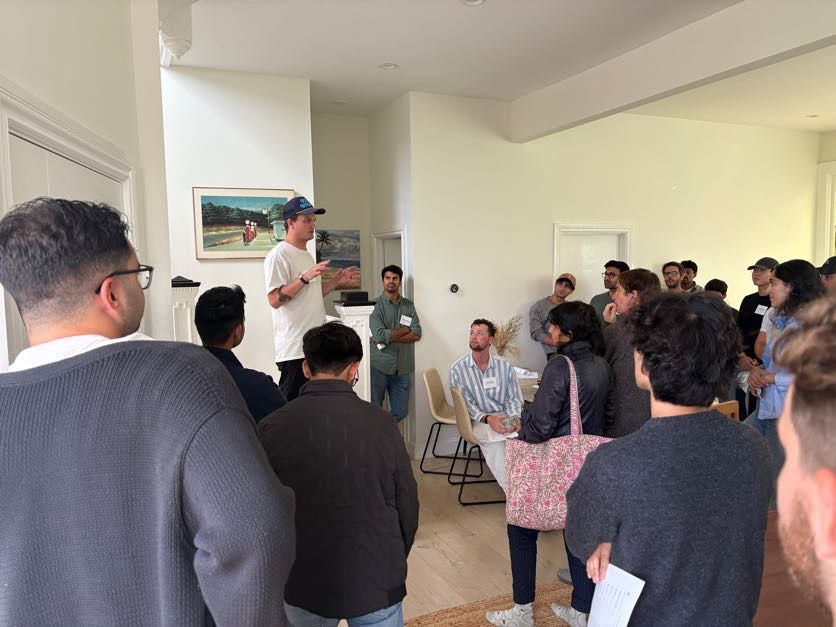
Most AEO platforms sell the same $99/month mirage: a generic list of prompts with no proof that a real person ever asked them. And because anyone, including your competitors, can buy access to the same synthetic prompts, your “AEO strategy” may just be a race to optimize for the same made-up questions. That was the point I made at Luke Clancy’s inaugural Growth Junto, in my demo to a room of "exceptional, AI-pilled growth operators" from companies like OpenAI, Gusto, Notion, and more. Before the session, I audited 13 AEO platforms. None showed the provenance (or source) of the prompts they recommended. Some claimed data sets from “150 million conversations.” Others relied on “internal probability” instead of “actual telemetry.” 🤷 When a platform doesn’t point to the source of a prompt, the safe assumption is that it can’t and that the prompt was generated synthetically rather than observed organically. That creates 3 problems: 1. Synthetic prompts obscure the real customer language your audience is already using online. 2. They pull your content away from what your audience actually searches for and why. 3. The barrier to a competitor chasing the same prompts is roughly $99/month. Here’s how I solve it. 𝗦𝘁𝗲𝗽 𝟭: 𝗘𝘅𝘁𝗿𝗮𝗰𝘁 𝗿𝗲𝗮𝗹 𝗯𝘂𝘆𝗲𝗿 𝗾𝘂𝗲𝘀𝘁𝗶𝗼𝗻𝘀. I use a “Question Miner” prompt to pull verbatim questions from Reddit, Quora, and G2. I filter for tool evaluation and pricing questions in my niche, then discard vendor headlines and sentence fragments that don’t stand on their own. 𝗦𝘁𝗲𝗽 𝟮: 𝗩𝗲𝗿𝗶𝗳𝘆 𝗳𝗶𝗱𝗲𝗹𝗶𝘁𝘆 𝗮𝗻𝗱 𝗽𝗿𝗼𝘃𝗲𝗻𝗮𝗻𝗰𝗲. A second “Reviewer” prompt checks each entry against its source page: * Does it match the source character for character? * Does the source line end with a question mark? * Can someone understand it without external context? * Does it help someone evaluate tools? Most don’t! I mined over 1,900 questions for the demo, and fewer than 2% survived. Seeing prompts tracked in a dashboard is not the same as knowing where they came from. 𝗦𝘁𝗲𝗽 𝟯: 𝗠𝗮𝗽 𝘁𝗼 𝗰𝗼𝗻𝘁𝗲𝗻𝘁 𝘁𝗼𝗽𝗶𝗰𝘀. I cluster the survivors into themes, then write answer-focused content against the questions customers actually raise. 👆 𝘛𝘩𝘪𝘴 is where the leverage is. It's not in mining more data, but in cutting harder. You don’t need a hyperscaling AEO platform’s infrastructure to do this yourself. You need to be willing to throw away 98% of what you mine. Now look at your current prompt data and ask, “Am I looking at questions real people actually asked, or synthetic ‘guesses’ from an LLM?” If you can’t tell the difference, you might be optimizing for the wrong thing. - - - P.S. The Question Miner and Reviewer prompts are in the comments. P.P.S. I bundled the technical components of my Growth Junto demo (the Mastra harness, Claude skill config for UGC extraction, and full prompt library) into a ZIP file. Drop “PROVENANCE” in a comment below, and it’s yours.
- LINKEDIN · IMAGERecorded 3 Oct 2026
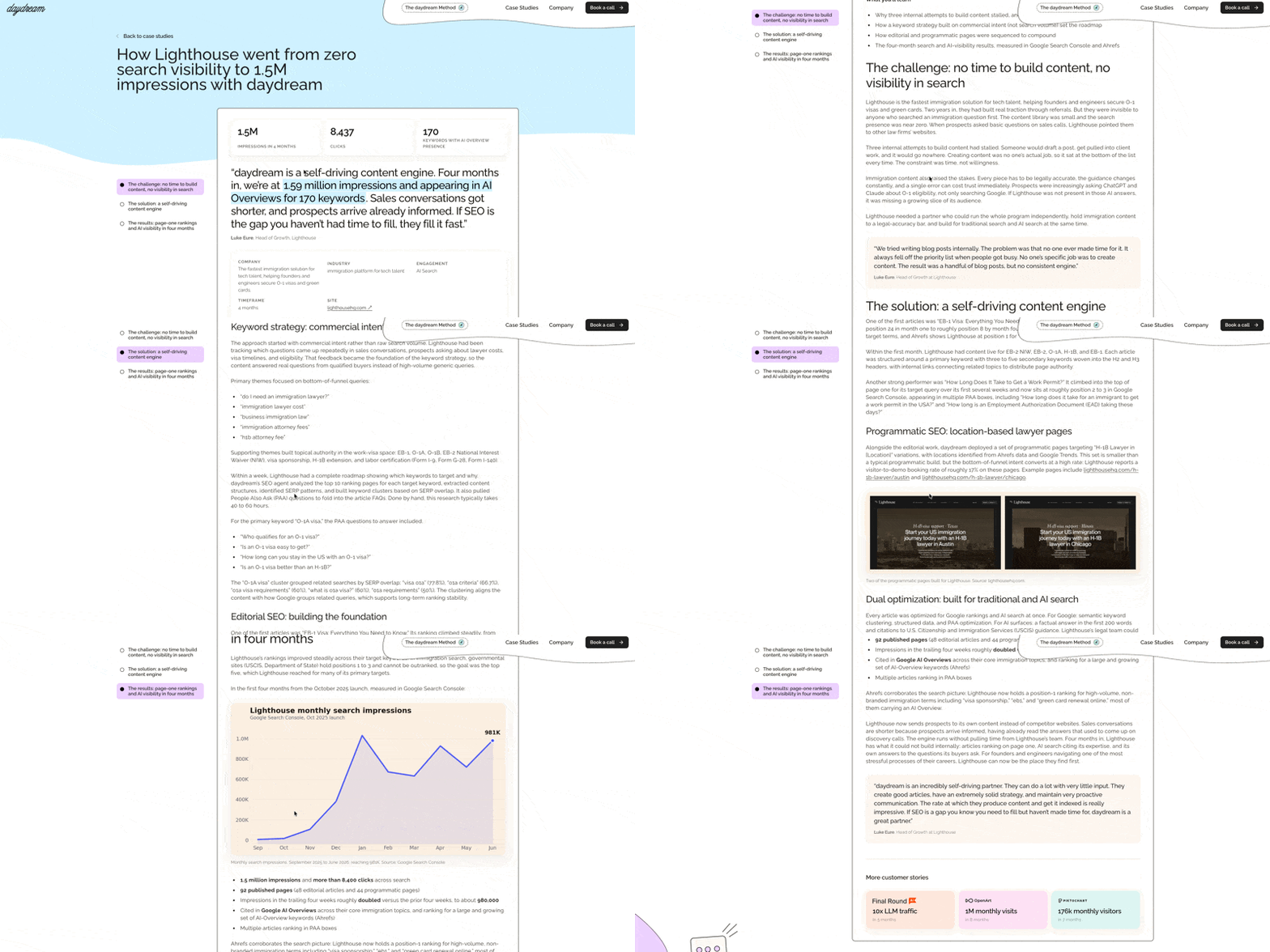
Today we're announcing daydream's case study with Lighthouse HQ. From Luke Eure of Lighthouse: "daydream is a self-driving content engine. Four months in, we’re at 1.59 million impressions and appearing in AI Overviews for 170 keywords. Sales conversations got shorter, and prospects arrive already informed. If SEO is the gap you haven’t had time to fill, they fill it fast." For Lighthouse, the daydream team worked on every pillar of SEO & AI search: - Keyword research and strategy - Editorial SEO guides on immigration topics - Programmatic SEO for location-based lawyer pages - Optimization across both SEO & AI search We were a little late to post this one, but I'm super proud of what the team achieved here 🤝
- LINKEDIN · IMAGERecorded 3 Oct 2026
daydream has run SEO & AI search for 12% of the Forbes AI 50 and 14 companies valued at $1B+. But building a services business (even one that's AI-native) is *brutal*. With pure software, it's easier to externalize when you've messed up. "The product has problems X, Y, and Z" that need to be fixed. With a services business, when you mess up, there's no separate entity to externalize it onto. This makes for a more emotionally difficult experience all around. I can recall many times when a customer's negative feedback stuck with me for days. For all the hardship daydream went through in its early days, there's an amazing amount of learning that comes from building and scaling an AI-native growth agency. You must become great at hunting the best growth marketing talent. For a growth marketing agency in particular, the quality of the people you hire is everything. There are plenty of "good" people on the market, but "excellent" is rare and incredibly difficult to find. You learn what excellence in a particular growth marketing channel looks like, at scale. If an SEO practitioner can create two 95th percentile outcomes over the course of an entire career, they'll find themselves with no shortage of opportunities. In running daydream, we've tried to create dozens of these outcomes every single year, for the fastest-growing companies with the highest expectations for success. It's a brutal bar, but it teaches you what mastery of the craft looks like.

6 of 164 adsSign up to see every daydream ad, filter by format and date, and get alerts on new ones.
See all 164 adsWatch the companies you care about.
Filter every ad by industry, country, format and network, and get alerts when a company you watch starts running new ads.